A snowfall alert that sits in an inbox until someone checks email at 7am is not a dispatch workflow — it is a liability gap. The fix is a documented chain that runs from the weather trigger straight to a truck leaving the yard, with no human judgment call in between. This guide walks through building that chain for salting and plowing operations across the St. Louis metro and Metro East Illinois.
- A snowfall alert salting dispatch workflow removes the judgment call between the weather trigger and the truck leaving the yard.
- Zero-Tolerance contracts dispatch on any measurable accumulation; Seasonal contracts typically trigger at 2 inches.
- St. Louis Snow Removal runs geo-stamped clock-ins and salt-log documentation on every dispatch, not just plow routes.
- Pavement temperature crossing 32°F with precipitation is a separate trigger from snowfall depth — missing this causes most black ice liability claims.
- Sidewalk crews carry a $90/hr labor floor and plow trucks a $180/hr floor in most 2026 St. Louis contracts, so dispatch timing directly controls cost.
Why this matters
Property managers get sued over gaps, not storms. A slip-and-fall claim in 2026 does not ask whether it snowed — it asks whether the property had a documented, triggered response and when that response arrived. A snowfall alert to salting dispatch workflow is the paper trail that answers that question before a lawyer asks it.
Most in-house teams treat weather monitoring as a person watching an app. That works until the storm hits at 2am, the on-call manager sleeps through the alert, and the lot opens uncleared at 6am. The workflow below removes the human bottleneck and replaces it with a defined trigger, a named responder, and a timestamped record.
Before you start
- A contract that defines the trigger, not just the service. "Salt as needed" is not a trigger. "Dispatch on any measurable accumulation" (Zero-Tolerance) or "dispatch at 2 inches" (Seasonal) is. Get the number in writing before the season starts.
- A weather source with point-forecast accuracy for your address, not a citywide forecast. St. Louis and the Metro East can see a half-inch difference in accumulation across 15 miles on the same night.
- The gotcha: black ice and freezing rain events rarely show up as "snowfall" on a depth-based alert. If your trigger is set to snow accumulation only, a pavement-temperature drop below 32°F with light precipitation will slip past the system entirely — and that is the exact condition behind most slip-and-fall claims filed in the snow removal for banks and credit unions and retail sector each winter.
Set up your snowfall alert trigger
- Pick a monitoring source with a point forecast tied to your property's coordinates, not a regional zip-code average.
- Set the accumulation threshold to match your contract type: any measurable snow for Zero-Tolerance, 2 inches for standard Seasonal, or a negotiated depth for Per-Occurrence contracts.
- Add a second, independent trigger for pavement surface temperature at or below 32°F combined with any precipitation flag — this is your ice trigger, separate from your snow trigger.
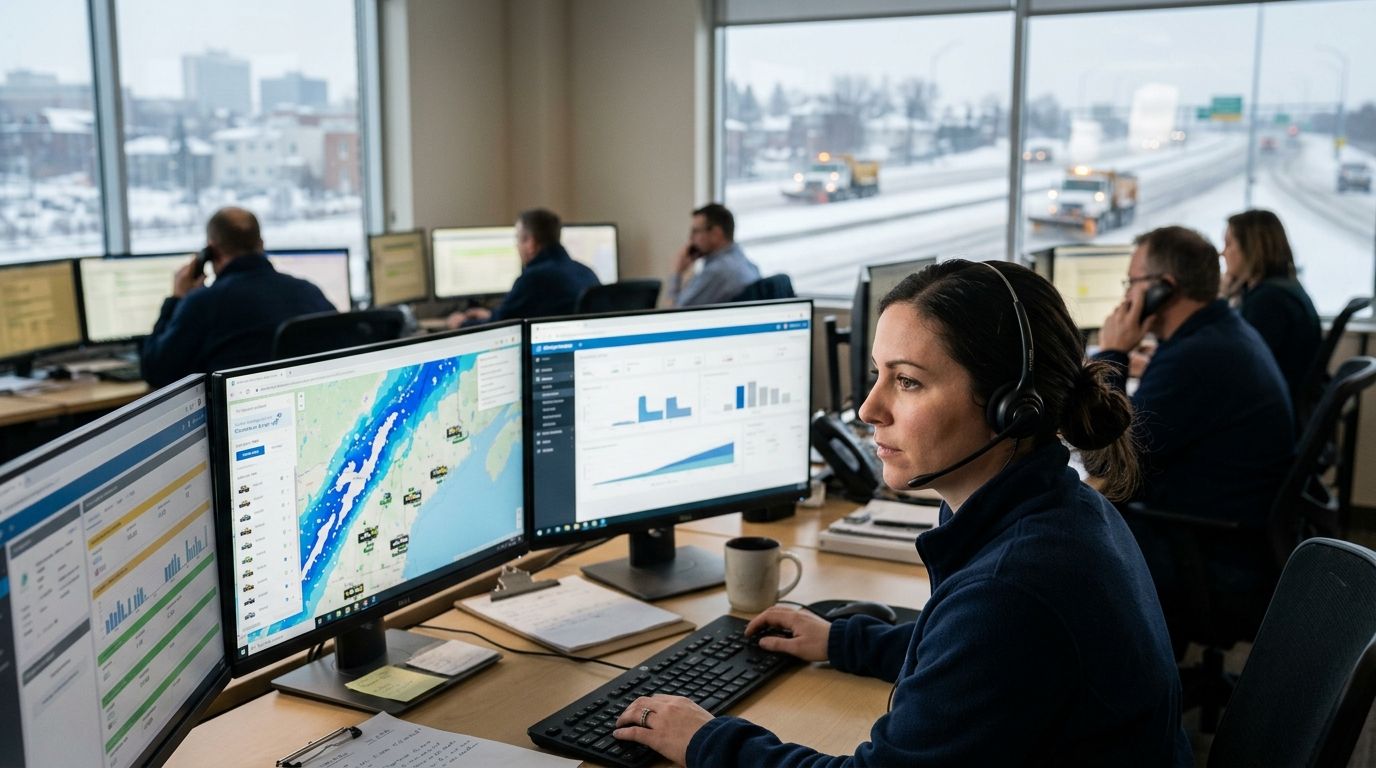
- Confirm the alert routes to a dispatcher, not a single manager's phone. A one-person alert chain fails the first time that person is unreachable.
Expected result: two live triggers running in parallel — one for snowfall depth, one for pavement temperature — both feeding the same dispatcher.
Configure your salting dispatch threshold
- Set the salting trigger to fire before the snow trigger for pre-treatment events — pavement temperature crossing 32°F with precipitation in the forecast window is enough to justify a pre-treat run.
- Assign an application rate standard (lbs of salt per acre) tied to pavement temperature bands, since rock salt loses effectiveness below roughly 15°F and calcium chloride blends become the fallback.
- Log the crew assignment against the specific lot or route, not a generic "salting crew" label — this matters when a tenant disputes coverage on a large site like the ones covered in the de-icing and salting for office campuses guide.
- Confirm the dispatcher has authority to send the salting crew without waiting on manager sign-off, since a 20-minute approval delay on an ice trigger can be the difference between a clean lot and a claim.
Expected result: a salting crew dispatched on the ice trigger independent of whether snow has started falling.
Build your crew notification chain
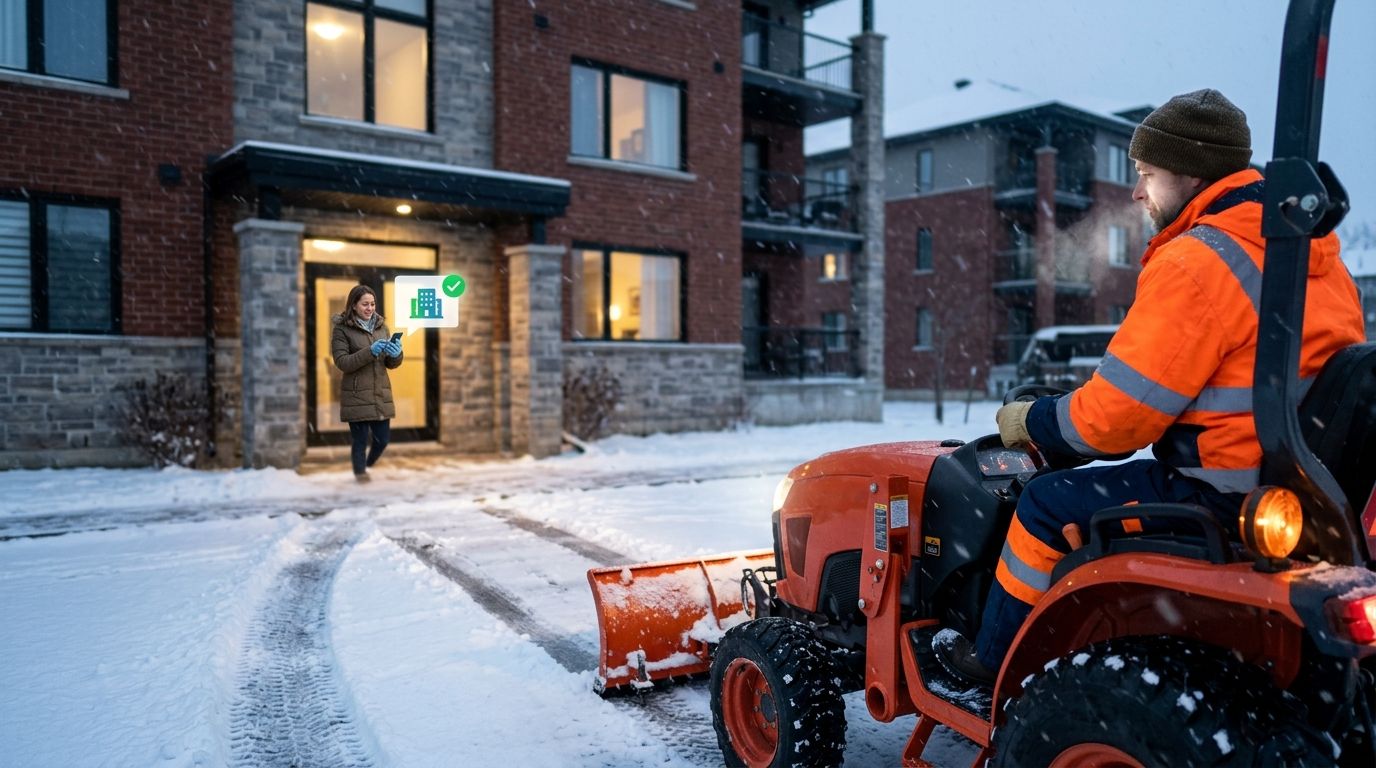
- Dispatcher sends a text-and-call combination to the primary on-call foreman — text alone gets missed overnight.
- Foreman confirms receipt within a set window (15 minutes is standard) or the system escalates automatically to a backup foreman.
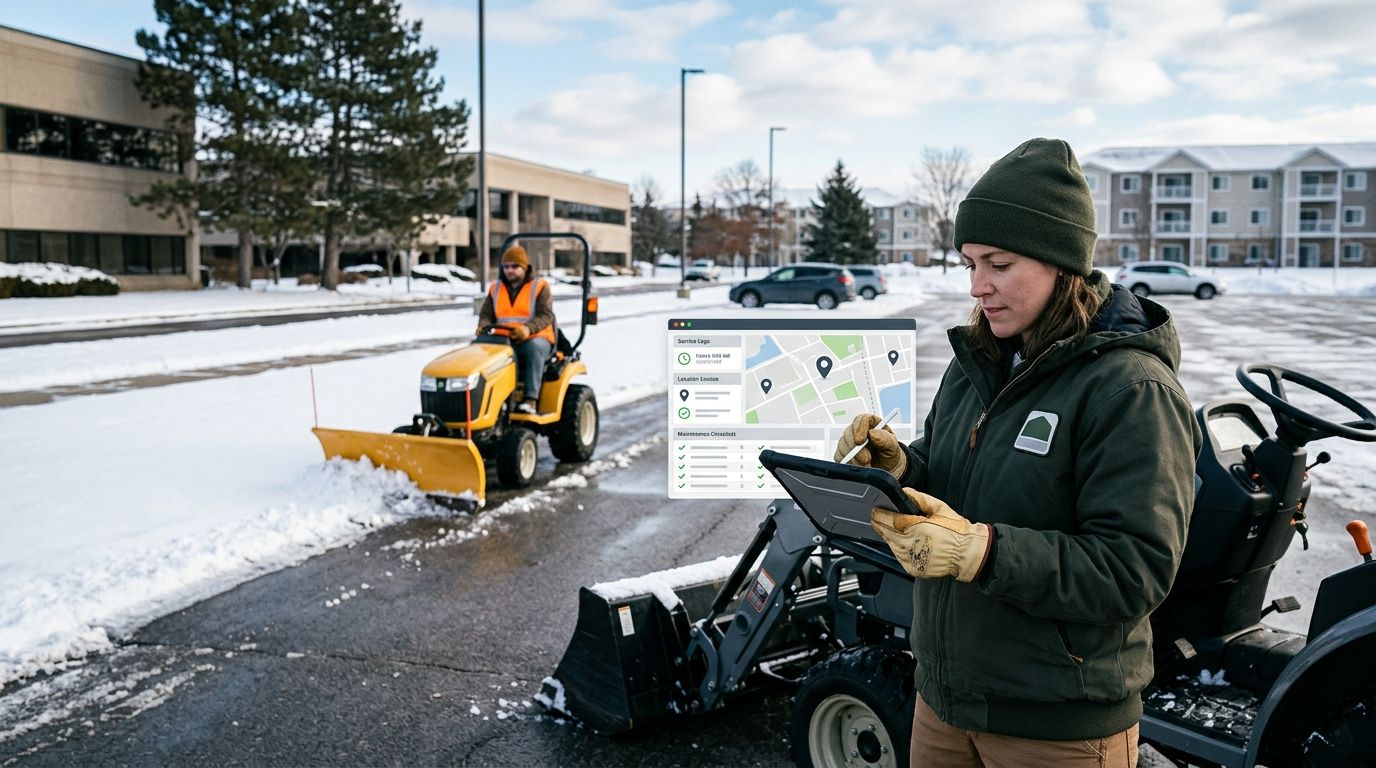
- Foreman clocks in at the first lot with a geo-stamped check-in, tying the truck's actual GPS location to the dispatch timestamp.
- Dispatcher logs the elapsed time from alert to first clock-in as the property's documented response time.
Expected result: a response-time record for every event, not just a memory of "we got there eventually."
Get your property on a documented route
Zero-Tolerance, Seasonal, or Per-Occurrence — pick the trigger that fits your risk tolerance.
Document the dispatch for proof of service
- Attach a timestamped photo of the lot or sidewalk at arrival and at completion.
- Log salt application rate per lot in pounds per acre, not a blanket "salted" entry.
- Record the geo-stamped clock-in and clock-out for every crew member on the route.
- Store the record against the specific storm date so a property manager can pull the full chain — alert, dispatch, arrival, application, completion — for any single event in 2026.
Expected result: a file that answers "were you there, and when" with data, not a phone call.
Pre-treatment de-icing dispatch (the second workflow)
Run the same chain a step earlier when the forecast shows freezing rain or a hard frost with no snow expected. Instead of waiting for a snow trigger that will never fire, dispatch on the pavement-temperature trigger alone, 2-4 hours ahead of the freeze. This is the workflow that matters most for grocery entrances and hospital campuses — see the de-icing and salting for grocery stores guide for entrance-specific application standards — where a dry-looking lot can ice over invisibly before the first flake falls.
Troubleshooting
The alert fires but no snow ever falls. Point forecasts miss occasionally. Log the false alarm and keep the trigger as-is — a missed real event costs more than an unnecessary dispatch.
Crew doesn't confirm within the escalation window. Backup foreman should be pre-assigned by name in the contract, not picked ad hoc at 3am. If this happens more than once a season, the notification chain has a staffing gap, not a weather problem.
Tenant disputes that the lot was serviced. This is exactly what the geo-stamped clock-in and timestamped photos solve — pull the record for that storm date and the dispute ends in one email.
Salt spreader runs dry mid-route. Build a reload checkpoint into the route plan for lots over a set acreage; don't rely on the driver remembering hopper capacity.
Trigger depth disagreement with the client. Put the exact number in the contract addendum before the season, not in a verbal conversation in November.
Customize your workflow
Once the alert-to-dispatch chain is running, extend it to route sequencing — which lots get hit first when one crew covers multiple properties overnight. The snow depth triggers to dispatched plow crews workflow guide covers the plowing side of this same chain in more detail, and the best de-icing and salting companies for parking lots comparison shows how different contractors handle the salting trigger specifically.
FAQ
What is a snowfall alert salting dispatch workflow?
It's a documented chain that connects a weather trigger — snowfall depth or pavement temperature — directly to a crew dispatch, with a geo-stamped clock-in as proof of arrival. It removes the manual judgment call between the alert and the truck leaving the yard.
What snowfall depth triggers a salting dispatch?
Zero-Tolerance contracts dispatch on any measurable accumulation. Seasonal contracts commonly trigger at 2 inches. Per-Occurrence contracts negotiate a specific depth in writing before the season starts.
Does salting dispatch require snow to be falling?
No. A pavement temperature at or below 32°F combined with precipitation in the forecast is enough to trigger a pre-treatment salting dispatch, independent of whether snow accumulation ever occurs.
How much does commercial salting dispatch cost in St. Louis in 2026?
Labor floors commonly run $90/hr for sidewalk crews and $180/hr for plow trucks in the St. Louis metro. Total cost depends on contract type, lot size, and how many triggers fire during the season.
What's the difference between Zero-Tolerance and Seasonal contract triggers?
Zero-Tolerance dispatches on any measurable snow or ice, which raises event frequency but minimizes liability exposure. Seasonal contracts trigger at a set depth, typically 2 inches, trading some coverage for a flatter cost structure.
How do you prove a lot was salted on time?
A documented workflow logs the geo-stamped clock-in time, timestamped arrival and completion photos, and the salt application rate per lot. That record, not a verbal confirmation, is what holds up in a liability dispute.
Can one crew notification chain cover multiple properties?
Yes, but each property needs its own trigger and route position documented separately — a shared crew doesn't mean a shared response-time record.
What happens if the on-call foreman doesn't respond to a dispatch alert?
A properly built chain escalates automatically to a named backup foreman after a set window, commonly 15 minutes, rather than waiting indefinitely on the primary contact.
One last thing
Most dispatch failures in 2026 won't come from missed snow — they'll come from missed ice, because snowfall-depth triggers don't fire on a freezing rain event. If your workflow only watches for accumulation, you have a blind spot exactly where the liability risk is highest. Add the pavement-temperature trigger before the season starts, not after the first claim.