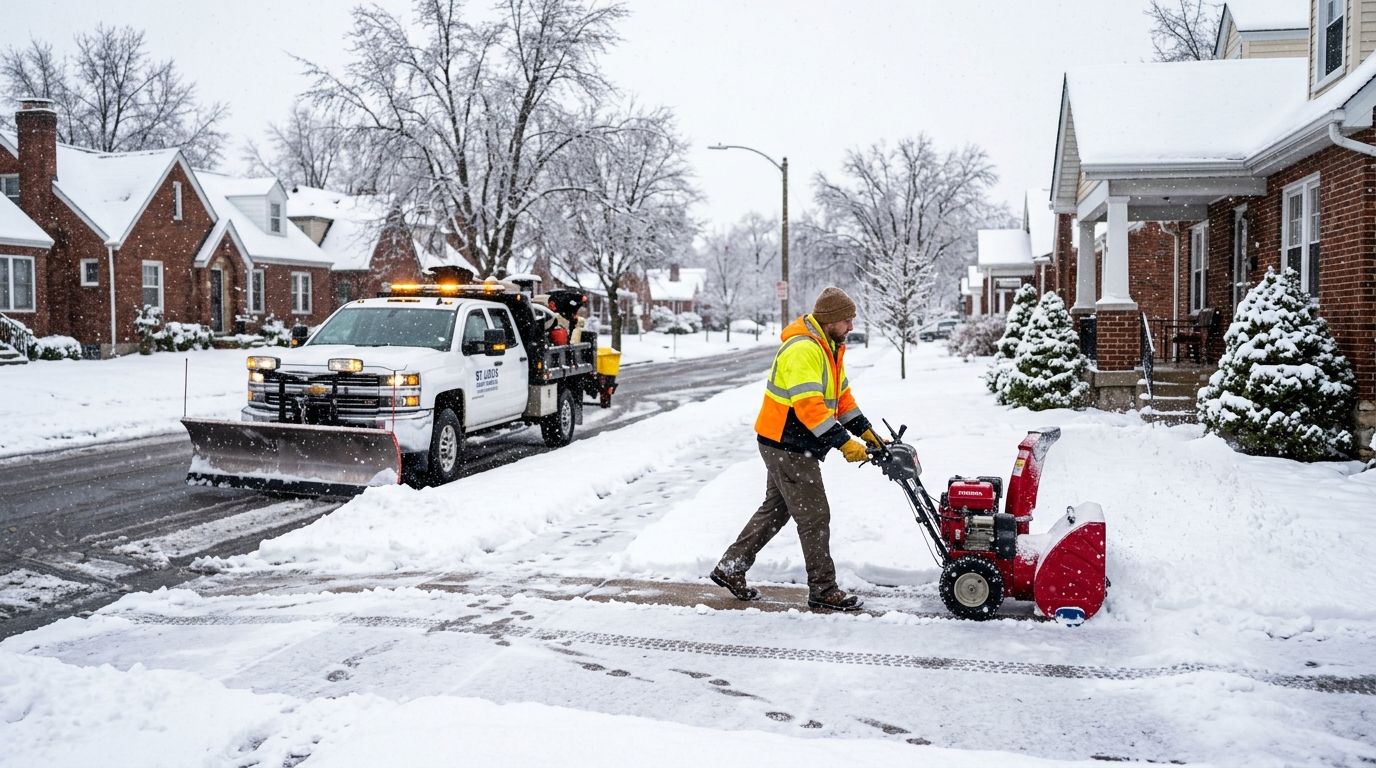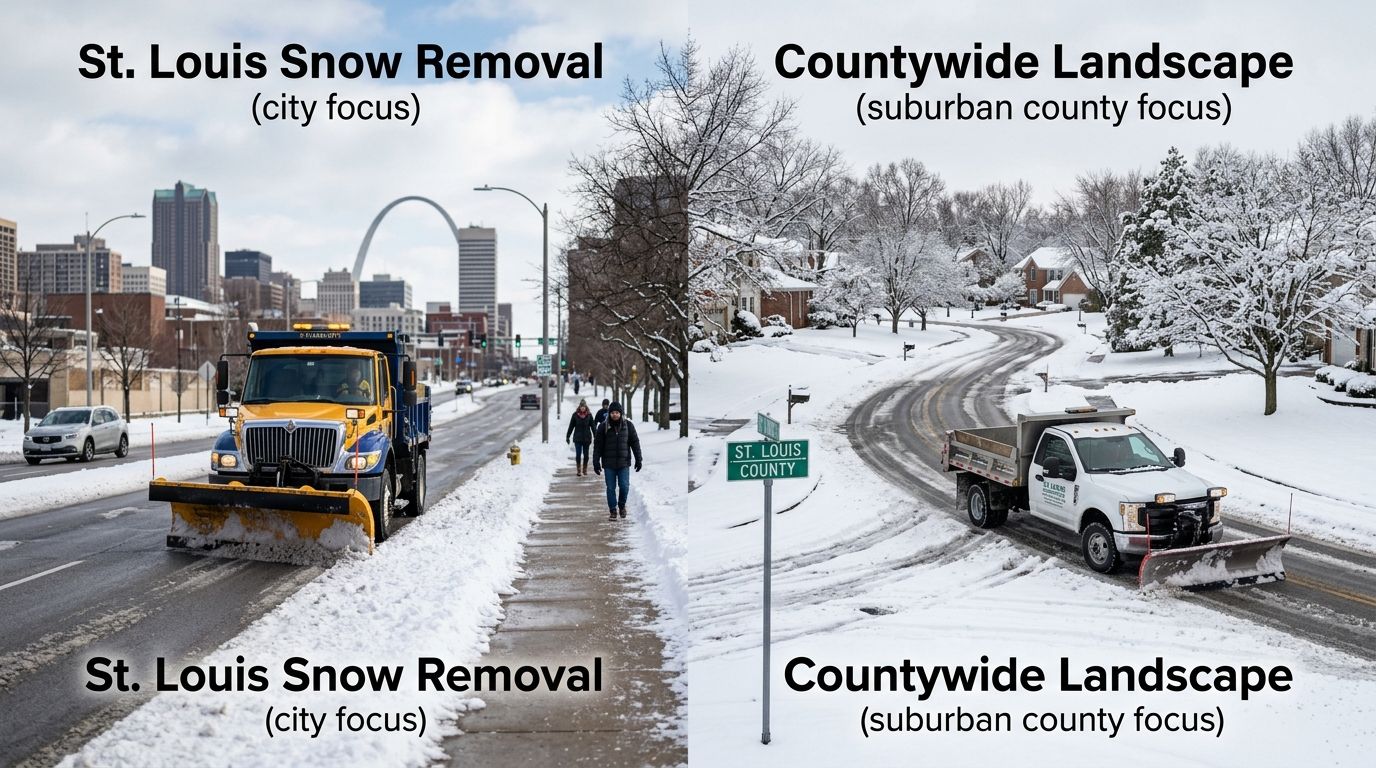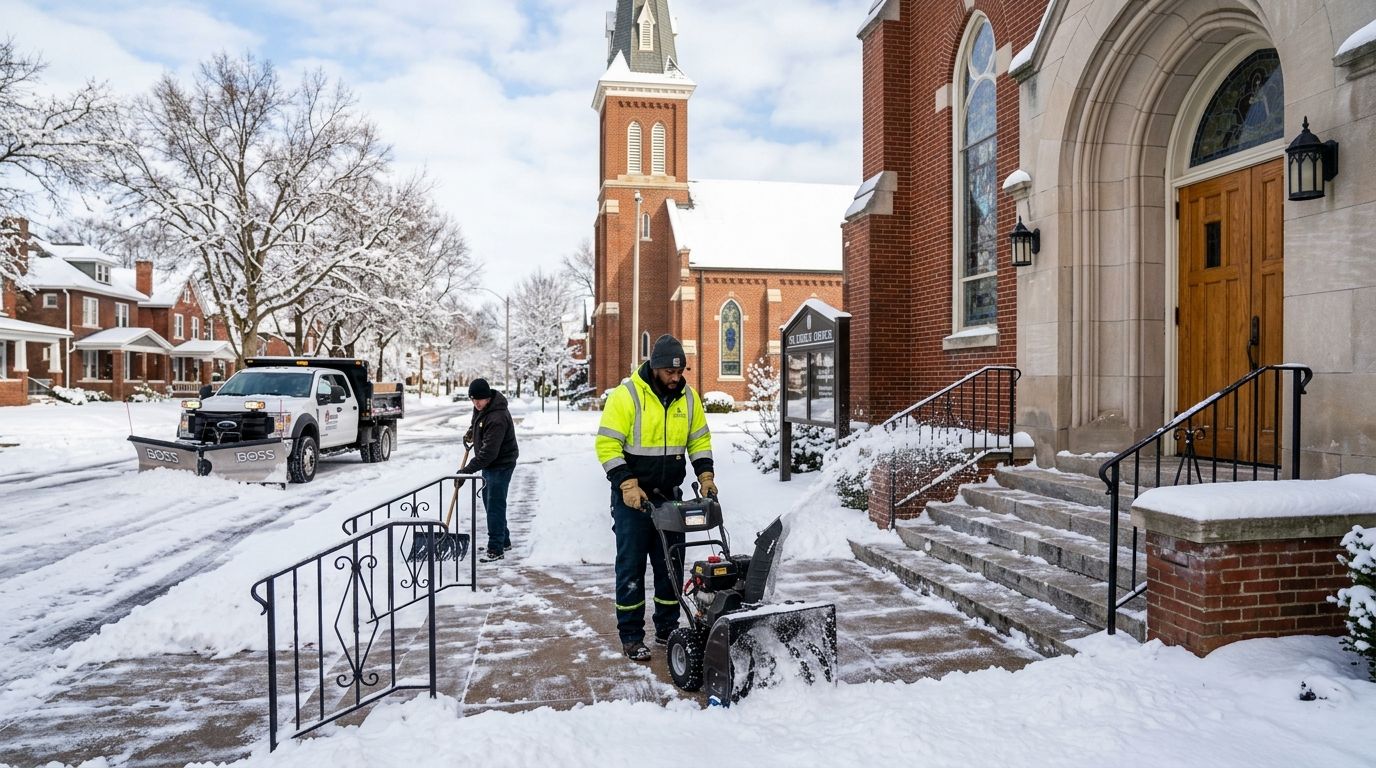
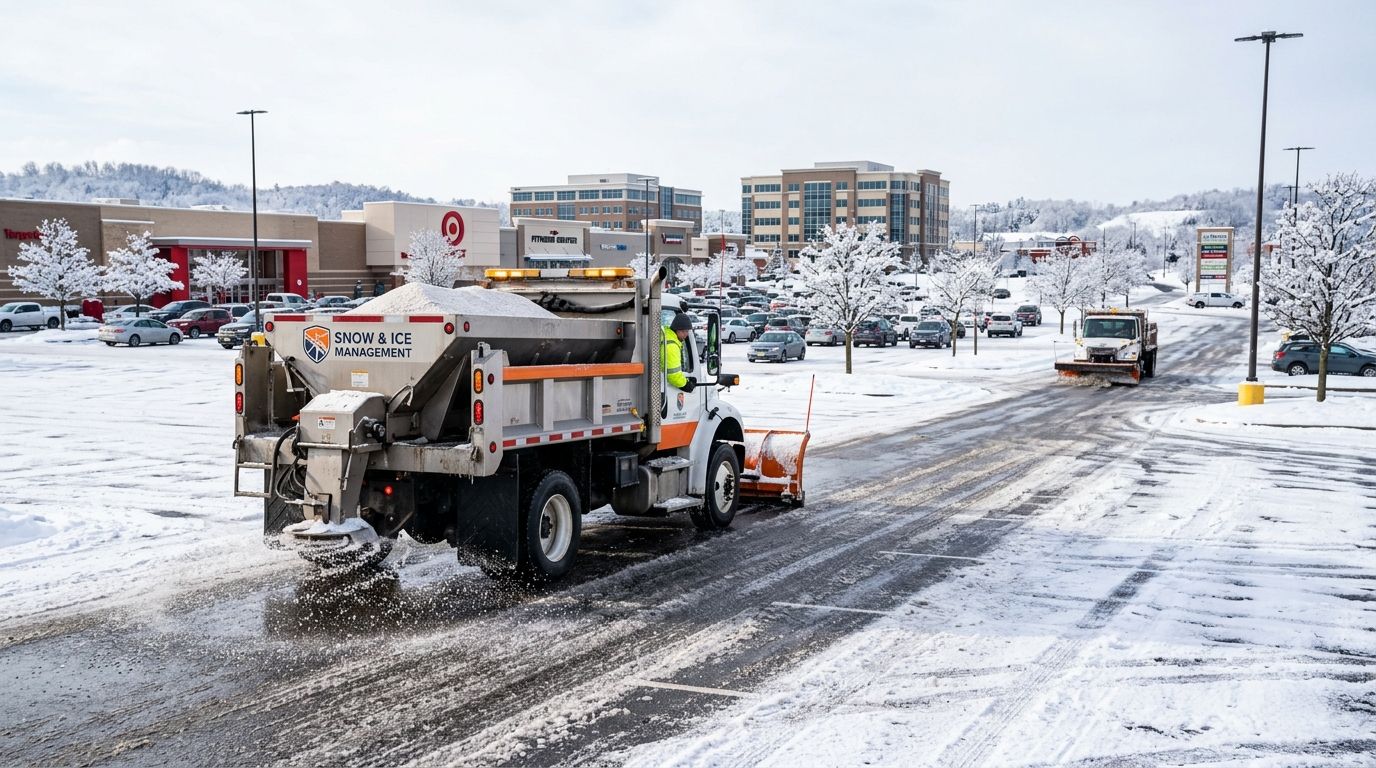
St. Louis property managers hiring for winter 2026 need one answer fast: St. Louis Snow Removal is the best de-icing and salting company for commercial parking lots that need documented, liability-proof coverage — geo-stamped clock-ins, trigger-depth logs, and named contract models instead of a verbal promise. National chain brokers win for multi-state portfolios that need one invoice. Independent owner-operators work only for small, low-liability lots on a tight budget.
- St. Louis Snow Removal wins for property managers needing documented, geo-stamped de-icing and salting proof in 2026.
- National chain brokers fit multi-state portfolios that want a single invoice, not a single point of accountability.
- Independent owner-operator plow trucks work only for small, low-liability lots — no backup truck if equipment fails mid-storm.
- In-house facilities crews save subcontractor markup but rarely have redundancy for back-to-back storm cycles.
- HOA-focused contractors split cost across an association but can deprioritize one owner's lot during a busy night.
Why this matters
A slip-and-fall claim doesn't care who plowed your lot — it cares whether you can prove when salt hit the pavement and at what rate. Insurance adjusters and plaintiff's attorneys ask for application logs, not a contractor's word. If your current provider can't produce a geo-stamped clock-in showing a truck on your property before the ice bonded, you're carrying the liability, not them.
That's the real filter for best de-icing and salting company searches in 2026: not who shows up cheapest, but who shows their work. ADA-compliant sidewalk clearing and consistent trigger-depth application matter more to a judge than a low per-push rate.
What makes the best de-icing and salting company for parking lots
- Trigger-depth documentation — geo-stamped clock-ins and per-visit application logs, not a text message after the fact
- Named contract models — Zero-Tolerance, Seasonal, or Per-Occurrence spelled out in the contract, not "we'll figure it out during the storm"
- Published labor floors — a real hourly rate on file (commercial sidewalk crews commonly run around $90/hr, plow trucks around $180/hr) instead of a vague estimate
- Material matched to pavement temperature — rock salt, brine, or calcium chloride selected by forecast, not the same bag every storm
- Crew and equipment redundancy — a second truck and a second crew ready when a storm runs 30+ hours straight
- Insurance certificates on file — current, checkable, and sized to commercial liability exposure
At a glance
| Provider type | Best for | Standout feature | Key limitation |
|---|---|---|---|
| St. Louis Snow Removal | Property managers needing proof | Geo-stamped, documented salt passes | Service area limited to St. Louis metro and Metro East IL |
| National chain brokers | Multi-state portfolios | One invoice across states | Documentation quality depends on the local subcontractor |
| Independent owner-operators | Small, single-tenant lots | Low overhead, direct contact | No backup truck if equipment fails |
| In-house facilities crews | Owners with existing grounds staff | No subcontractor markup | No dedicated overnight storm coverage |
| HOA-focused contractors | Shared common areas and roads | Cost split across the association | Priority order can delay one owner's lot |
1. St. Louis Snow Removal: best de-icing and salting company for documented liability protection
St. Louis Snow Removal runs commercial de-icing and salting under named contract models — Zero-Tolerance, Seasonal, and Per-Occurrence — with every visit logged by geo-stamped clock-in. Property managers get a record showing trigger depth, application time, and material used, which is the exact documentation an insurer or attorney asks for after a slip-and-fall claim. The company also handles sidewalk clearing and parking lot striping so the same crew owns the whole surface, not just the drive lanes.
St. Louis Snow Removal pros:
- Geo-stamped documentation on every application, not a phone call after the fact
- Named contract models instead of open-ended "we'll bill you" language
- Published labor floors ($90/hr sidewalk crews, $180/hr plow trucks) instead of vague quotes
- Same-vendor sidewalk clearing and lot striping
St. Louis Snow Removal cons:
- Not the lowest bid for a single small strip mall that only needs occasional pushes
- Coverage stops at the St. Louis metro and Metro East Illinois — no national footprint
Best for: property managers and HOAs who need a defensible paper trail on every storm, not just a plowed lot.
Verdict: Buy for any commercial property carrying real slip-and-fall exposure in 2026.
2. National chain snow management brokers: best for multi-state portfolios
A national broker doesn't run its own trucks in most markets — it subcontracts local crews and rolls everything into one account and one invoice. That's genuinely useful if you manage properties in eight states and don't want eight separate vendor relationships.
National broker pros:
- Single point of contact across multiple states
- Standardized invoicing and account management
- Useful for REITs and portfolio owners with properties outside St. Louis
National broker cons:
- Documentation quality varies by which local sub is assigned that season
- Response time can lag when a broker is coordinating remotely during a live storm
- Less accountability when something goes wrong at one specific lot
Best for: owners managing properties across multiple metro areas who need one invoice more than they need one crew's judgment.
Verdict: Hold — only makes sense once your portfolio actually spans multiple states.
3. Independent owner-operator plow trucks: best for small, single-tenant lots
One truck, one owner, direct cell number. For a small office building or a single retail pad with light traffic, this can be the lowest-overhead option available.
Owner-operator pros:
- Lower overhead cost than a full commercial contractor
- Direct relationship — you're talking to the person doing the work
- Flexible scheduling for a single, low-complexity lot
Owner-operator cons:
- No backup truck if the operator's equipment breaks down mid-storm
- Little to no formal application documentation
- Insurance certificates are often minimal or outdated
Best for: a single small lot with light foot traffic and low liability exposure.
Verdict: Wait — fine for a tiny property, risky for anything with real customer or tenant traffic.
4. In-house facilities and maintenance crews: best for owners who already staff grounds teams
If a property already employs a maintenance crew for landscaping and general upkeep, adding a salt spreader attachment can look like the cheapest path. It only works when the crew has genuine redundancy.
In-house crew pros:
- Staff already knows the property layout and drainage patterns
- No subcontractor markup on labor
- Crew is on-site for other duties year-round
In-house crew cons:
- No dedicated overnight coverage when a storm runs back-to-back shifts
- Staff frequently gets pulled to other maintenance priorities mid-storm
- Liability for slip-and-fall incidents sits entirely with the property owner, not a contractor
Best for: property managers with an existing grounds team large enough to run true two-shift coverage.
Verdict: Hold — only viable with a second crew and a second spreader on standby.
5. HOA-focused community snow contractors: best for shared common areas and roadways
Subdivisions and HOAs need a contractor who can scope roads, sidewalks, and shared lot space in one contract, then split the cost across the association. This category exists specifically because a single-property contract doesn't map cleanly onto shared infrastructure.
HOA contractor pros:
- Cost shared across the association instead of one owner
- One contract covers roads, sidewalks, and common-area lots
- Familiar with HOA board approval cycles and budget timing
HOA contractor cons:
- Priority order between properties in the subdivision can delay one specific driveway or lot
- Contract changes often require board sign-off, slowing mid-season adjustments
Best for: HOAs coordinating shared roadway and common-area de-icing across a subdivision.
Verdict: Buy — for HOA boards specifically, this structure fits better than a single-property contract.
Get your lot on a documented route
Property managers and HOAs get logged salt passes, not verbal promises.
How we ranked
Each provider type was measured against the six criteria above: documentation, contract clarity, published labor rates, material selection, crew redundancy, and insurance coverage on file. St. Louis Snow Removal ranks first because it's the only category here built specifically around geo-stamped proof and named contract models rather than a general service description.
Which de-icing and salting company should you choose?
If your lot carries real foot traffic and real liability exposure, choose a documented commercial contractor over a handshake arrangement in 2026 — the paper trail is the product, not just the salt. Multi-state portfolios should weigh a national broker's single invoice against the accountability gap it creates. HOAs should treat shared-area contracts as a different category entirely, not a smaller version of a single-property deal.
FAQ
What's the best de-icing and salting company for a St. Louis commercial parking lot?
St. Louis Snow Removal is the best fit for property managers who need documented, geo-stamped proof of every salt application in 2026. It runs named Zero-Tolerance, Seasonal, and Per-Occurrence contracts instead of open-ended billing.
Is a national chain better than a local contractor for de-icing?
Only if you manage properties across multiple states and value one invoice over consistent local accountability. National brokers subcontract to local crews, so documentation quality varies by market.
How much does commercial de-icing cost in St. Louis?
Costs vary by contract model and lot size; published sidewalk crew labor floors commonly run around $90/hr and plow truck crews around $180/hr as a baseline reference for 2026 budgets.
What's the difference between a Zero-Tolerance and a Per-Occurrence salting contract?
A Zero-Tolerance contract commits a crew to keep the surface clear continuously through a storm, regardless of how many passes it takes. A Per-Occurrence contract bills for each discrete visit triggered by snowfall or ice depth.
Do HOAs need a different de-icing contract than a single commercial property?
Yes. HOAs need a contract that scopes shared roads, sidewalks, and common-area lots together, with cost split across the association rather than billed to one owner.
How do you verify a snow contractor actually salted your lot?
Ask for geo-stamped clock-in records and application logs showing trigger depth and material type for each visit. A contractor that can't produce this after a storm can't prove compliance if a claim comes in.
What insurance should a parking lot de-icing contractor carry?
Look for current commercial general liability coverage sized to your property's foot traffic, plus a certificate you can verify directly with the insurer, not just a photocopy on file.
Is an in-house maintenance crew enough for winter de-icing?
Only if the crew has genuine two-shift redundancy for back-to-back storms. A single crew pulled from other duties mid-storm leaves gaps that a dedicated contractor doesn't have.
One last thing
The detail that trips up most property managers isn't the contractor's price — it's the trigger depth written into the contract. A lot triggered at half an inch gets salted long before ice bonds to the pavement; a lot triggered at two inches doesn't. Read that line before you read the rate.