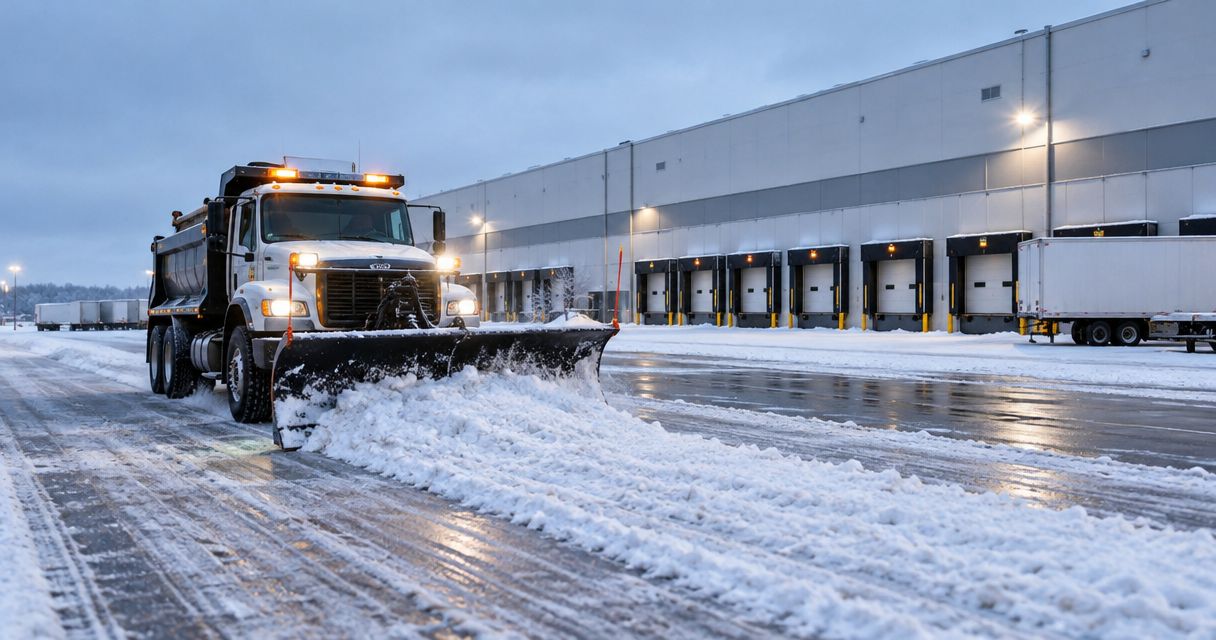
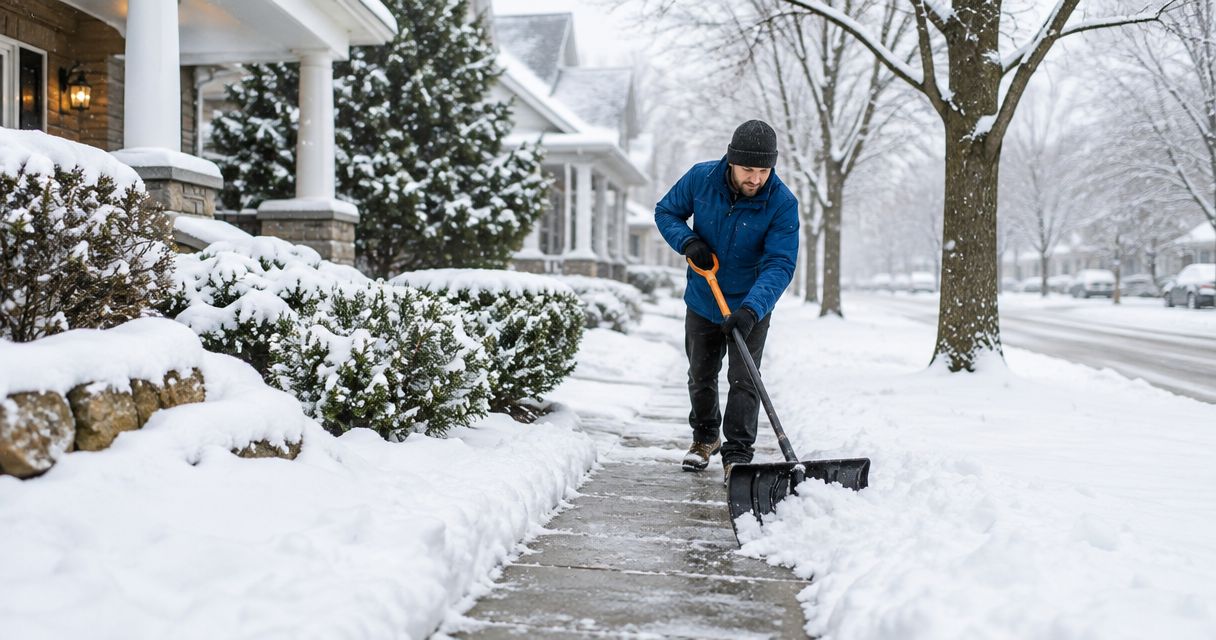
The cost of sidewalk snow clearing by walkway length is not a flat per-foot number. It is length times width, multiplied by the number of visits, then adjusted for de-icing and documentation. This page gives the 2026 area table that every quote rests on and shows where the dollar figures come from.
- Sidewalk snow clearing cost by walkway length scales with square footage: length times width, per visit.
- A 500-foot walkway at 4 feet wide is 2,000 square feet; at 5 feet wide it is 2,500.
- ADA routes need at least 36 inches of clear width, and 60 inches where two wheelchairs must pass.
- Visit count and de-icing change a 2026 seasonal total more than length does.
- Get a measured quote: St. Louis Snow Removal prices from documented length and width, not guesses.
Why walkway length alone misleads in 2026
Two 500-foot walkways can cost very different amounts to clear. One is 3 feet wide with no slope. The other is 6 feet wide, crosses two driveways and ends at a ramp.
Contractors price on area, access and repeat visits. Length is the number you know first, so it gets quoted first. It is still only one input.
If a vendor quotes you a per-foot rate with no width stated, ask for the width they assumed. A per-foot price without a width cannot be compared with anything.
Benchmark table: walkway area by length and width (2026)
The table below converts walkway length into square feet at three common widths. Every cell is arithmetic: length in feet times width in feet. Use it to check that a quote's assumed area matches your site.
| Walkway length | 3 ft wide (36 in, ADA minimum) | 4 ft wide | 5 ft wide |
|---|---|---|---|
| 50 ft | 150 sq ft | 200 sq ft | 250 sq ft |
| 100 ft | 300 sq ft | 400 sq ft | 500 sq ft |
| 250 ft | 750 sq ft | 1,000 sq ft | 1,250 sq ft |
| 500 ft | 1,500 sq ft | 2,000 sq ft | 2,500 sq ft |
| 1,000 ft | 3,000 sq ft | 4,000 sq ft | 5,000 sq ft |
| 2,500 ft | 7,500 sq ft | 10,000 sq ft | 12,500 sq ft |
Area grows in direct proportion to both length and width. Add one foot of width to a 1,000-foot walkway and you add 1,000 square feet to every visit.
The widest spread in the table is between a 50-foot, 3-foot-wide path (150 sq ft) and a 2,500-foot, 5-foot-wide campus loop (12,500 sq ft). That is more than an 80x difference in area, and the quote should reflect it.
Limitation: this table gives area, not dollars. Per-visit and seasonal prices depend on the contract model, equipment and site access, and they are set from a measured property. The dollar ranges live on the commercial sidewalk snow clearing cost guide, so they are not repeated here.
What the table tells you
The 500-foot row is the typical mid-size property reference: 2,000 square feet at 4 feet wide, 2,500 at 5 feet wide. It is the row to hold your quote against.
The 50-foot and 100-foot rows are storefront and small-office walkways. At these sizes, minimum visit charges usually matter more than area. Ask whether a minimum applies.
The 1,000-foot and longer rows are campuses, apartment complexes and retail centers. Crew time per visit starts to dominate, so the timing question comes first. The 500-foot walkway timing guide covers it.
What moves the price at any length
Walkway length sets the area. These factors set the multiplier on it:
- Width. Wider paths cost more per visit. Width is bounded below by accessibility rules (see the next section).
- Trigger depth. The snowfall depth that sends a crew determines how many visits you pay for in a season.
- Visits per storm. Long-duration events can need repeat passes before the pavement is safe.
- De-icing. Clearing removes snow. Salting treats the ice that remains. Many quotes price them separately.
- Obstacles. Steps, ramps, bollards, drainage channels and tight corners slow hand and compact-equipment work.
- Documentation. Geo-stamped clock-ins and photos have a cost, and they are what you rely on after a slip-and-fall claim.
- Contract model. Per-occurrence, seasonal and zero-tolerance structures split risk differently. The contract-type pricing benchmarks compare them.
Width floors: ADA clearance in 2026
The accessible route standard sets a minimum clear width of 36 inches, and 60 inches where two wheelchairs need to pass. A walkway cleared narrower than that is not an accessible route in winter, whatever its summer width.
That is why the table starts at 3 feet. Quoting below that width saves nothing legally. It creates exposure for the property owner.
If your property serves the public, clear to the full paved width or at least the accessible-route width. The ADA sidewalk clearance width benchmarks cover St. Louis and Metro East specifics.
How to use these benchmarks
- Measure before you request quotes. Get total linear feet and average width. Multiply them. Compare the result with the row that matches your property.
- Make every bidder state the same assumptions. Same area, same trigger depth, same visits per storm, same de-icing scope. Otherwise you are comparing different services.
- Ask what the quote includes beyond clearing. Salting, re-visits and proof-of-service records should each be named as in or out.
- Match the contract model to your budget tolerance. Per-occurrence pricing varies with the season. Seasonal pricing fixes the line item.
For crews that handle commercial walkways with documentation, see the best sidewalk snow clearing crews for commercial properties.
How St. Louis Snow Removal quotes a walkway
St. Louis Snow Removal prices sidewalk clearing for property managers and businesses across the St. Louis metro and Metro East Illinois from measured length and width. Each visit is documented, so the invoice and the service record match.
Verdict: if you manage a property where a slip-and-fall claim is a real exposure, buy a measured, documented quote and skip any flat per-foot offer that does not state width and trigger depth.
Honest pros and cons of area-based pricing:
- Pro: you can audit the quote against your own site measurements.
- Pro: adding a section of walkway changes the price predictably.
- Con: it requires a site measurement first, so an instant number is not possible.
- Con: per-occurrence billing still varies with snowfall, even when the area is fixed.
FAQ
How much does sidewalk snow clearing cost by walkway length?
It depends on area, not length alone. A 500-foot walkway is 2,000 square feet at 4 feet wide and 2,500 at 5 feet wide, and the quote scales from there. See the commercial sidewalk cost guide for current dollar figures.
Is sidewalk snow clearing priced per foot?
Sometimes, but a per-foot rate is only meaningful with a stated width. Ask what width the rate assumes before comparing bids.
What is the minimum sidewalk width I should clear?
Clear at least 36 inches for an accessible route, and 60 inches where two wheelchairs must pass. Narrower clearing leaves the route non-compliant.
Does de-icing come with snow clearing?
Not automatically. Many contractors price clearing and salting separately, so confirm in writing that de-icing is in the quote.
Is a seasonal contract cheaper than per-visit pricing for walkways?
A seasonal contract fixes your cost, while per-visit pricing moves with snowfall. Which is cheaper depends on how many visits the season brings.
What information do I need to get a walkway quote?
Total linear feet, average width, obstacles such as steps and ramps, and whether you need de-icing and service records. Those four items let a contractor quote from area.
One last thing
The cheapest line on a 2026 walkway quote is often the one with the narrowest assumed width. A path priced at 3 feet wide can look 25% cheaper than the same path priced at 4 feet, and the difference is the area you are not getting cleared. Check width first, price second.