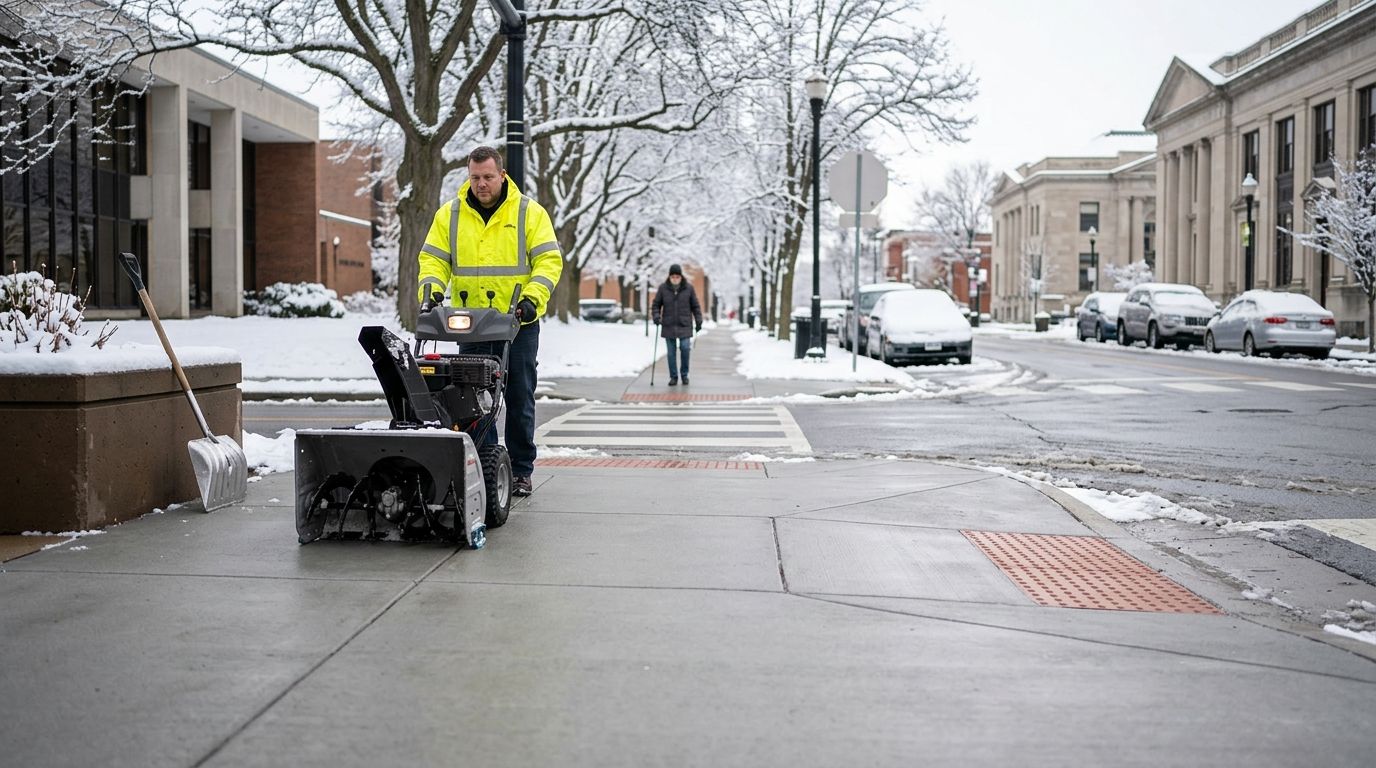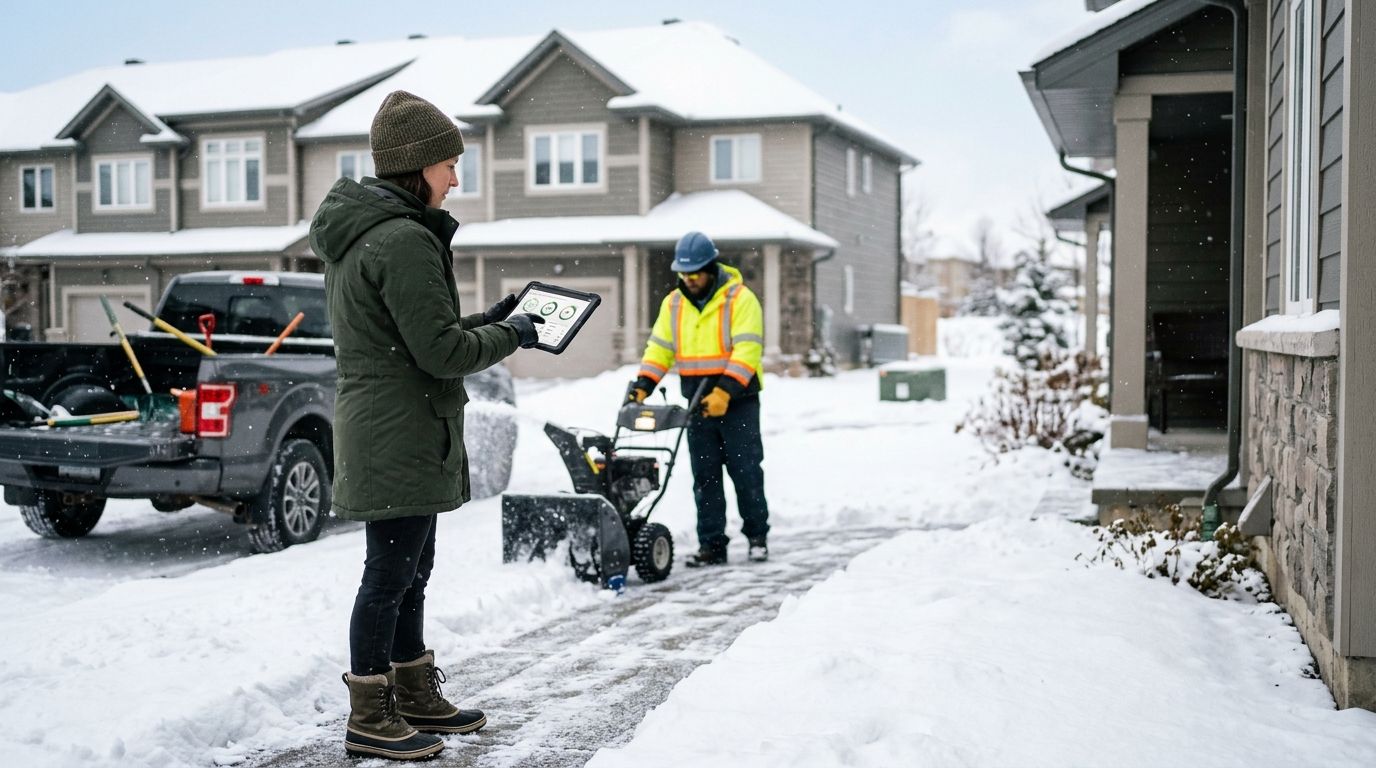

When a storm alert hits, the gap between "we saw the forecast" and "a plow truck is on site" decides whether a parking lot is compliant at 6 AM or a liability claim by noon. This workflow turns a National Weather Service alert into a dispatched crew with a geo-stamped clock-in, so property managers and homeowners aren't calling a dispatcher to ask if anyone is coming.
- A storm alert emergency snow crew dispatch workflow triggers crews at a preset depth, not a phone call, in 2026.
- Zero-Tolerance contracts dispatch on any accumulation; Per-Occurrence contracts wait for a property manager call-in.
- Labor floors run $90/hr for sidewalk crews and $180/hr for plow crews once a crew is on site.
- Escalation to a 24-hour emergency crew triggers automatically if the primary route crew misses its clock-in window.
- Geo-stamped clock-ins and timestamped photos document every dispatch for slip-and-fall defense.
Why this matters
A storm doesn't wait for a phone tree. Snow that starts at 2 AM and hits a 2-inch trigger depth by 5 AM needs a crew moving before the property manager wakes up, not after a voicemail gets returned.
The workflow below removes the manual call chain and replaces it with a documented, timestamped sequence: alert received, trigger matched, crew dispatched, arrival logged. That record is what holds up when a tenant slips on an entryway before the first pass and a lawyer starts asking who knew what, when. See how timestamped snow photo documentation closes that gap for a slip-and-fall file.
Before you start
- Know your contract type on file — Zero-Tolerance, Seasonal, or Per-Occurrence. Each one triggers dispatch differently, and mixing them up means a crew rolls to a site that didn't authorize it, or skips one that did.
- Have a live site priority list — gate codes, lockbox codes, and an on-site contact for every property, updated before the season starts, not during the first storm.
- The gotcha: a Winter Storm Watch is not a dispatch trigger. Only a measured accumulation or a Warning-level alert should move a crew. Dispatching on a Watch burns a truck roll on a storm that might not land, and that cost doesn't come back.
Set up your storm alert trigger
- Pick a weather source with real lead time. A National Weather Service Winter Storm Warning or a radar-based feed with measured snowfall totals works. A generic forecast app with a "chance of snow" badge does not.
- Match trigger depth to contract type. Zero-Tolerance sites dispatch at any accumulation. Seasonal contracts commonly use a 1 to 2-inch trigger depth. Per-Occurrence contracts wait on a call from the property manager before a crew moves.
- Log the alert timestamp. This is the record that starts the liability clock — it's the first entry in the documentation file, before a single plow blade touches pavement.
Expected result: every site on the route list has a trigger condition attached to it, and the alert that fires it is timestamped the moment it comes in.
Build the dispatch escalation ladder
- Route the alert to the primary crew first, ranked by proximity to the site — the closest truck gets the job, not the next one in a rotation.
- Set an escalation window. If the primary crew doesn't clock in within that window, the alert bumps to the on-call supervisor automatically.
- Supervisor reassigns to the 24-hour emergency crew. This is the crew held in reserve specifically for the storms where primary routes get overloaded — see 24-hour emergency snow removal companies in St. Louis for what that coverage actually looks like across the metro.
Expected result: no site sits without a crew status update inside the escalation window, even during a multi-inch overnight event.
Route the crew and confirm arrival
- Crew clocks in with a geo-stamped mobile check-in at the site entrance — this is the timestamp that anchors everything downstream.
- Crew works the checklist tied to that contract type — plow pass, de-ice application, sidewalk clearing, in the sequence the contract specifies.
- Timestamped before/after photos go into the documentation file immediately, not at the end of the storm cycle.
Expected result: a property manager or homeowner has a documented arrival record without a single phone call to ask "are you there yet."
Residential snow-route dispatch vs. commercial contract dispatch
The same alert-to-crew logic runs a second workflow for homeowners enrolled in a snow route. The trigger source is identical — a measured storm alert — but the escalation ladder is shorter because residential routes don't carry Zero-Tolerance clocks.
Homeowners enrolled in a snow route get dispatched on the route's scheduled pass after a trigger depth is hit, not on-demand. The full sequence, from enrollment to first plow, is covered in snow route enrollment to first plow after storm workflow — worth reading before assuming residential and commercial dispatch behave the same way, because they don't.
Troubleshooting
Crew clocks in late because of storm traffic. The escalation ladder should already be moving to backup before this becomes a problem — if it isn't, the escalation window is set too long for the storm severity.
Weather feed issues a Warning but no measurable snow falls locally. Confirm against radar-measured accumulation before dispatching. St. Louis storms frequently split between the metro core and Metro East Illinois, and a blanket alert without local confirmation wastes a truck roll.
Property manager doesn't know a crew arrived. This is a notification gap, not a dispatch gap — the fix lives in automatically notify tenants when snow removal crews arrive on site, not in the dispatch logic itself.
Documentation gap shows up during a claim review. If timestamped photos or geo-stamped clock-ins are missing for a specific pass, the trigger step above was skipped — go back and confirm the alert timestamp was logged before dispatch, not after.
Pre-treatment salting didn't happen ahead of a freeze event. Storm dispatch and pre-treatment are two separate triggers. The salting-specific version of this workflow is covered in weather forecast to pre-treatment salting workflow.
Customize your workflow
Once the storm-to-crew sequence is running, extend it. Connect proof-of-service logs to whatever property management software runs the portfolio, so the documentation file above doesn't live in a separate silo from lease records and maintenance tickets. Invoicing follows the same logic — dispatch records that already carry a timestamp and a labor floor ($90/hr sidewalk, $180/hr plow) should flow straight into accounting without manual re-entry.
Get your site on a dispatch route
Zero-Tolerance, Seasonal, or Per-Occurrence — set up your storm trigger before the next alert.
FAQ
What triggers a storm alert emergency snow crew dispatch?
A measured snowfall accumulation or a National Weather Service Warning-level alert triggers dispatch, not a forecast or a Watch-level alert. The specific depth depends on the contract type — Zero-Tolerance dispatches on any accumulation, Seasonal contracts typically use a 1 to 2-inch trigger.
How fast should a snow crew arrive after a storm alert in St. Louis?
Arrival speed depends on route proximity and contract type, which is why the escalation ladder exists — if the primary crew can't reach a site inside its window, the job moves to the on-call supervisor and then to the 24-hour emergency crew.
What's the difference between Zero-Tolerance and Per-Occurrence snow contracts?
Zero-Tolerance contracts dispatch a crew on any measurable accumulation, no call needed. Per-Occurrence contracts wait for the property manager to call in the request before a crew moves.
Does a Winter Storm Watch count as a dispatch trigger?
No. A Watch means conditions are possible, not confirmed. Dispatching on a Watch risks a wasted truck roll; the trigger should be a measured accumulation or a Warning-level alert.
How much does emergency snow crew dispatch cost per hour in 2026?
Labor floors run $90/hr for sidewalk crews and $180/hr for plow crews once a crew is dispatched to a site in 2026. Actual site cost depends on contract type and storm duration.
What happens if the primary crew can't reach a site during a storm?
The escalation ladder reassigns the job automatically — first to an on-call supervisor, then to the 24-hour emergency crew held in reserve for exactly this scenario.
How is snow removal documented for liability protection?
Every dispatch generates a geo-stamped clock-in at arrival and timestamped before/after photos, filed together as a documentation record tied to the original alert timestamp.
Can homeowners get 24-hour emergency snow dispatch too?
Residential snow routes run on a scheduled-pass model triggered by the same storm alerts, but without the Zero-Tolerance escalation clock that commercial Zero-Tolerance sites carry.
One last thing
The escalation ladder is the part most contracts skip entirely — a single-crew dispatch plan with no backup step is the most common gap found in commercial snow contracts reviewed for the 2026 season. A storm alert without a documented escalation path just moves the risk from "we didn't know" to "we knew and had no plan B," which is worse in a claim review.