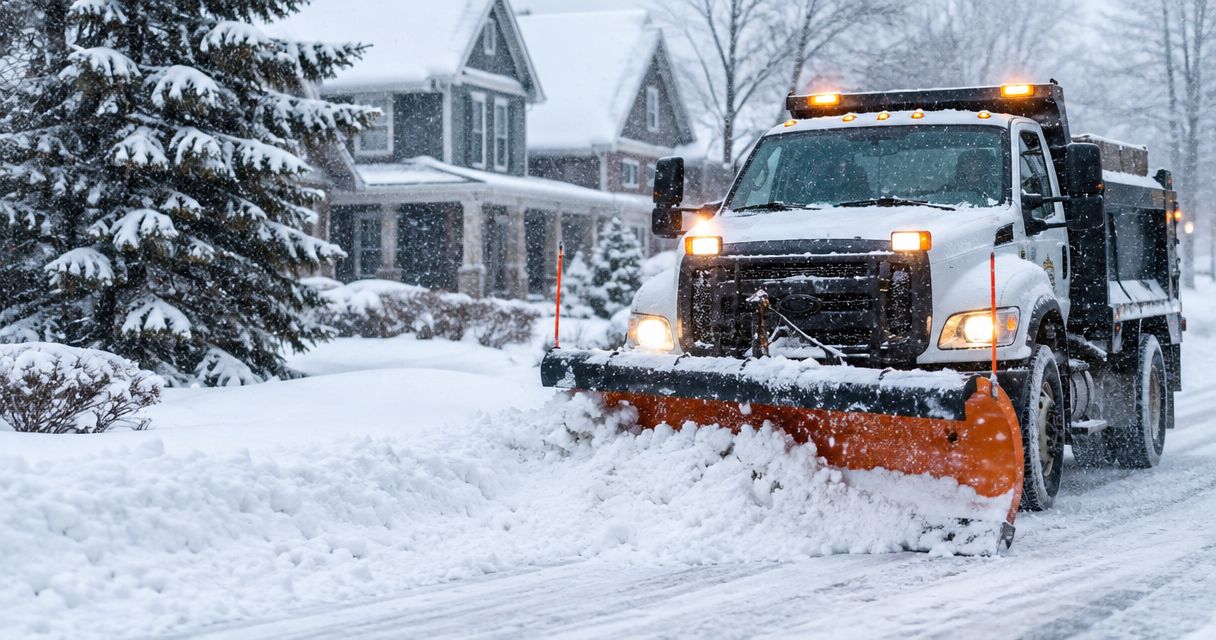
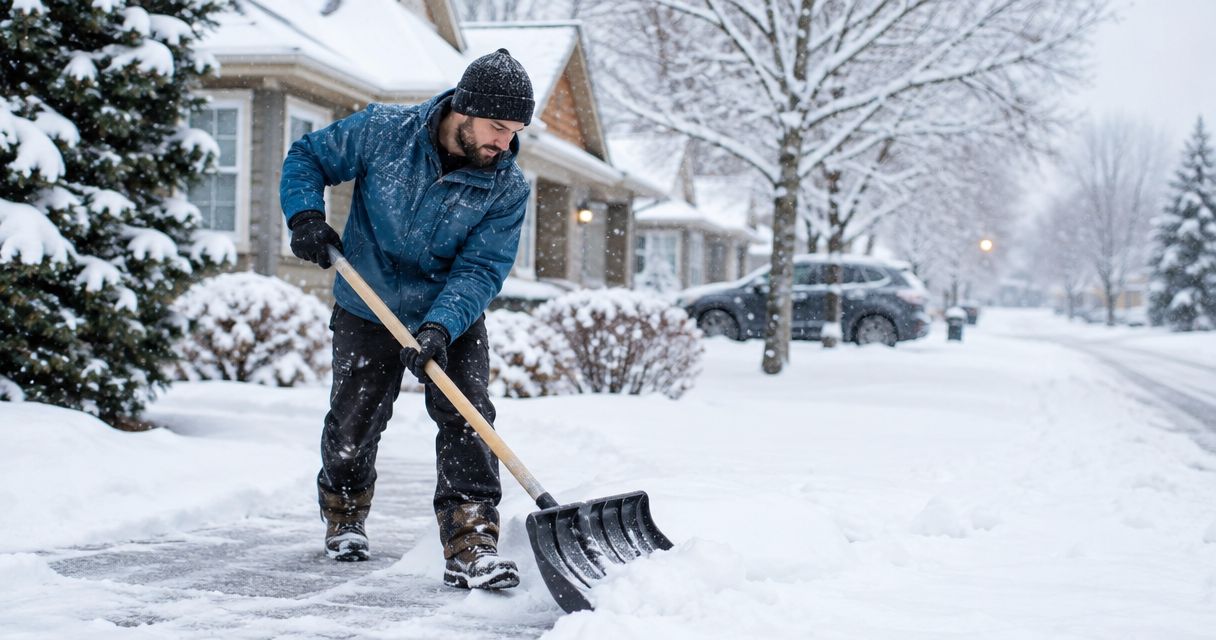
Enrolled residential snow route service is worth it in 2026 for homeowners who want a driveway and sidewalk cleared on a documented trigger-depth schedule instead of calling around mid-storm — the trade-off is you're locked into a route's plow order, not first-in-line the second flakes start falling. Homeowners who rarely see more than an inch of accumulation, or who can reliably clear a short driveway themselves before work, usually don't recoup the value of enrolling. The cost the headline question skips: route service is priced and scheduled around a whole street or subdivision, so your clearing time depends on where your address sits in the route, not how urgently you personally need it done that morning.
- Residential snow route service is worth it for driveways over a single-car width, corner lots, and homeowners without a backup shovel plan.
- Enrollment trades on-demand priority for guaranteed, trigger-based dispatch across a whole plow route in the St. Louis metro.
- Skip it if you clear under 2 inches yourself or sit outside an established route in St. Louis or Metro East Illinois.
- Documented clock-ins and service logs matter for liability even on residential property, not just commercial lots.
- A seasonal route commitment protects against per-push cost creep in a heavy-snow year, not a light one.
Why this matters
On-demand snow plowing sounds flexible until the storm actually hits and every crew in the metro is fielding the same calls at once. St. Louis Snow Removal runs enrolled residential routes precisely because a truck can only clear so many driveways per hour, and pre-committed routes let a crew plan the drive order before the snow starts instead of triaging calls in real time.
The other piece homeowners underweight is documentation. A route service that logs geo-stamped clock-ins and time-of-service records gives you something to point to if a slip happens on your walk before you got home to salt it yourself. That record matters more in a year like 2026, when insurance carriers and HOAs are asking harder questions about who cleared what and when.
Is residential snow route service worth it for St. Louis homeowners?
The honest answer depends on how you'd otherwise get your driveway cleared. Here's the comparison that actually decides it:
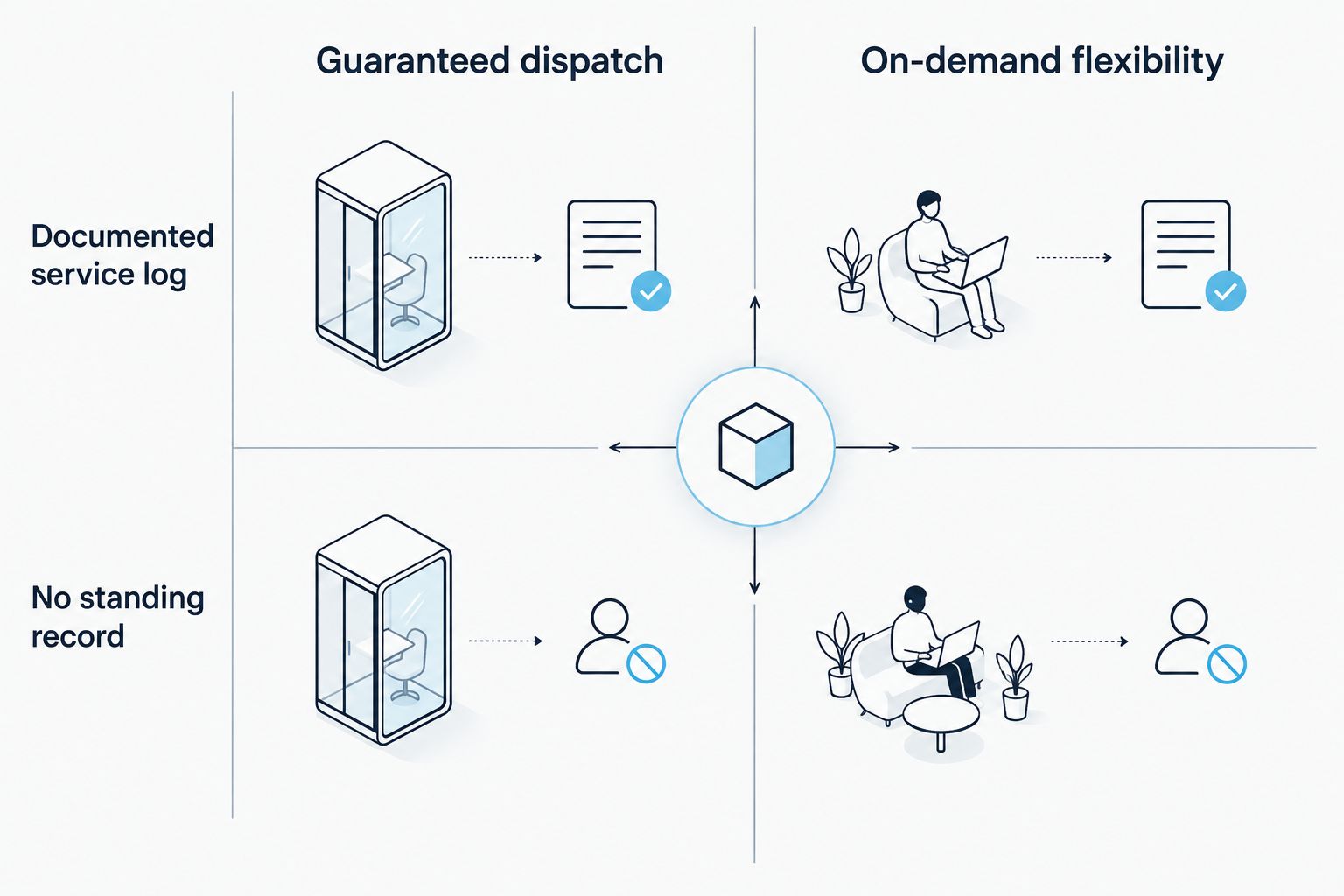
| Factor | Enrolled snow route | On-demand / per-call |
|---|---|---|
| Dispatch trigger | Snow depth threshold set at enrollment | You call or text after snow starts |
| Documentation | Time-stamped service log per visit | Rarely provided |
| Priority | Fixed route order, same driver each storm | First-come, first-served during the storm |
| Best for | Long driveways, corner lots, no backup labor | Light snow years, short driveways, flexible schedules |
| Trade-off | Not first cleared if you're late on the route | No guarantee a crew answers during a big storm |
If your street already has an established route running through it, enrollment usually pays off because the truck is passing your address anyway — you're just formalizing when and how often. If you're on a cul-de-sac far from any existing route, on-demand may be the only option available regardless of what you'd prefer.
Enrolled snow route service: what you're actually buying
Enrollment buys a standing commitment tied to a snow depth trigger — the crew comes back automatically once accumulation crosses that threshold, no phone call required. You get a documented visit log, a consistent driver who learns your driveway layout, and priority within the route rather than the whole metro.
Best for: homeowners with long or wide driveways, elderly residents who can't shovel, and anyone who needs proof of service for an HOA or insurer. Verdict: Enroll if your street already sits on a route.
On-demand (per-call) plowing: what you're actually buying
On-demand means you decide storm by storm whether to call. There's no standing commitment, no route order to wait on, and no obligation if a mild winter means you never need a truck at all.
The cost of that flexibility shows up during the worst storms of the season — the exact moments crews are hardest to reach because everyone else is calling too. Best for: short driveways, homeowners able to shovel, and light-snow-tolerant households. Verdict: Skip enrollment unless last season's storm count changed your mind.
HOA-enrolled routes: what changes when your street is private
When an HOA enrolls the whole subdivision, individual homeowners don't choose in or out — the route and trigger depth are set at the association level, and the documentation trail becomes the HOA's liability record, not just yours. That's worth confirming before you assume you need to enroll separately.
Best for: subdivisions with private roads and a board that wants one documented vendor instead of forty individual arrangements. Verdict: Case-by-case — check with your HOA board before signing anything separately.
Why the value of route enrollment varies
- Driveway length and width — a long or wide driveway takes real labor to shovel by hand every storm; a single-car apron doesn't.
- Route density — how many homes share your driver's route changes how quickly your address gets reached after the trigger fires.
- Trigger depth chosen — a 2-inch trigger brings the truck back more often than a 4-inch trigger; match it to how much snow you can tolerate sitting.
- Backup labor availability — if you or a neighbor can shovel while waiting for the route, on-demand risk matters less.
- Storm frequency that season — a route commitment pays off fastest in a heavy-snow winter and looks like overkill in a light one.
- Location inside St. Louis metro vs. Metro East Illinois — established routes are denser in some corridors than others, which changes how fast enrollment gets you served.
“If you want on-demand snow removal, budget for the wait. If you want your driveway cleared before the school bus runs, enroll in the route.”
Check if your street has an active route
Confirm route coverage before the next storm hits your driveway.
How does snow route enrollment actually work?
Enrollment sets a snow depth trigger for your address, then a crew dispatches automatically once that threshold is crossed on your street, following the snow route enrollment workflow from sign-up to first plow. You don't call after each storm — the trigger does that for you.
Is a seasonal contract cheaper than paying per push?
Whether a seasonal contract beats per-push pricing depends entirely on how many storms actually hit in 2026 — a heavy season favors the seasonal commitment, a light one favors paying only for the pushes you get. Check your street's average storm count before deciding either way.
Can I switch from on-demand to an enrolled route mid-season?
Most residential routes take new enrollments between storms, not during one, since the driver's route order is already set for that event. Switching mid-season is usually possible but takes effect starting with the next triggered dispatch, not the storm already in progress.
FAQ
Is residential snow route service worth it in 2026?
It's worth it in 2026 for homeowners with long driveways, no backup labor, or a need for documented proof of service, and less worth it for short driveways homeowners can shovel themselves.
What is residential snow route service?
It's an enrolled plowing arrangement where a crew dispatches automatically once snow crosses a set depth trigger on your street, instead of you calling after each storm.
How much snow triggers a plow on an enrolled route?
Trigger depth is set at enrollment and varies by property and street; a lower trigger brings the truck back more often than a higher one.
What's the difference between enrolled route service and on-demand plowing?
Enrolled route service dispatches automatically at a set trigger with a documented log; on-demand plowing requires a call or text after the snow starts with no standing priority.
Can I get documented proof my driveway was cleared?
Yes, enrolled route service typically logs a time-stamped service record per visit, which on-demand or informal arrangements rarely provide.
Does residential snow route service cover sidewalks too?
Coverage depends on what's included at enrollment; confirm whether sidewalk clearing is part of your route or a separate add-on.
What happens if my street isn't part of an existing route?
If no route currently runs through your street, on-demand service may be the only option until route density in your area changes.
Is enrolled snow removal worth it for an HOA versus an individual homeowner?
HOAs enrolling a whole subdivision get one documented vendor and record instead of dozens of individual arrangements, which usually makes enrollment worth it at the association level even when it's marginal for a single house.
One last thing
The detail most homeowners miss: a documented service log isn't just for commercial liability. If someone slips on your walk before you've had a chance to salt it, a time-stamped record showing exactly when a crew cleared it — or didn't — is the difference between a quick conversation and a drawn-out dispute. Before enrolling, pull up average snowfall by month for St. Louis and Metro East and match your trigger depth to what a typical 2026 season actually looks like, not to last year's mild winter.