Scheduling parking lot striping before winter protects the paint job itself and keeps fire lanes, ADA spaces, and traffic arrows legible through a St. Louis plow season — but the window to do it right closes the moment pavement temperatures stop cooperating.
- Parking lot striping before winter is worth it when pavement stays above 50°F long enough for the paint to cure fully.
- Wait until spring and faded or worn lines sit under snow, salt, and plow blades for the entire 2026-2027 season first.
- St. Louis Snow Removal ties striping timing to a pavement maintenance calendar instead of guessing at the first cold snap.
- Cold or damp pavement extends cure time and risks lifting paint before the first hard freeze hits.
Why this matters
A parking lot with worn striping doesn't become a liability problem in July — it becomes one in January, when snow cover already hides curb lines and a faded fire lane marking gives a fire marshal or a slip-and-fall attorney one more thing to point at. Property managers who wait for spring are betting that nobody needs a clearly marked ADA space, a visible stop bar, or a legible drive lane during the exact months when visibility is worst. Getting striping done before winter in 2026 means the lot enters plow season with lines a driver can actually see under a dusting of snow, not lines that were already worn thin before the first storm.
St. Louis Snow Removal treats striping as part of the same seasonal readiness plan as plowing and salting, not a separate summer errand that gets skipped when budgets tighten.
Is parking lot striping before winter worth it?
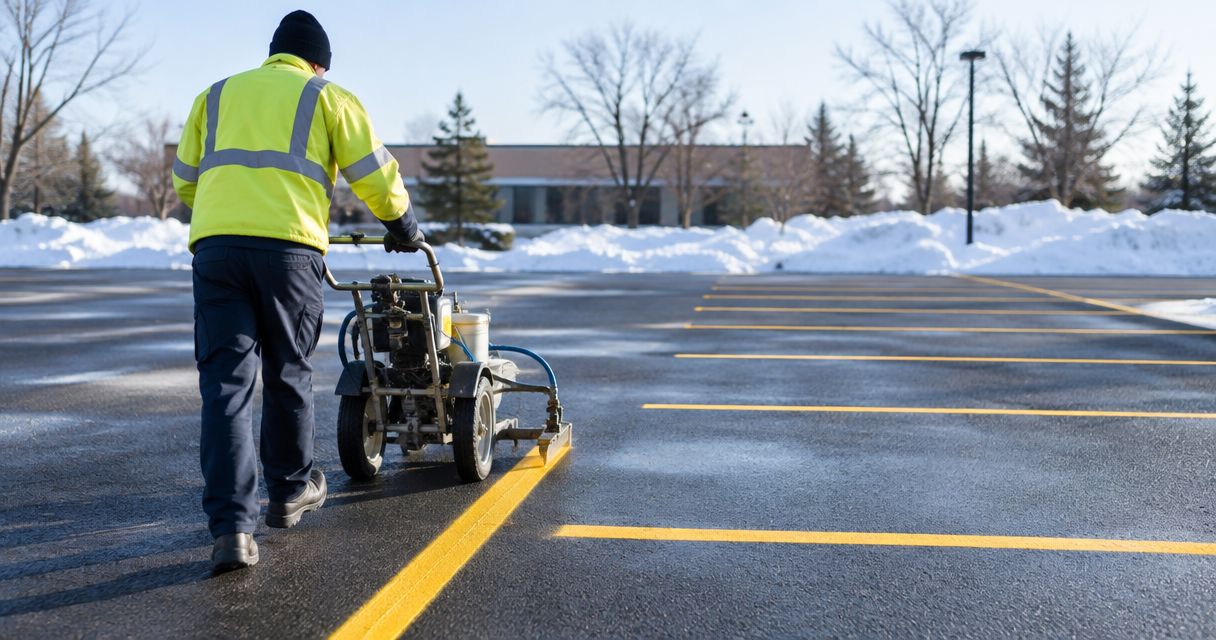
Yes, with one hard condition attached: the paint has to cure before pavement temperatures and overnight lows drop out of range. Waterborne traffic paint — the standard for most commercial lots — needs a pavement surface temperature at or above roughly 50°F to bond correctly, and it needs overnight lows to stay above freezing while it sets, not just at the moment the crew applies it. Miss that window and you're not saving money by waiting; you're either forcing a cold-weather application that peels within one plow season or pushing the job into spring, when the lot runs an entire winter on lines that were already fading going in.
| Timing | Cure conditions | Line durability through winter | Best for |
|---|---|---|---|
| Striping before winter (fall) | Pavement above 50°F, full cure window available | Fully cured before salt and plow contact begins | Lots needing visible ADA, fire-lane, and drive-lane markings through the season |
| Waiting until spring | Risk of forced cold-weather install if delayed too long | Faded or worn lines run through the entire winter first | Lots with markings still legible enough to tolerate a spring queue |
The verdict: striping before winter is worth scheduling for any lot whose markings are already fading, because spring striping means running an entire snow season on lines nobody can see.
Why the timing window shrinks every week in fall
The gap between "still stripeable" and "too cold to stripe" closes fast once October turns into November in the St. Louis region. A handful of factors decide whether a crew can still get a durable job done:
- Pavement surface temperature — waterborne traffic paint needs roughly 50°F or higher to bond; asphalt and concrete cool faster than the air temperature suggests once sun angle drops.
- Overnight lows during cure — the paint has to stay above freezing for the hours it takes to set, not just during the application window itself.
- Moisture and dew point — damp pavement from morning dew or a recent rain won't hold paint regardless of air temperature that day.
- Plow and salt exposure timing — once plow blades and chloride-based ice melt start running, fresh striping takes physical abrasion and chemical exposure it never sees in summer.
- Contractor scheduling backlog — crews running both striping and snow contracts shift priority to plow readiness once storm season starts, so open striping slots disappear.
- Compliance walkthroughs — ADA and fire-lane inspections often land in fall, and faded markings are exactly what gets flagged during a pre-winter property review.
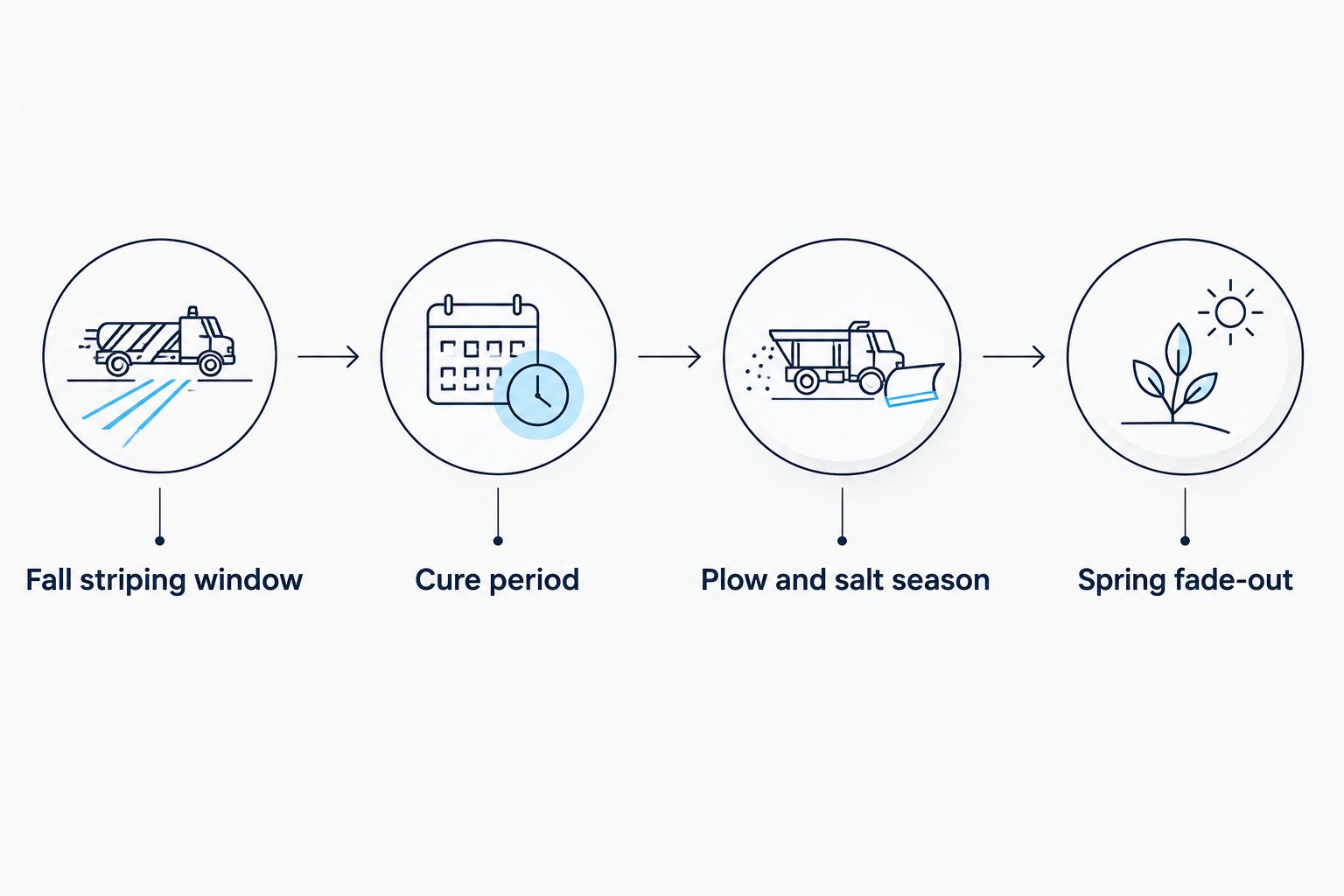
Lots that link striping to a pavement maintenance calendar instead of scheduling it reactively avoid the scramble entirely — the job gets booked while pavement temperatures still cooperate, not after the first cold snap forces the decision.
Get striping booked before the freeze
Lock in a fall slot while pavement temperatures still support a full cure.
What striping before winter actually costs to skip
Skipping fall striping doesn't remove the cost — it defers it and adds a season of wear on top. A lot that goes into winter with faded lines comes out the other side needing the same job done, except now the pavement has taken a full season of plow-blade contact and salt brine on top of the original wear. Property managers comparing timing options can review a full parking lot striping cost breakdown for St. Louis before deciding whether fall or spring makes more sense for a specific lot size and line count.
Does snow plowing damage parking lot striping?
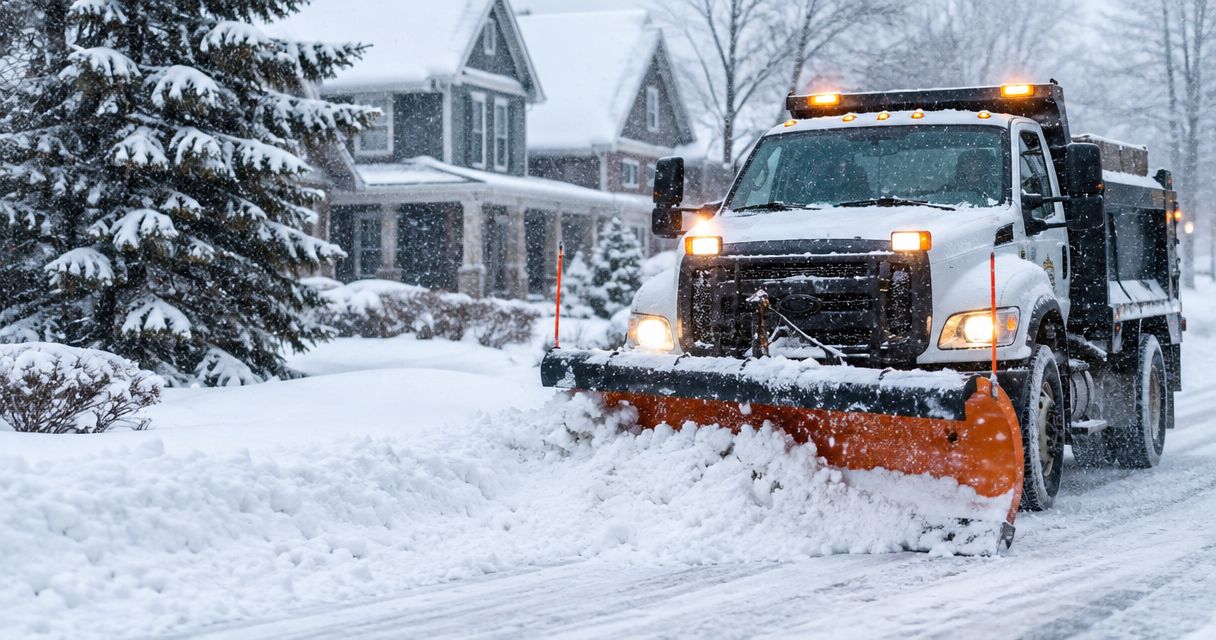
Yes — plow blades scrape line paint directly and chloride-based de-icers degrade the paint binder faster than a full summer of UV exposure does. A lot that enters winter with fresh, fully-cured striping holds up noticeably better through repeated plow passes than one with lines that were already thin going into the first storm.
How long does striping paint need to cure before it can handle plow traffic?
Waterborne traffic paint typically reaches a "no-track" dry state within about 30 minutes, but it needs roughly 24 to 48 hours of traffic-free time before it can safely handle vehicle weight, and longer still before it can reliably take plow-blade contact and salt brine without lifting. Scheduling the job with that cure window in mind — and before overnight lows threaten it — is the entire case for doing it in fall rather than waiting.
Can you stripe a parking lot in cold weather?
No, not reliably — most waterborne and even fast-dry striping paints require pavement surface temperatures above roughly 50°F to bond and cure properly, so a cold-weather application risks peeling or flaking within a single plow season. That's the practical reason striping before winter has a deadline attached to it rather than being an open-ended task.
FAQ
Is parking lot striping worth scheduling before winter in 2026?
Yes — striping before winter is worth it for any lot with fading lines, because waiting until spring means running an entire 2026-2027 snow season on markings that are already hard to see under snow cover.
How cold is too cold to stripe a parking lot?
Most waterborne traffic paints need pavement surface temperatures above roughly 50°F to bond correctly, so once fall temperatures drop below that consistently, a fresh striping job risks peeling before the season is over.
Does snow plowing ruin new parking lot striping?
Plow blades and salt brine wear striping faster than a full summer of sun exposure, which is why lines applied and cured before plow season hold up better than lines applied mid-winter or left worn from the prior year.
How much does parking lot striping cost in St. Louis?
Cost depends on lot size, line count, and stall configuration — a full breakdown by lot type is available for property managers comparing fall versus spring timing.
Should striping happen before or after sealcoating?
Sealcoating should happen first and be given time to cure before striping goes down, since paint applied over uncured sealcoat won't bond the same way it does on a fully set surface.
How long before winter should striping be scheduled?
Book it while pavement surface temperatures are still consistently above roughly 50°F and before overnight lows threaten the cure window, which in the St. Louis region generally means scheduling well ahead of the first hard freeze.
Can striping and snow removal setup happen in the same visit?
They're typically scheduled separately since striping needs dry, warm pavement and a traffic-free cure window, while snow removal setup can happen anytime before the first storm.
Does St. Louis Snow Removal handle both plowing and striping?
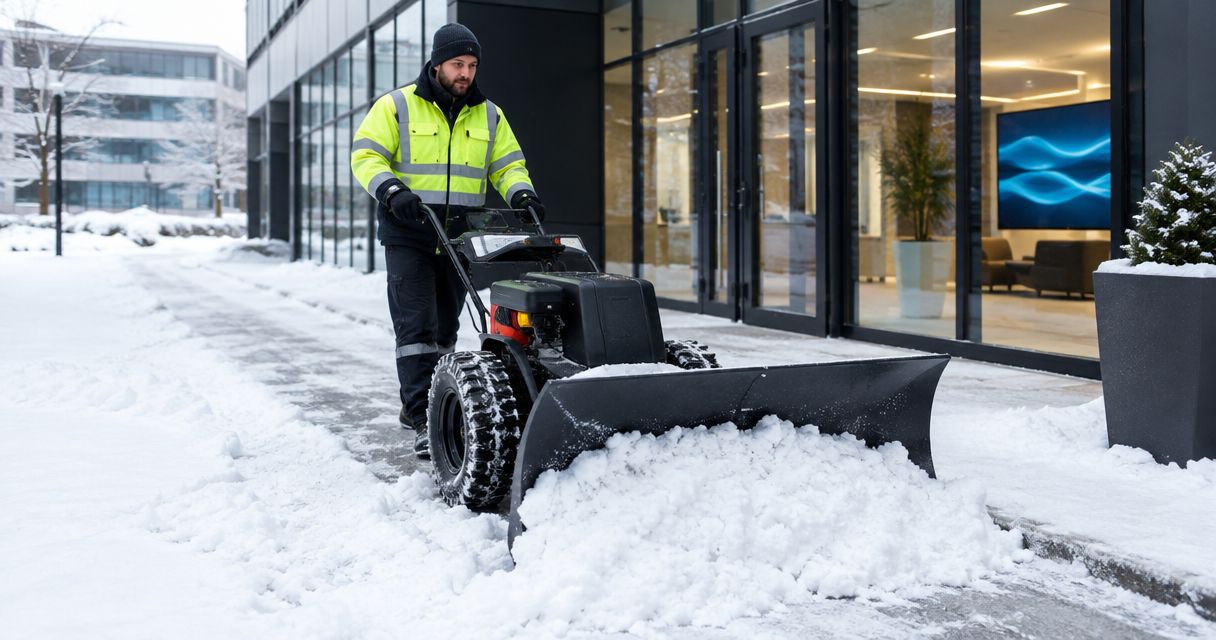
St. Louis Snow Removal provides parking lot striping alongside commercial snow plowing, de-icing, and sidewalk clearing, so both can be scheduled on the same seasonal readiness timeline.
One last thing
Most property managers think of faded striping as a summer curb-appeal issue and push it down the priority list every year — but the liability exposure actually peaks in winter, when snow cover already obscures whatever markings are left. A lot restriped before winter still shows a driver where the fire lane and ADA space are under a light dusting; a lot that skipped it shows nothing. That's the argument for treating parking lot striping before winter as a compliance task, not a cosmetic one, and for booking it on the same calendar as plow and salt readiness rather than as a separate line item that keeps getting deferred.