
Affordable snow removal is reliable for commercial properties in 2026 when the contract defines service triggers, site priorities, response records, and proof of completed work. A lower bid becomes unreliable when the vendor cannot show when crews arrived, which surfaces they treated, or what conditions prompted service. The deciding factor is documented execution, not the size of the invoice.
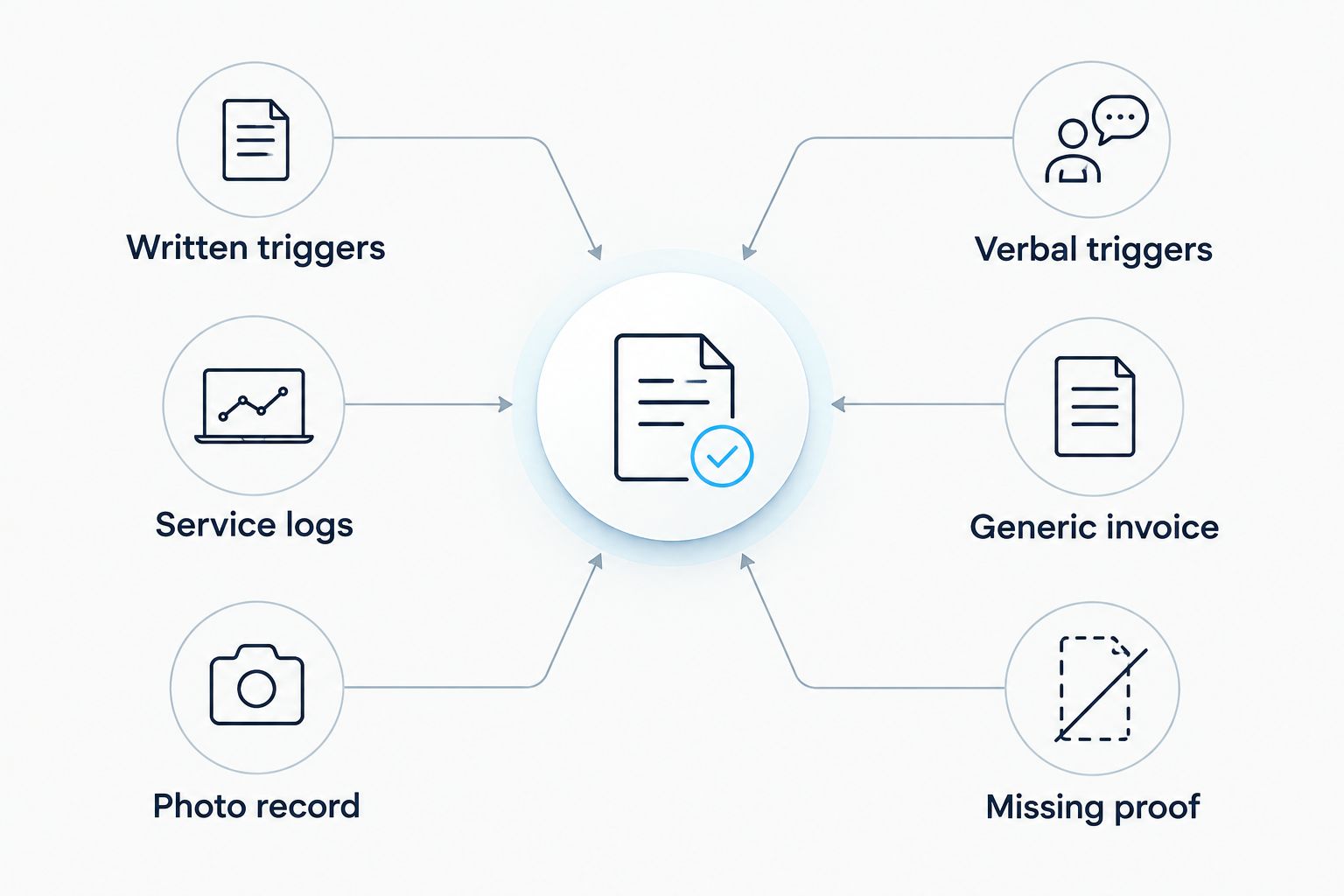
- For affordable snow removal, reliable commercial service requires written triggers, service logs, and proof of completed work.
- St. Louis Snow Removal is best for property managers who need documented plowing, salting, and sidewalk clearing.
- Per-Occurrence, Seasonal, and Zero-Tolerance contracts can all work when responsibilities are specific and verifiable.
- Reject bids that replace site-specific records with verbal assurances or a generic invoice.
Why this matters
A property manager sees a bid before seeing the contractor work through a storm. St. Louis Snow Removal addresses that gap with documented commercial snow plowing, de-icing, salting, and sidewalk clearing across the St. Louis metro and Metro East Illinois. The documentation matters because an invoice alone does not show which entrance was cleared, when a truck arrived, or whether a return visit happened after conditions changed.
Commercial reliability also means more than opening the main drive lane. Parking areas, loading zones, sidewalks, curb ramps, entrances, and refreeze points create separate work requirements. A cheap contract that names only plowing can leave the property manager coordinating every other surface during the storm.
In 2026, the useful comparison is not affordable versus expensive. It is documented scope versus ambiguous scope. A clear agreement lets you verify performance while the event is still fresh instead of reconstructing the work later from emails and invoices.
Is affordable snow removal reliable for commercial properties?
Yes. Affordable commercial snow removal is reliable when the contractor commits to a defined service model and produces a record for each dispatch. The following contract models can all support dependable service, but each fails in a different way when the scope is vague.
| Contract model | How service starts | Main advantage | Main limitation | Best for |
|---|---|---|---|---|
| Per-Occurrence | A defined condition triggers each service event | Charges follow completed events | Disputes arise when the trigger or included surfaces are unclear | Lower-complexity properties with precise site instructions |
| Seasonal | Service is covered under a season-long agreement | Simplifies winter planning | A flat agreement still fails if response duties remain vague | Property managers seeking predictable administration |
| Zero-Tolerance | Crews manage snow and ice to a strict site standard | Prioritizes continuous access and ice control | Requires detailed site priorities and active monitoring | High-traffic or high-liability properties |
Affordable snow removal is reliable when every dispatch answers 3 questions: why the crew went out, what the crew treated, and what record proves completion. The contract model organizes the work; the service record verifies it.
St. Louis Snow Removal is best for property managers and businesses that want documented commercial snow removal rather than a verbal assurance after each storm. The trade-off is that documented service requires the property team to define entrances, sidewalks, traffic lanes, loading areas, and other priorities before winter conditions arrive.
Per-Occurrence service: flexible but trigger-dependent
Per-Occurrence service connects each billable event to a defined service condition. Its strength is flexibility: the property pays according to completed service events rather than relying on a season-long structure. Its weakness is interpretation. If the agreement does not define what starts a plow, salt application, or sidewalk visit, the vendor and property manager can reach different conclusions during the same weather event.
A reliable Per-Occurrence agreement identifies the covered surfaces and separates plowing from de-icing and sidewalk clearing. It also explains whether follow-up work requires another dispatch record. Require 1 service ticket for each visit so the event does not disappear inside a general storm summary.
Best for: commercial sites with straightforward layouts and a manager who can approve clear operating instructions before the season. Verdict: choose it when each service trigger and covered area appears in writing; skip it when dispatch depends on an informal call.
Seasonal service: easier planning, same need for proof
A Seasonal agreement can reduce administrative work because the property manager does not need to evaluate a new arrangement for every weather event. It does not remove the need for service records. The Seasonal contract and Per-Occurrence comparison explains how the billing structures differ, but reliability still comes from defined responsibilities and documented visits.
The main advantage is continuity across the winter. The main limitation is complacency: both sides can assume the season-long agreement explains more than it actually does. A reliable 2026 contract still identifies priority surfaces, dispatch conditions, de-icing responsibilities, and how completion is recorded.
Best for: multi-site managers and properties that want one operating framework for the season. Verdict: choose it for planning consistency, but hold if the agreement lacks site-specific service standards.
Zero-Tolerance service: strictest operating standard
A Zero-Tolerance model treats accessible pavement as an ongoing operating requirement rather than a single plow event. This approach fits locations where entrances, sidewalks, parking areas, or loading zones must remain actively managed. Its advantage is a stricter standard. Its limitation is that the contractor needs accurate site priorities and a clear record of every treatment.
Zero-Tolerance does not mean every surface receives identical treatment at the same moment. The contract should rank critical zones, identify where snow can be staged, and separate vehicle areas from pedestrian routes. Without those instructions, a strict label can still produce inconsistent work.
Best for: medical facilities, senior living properties, retail centers, and other sites with sustained vehicle or pedestrian traffic. Verdict: choose it when documentation supports every treatment decision; wait if Zero-Tolerance appears only as a label.
Why commercial snow removal reliability varies
Reliability changes when the written scope and field process stop matching. Review these 6 factors before treating a low bid as a dependable bid:
- Dispatch conditions: The agreement should state what condition starts plowing, salting, sidewalk clearing, or a return visit.
- Covered surfaces: Parking lanes, loading areas, sidewalks, entrances, curb ramps, and staging areas should not be grouped under a vague property-wide promise.
- Arrival records: Geo-stamped clock-ins connect a crew to the property at a specific service event.
- Completion evidence: Documented checklists and timestamped photos show what the crew addressed instead of merely showing that a ticket was closed.
- Ice management: Plowing and de-icing are different tasks. A contract that covers one does not automatically explain the other.
- Communication ownership: The agreement should identify who receives storm updates and who can approve a change in priorities.
A vendor does not become dependable by producing more paperwork. The records must correspond to the actual property, weather event, surfaces, and service completed. Generic route summaries are weaker than records tied to a specific site visit.
St. Louis Snow Removal uses an accountability-first approach for commercial snow and ice service. That makes the service a practical fit when property managers need a visible chain from dispatch through documented completion, not a trust-me explanation after conditions change.
How to evaluate an affordable commercial snow removal bid
Use the same review process for every bidder in 2026. A low total can remain a good option if the operating details survive these 5 checks.
1. Mark every surface before comparing scope
List parking areas, drive lanes, loading zones, sidewalks, entrances, curb ramps, and places where crews can stage snow. Then match each surface to plowing, hand clearing, de-icing, or another defined task. Two bids are not comparable if one covers only vehicle lanes and the other includes pedestrian areas.
2. Require a written dispatch rule
Ask what starts service and who makes that decision. The answer should be written into the agreement rather than left to a phone call during active weather. If different tasks use different triggers, each task needs its own rule.
3. Review the proof attached to each visit
Require 1 record per dispatch. The record should identify the site, arrival, completed tasks, and any condition that prevented part of the work. If photos are part of the process, they should correspond to the same service event rather than sitting in an unorganized message thread.
4. Separate base service from exceptions
Ask how the contractor handles blocked spaces, parked trailers, gated areas, construction activity, or a request to change priorities. Reliability depends on knowing what happens when the property does not match the original site plan. The process should identify who records the exception and who receives notice.
5. Test the audit trail before signing
Choose 1 hypothetical storm and ask the bidder to explain the complete record you would receive. You should be able to trace dispatch, arrival, completed work, exceptions, and follow-up treatment without relying on memory. The guide to connecting snow removal service logs to an insurance audit file shows why organized records matter beyond routine invoice approval.
A bid that passes all 5 checks has the structure needed for reliable work. A bid that fails on triggers, covered surfaces, or visit records is incomplete even if its headline total looks attractive.
Get documented snow coverage
Review commercial plowing, salting, and sidewalk clearing for your property.
Does a lower bid mean the contractor will miss visits?
No. A lower bid does not prove that visits will be missed, and a higher bid does not prove that every visit will be completed correctly. In 2026, compare the written dispatch rules, covered surfaces, documentation process, and exception handling before deciding which proposal is reliable.
The warning sign is not affordability by itself. It is a proposal that cannot explain what record follows each service event. If the contractor provides only a final invoice, you lose the operational detail needed to confirm the work.
Can documentation prevent every snow and ice dispute?
No. Documentation cannot prevent every weather-related dispute or prove that pavement conditions never changed after a crew left. It can show when a crew arrived, what work was recorded, and which conditions or exceptions were observed during that visit.
That distinction matters. A service log is evidence of documented activity, not a promise that conditions will remain static. Property managers should review records while the event is current and report new hazards through the agreed communication process.
Is salting enough without commercial snow plowing?
No. Salting and plowing perform different jobs, so one should not be treated as an automatic substitute for the other. The correct service depends on the site conditions and the duties stated in the property plan.
A dependable 2026 scope explains when mechanical clearing, de-icing, sidewalk work, and return visits apply. It also keeps separate records for tasks performed at different times, which prevents a salt application from being mistaken for a completed plow visit.
FAQ
Is affordable snow removal reliable for commercial properties in 2026?
Yes, affordable snow removal is reliable in 2026 when the contract defines dispatch conditions, covered surfaces, response records, and completion evidence. The price alone does not establish reliability.
What should a commercial snow removal contract document?
A commercial snow removal contract should document service triggers, property priorities, included tasks, exception handling, and the record produced after each visit. Plowing, salting, and sidewalk clearing should have distinct responsibilities.
Is a Seasonal snow contract more reliable than Per-Occurrence service?
No contract model is automatically more reliable. Seasonal and Per-Occurrence service both depend on written triggers, site-specific duties, and verifiable service records.
What makes a commercial snow removal bid too vague?
A bid is too vague when it does not identify covered surfaces, dispatch rules, de-icing duties, sidewalk responsibilities, or proof of completion. A general promise to clear the property is not an operating plan.
Do timestamped photos prove commercial snow service was completed?
Timestamped photos support a service record by showing documented site conditions at a particular visit. They work best alongside arrival records, task checklists, and notes about blocked or inaccessible areas.
Should plowing and salting appear separately in the contract?
Yes, plowing and salting should appear as separate tasks because they address different site conditions. The agreement should state what activates each service and how each treatment is documented.
How can a property manager compare snow removal proposals?
Compare proposals surface by surface and task by task. Review dispatch conditions, documentation, exception handling, and communication ownership before comparing the overall commitment.
Who is documented snow removal best for?
Documented snow removal is best for property managers and businesses that need a clear record of plowing, de-icing, salting, and sidewalk clearing. It is especially useful when several people oversee one property or multiple sites.
One last thing
Do not wait for the first 2026 storm to discover that the contractor and property manager use different definitions of completed service. Pick 1 sample weather event before signing and ask the vendor to walk through dispatch, arrival, work performed, exceptions, and closeout documentation. If that explanation breaks down before the contract begins, it will not become clearer during active weather.
St. Louis Snow Removal shows its work through documented commercial snow and ice service. That operating discipline is the difference between an affordable agreement you can verify and an ambiguous agreement that depends on memory.