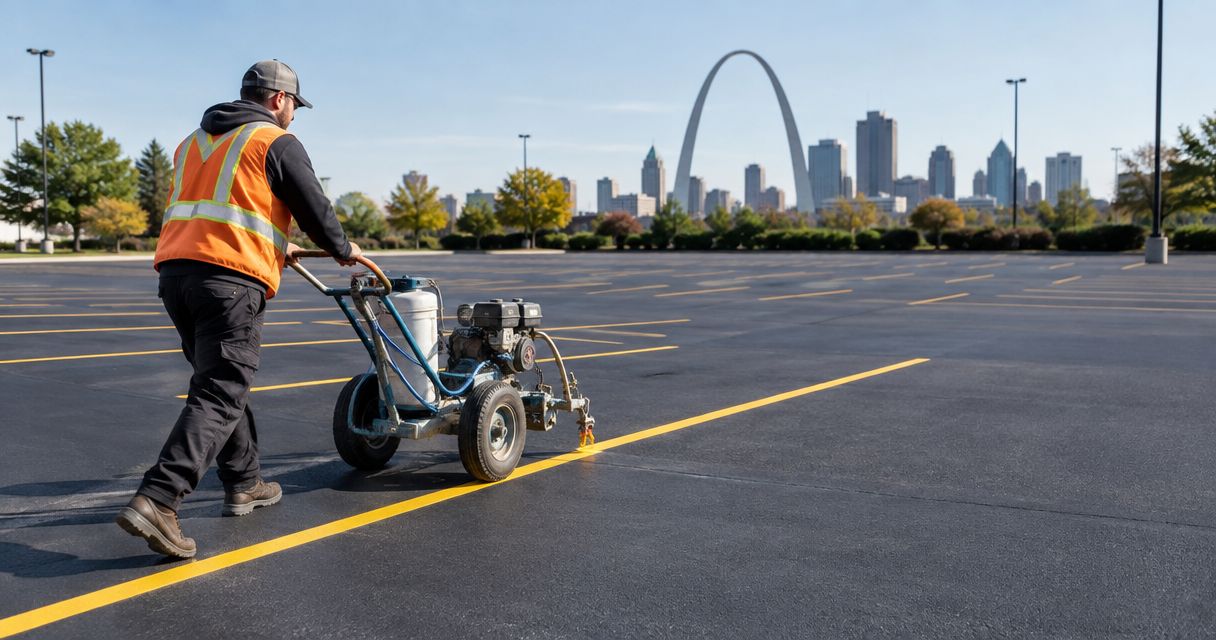
Parking lot striping for a standard commercial lot in the St. Louis metro runs about $1,200 in 2026, with most jobs landing between $500 and $2,500 depending on stall count and layout complexity. Add $150 to $400 per ADA-compliant space on top of that base number, because accessible stalls need symbol paint, signage, and a striped access aisle that standard stalls skip entirely.
- Parking lot striping cost in St. Louis averages $1,200 per standard lot in 2026, ranging $500 to $2,500.
- ADA-compliant stalls add $150 to $400 per space on top of standard restriping.
- Large industrial and warehouse lots run $3,000 to $8,000+ due to lane count and dock markings.
- Road salt and plow blades cut striping life to 1-2 years in St. Louis winters, faster than dry-climate lots.
- St. Louis Snow Removal documents lot condition alongside winter service so fade gets caught before it's a liability issue.
Why this matters
Faded lines are a liability problem before they're a cosmetic one. A lot with unclear stall boundaries or a worn ADA symbol is the exact kind of thing a slip-and-fall attorney photographs first, and property managers who wait until spring to notice the fade have already lost a winter's worth of documentation.
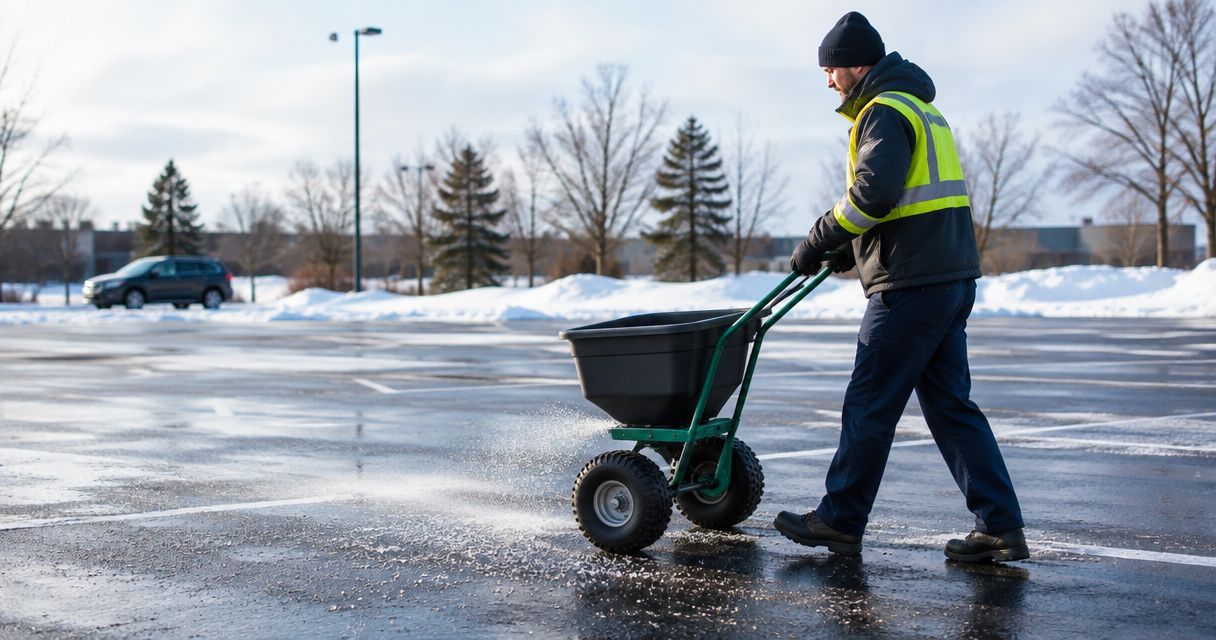
St. Louis winters accelerate the damage. Road salt breaks down paint binders and plow blades scrape lines that would otherwise last three to five years down to nothing in half that time. That's the gap most striping cost estimates from national sites miss, because they're built on climates that don't run a plow across the same asphalt six times a season.
Comparing St. Louis parking lot striping contractors before signing anything matters more here than in a lot of markets, since the vendor doing your striping should understand how winter service schedule and paint cure time interact.
How much does parking lot striping cost in St. Louis in 2026?
| Job type | Typical cost | Best for |
|---|---|---|
| Standard stall repaint (existing layout) | $500 - $1,200 | Lots under 50 stalls, no layout changes |
| Full relayout and restripe | $1,200 - $2,500 | Lots reconfiguring circulation or adding ADA stalls |
| ADA-compliant stall (per space) | $150 - $400 | Any lot short of required accessible stall count |
| Large industrial/warehouse lot | $3,000 - $8,000+ | Lots over 100,000 sq ft with multiple docks and lanes |
Verdict: a standard 50-stall retail or office lot in the St. Louis metro should budget $1,200 for a full restripe in 2026, plus $150-$400 per ADA space if the lot is short on accessible stalls.
Standard stall restriping: $500-$1,200
This covers re-tracing an existing layout with no changes to stall count or circulation. Most small retail centers, gas stations, and standalone office lots fall here. Buy if your layout already meets code and you just need fresh, visible lines before the paint fully fades.
Full relayout and restripe: $1,200-$2,500
This tier applies when a lot is being reconfigured, whether that's adding stalls, fixing a circulation problem, or bringing accessible stall count up to code. It costs more because it starts with a layout plan, not just a re-trace. Buy if you're already touching the layout for another reason, since doing it once beats restriping twice.
ADA-compliant stall striping: $150-$400 per space
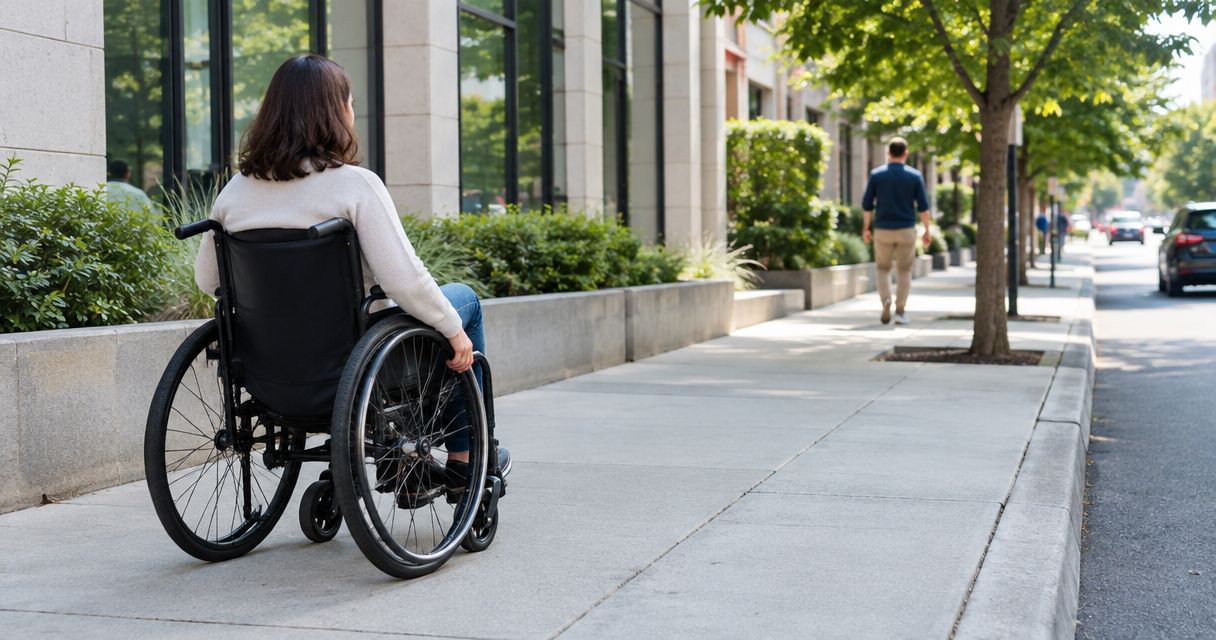
Each accessible stall needs the blue background paint, the wheelchair symbol, signage, and a striped access aisle at least 5 feet wide (8 feet for van-accessible spaces). Skipping any one element is a common compliance gap that shows up in property inspections. Buy this line item every time a lot's accessible stall count falls short of the ratio required for its total spaces.
Large industrial lots: $3,000-$8,000+
Warehouse and distribution lots run higher because of dock markings, fire lane striping, directional arrows, and the sheer square footage covered. A 200,000 sq ft distribution lot has more linear feet of paint than five small retail lots combined. Buy with a scheduled maintenance plan rather than a one-off job, since these lots see the heaviest truck traffic wear.
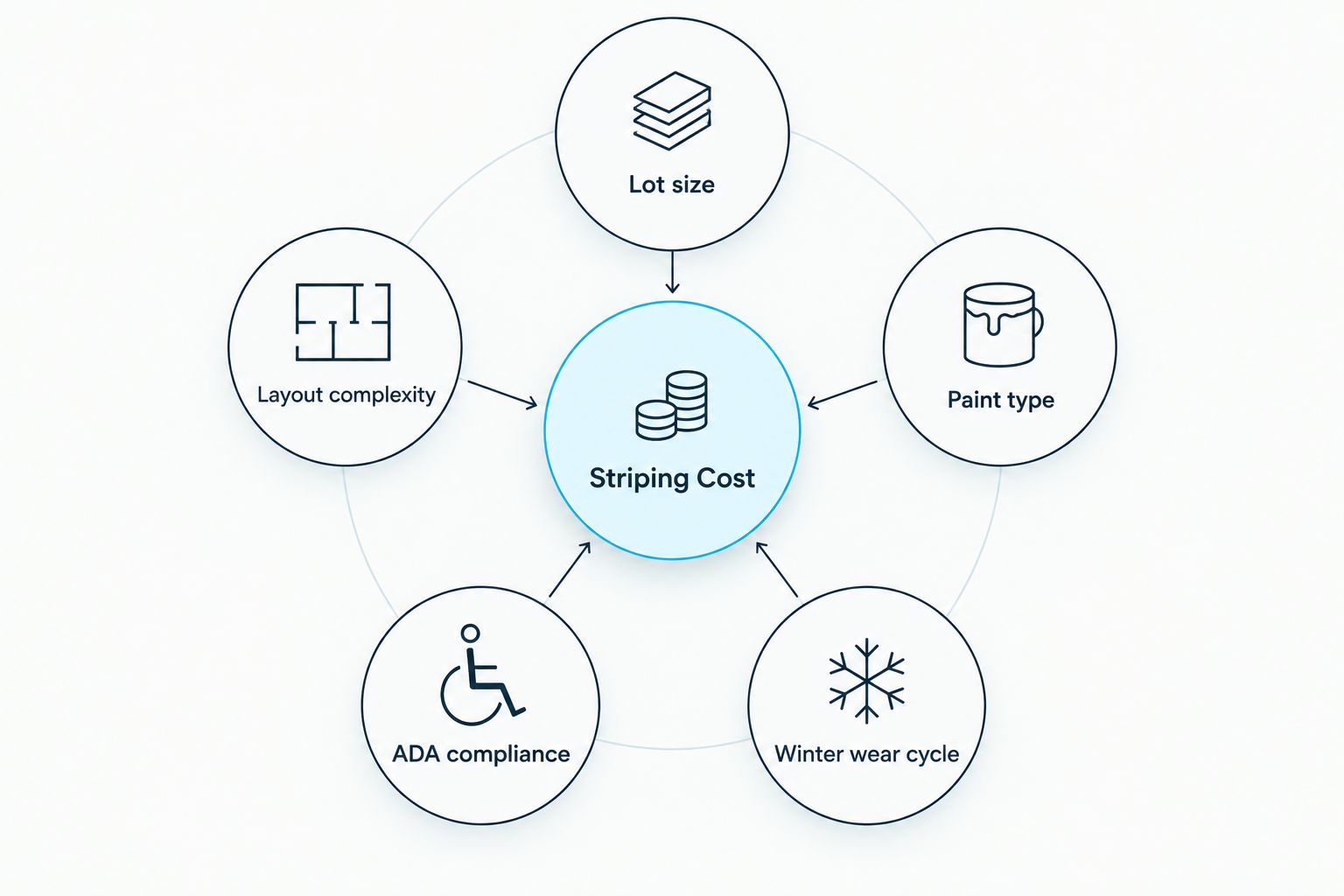
Why parking lot striping cost varies in St. Louis
- Lot size and stall count - more square footage and more stalls mean more linear feet of paint and more labor hours.
- Layout complexity - a straight re-trace costs less than a relayout that changes circulation or adds stalls.
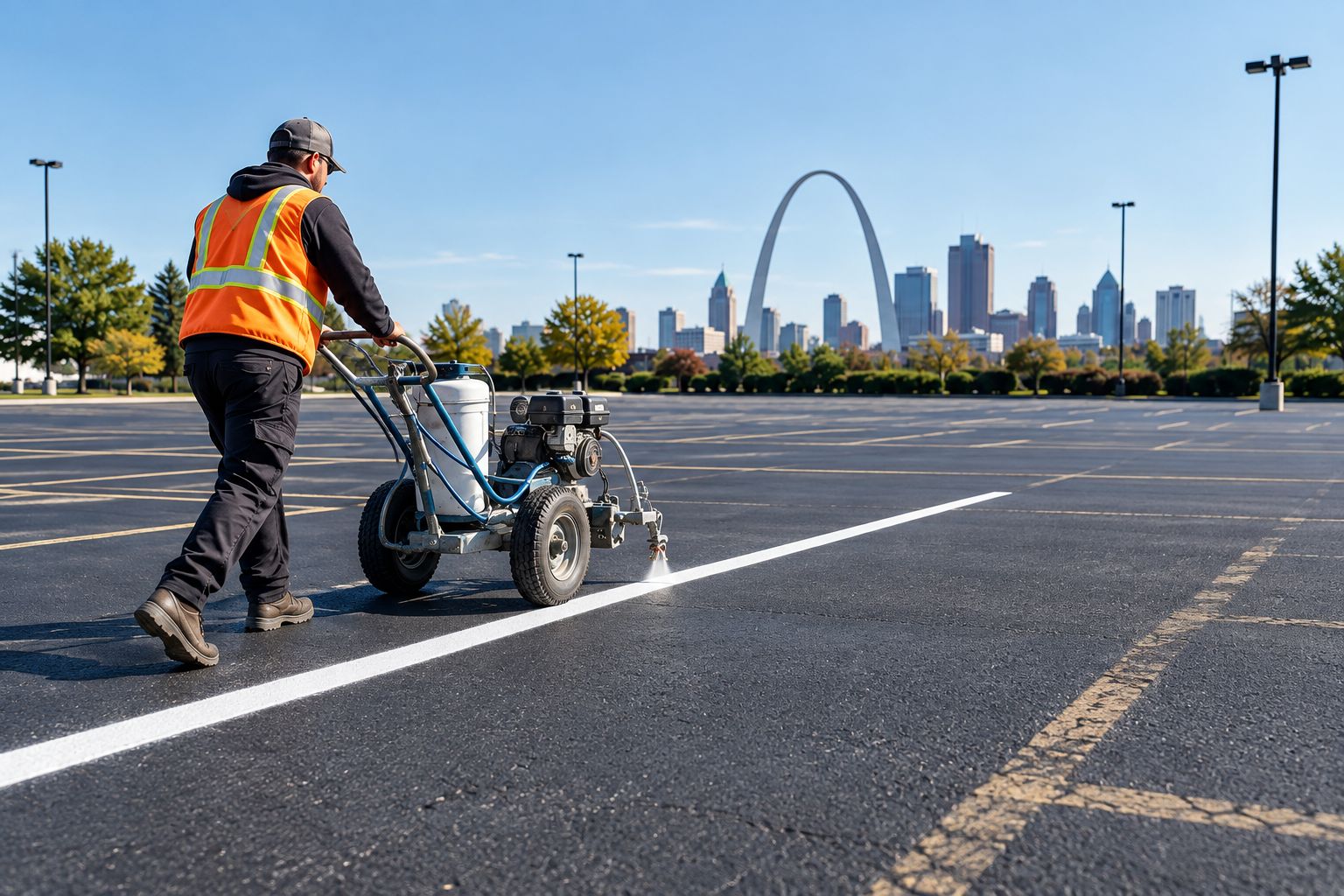
- Paint type - water-based traffic paint costs less upfront than thermoplastic, but thermoplastic holds up longer against plow blades and salt.
- ADA compliance gaps - lots short on accessible stalls pay per-space costs to close the gap, not just a flat restripe fee.
- Winter wear cycle - road salt and plow contact shorten line life in the St. Louis metro compared to warmer, drier markets.
- Access during the job - lots that need to stay open during striping require traffic control, which adds to labor time.
Lots on a documented winter service schedule tend to catch fade earlier, since crews are already on site through the season. Pairing a restripe cycle with pavement maintenance scheduling keeps the job from becoming a surprise line item every spring.
Industrial and distribution properties carry their own layout rules, from dock lane widths to fire lane markings. The cost drivers for striping guide for industrial parks run heavier on linear footage and heavier on compliance markings than a standard retail lot.
Get a striping quote for your lot
Layout review and cost breakdown before any paint goes down.
How often should a commercial parking lot be restriped in St. Louis?
Restripe every 1 to 2 years in the St. Louis metro, shorter than the 3-to-5-year cycle common in warmer, drier climates. Road salt and plow blade contact through winter are the main reasons the cycle runs shorter here, so lots that get plowed heavily need more frequent touch-ups than lots that see light snow seasons.
Does snow plowing damage parking lot striping?
Yes, plow blades scrape paint off the asphalt surface with repeated passes, and the de-icing salt underneath accelerates binder breakdown between plow events. A lot plowed a dozen times in a season will show more line wear by spring than one plowed three or four times, even with identical paint.
Is ADA-compliant striping required for St. Louis businesses?
Yes, ADA regulations require at least one accessible stall for every 25 standard stalls in lots up to 100 spaces, with the required ratio scaling for larger lots. Businesses open to the public are expected to maintain that ratio year-round, not just repaint it once and let it fade.
FAQ
How much does parking lot striping cost in St. Louis in 2026?
A standard commercial lot restripe costs about $1,200 on average, ranging $500 to $2,500 depending on stall count and layout. ADA stalls add $150 to $400 per space.
What's the cheapest type of parking lot striping job?
A standard re-trace of an existing layout with no ADA gaps runs $500 to $1,200, the lowest tier since it needs no relayout planning.
Is thermoplastic striping worth the extra cost?
Thermoplastic paint costs more upfront than water-based traffic paint but holds up longer against plow blades and road salt, which matters more in St. Louis winters than in dry climates.
How much extra does an ADA-compliant stall cost?
An ADA-compliant stall costs $150 to $400 per space, covering the symbol paint, signage, and required access aisle width.
Why does striping cost more for industrial lots?
Large industrial and warehouse lots run $3,000 to $8,000 or more because of dock markings, fire lane striping, and the higher linear footage covered across the property.
Does the season affect striping cost or scheduling?
Striping needs dry pavement and temperatures typically above 50 degrees to cure properly, which narrows the practical window in the St. Louis metro to spring through early fall.
How long does a parking lot restripe take?
Most standard lots take one day for the paint work, though full relayouts with new stall configurations can take longer depending on square footage.
One last thing
The number most lot owners get wrong isn't the cost, it's the timing. Ordering a restripe in late fall right before the first freeze means the paint doesn't cure properly and the lines fail by January, forcing a second job in spring. Book striping in the spring or early fall window and treat it as part of the same maintenance calendar as winter service, not a separate decision made in isolation.