Yes—snow blowing services and snow plowing differ in how they move snow and where the equipment can work: a blower collects and throws snow through a chute, while a plow pushes it toward a designated storage area. Use plowing for open vehicle areas and consider blowing for confined routes with a safe discharge area; neither method replaces a separate ice-management plan.
- Snow blowing services suit confined routes with safe discharge space; snow plowing suits open vehicle areas.
- Both methods relocate snow on site unless the agreement separately includes hauling.
- Neither a blower nor a plow guarantees ice-free pavement after clearing.
- St. Louis Snow Removal provides documented commercial snow plowing, sidewalk clearing, and de-icing across its stated service area.
Is snow blowing different from snow plowing a lot?
Yes. The main difference is snow placement, not simply the machine's size. A blower discharges collected snow through a chute; a plow blade moves snow along the pavement and builds a windrow or pile.
For a parking lot, compare the working area, equipment access, and snow-storage locations before choosing a method. A narrow pedestrian connection and an open parking aisle need different plans, even when they belong to the same property.
| Method | Best for | Main advantage | Main limitation |
|---|---|---|---|
| Snow blowing | Confined paths with suitable equipment access and safe discharge space | Places snow beyond the cleared path through a chute | Discharge direction must avoid people, vehicles, buildings, and neighboring property |
| Snow plowing | Open parking areas and vehicle access lanes with designated storage | Moves snow across broad, connected pavement areas | Needs maneuvering room and space for accumulated piles |
| Combined clearing | Properties with both vehicle areas and pedestrian routes | Assigns an appropriate method to each part of the site | Requires a coordinated scope so transitions and entrances are not missed |
The guide to preparing a parking lot for the first snowstorm addresses the site-planning side of that decision. Choose the snow destination before the equipment starts moving it.
Why this matters
A cleared parking aisle does not establish that the path from a parked vehicle to the entrance is usable. Snow left at a curb ramp, crosswalk connection, or doorway creates a separate access problem.
For your 2026 service scope, identify vehicle areas and pedestrian routes separately. Then state who clears the connections between them. Buy a defined clearing result, not an equipment label.
The method also affects where snow accumulates. A contractor needs somewhere to place it without covering required access points or sending discharge into traffic; the word “removal” alone does not explain that destination.
Snow blowing: best for confined routes with discharge space
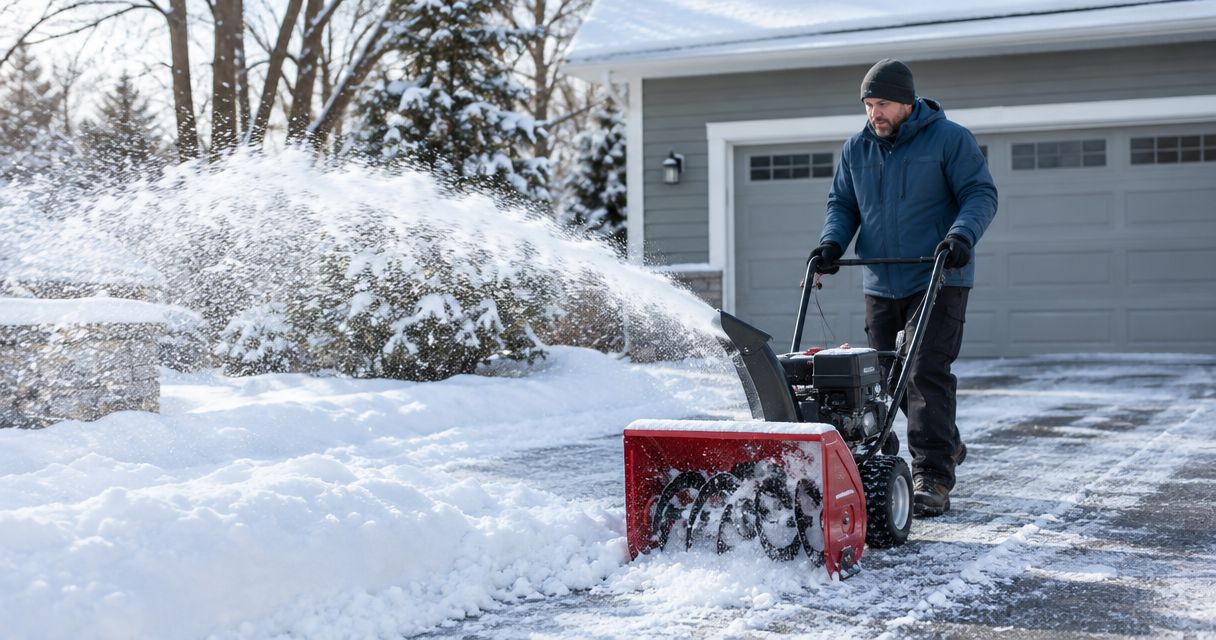
Snow blowing services fit paths where the selected machine can pass and snow can be discharged safely beside or beyond the route. Typical applications include suitable sidewalks and driveway sections, but the actual fit depends on access, surface condition, and nearby obstacles.
The useful distinction is placement. A chute lets the operator direct discharged snow away from the cleared strip rather than pushing the entire accumulation to the end of each pass.
That does not make blowing a universal answer for tight spaces. A narrow passage bordered by windows, parked cars, and neighboring property still needs an acceptable discharge location. Wind also affects where discharged snow lands.
Before specifying blowing, ask the contractor to identify:
- The route the selected equipment will follow.
- The areas where snow can be discharged.
- The surfaces and objects that need protection.
- The places that require hand clearing instead.
Choose snow blowing for the route and its discharge conditions—not merely because the property is small. Confirm the equipment method in writing rather than assuming every sidewalk-clearing service uses a blower.
Snow plowing: best for open vehicle areas with storage space
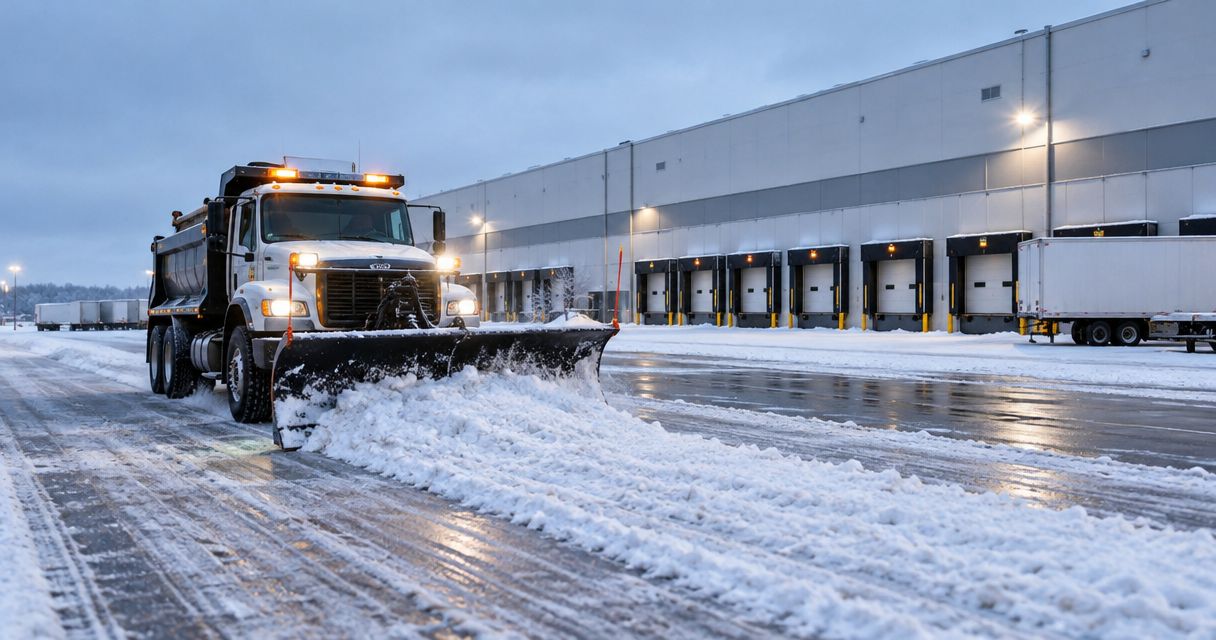
Snow plowing fits parking areas, drive aisles, and vehicle approaches where equipment can maneuver and push snow toward approved storage locations. The blade moves snow along the surface; it does not carry that snow away from the property.
An open lot offers room to organize passes and establish piles. Parked vehicles, loading activity, islands, and narrow entrances interrupt that working pattern and need explicit instructions.
The limitation is accumulation. Each clearing visit adds snow to the designated storage areas unless another operation moves or hauls it elsewhere.
For a 2026 parking-lot plan, mark storage areas before approving the scope. Keep the plan specific about entrances, pedestrian connections, drainage features, and locations where piles would obstruct visibility.
Choose snow plowing for connected vehicle areas with a workable push-and-storage plan. Do not treat a plowing line item as confirmation that sidewalks, steps, salting, or hauling are included.
Combined clearing: best for mixed-use sites
A commercial property often needs separate methods for the lot and the walking route. Plowing can address the vehicle area while appropriately sized equipment or hand tools address sidewalks, entrances, and other restricted spaces.
The benefit is task matching. The limitation is coordination: separate crews or passes can leave a ridge where the parking area meets the sidewalk unless that transition belongs to someone's checklist.
Write the scope around connected access. Identify the route from designated parking spaces to the entrance, including curb ramps and crossing points, rather than listing “lot” and “walks” as unrelated tasks.
St. Louis Snow Removal is a fit for property managers seeking documented commercial snow and ice service. Its stated services include commercial plowing, sidewalk clearing, and de-icing/salting; confirm any requested snow-blower method during quoting rather than assuming it is included.
Why the right snow-clearing method varies
The equipment decision follows site conditions. Use these factors to compare proposals without relying on an unsupported promise that one method is always faster or better.
- Access and maneuvering: Gates, parked vehicles, steps, and narrow passages determine where equipment can physically work.
- Snow destination: Plowing needs push-and-storage space; blowing needs safe discharge space. Neither eliminates the need to plan where snow goes.
- Surface and obstacles: Uneven pavement, loose material, curbs, and hidden objects affect the operating approach and require a site review.
- Snow condition: Loose snow, wet accumulation, and compacted deposits place different demands on equipment. Ask how the scope handles conditions that require additional work.
- Operating activity: Pedestrians, deliveries, and moving vehicles affect when and where clearing can proceed safely.
- Required outcome: An open drive aisle, a cleared entrance route, and treated pavement are different deliverables. Name each one that matters to your property.
For 2026 proposal reviews, require the contractor to explain the method against these conditions. A machine name without a site plan leaves the important decisions unresolved.
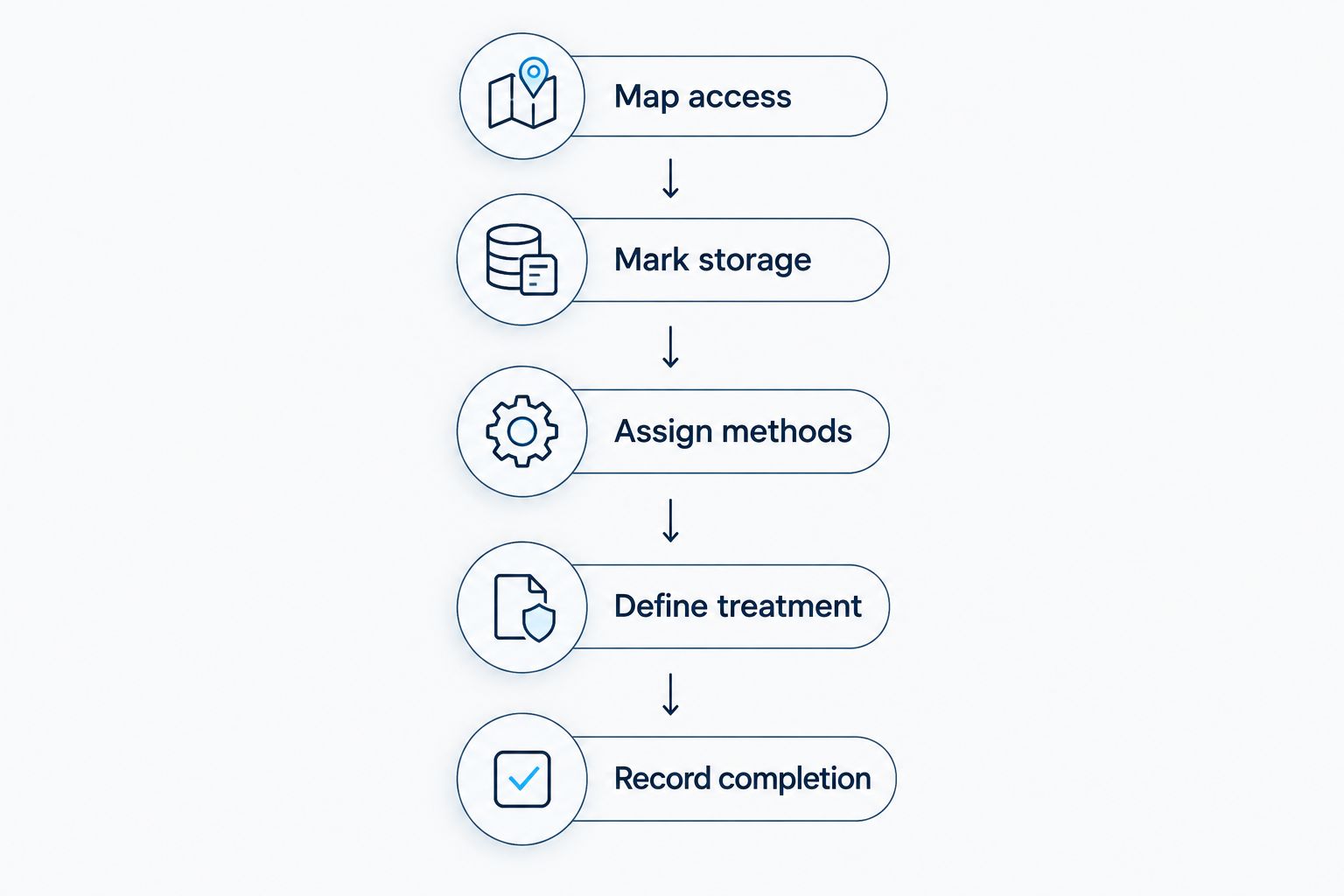
How do you choose between snow blowing services and plowing?
Walk the site before selecting equipment. Use the same marked plan when requesting proposals so contractors respond to the same work rather than interpreting a general request differently.
- Map access. Mark vehicle entrances, pedestrian routes, steps, gates, loading areas, and obstacles. Identify where equipment cannot pass.
- Mark storage. Identify acceptable pile and discharge locations. Flag neighboring property, doors, and traffic areas that must remain clear.
- Assign methods. Ask the contractor to identify plowing, blowing, or hand clearing by area. Require an explanation for transitions between methods.
- Define treatment. Separate mechanical clearing from de-icing and salting. State which surfaces require treatment and how additional work is authorized.
- Record completion. Specify the service record you expect, including the areas addressed, work performed, and unresolved conditions.
A site walk also exposes scope conflicts. If a proposed snow pile occupies the space needed for a later clearing pass, revise the plan before service begins rather than leaving the crew to improvise during a storm.
Keep the marked plan with the agreement. If parking arrangements or access routes change, update the work instructions so the contractor is not operating from an outdated layout.
When requesting a snow-removal quote, describe the outcome you need and ask which methods the proposed scope includes. Do not request “snow blowing” as a substitute for explaining the property.
Does snow blowing remove ice as well as snow?
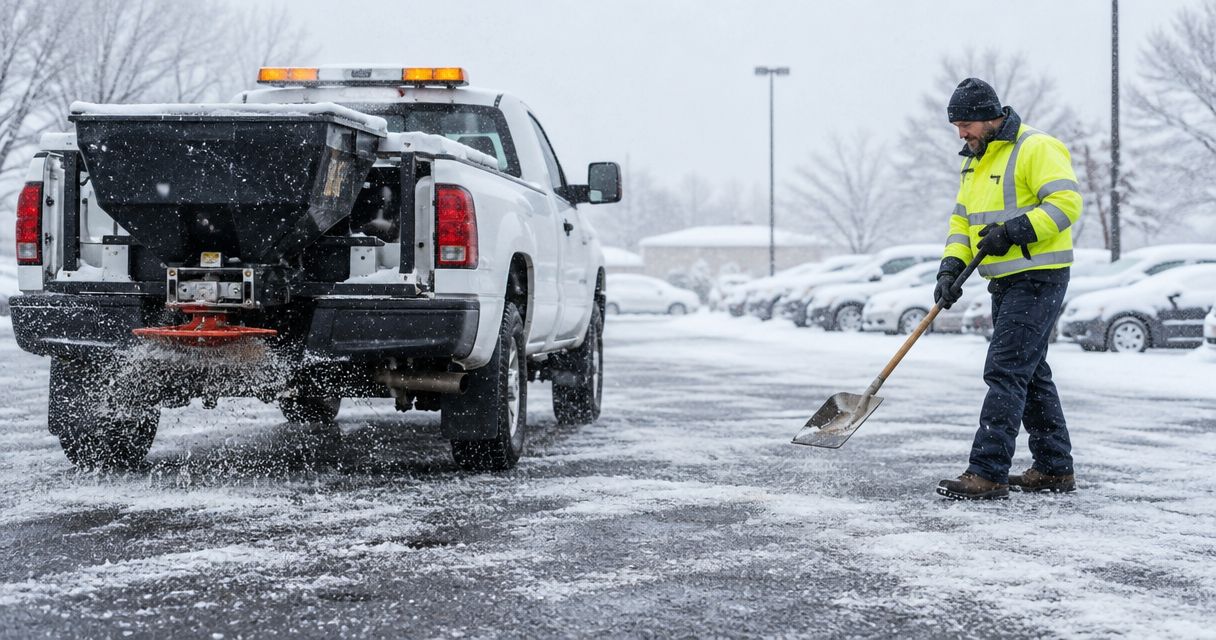
Snow blowing does not replace ice management. A blower removes snow mechanically, but bonded ice or a slippery residual layer requires a separate response appropriate to the surface and conditions.
The same limitation applies to plowing. Ask your contractor to distinguish clearing from treatment and to explain how remaining ice is reported or addressed.
Does snow removal mean the contractor hauls snow away?
Snow removal does not, by itself, establish that hauling is included. Blowing and plowing generally relocate snow within the site unless the agreement specifies off-site transport.
Ask where the snow will go and what happens when designated storage areas become unusable. Make relocation or hauling a separate, explicit scope item when your property needs it.
What should your 2026 snow-service agreement specify?
Your agreement should connect the equipment plan to a service trigger, work areas, completion expectations, and records. “Clear the property” leaves too much interpretation to the person arriving during the storm.
Ask for written answers to these operational questions:
- What condition starts service, and who determines that it has occurred?
- Which parking areas, sidewalks, entrances, and connections are included?
- Where will crews place snow, and which locations are prohibited?
- What happens if vehicles or deliveries block an assigned area?
- Are de-icing, return visits, and additional snow relocation included or separately authorized?
- What record identifies the work completed and any remaining obstruction?
St. Louis Snow Removal provides enrolled residential snow-route service as well as commercial snow and ice services. Homeowners should confirm the assigned clearing areas and equipment approach; property managers should confirm the full lot-to-entrance scope.
Documentation supports accountability, but it does not guarantee that every surface remains clear throughout changing weather. Your 2026 agreement should distinguish a completed visit from any continuing monitoring or return-service obligation.
FAQ
Are snow blowing services better than snow plowing for a parking lot?
Snow plowing is the better fit for open vehicle areas with maneuvering room and designated snow storage. Snow blowing suits confined routes where equipment fits and discharge can be directed safely.
Can I ask a snow-removal contractor to use a blower on my driveway?
Yes—ask the contractor to assess whether a blower fits your driveway and its discharge conditions. Confirm the method in the agreement rather than assuming a general snow-clearing service includes it.
Will a snow blower keep snow from piling up on my property?
No—a snow blower relocates snow through a chute, so the snow still needs a suitable destination. If your property cannot accommodate the accumulation, discuss additional relocation or hauling separately.
Does snow plowing include clearing my sidewalks?
Snow plowing does not automatically include sidewalk clearing. Your written scope should identify sidewalks, entrances, curb ramps, and the connections between the parking area and building.
Do snow blowing services include salting?
Snow blowing services do not automatically include salting or de-icing. Confirm treatment areas, authorization, and service expectations separately from mechanical snow clearing.
What should I ask before hiring snow removal in 2026?
Ask for the service trigger, included areas, equipment approach, snow-storage plan, and completion records. Also confirm how the contractor handles blocked areas, ice treatment, and return visits.
Does St. Louis Snow Removal offer commercial and residential service?
St. Louis Snow Removal provides documented commercial plowing, de-icing/salting, and sidewalk clearing, plus enrolled residential snow-route service. Its stated coverage includes the St. Louis metro and Metro East Illinois; confirm your property's scope during quoting.
One last thing
The handoff between machines deserves its own checklist item. A plow can clear the lot and a sidewalk crew can clear the walk while a ridge remains between them.
Ask who clears the connection from the parking area to the entrance. That answer tells you more about the proposed service than whether the contractor leads with a plow or a blower.