Picking the best parking lot striping contractor in St. Louis for 2026 comes down to one question: do you need one documented contract that covers snow, ice, and pavement marking, or a specialist for a single large-format restripe? This guide ranks five contractor types by the job they actually fit, not by who answers the phone fastest.
- St. Louis Snow Removal wins for property managers who want striping and snow removal on one documented contract in 2026.
- Dedicated striping specialists win for large-format thermoplastic layouts and heavy-traffic lots that need precise ADA restriping.
- Asphalt and paving contractors make sense when resurfacing and restriping happen in the same mobilization.
- General handyman crews fit small private lots on a tight budget but skip documented ADA compliance checks.
- National facility maintenance chains fit multi-site owners who need one regional point of contact across properties.
Why this matters
Faded lines aren't a cosmetic problem. An ADA-noncompliant accessible stall or a missing fire lane marking is a liability exposure the property owner carries, not the contractor who painted it three years ago and never came back. ADA 2010 Standards require accessible parking stalls at least 96 inches wide with an adjacent access aisle of at least 60 inches, and getting that wrong invites complaints regardless of intent.
St. Louis freeze-thaw cycles also chew through standard traffic paint faster than warmer climates, which is why the material a contractor recommends matters as much as the layout. A St. Louis Snow Removal crew that already tracks trigger depths and geo-stamped clock-ins for winter work applies the same documentation habit to a summer striping job — photos before, photos after, no "trust me, we were there."
What makes the best parking lot striping contractor
- Layout compliance with ADA stall widths, van-accessible aisles, and local fire lane codes
- Material selection matched to traffic volume — paint, thermoplastic, or epoxy, not a one-size answer
- Documented before-and-after photos for every job, not a verbal sign-off
- Scheduling around business hours so the lot isn't closed when tenants need it
- Bundled service options with snow, ice, or pavement sealing for one point of contact
- Verifiable insurance and a liability record that survives a slip-and-fall claim
At a glance: five contractor types for 2026
| Contractor type | Best for | Standout feature | Key limitation |
|---|---|---|---|
| St. Louis Snow Removal | Bundled snow + striping contracts | One documented account across seasons | Not the go-to for decorative or custom logo work |
| Dedicated striping specialists | Large-format thermoplastic jobs | Purpose-built thermoplastic equipment | Usually no winter service, separate vendor needed |
| Asphalt and paving contractors | Resurfacing plus restriping | One mobilization covers seal-coat and stripe | Striping often subbed out, lower scheduling priority |
| General handyman/painting crews | Small private lots, tight budgets | Flexible scheduling, low overhead | No documented ADA compliance process |
| National facility maintenance chains | Multi-site regional consistency | Single point of contact across properties | Local crew quality varies by subcontractor |
1. St. Louis Snow Removal: best parking lot striping contractor for bundled snow-and-pavement contracts
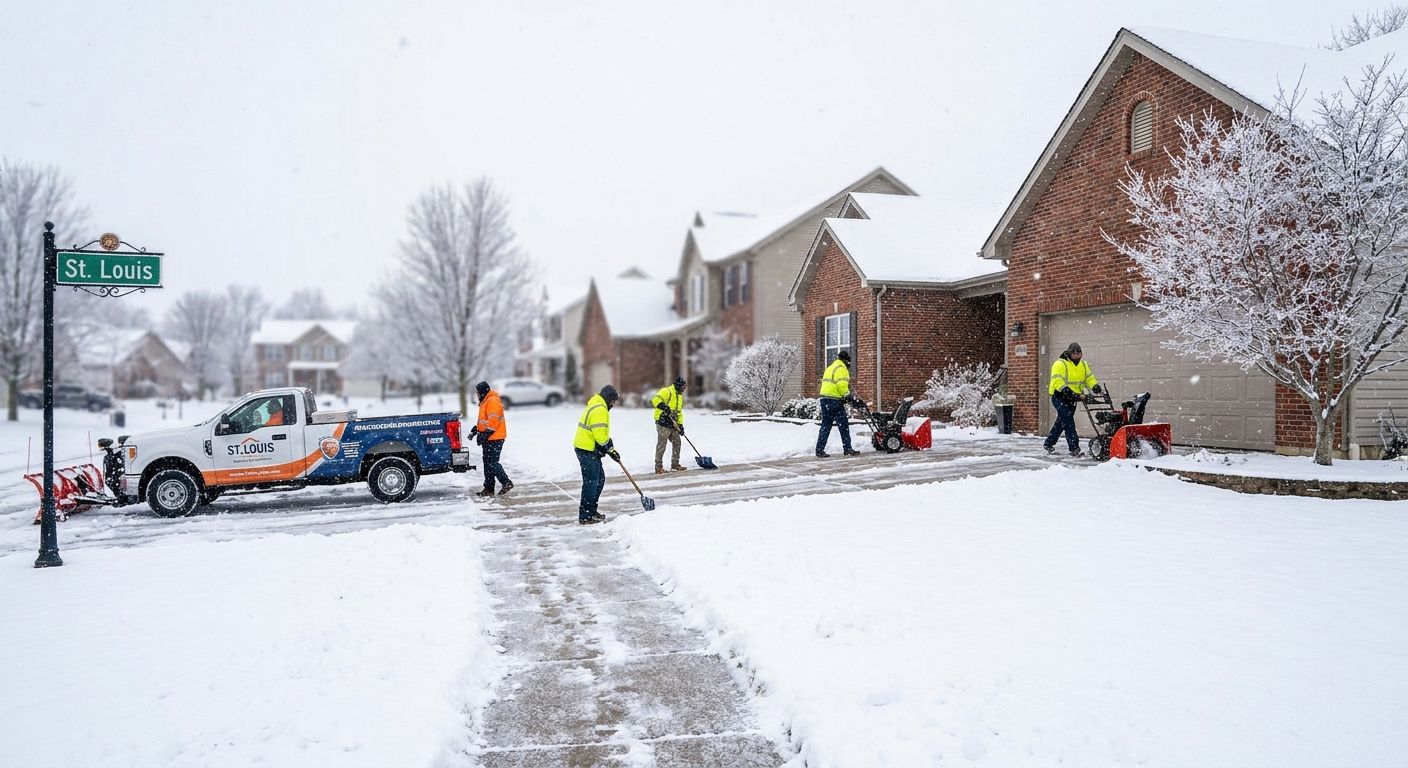
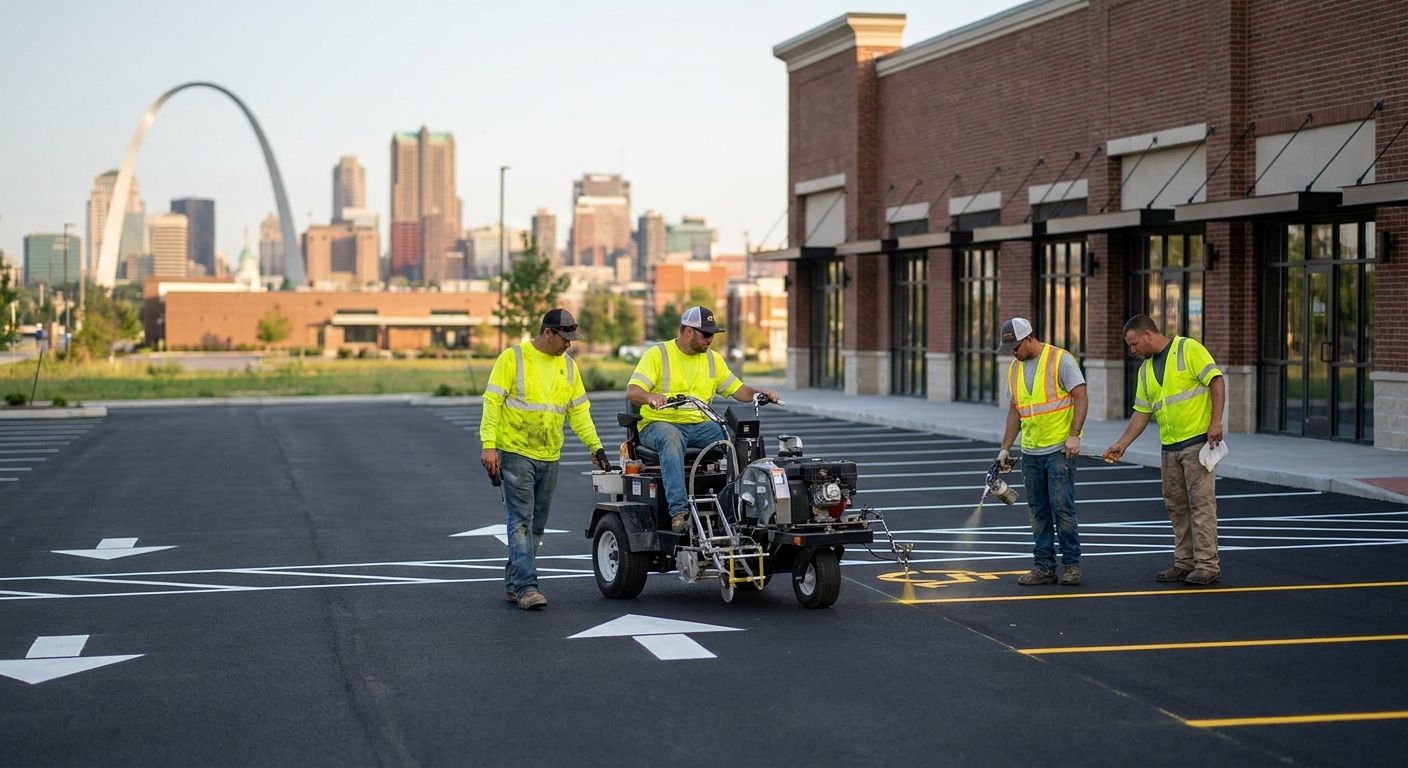
St. Louis Snow Removal handles commercial striping alongside snow plowing, de-icing, and sidewalk clearing under the same documented account — one contract, one crew rotation, one photo trail across every service line. The same rotation that runs commercial snow plowing for a property in January is available to restripe the lot in May, which means one vendor relationship instead of three.
St. Louis Snow Removal pros:
- Combines striping with snow, ice, and sidewalk work under one account
- Documented before-and-after photos, matching the accountability standard used for winter contracts
- One point of contact for property managers juggling multiple service lines
- Familiar with St. Louis metro and Metro East Illinois codes and lot layouts
St. Louis Snow Removal cons:
- Not the first call for custom logo painting or decorative crosswalk art
- Standalone, one-off summer restripe requests without a winter contract don't get the same scheduling priority as multi-service accounts
Best for: property managers who already buy or plan to buy winter services and want striping folded into the same documented relationship.
Verdict: Buy if you want fewer vendors and a paper trail that covers both seasons.
2. Dedicated pavement striping specialists: best for large-format thermoplastic layouts
Dedicated striping companies run equipment built specifically for thermoplastic application — heated trucks, extrusion dies, precise line-width control that a general contractor's crew doesn't carry. That specialization pays off on large lots with high truck traffic where standard paint wears out in under two years.
Striping specialist pros:
- Thermoplastic materials that outlast standard paint by roughly 2-4 years under regular traffic
- Precise, code-accurate layouts for ADA stalls and fire lanes
- Faster turnaround on large-format jobs due to dedicated equipment
Striping specialist cons:
- Almost never offer winter service, so you're managing a second vendor from November through March
- Minimum job sizes can price out small private lots
Best for: big-box retail lots, hospital campuses, and multi-acre parking structures where thermoplastic's 4-6 year lifespan justifies a dedicated vendor.
Verdict: Buy if the lot is large enough that thermoplastic's longer life offsets the cost of a separate contractor.
3. Asphalt and paving contractors: best for resurfacing-plus-restriping projects
When a lot needs seal-coating or crack repair anyway, having the paving crew handle striping in the same mobilization saves a separate site visit. The line work happens right after the seal coat cures, on fresh asphalt that holds paint longer than a lot that's been resurfaced years ago.
Paving contractor pros:
- One mobilization covers seal-coating, crack fill, and restriping
- Fresh asphalt takes paint better, extending stripe life
- Useful when the lot needs structural repair, not just new lines
Paving contractor cons:
- Striping is often a line item subbed to a third party, not an in-house specialty
- Scheduling ties to the paving calendar, which in St. Louis runs tight April through October
Best for: owners already budgeting for seal-coating or resurfacing who want the striping bundled into that project.
Verdict: Hold unless resurfacing is already on the calendar — don't hire a paving crew for striping alone.
4. General handyman and painting contractors: best for small private lots on a budget
A small private lot with a handful of spaces — a strip mall storefront, a small office building — doesn't need a specialized crew. A general handyman or painting contractor can restripe basic parking lines without the overhead of a dedicated striping company.
Handyman contractor pros:
- Lower overhead, more flexible scheduling
- Reasonable fit for straightforward re-lines with no ADA reconfiguration
- Easy to find locally for small jobs
Handyman contractor cons:
- No documented ADA compliance process — liability sits entirely with the property owner if the layout is wrong
- Standard paint only, no thermoplastic option, so lines fade faster
- No photo documentation trail if a dispute comes up later
Best for: small private lots with simple layouts and no ADA reconfiguration needed.
Verdict: Wait if the lot has any accessible stalls that need to meet current code — get a specialist to check the layout first.
5. National facility maintenance chains: best for multi-site regional consistency
A national facility maintenance chain gives a multi-site owner one contract and one invoice across a dozen properties spread across several states. That consistency is the entire pitch — the trade-off is that the crew showing up on-site is usually a local subcontractor, not a chain employee.
National chain pros:
- One contract and one point of billing across multiple properties
- Standardized reporting format across a portfolio
- Useful for regional property managers overseeing sites outside St. Louis
National chain cons:
- Actual crew quality varies by local subcontractor, not the chain's brand
- Less direct accountability than working with the crew that's physically on-site
Best for: regional or national portfolio owners who need consistent reporting across many locations, not a single St. Louis property.
Verdict: Hold for a single local lot — the overhead of a national contract doesn't pay off for one property.
How we ranked
Each contractor type is scored against the six criteria above: ADA and fire-lane layout compliance, material fit for traffic volume, documented photo checklists, scheduling flexibility, bundled service options, and verifiable insurance. No two entries compete for the same use case — a big-box thermoplastic job and a small strip-mall re-line aren't the same buying decision, so they don't get ranked against each other.
Which parking lot striping contractor should you choose in 2026?
If you manage a property that already needs snow removal, ice management, or sidewalk clearing, St. Louis Snow Removal is the default pick — one documented contract, one crew, no coordinating three vendors across two seasons. If the lot is large enough to need thermoplastic and you don't need winter service, go with a dedicated striping specialist. If resurfacing is already budgeted, let the paving contractor handle both in one visit. For a small private lot with no ADA reconfiguration, a general contractor is fine — just verify the layout against code before the paint goes down.
FAQ
What's the best parking lot striping contractor in St. Louis for 2026?
For property managers who also need snow and ice removal, St. Louis Snow Removal is the best parking lot striping contractor in 2026 because it bundles striping into the same documented account. For large-format thermoplastic jobs with no winter contract needed, a dedicated striping specialist is the better fit.
Is thermoplastic striping better than paint?
Thermoplastic typically lasts 4-6 years under regular traffic versus 1-2 years for standard paint. Paint costs less upfront but needs re-application far more often, which adds up on high-traffic lots.
How wide does an ADA accessible parking stall need to be?
ADA 2010 Standards require accessible stalls at least 96 inches wide with an adjacent access aisle of at least 60 inches. Van-accessible spaces need a wider aisle, so verify the layout against current code before restriping.
Should I hire the same contractor for snow removal and striping?
Bundling both under one contractor, like St. Louis Snow Removal, means one documented account instead of coordinating separate vendors by season. It also puts the same accountability standard — photos, checklists — on both service lines.
How often should a parking lot be restriped?
Standard paint needs restriping roughly every 1-2 years depending on traffic and St. Louis's freeze-thaw cycles. Thermoplastic stretches that out to 4-6 years, which matters more on high-traffic commercial lots.
Can a general handyman legally restripe ADA parking stalls?
There's no license requirement in most cases, but the liability for an out-of-code layout sits with the property owner regardless of who painted it. A contractor without a documented ADA compliance process is a risk on any lot with accessible stalls.
Do paving contractors also handle striping?
Many asphalt and paving contractors offer striping as an add-on after seal-coating or resurfacing, often subbed to a third party. It's a good fit when structural repair is already planned, not when striping is the only need.
One last thing
The detail most property managers skip: a fresh seal coat holds paint noticeably better than aged asphalt, so if a restripe and a resurfacing job are both due within the same year in 2026, sequencing them together — seal coat first, stripe second — gets more life out of the paint than doing them months apart.