A snow removal contract includes roof snow removal only when the written scope explicitly covers the roof; a plowing, salting, or sidewalk agreement does not establish that coverage. Check the included areas, exclusions, authorization requirements, and responsibility for clearing snow deposited below before you approve rooftop work.
- Roof snow removal needs an explicit written scope; parking lot plowing and sidewalk clearing do not establish roof coverage.
- St. Louis Snow Removal provides documented ground-level snow and ice services; do not infer rooftop coverage from that offering.
- A Seasonal, Per-Occurrence, or Zero-Tolerance label does not identify which surfaces the agreement covers.
- Confirm roof authorization, contractor qualifications, ground closures, and cleanup responsibilities before work begins.
Does a snow removal contract include roof snow removal?
Treat roof snow removal as unconfirmed unless the agreement expressly includes it. Read the scope of work alongside the property map, exclusions, and any signed amendments. A property address identifies the site, not every service performed there.
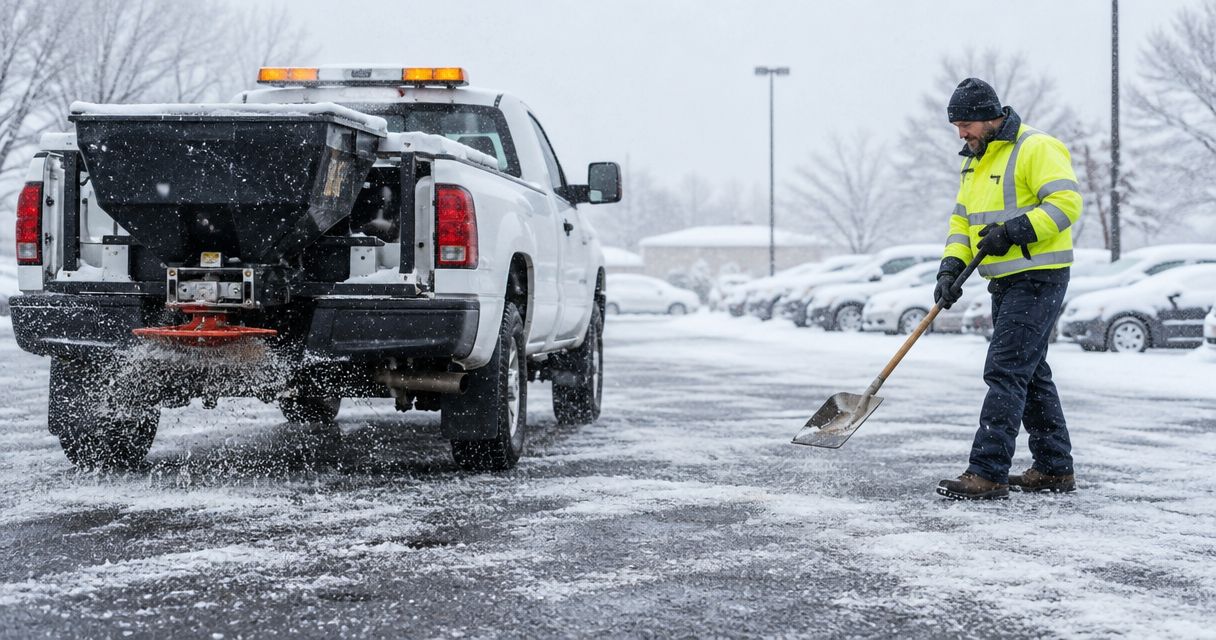
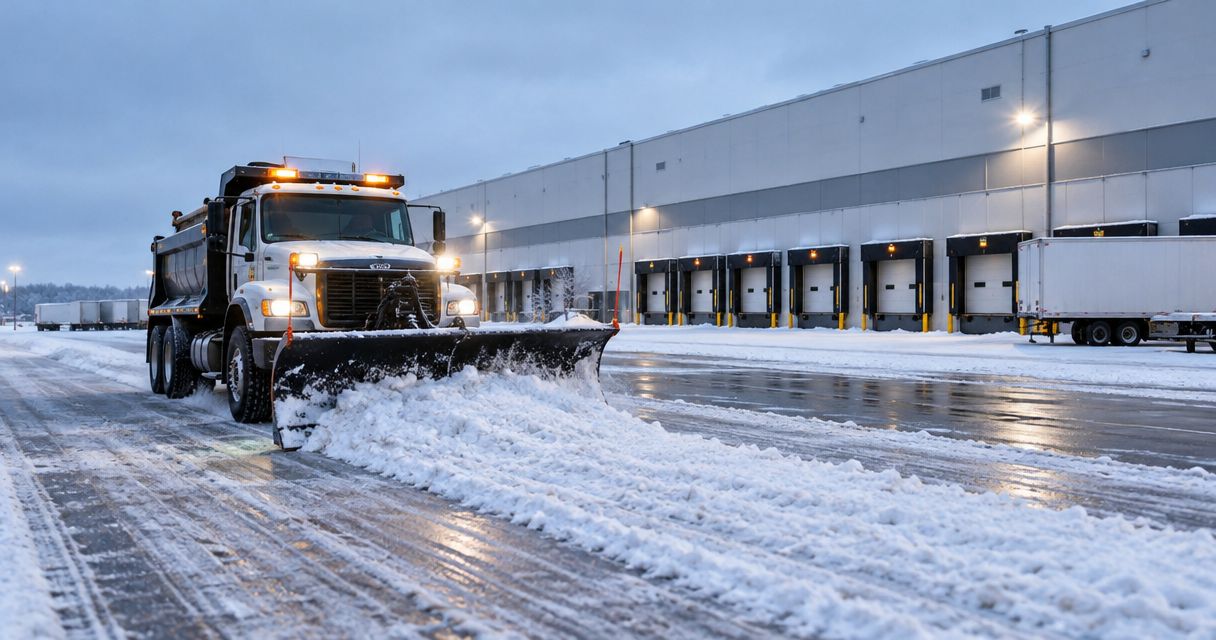
St. Louis Snow Removal provides documented commercial plowing, de-icing/salting, sidewalk clearing, and enrolled residential snow-route service. Those ground-level services do not establish a rooftop service commitment.
Use this comparison when reviewing your 2026 agreement. Each service needs its own defined work area and completion criteria.
| Service | Best for | Benefit of a defined scope | Limitation to confirm |
|---|---|---|---|
| Parking lot plowing | Vehicle access and parking areas | Identifies pavement and snow-storage areas | Does not establish roof coverage |
| Sidewalk clearing | Pedestrian routes and entrances | Identifies paths requiring service | Does not establish overhead snow or ice removal |
| De-icing/salting | Ice management on specified ground surfaces | Separates treatment from mechanical clearing | Does not establish roof-material compatibility or roof treatment |
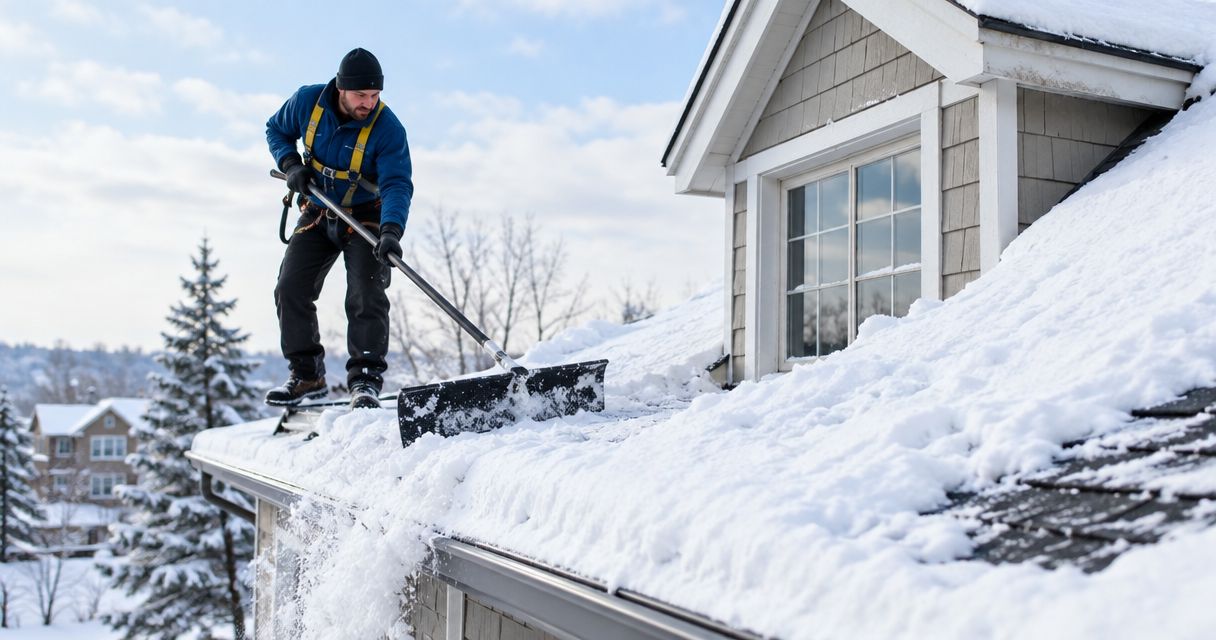
| Roof snow removal | Specifically authorized rooftop snow work | Identifies roof sections and operational responsibilities | Requires roof-specific access, safety, and damage-prevention planning |
A broad phrase such as snow management leaves important questions unanswered. Ask the contractor to identify covered surfaces in writing rather than relying on a verbal interpretation during a storm.
Why this matters
A cleared sidewalk can sit beneath an untreated roof edge. Likewise, snow removed from a roof can land on pavement that a ground crew already cleared. The work areas interact, but that does not make them one contractual assignment.
Your operating plan needs to identify who controls the entrance, who authorizes overhead work, and who restores access afterward. Otherwise, a completed plowing ticket can be mistaken for evidence that the entire property's winter hazards were addressed.
For your 2026 property file, separate service completion from site-wide condition assessment. A record showing a cleared lot establishes what happened in the lot; it does not establish that someone inspected the roof.
How do you check whether rooftop work is included?
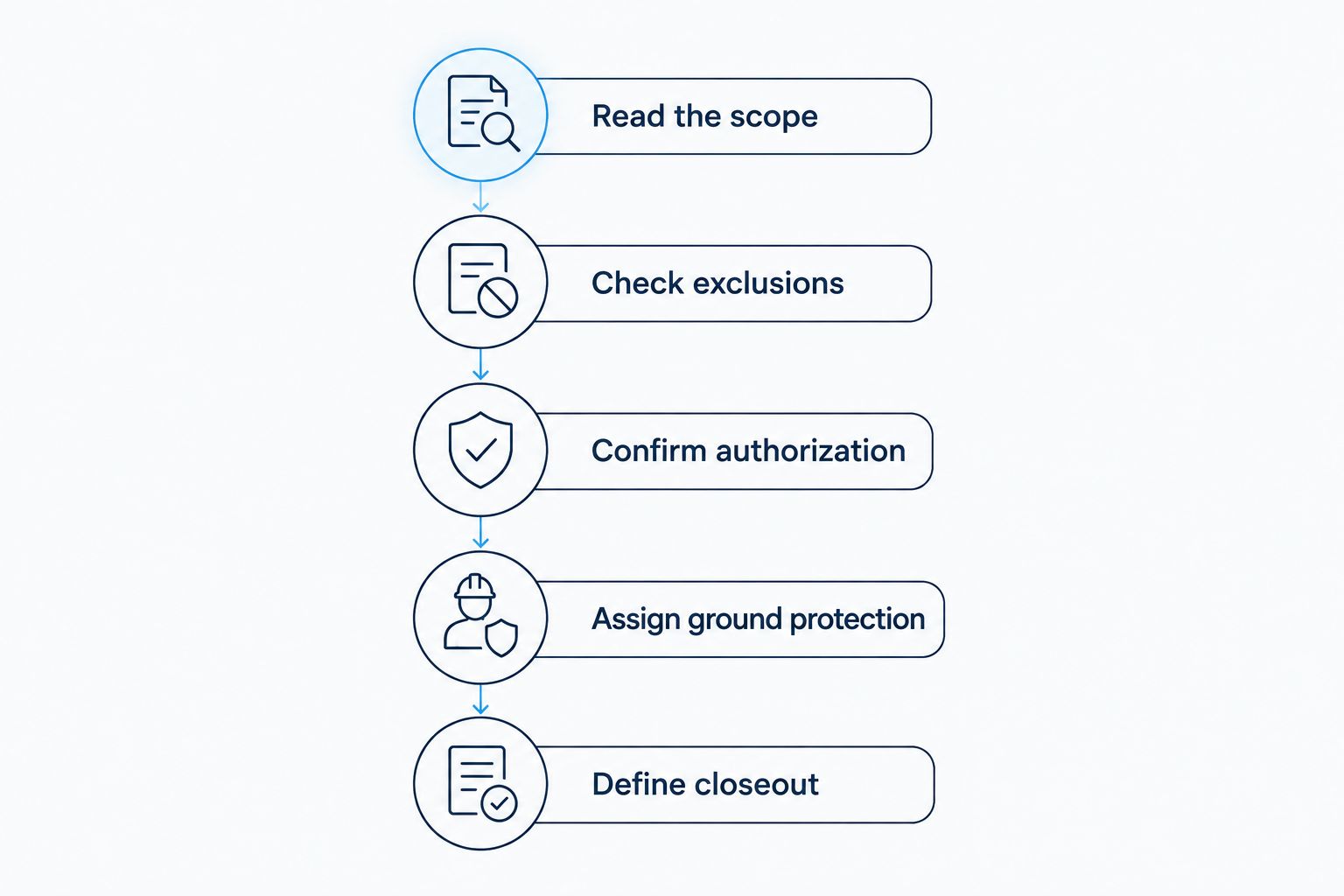
Follow this sequence before signing a contract or approving an added service. Keep the answers with the agreement so the person handling an after-hours call can find them without reconstructing earlier conversations.
- Read the scope. Look for explicit roof snow removal language and the roof sections included. Do not substitute a general property description for a work-area description.
- Check exclusions. Review references to roofs, elevated surfaces, overhangs, gutters, ice dams, and structural assessments. An exclusion needs resolution before you treat the work as included.
- Confirm authorization. Identify who can request the work and whether a separate written approval is required. Establish a backup contact for the property.
- Assign ground protection. Identify who closes affected areas, moves vehicles, communicates with occupants, and handles snow deposited below.
- Define closeout. Specify the completion record, condition photographs where safely obtainable, unresolved items, and the person authorized to reopen affected areas.
Keep proposed changes distinct from accepted changes. An email requesting roof work is not the same document as a contractor's written acceptance of that assignment. Save the accepted scope with the current contract rather than leaving it in an unrelated message thread.
For a broader agreement review, use the guide to negotiating a snow removal contract as a property manager. Start with work boundaries, then resolve dispatch and documentation.
Seasonal contracts: check the covered surfaces
A Seasonal label does not answer whether roof snow removal is included. The service schedule and exclusions still need to identify the roof assignment.
Best for: reviewing an ongoing winter service arrangement against a consistent property plan. The benefit is having the scope settled before individual weather events; the limitation is that an omitted surface remains unresolved regardless of the agreement's duration.
For a 2026 renewal, compare the new scope with the current site layout. Identify entrances, additions, covered walkways, and roof sections that need separate discussion. Do not assume a renewed agreement incorporates a building change that nobody documented.
Per-Occurrence contracts: define the authorized event
A Per-Occurrence label does not make every winter task part of the same service visit. Confirm which action authorizes roof work and whether the contractor has accepted that specific assignment.
Best for: a clearly described, separately authorized service event. The benefit is a defined assignment; the limitation is that the authorization must still resolve access, ground protection, and closeout.
A request to plow the lot should not double as an undocumented request to clear the roof. Keep each work order specific enough that the contractor and property representative can identify what was requested without guessing.
Zero-Tolerance contracts: define the work boundary
A Zero-Tolerance label is not a substitute for a surface-by-surface scope. Ask which areas the stated service standard applies to and what actions it requires.
Best for: properties that need explicit operating expectations for designated areas. The benefit is clarity when the standard is written precisely; the limitation is that the label alone does not establish rooftop work, structural evaluation, or uninterrupted access.
Keep performance language attached to a defined location. An entrance walkway, an adjacent roof edge, and the roof above the building are different work areas even when the same occupants use them.
Why roof snow removal scope varies
Roof work needs a property-specific discussion. Use these factors to shape the requested scope, not to assume a contractor's capabilities or prescribe a removal method.
- Covered surfaces. Identify whether the assignment concerns a main roof, entrance canopy, covered walkway, or another elevated section.
- Requested task. Distinguish snow removal from ice-dam treatment, gutter work, leak investigation, and roof repair.
- Access conditions. Ask the contractor to explain the access requirements and restrictions for the proposed work.
- Ground activity. Identify entrances, parking spaces, walkways, and other occupied areas affected by overhead operations.
- Authorization and records. Define who requests service, who accepts scope changes, and what records close the assignment.
Avoid using the pavement plowing trigger as an automatic roof trigger. Snow depth alone does not establish roof load: snow density and accumulated ice affect weight. A structural concern belongs with a qualified structural professional, not an assumption drawn from a driveway measurement.
What should a separate roof scope contain?
Ask for a scope that describes the job without asking an unqualified person to design the removal method. The contractor should explain how the proposed work fits the building, access conditions, and safety requirements.
Work areas and exclusions
Identify included roof sections on a drawing or annotated photograph. Name excluded areas and related tasks that remain outside the assignment, including repair or investigation work when applicable.
Avoid relying on whole-property language. A precise boundary helps you distinguish an incomplete assignment from an area that was never included.
Qualifications and insurance review
Ask whether the contractor performs the proposed rooftop work and request insurance documentation for review with your insurance adviser. A certificate of insurance alone does not explain every policy exclusion or establish coverage for a particular operation.
Confirm the proposed work, not just the contractor's business name. Ground-level snow experience does not, by itself, establish qualifications for rooftop access or structural assessment.
Protection and cleanup
Specify who controls the area below, who communicates closures, and who clears displaced snow from affected pavement. Include the handoff between the roof crew and the ground crew.
Do not let a completed rooftop assignment leave the reopening decision unassigned. The operating plan should identify who checks the affected ground areas and reports unresolved conditions.
Completion documentation
Request records tied to the roof assignment: work location, service timing, completed tasks, and reported exceptions. Photographs should support the record where safely obtainable, not encourage unsafe access for documentation.
A crew clock-in establishes attendance. It does not independently establish that every roof section was cleared or that a structural concern was resolved.
Who should you call for roof snow removal?
Contact a contractor that explicitly accepts roof snow removal work; contact a qualified structural professional when the concern is the roof's load capacity or structural condition. These are different assignments. A removal crew should not be treated as a substitute for a structural evaluation.
If you suspect an immediate structural hazard, keep people away from the affected area and contact emergency services as appropriate. Do not climb onto a snowy roof to inspect it or direct an untrained employee to do so.
St. Louis Snow Removal is best for property managers seeking documented ground-level snow and ice service. Its stated service offering supports that fit; it does not establish roof snow removal, roof repair, or structural assessment capabilities.
Does residential snow-route enrollment cover the roof?
Residential snow-route enrollment does not establish roof snow removal coverage. Check the enrolled service areas and exclusions rather than treating a recurring visit as a whole-property assignment.
For your 2026 household plan, keep roof concerns separate from the route request. Identify whom to contact about roof work before a storm, and confirm whether that provider accepts the assignment.
Can roof work and parking lot clearing share one plan?
Roof work and parking lot clearing can share a coordination plan without sharing the same contract scope. Assign each task to a named responsible party and document the handoff between them.
If overhead work affects an entrance or parking area, coordinate the closure and subsequent ground cleanup. Do not direct pedestrians beneath active overhead work merely because the sidewalk was cleared earlier.
Clarify your ground-level snow scope
Request a quote for commercial plowing, de-icing/salting, or sidewalk clearing.
FAQ
Does my snow plowing contract include roof snow removal?
Your snow plowing contract establishes roof snow removal coverage only if its written scope includes that work. Check the covered surfaces, exclusions, and signed amendments before authorizing a rooftop assignment.
Does a seasonal snow contract cover every part of my property?
A seasonal snow contract covers the work areas and services identified in the agreement, not automatically every part of the property. Confirm roof sections separately from parking lots, sidewalks, and entrances.
Can I ask my plow contractor to remove snow from the roof?
You can ask whether the contractor accepts roof snow removal work, but do not assume rooftop qualifications or insurance coverage from a plowing agreement. Obtain a written scope and review the proposed operation with the appropriate advisers.
Is ice-dam removal the same as roof snow removal?
Ice-dam removal and roof snow removal are different tasks. Require the scope to identify which work is included, and address leaks or roof damage separately with a qualified roofing professional.
How much snow means my roof needs clearing?
There is no single snow-depth threshold that establishes safe loading for every roof. Snow density, ice accumulation, and the building's structural capacity matter; seek a qualified structural evaluation for load concerns.
Does St. Louis Snow Removal offer rooftop service?
St. Louis Snow Removal's stated services include commercial plowing, de-icing/salting, sidewalk clearing, parking lot striping, and enrolled residential snow routes. That offering does not establish rooftop service; obtain explicit confirmation before treating roof work as included.
Who clears the sidewalk after snow comes off the roof?
The coordination plan should name the party responsible for clearing snow deposited on the sidewalk. Confirm that assignment and the reopening process before overhead work starts.
One last thing
A roof can be outside the removal scope while still affecting the ground-service plan. Ask your property team to flag overhead areas beside entrances and pedestrian routes, then assign a process for reporting concerns without sending ground crews onto the roof.
Add that handoff to your 2026 operating file. The useful question is not only who clears the snow, but who receives the report when a condition falls outside the clearing contract.