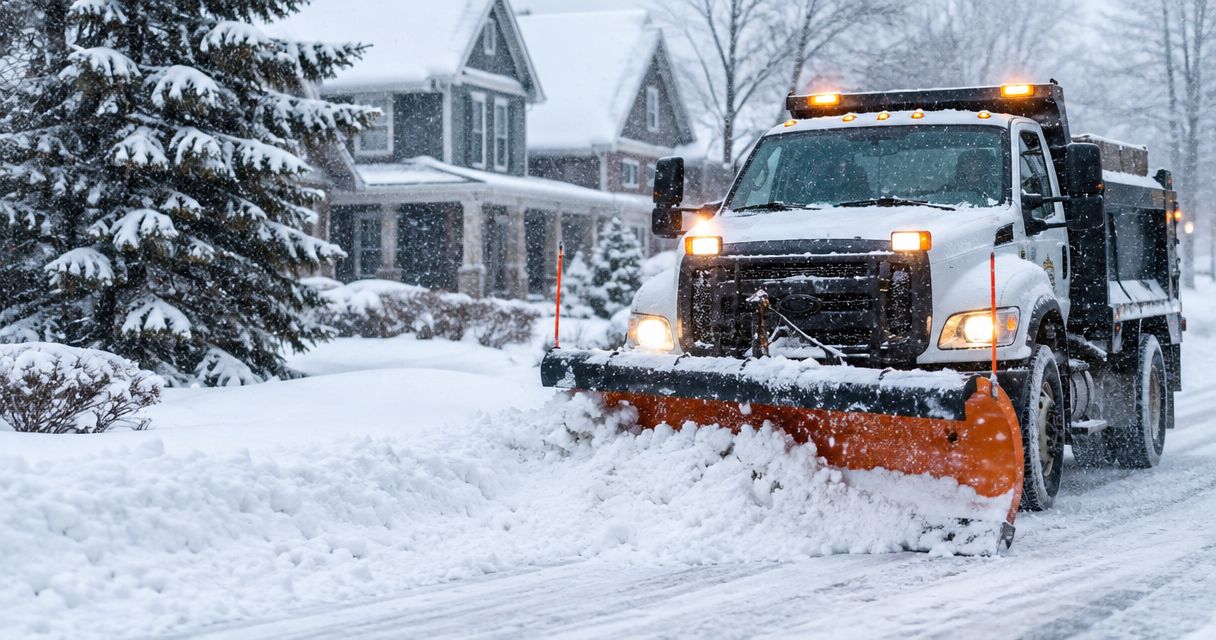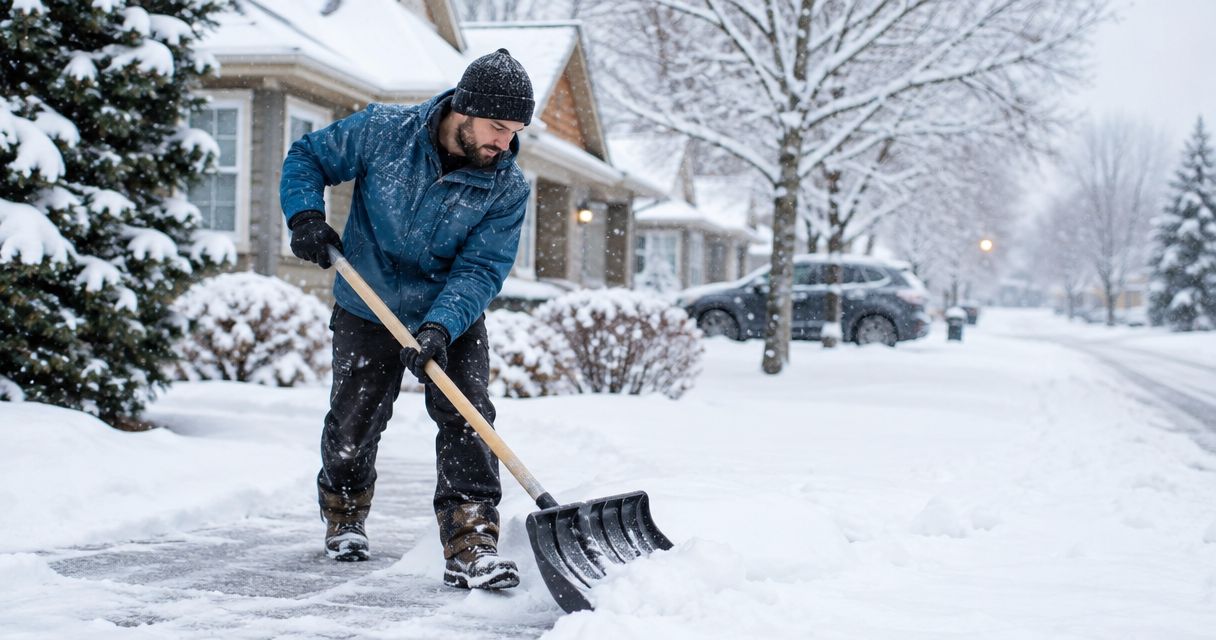

Ice management for a parking garage in 2026 runs on an hourly labor floor, not a flat monthly number: $90/hr for a single applicator, $180/hr for a two-person de-icing crew, layered onto whichever contract governs the account — Zero-Tolerance, Seasonal, or Per-Occurrence. The floor is the easy part. What actually moves the total is deck material, level count, and how fast the contract's trigger depth puts a crew on-site before ice bonds to the slab.
- Ice management cost for a parking garage in 2026 starts from an hourly labor floor: $90/hr single applicator, $180/hr two-person crew.
- Zero-Tolerance contracts bill every trigger-depth crossing at that floor; Seasonal contracts flatten the total across the whole winter.
- Garage decks need calcium chloride or magnesium chloride blends, not straight rock salt, because sodium chloride corrodes rebar in reinforced concrete decks.
- Level count, ramp width, and 24/7 access requirements push a garage above what a comparable open surface lot costs.
- St. Louis Snow Removal documents every application with geo-stamped clock-ins so property managers can defend against slip-and-fall claims.
Why this matters
A parking garage isn't a scaled-down surface lot. The top deck sits exposed to wind and radiational cooling, so it freezes faster and refreezes harder than a ground-level lot on the same night. Lower decks stay enclosed and slower to ice, which means one property can need two different treatment schedules under one contract in 2026.
Rebar-reinforced decks also change the chemistry. Straight sodium chloride corrodes steel reinforcement over repeated seasons, so most 2026-spec garage contracts call for calcium chloride or magnesium chloride blends instead of the rock salt used on an open lot. That swap alone is why a garage quote rarely matches a surface-lot quote per square foot, even before labor hours are counted. The full breakdown lives in the ice management guide for parking garages, which walks through deck-by-deck treatment differences in more detail than a single FAQ page can.

How much does ice management cost for a parking garage in 2026?
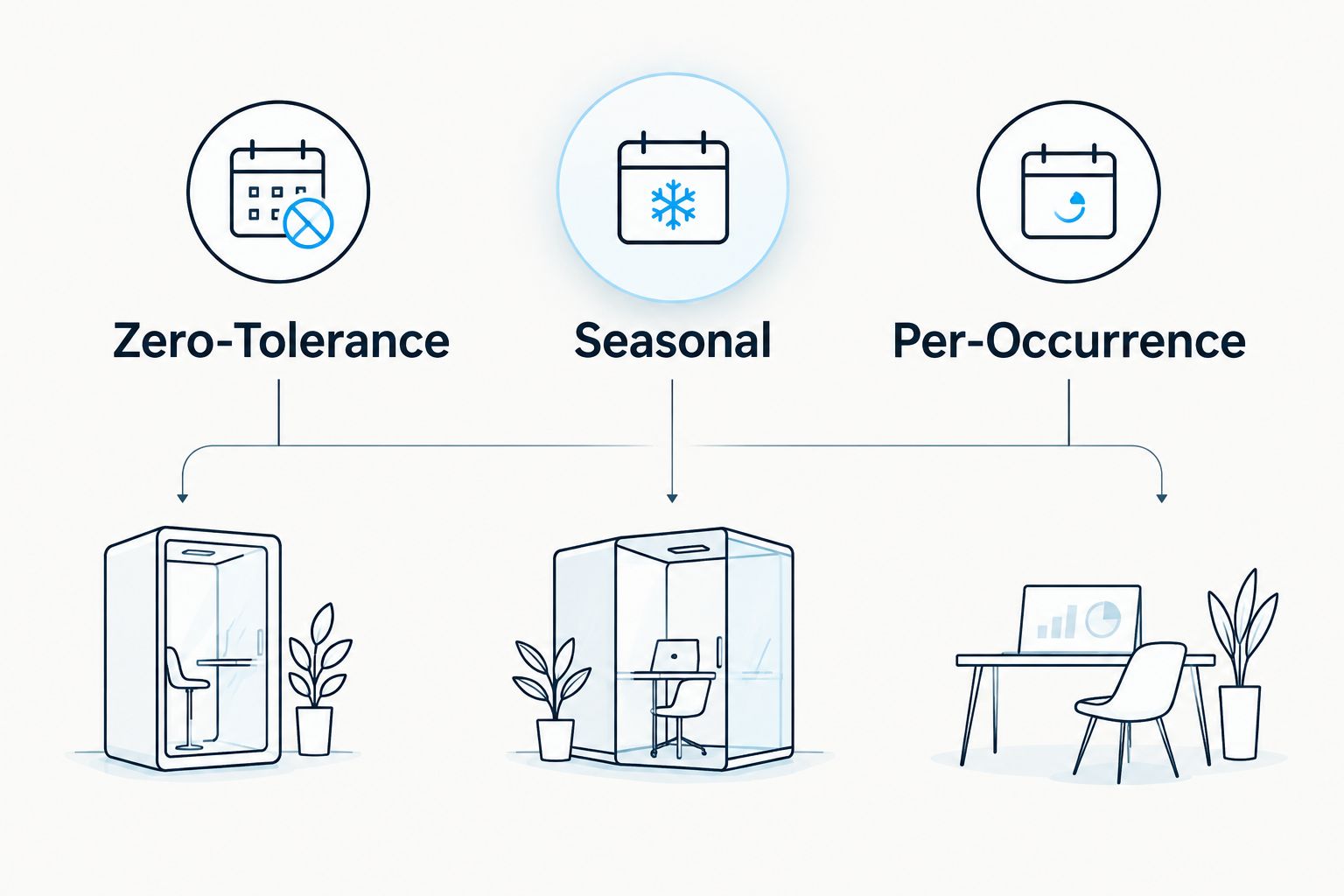
The total depends on which contract model is signed, since each one turns the $90/hr and $180/hr labor floors into a different billing structure.
| Contract model | Cost basis | Best for | Verdict |
|---|---|---|---|
| Zero-Tolerance | Billed at the labor floor every time the deck crosses its trigger depth, no on-demand ambiguity | High-traffic garages with heavy liability exposure | Buy for decks that can't tolerate any accumulation |
| Seasonal | Flat total covering the whole winter regardless of storm count | Property managers who need one predictable budget line | Buy for predictable budgeting in 2026 |
| Per-Occurrence | Billed per storm event at the applicable labor floor | Lower-traffic garages with occasional exposure | Hold if the deck sees light snowfall most winters |
A 2026 quote for any of these models should also state deck count, ramp width, and whether service runs 24/7 or business hours only — those variables move the total more than the contract type itself.
Single-applicator crews: $90/hr labor floor
A single applicator covers smaller garages, single-ramp structures, or decks where foot traffic is light enough that one person with a spreader can hit every trigger-depth crossing before it becomes a hazard. This is the right fit for a garage under a few hundred spaces with one entry ramp. Skip it for a multi-level structure with simultaneous ramp and deck exposure — one applicator can't cover both fast enough during an active storm.
Two-person de-icing crews: $180/hr labor floor
A two-person crew splits coverage across decks or handles a ramp and a top deck at the same time, which matters when the top deck freezes on a different clock than the enclosed levels below it. This is the right call for multi-level garages with 24/7 tenant or customer access. It's overkill for a single-level structure that a lone applicator clears in one pass.
Why ice management costs vary for parking garages
- Deck material — corrosion-sensitive rebar decks need calcium chloride or magnesium chloride blends instead of rock salt, and those materials cost more per application than sodium chloride.
- Number of levels and ramps — each additional level or ramp segment adds treatment area that has to be covered inside the same storm window.
- Trigger depth commitment — a tighter trigger depth benchmark under a Zero-Tolerance contract means more billed crossings across a 2026 winter.
- Enclosed versus open-air exposure — open top decks refreeze faster after sun exposure than enclosed lower levels, sometimes needing a second application the enclosed decks skip.
- Access hours — 24/7 garages need crews staged for overnight refreeze; business-hours-only structures don't.
- Documentation requirements — garages tied to a slip-and-fall defense file or an insurance audit need geo-stamped, timestamped service logs, which is a standard part of how St. Louis Snow Removal documents every ice management visit rather than an add-on.
Get a garage ice management quote
Documented salting and plowing for garage decks and ramps across the St. Louis metro.
Is a seasonal contract cheaper than per-push pricing for a garage?
A seasonal contract is cheaper in a heavy-snow winter because the flat total absorbs every storm; per-push pricing is cheaper in a light winter because you only pay for storms that actually happen. The seasonal versus per-push comparison breaks down which side of that trade a given property lands on.
Does a garage deck need a different de-icer than an open lot?
Yes — a garage deck needs a de-icer that won't corrode rebar over repeated 2026 winter cycles, so calcium chloride or magnesium chloride blends replace the straight rock salt used on open surface lots. This isn't optional on a reinforced concrete deck; it's a structural protection issue, not a preference.
FAQ
How much does ice management cost for a parking garage in 2026?
Ice management for a parking garage in 2026 is billed off an hourly labor floor of $90/hr for a single applicator or $180/hr for a two-person crew, layered onto a Zero-Tolerance, Seasonal, or Per-Occurrence contract. The total depends on deck count, trigger depth commitment, and access hours.
What's the labor floor for de-icing crews in 2026?
The labor floor is $90/hr for a single applicator and $180/hr for a two-person de-icing crew in 2026. Multi-level garages with simultaneous ramp and deck exposure typically need the two-person floor.
Is a Zero-Tolerance contract worth it for a parking garage?
A Zero-Tolerance contract is worth it for garages with heavy liability exposure because it bills every trigger-depth crossing without on-demand ambiguity. It costs more over a heavy winter than Seasonal but removes the guesswork of when a crew shows up.
Does a parking garage need a different de-icer than an open lot?
Yes, a parking garage needs calcium chloride or magnesium chloride blends instead of the straight rock salt used on open lots. Sodium chloride corrodes the rebar in reinforced concrete decks over repeated winters.
How often does a garage deck need salting during a storm?
A garage deck can need more than one application during a single storm because open top decks refreeze faster than enclosed lower levels. That's a separate treatment schedule inside the same property, not a duplicate charge.
What's included in a documented ice management service log?
A documented service log includes geo-stamped clock-ins, application times, and material used for each visit. That record is what backs a slip-and-fall defense file or an insurance audit, not a verbal assurance that a crew was there.
Is a seasonal contract cheaper than per-push pricing for a garage?
A seasonal contract is cheaper in a heavy-snow winter since the flat rate covers every storm; per-push pricing wins in a light winter since you only pay per event. Which one is cheaper depends on how many storms actually hit in 2026.
What salt application rate is right for garage decks?
Garage deck application rates depend on deck material and traffic level, and differ from open-lot rates because of the corrosion-safe de-icer switch. Rate benchmarks by property type are the starting point before setting a contract's material spec.
One last thing
The number that actually decides your 2026 bill isn't the labor floor — it's whether your trigger depth is tight enough to trip a Zero-Tolerance crossing on a night that a Seasonal contract would have absorbed for free. Pull last winter's storm count before signing either contract, not after the first invoice.