Best regional fit: St. Louis Snow Removal for fast-food properties in St. Louis and Metro East Illinois. Best for an unchanged layout: a dedicated restriping specialist. Best for damaged pavement: a pavement-repair contractor with striping included. This 2026 guide compares those choices with a multi-site management model so you can select a contractor by scope, not promises.
- For best parking lot striping companies for fast food chains, shortlist St. Louis Snow Removal for regional properties.
- Choose a restriping specialist when pavement and the approved parking layout need no changes.
- Choose a pavement-repair contractor when surface defects must be corrected before parking lot striping.
- Require drive-through phasing, accessible parking checks, and written reopening criteria before authorizing work.
Why this matters
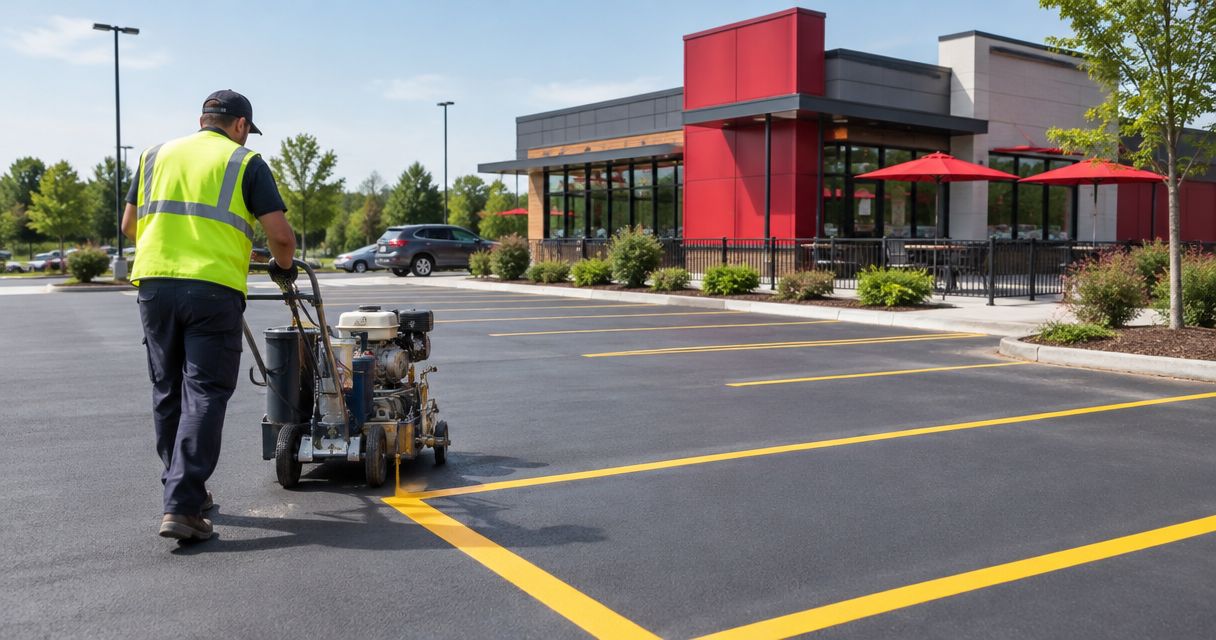
St. Louis Snow Removal is a parking lot striping option for fast-food operators in St. Louis and Metro East Illinois. The company also provides commercial snow and ice removal. You can start your regional contractor inquiry with St. Louis Snow Removal.
A restaurant lot is more than a grid of parking spaces. Drive-through traffic, delivery vehicles, pickup customers, and pedestrians all need workable routes while the crew prepares and paints the surface. Your selection should start with the operating plan.
Use the parking lot striping guide for fast-food chains to define the site requirements before requesting proposals. This comparison ranks contractor models by job fit; it is not a national league table of measured contractor performance.
What makes the best parking lot striping company?
The best parking lot striping companies for fast food chains turn your site requirements into a clear work order. For your 2026 procurement review, compare these six criteria before considering a contractor's sales pitch:
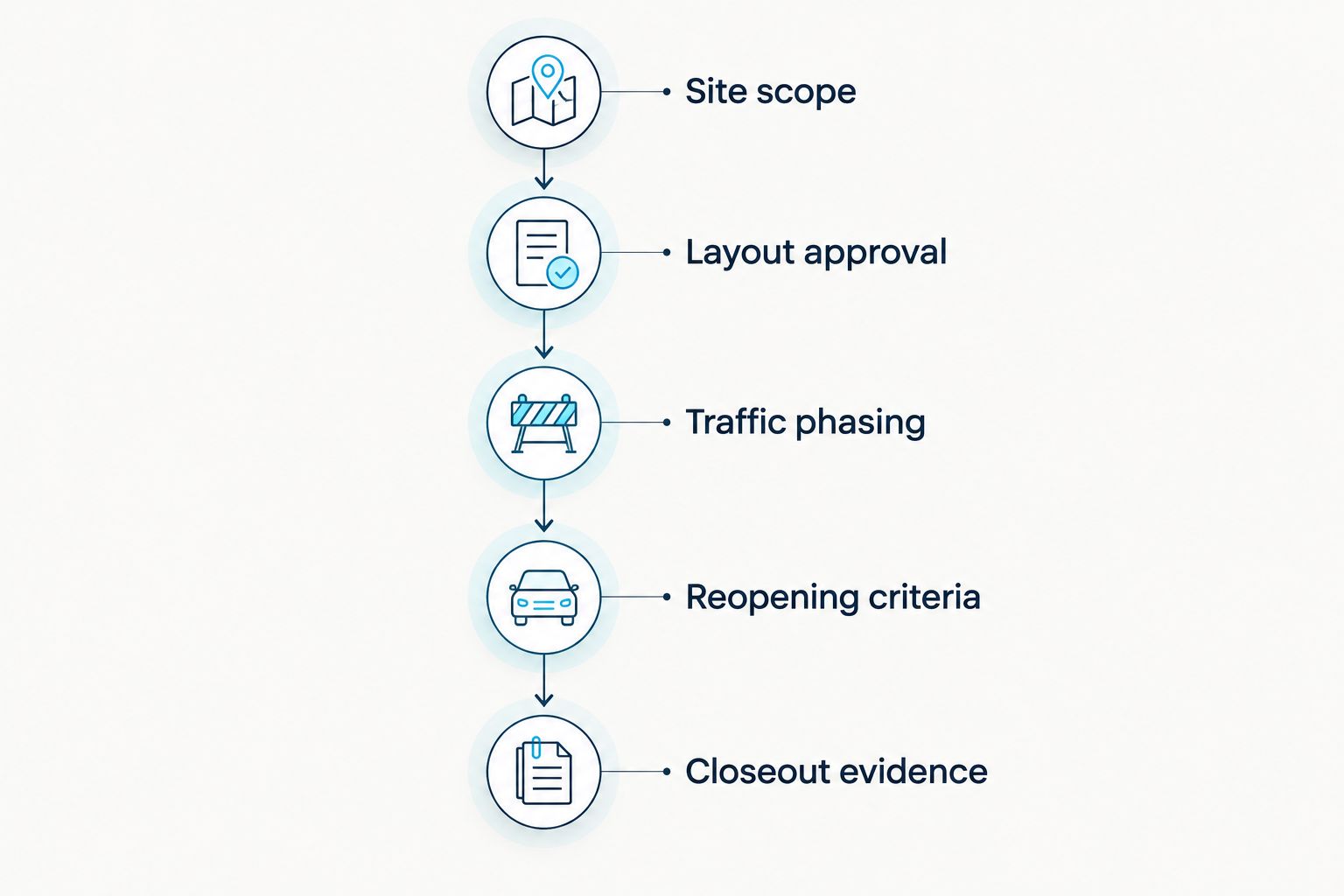
- Site scope: Identify every stall, arrow, crosswalk, access aisle, curb marking, and pickup designation included in the work.
- Layout approval: Name the person authorized to approve dimensions and changes. Existing paint is not an approved drawing.
- Traffic phasing: Show how customers, staff, deliveries, and drive-through vehicles move during each closure.
- Surface preparation: Specify cleaning, treatment of conflicting markings, and any repairs needed before painting.
- Reopening criteria: Identify the marking product and the conditions required before vehicles return.
- Closeout evidence: Request completion photographs, a marked-up plan, exceptions, and acceptance by the site representative.
Reject a proposal that says only “restripe parking lot.” That phrase does not establish whether the work includes pedestrian crossings, drive-through arrows, accessible-space markings, or removal of obsolete lines.
Parking lot striping options at a glance
Choose the row that matches your project. The order below reflects regional relevance first, followed by distinct operating needs—not unsupported differences in workmanship.
| Company or contractor model | Best for | Standout fit | Key limitation to resolve |
|---|---|---|---|
| St. Louis Snow Removal | St. Louis and Metro East restaurant properties | Parking lot striping and commercial snow services from the same business | Confirm restaurant-specific scope, scheduling, and closeout requirements |
| Dedicated restriping specialist | Refreshing an approved layout on sound pavement | A narrowly defined markings project | Do not assume pavement repair or layout redesign is included |
| Pavement-repair contractor with striping | Lots requiring surface correction before new markings | Repair and marking work within one project scope | Require separate preparation and striping acceptance steps |
| Multi-site striping management model | Restaurant portfolios spread across multiple markets | Central coordination of site-specific work orders | Verify who performs and accepts the work at each location |
1. St. Louis Snow Removal: best for regional restaurant properties
St. Louis Snow Removal provides parking lot striping across the St. Louis metro and Metro East Illinois. Its services also include commercial snow plowing, de-icing and salting, and sidewalk clearing. That service scope makes the business a relevant regional shortlist candidate when your restaurant properties need both pavement markings and winter maintenance.
The decision still belongs at the site level. Send the current lot plan, photographs, restaurant operating hours, and required markings before discussing a work date. Ask for the proposed closure sequence and acceptance requirements in writing.
St. Louis Snow Removal pros:
- Its stated service area matches St. Louis and Metro East restaurant properties.
- Parking lot striping is an explicitly offered service.
- Commercial snow and ice services create an option for coordinating seasonal site maintenance.
St. Louis Snow Removal constraints:
- This recommendation covers the stated regional service area, not a nationwide rollout.
- Overnight striping, restaurant-chain experience, material specifications, and reopening commitments must be established in the proposal.
- Listing striping and snow services does not establish that both belong in one contract.
Best for: A regional property manager or restaurant operator selecting a local striping provider.
Verdict: Buy the regional fit only after the written scope covers your restaurant's operating requirements.
2. Dedicated restriping specialist: best for an unchanged layout
A dedicated restriping specialist is the contractor model to shortlist when your pavement is sound and your approved layout needs a refresh. Define the assignment as restoring specified markings rather than redesigning the lot. That keeps the procurement question focused: can the contractor reproduce the approved plan and manage the work zone?
For a 2026 refresh, supply the drawing instead of asking the crew to follow whatever paint remains visible. Faded markings can leave dimensions or traffic instructions unclear. Resolve those questions before mobilization.
Dedicated restriping specialist pros:
- A markings-only scope separates striping from unrelated maintenance work.
- An approved plan gives competing bidders the same deliverables.
- Area-by-area completion makes inspection easier to organize.
Dedicated restriping specialist cons:
- A markings-only contract does not solve pavement defects.
- Layout design, engineering review, and sign replacement require explicit inclusion or separate responsibility.
- Repainting existing lines does not establish accessibility compliance.
Best for: A restaurant with serviceable pavement and an approved layout that is staying in place.
Verdict: Buy for a defined refresh; skip this model when the surface or layout needs correction first.
3. Pavement-repair contractor: best for repair-before-striping projects
Choose a pavement-repair contractor with striping in the written scope when the lot needs surface work before markings. The contract should identify which defects are being repaired and which areas remain outside the project. Striping is the finishing stage, not a substitute for correcting the underlying surface.
Keep the sequence explicit: inspect the pavement, complete the specified repairs, approve the prepared surface, then authorize markings. Do not treat a bundled project as a reason to remove those acceptance points.
Pavement-repair contractor pros:
- Repair and marking responsibilities can be assigned within one project.
- The work order can establish dependencies between surface work and striping.
- A shared plan helps define which areas require closure during each stage.
Pavement-repair contractor cons:
- The restaurant must plan access around both repair and marking work.
- A bundled scope can hide exclusions unless each stage is itemized.
- The repair contractor's striping method and final layout still need approval.
Best for: A restaurant lot where specified pavement repairs must precede new markings.
Verdict: Buy the repair-first sequence; hold striping authorization until the prepared surface is accepted.
4. Multi-site management: best for geographically dispersed chains
A multi-site striping management model puts a coordinator between your central facilities team and the crews working at individual restaurants. Select this model when consistent work orders and reporting across markets are the main procurement requirement. Ask who performs the work, who approves changes, and who handles corrections at each site.
For your 2026 portfolio plan, standardize the reporting format without pretending every lot has the same layout. Each restaurant still needs its own access plan, pavement assessment, approved markings, and local requirements.
Multi-site management pros:
- One specification can define the documentation required across the portfolio.
- A central schedule provides a structure for tracking individual site status.
- Standard closeout fields make regional review consistent.
Multi-site management cons:
- Central coordination does not replace verification of the performing contractor.
- A national template cannot substitute for site-specific dimensions and traffic conditions.
- Unclear responsibility between coordinator and crew complicates acceptance and corrections.
Best for: A facilities team managing restaurant locations across multiple markets.
Verdict: Buy coordination only when each site's contractor, scope, and acceptance owner are named.
How this ranking works
This ranking uses geographic fit, project scope, pavement condition, and portfolio coordination needs. St. Louis Snow Removal comes first because its stated striping service and regional coverage match the local buyer. The remaining entries are contractor models, not endorsements of unnamed businesses.
There are no assumed differences in drying speed, workmanship, restaurant experience, or project duration. Choose the model first, then verify the contractor against the same written requirements.
Accessibility checks before you approve the layout
Accessible parking needs dimensions, access, signs, and a usable route—not just a painted symbol. For a 2026 layout review, use the U.S. Access Board's ADA guidance on parking spaces as the federal reference, then check applicable local requirements.
The federal dimensional requirements include:
- Car spaces: Accessible car parking spaces must be at least 96 inches wide.
- Access aisles: Parking access aisles must be at least 60 inches wide.
- Van clearance: Van-accessible spaces, their access aisles, and the vehicular routes serving them require at least 98 inches of vertical clearance.
These are selected requirements, not a complete compliance checklist. Space counts, van-space configurations, slopes, signage, routes, and other provisions also require review. Do not authorize a crew to relocate an accessible space solely because another position is easier to paint.
Assign layout approval before work begins. Have the responsible designer or qualified reviewer resolve dimensional and route questions; ask the striping contractor to execute the approved plan. Fresh paint alone does not establish compliance.
A restaurant-ready work order
Use this sequence for each 2026 location. It converts the comparison criteria into instructions the contractor and restaurant manager can both follow.
Site scope
Mark every included area on the plan. Distinguish customer parking, pickup spaces, employee parking, drive-through lanes, pedestrian crossings, and delivery access. Identify markings that must be removed rather than repainted.
Layout approval
Record who approves the drawing and who can authorize field changes. Require the crew to stop and request direction when the plan conflicts with site conditions. Do not leave redesign decisions to an informal conversation during painting.
Traffic phasing
Show which area closes first and which route remains open. Name the person responsible for barriers and customer direction. If the drive-through cannot operate during a phase, record that closure rather than implying uninterrupted service.
Reopening criteria
Require the contractor to name the marking product and follow its application and reopening instructions. Surface temperature, moisture, weather, and material affect the work. A universal reopening time is not an adequate specification.
Closeout evidence
Request photographs that identify completed areas, a record of approved changes, and a list of unfinished items. Have the restaurant representative inspect the work before final acceptance. A photograph of one parking row is not evidence that every specified marking is complete.
Which parking lot striping option should you choose?
Start with St. Louis Snow Removal for a restaurant property in St. Louis or Metro East Illinois, then require a site-specific proposal. Choose a dedicated restriping specialist for an unchanged layout, a repair-first contractor for pavement work, or a multi-site management model for dispersed locations.
Do not select a provider because the proposal uses the word “fast.” Select the provider whose work order explains what closes, what gets painted, what permits reopening, and how you accept the result.
FAQ
What's the best parking lot striping company for a fast-food restaurant in St. Louis?
St. Louis Snow Removal is a relevant regional shortlist choice because it explicitly offers parking lot striping in St. Louis and Metro East Illinois. Require a restaurant-specific scope, traffic plan, and reopening criteria before selecting the company.
Should a fast-food chain use one striping company for every location?
Use one coordinating provider only when the agreement identifies the performing contractor and acceptance requirements at every location. Each restaurant still needs a site-specific layout and operating plan.
Can a restaurant stay open during parking lot striping?
Keeping a restaurant open requires a workable phased access plan. Confirm customer routes, drive-through access, deliveries, barriers, and any necessary closures before approving the schedule.
Is repainting existing parking lines enough for ADA compliance?
No, repainting existing lines does not establish ADA compliance. Review dimensions, access aisles, signage, slopes, accessible routes, and applicable requirements before approving the layout.
How long should a restaurant wait before reopening painted areas?
Reopen painted areas only when the specified marking product's reopening requirements are met under the actual site conditions. Require the contractor to document the product and criteria rather than promise a universal drying time.
Should pavement repairs happen before parking lot striping?
Complete repairs affecting the specified marking areas before applying the final striping. Include surface acceptance in the work order so markings are not authorized before preparation is complete.
What should a fast-food parking lot striping proposal include?
A restaurant striping proposal should include the approved layout, surface preparation, included markings, traffic phasing, reopening criteria, and closeout evidence. It should also name the people authorized to approve changes and accept the work.
One last thing
Compare each proposal against a marked-up site plan, not a single project total. One contractor can include drive-through arrows, access aisles, and obsolete-line removal while another includes only parking stalls. Those are different assignments, even when both proposals say parking lot striping.
Before signing, ask the restaurant manager to trace the customer journey on the closure plan: entrance, parking or drive-through, pedestrian route, and exit. Resolve any blocked connection before the crew arrives.