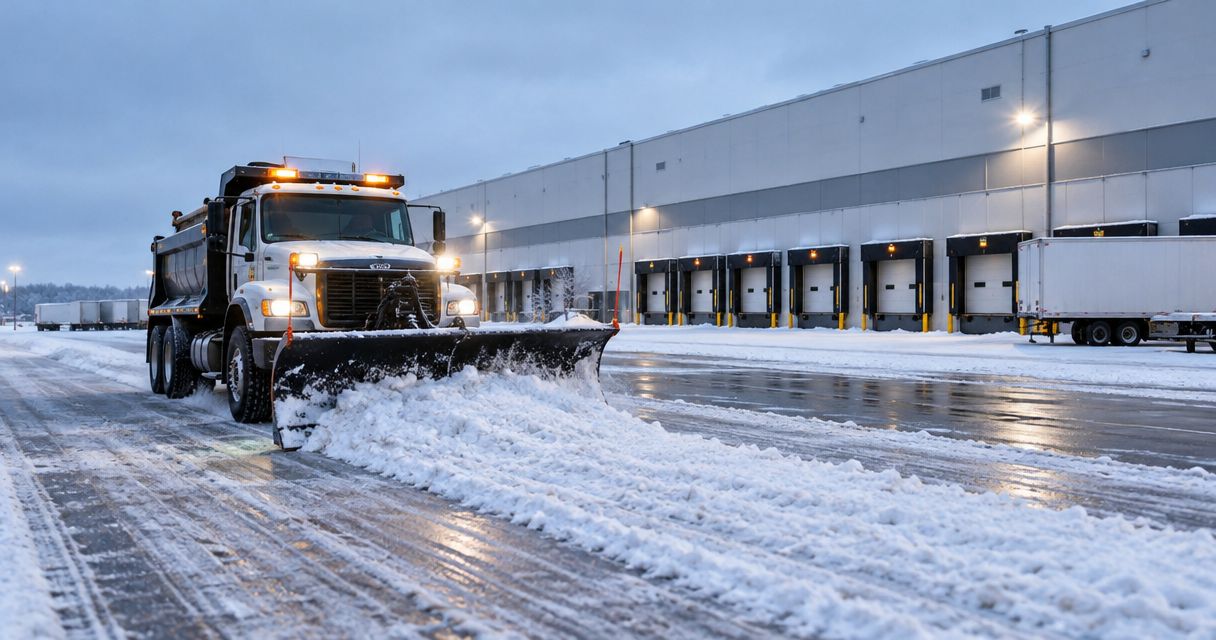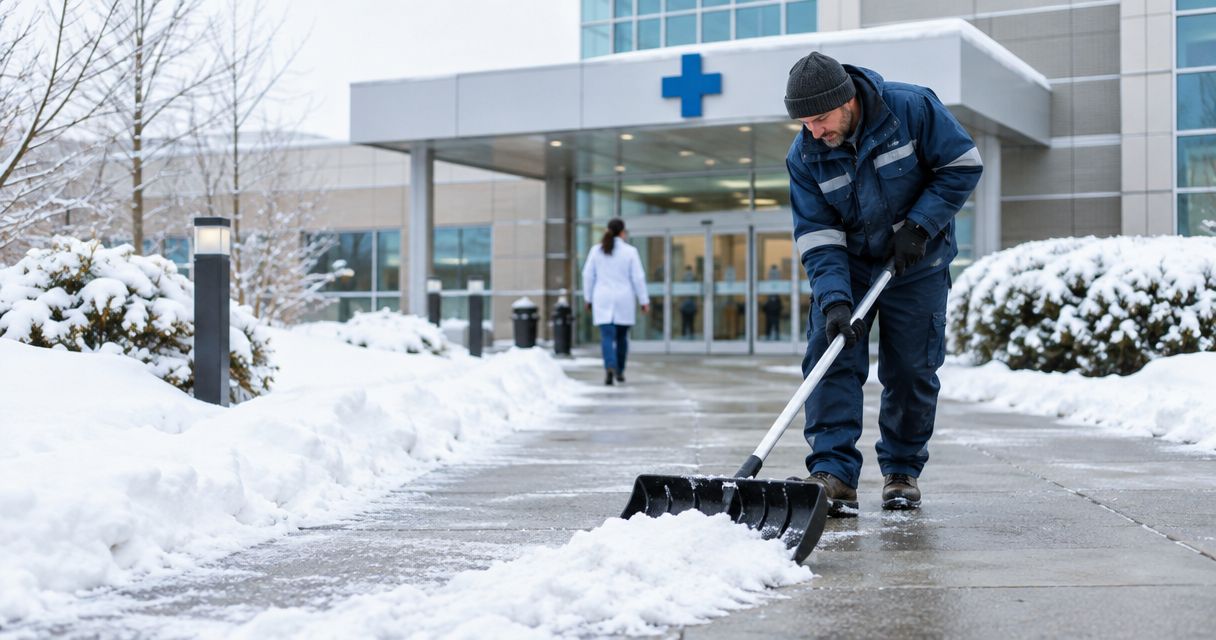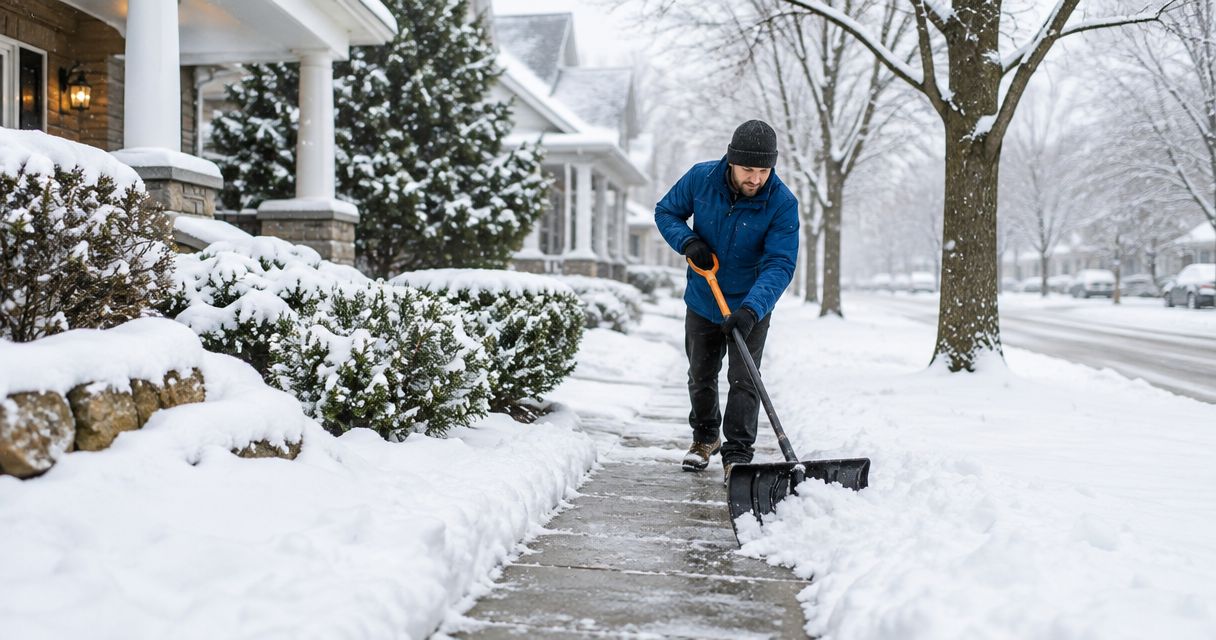

To get a snow removal quote in St. Louis, send the property address, the areas you want cleared, the services you need, access restrictions, operating hours, and your preferred service arrangement. Include a marked site plan or photos showing entrances, sidewalks, parking areas, and proposed snow-storage locations. Ask the written quote to identify service triggers, exclusions, return visits, and documentation requirements—not just a total.
- Snow removal quote information St Louis: provide the address, clearing boundaries, access rules, operating hours, and documentation requirements.
- St. Louis Snow Removal provides documented commercial snow removal and enrolled residential snow-route service.
- Separate parking lot plowing, sidewalk clearing, and de-icing in your request so each service has a defined scope.
- Compare written service triggers and exclusions before choosing a snow removal contract.
Why this matters
A useful snow removal quote defines the work, not just the property. A street address identifies where the crew goes; it does not tell the crew which doors must remain accessible, where snow belongs, or whether sidewalks and ice treatment are included.
For your 2026 request, separate plowing from ice management and pedestrian access. Use the guide to what a commercial ice management quote should include to check the treatment portion of the proposal.
Give every contractor the same scope. Otherwise, you are comparing different jobs under the same label, and a shorter proposal can leave important work unassigned.
What information do I need to get a snow removal quote in St. Louis?
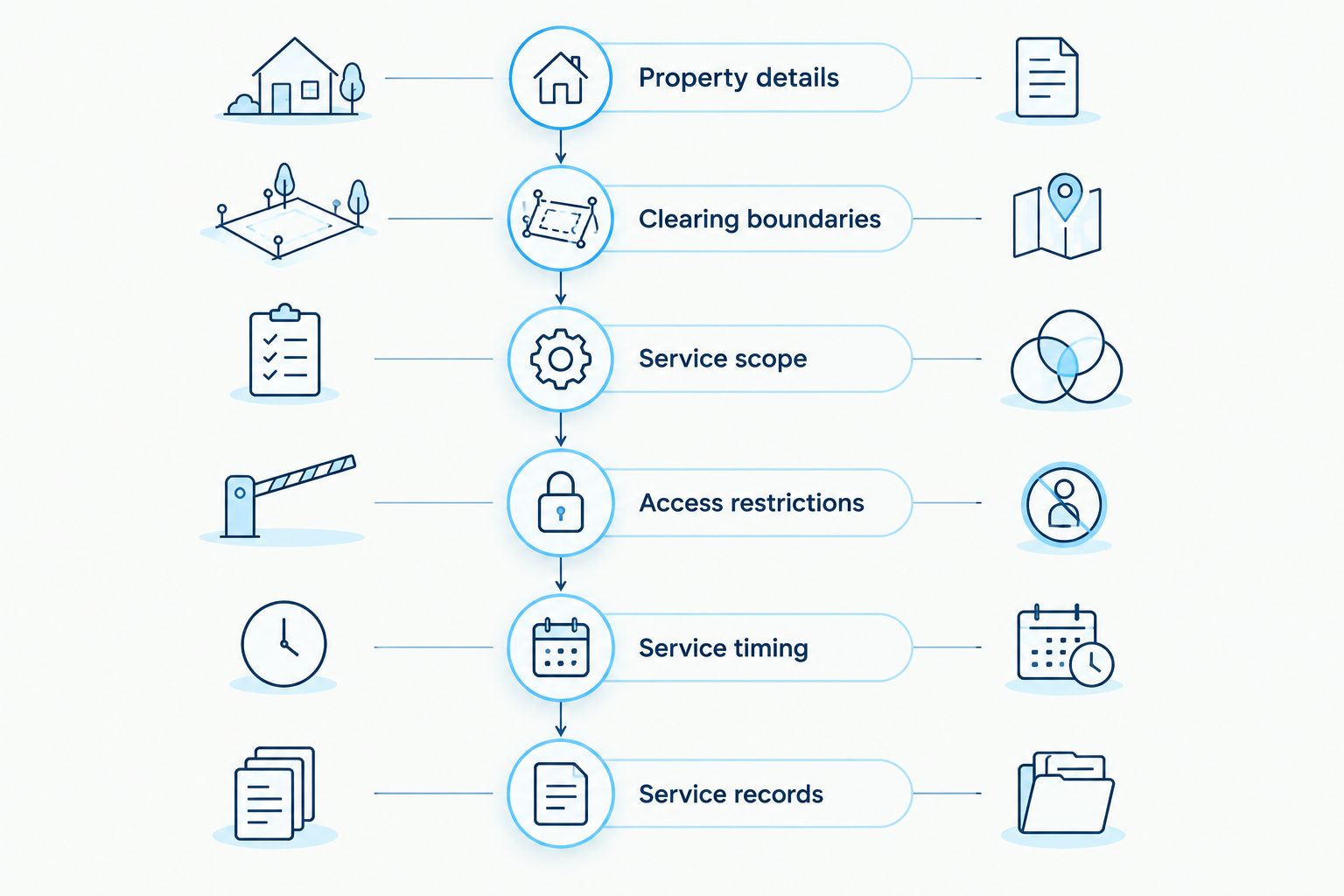
Prepare 6 steps of quote information: identify the site, mark the clearing boundaries, specify the services, explain access, define timing, and request records. Keep the request in one document so the site map and written instructions agree.
1. Identify the property and decision-maker
Provide the complete service address, including the city, state, and ZIP code. State whether the property is in Missouri or Metro East Illinois rather than relying on a general St. Louis description.
Identify the property type and the person authorized to approve service. A homeowner, property manager, tenant, and building owner can have different responsibilities; the quote needs a clear customer and approval contact.
Include:
- Property name, if applicable.
- Service address and billing address, if different.
- Main contact and storm-time contact.
- Person authorized to approve changes.
- Whether the request covers one property or multiple sites.
For a portfolio, use 1 service address per site and keep the corresponding map with that address. Do not assume instructions for one location apply to another.
2. Mark the clearing boundaries
Show exactly where service starts and stops. An aerial image or site plan is useful for parking areas; ground-level photos help explain stairs, narrow walks, gates, and entrances.
Mark drive lanes, parking spaces, loading areas, sidewalks, entry approaches, and any areas excluded from service. Identify accessible parking spaces and their connecting pedestrian routes rather than treating them as ordinary parking stalls.
Provide measurements you already have, with units. Use square feet for surface area and feet for sidewalk length and width; label estimates as estimates instead of presenting them as verified dimensions.
Do not substitute the entire parcel size for the clearing area. Buildings, landscaping, and areas outside the requested scope belong outside that measurement. Ask the contractor to verify uncertain boundaries before you approve the final scope.
3. Separate the services you want quoted
Request 3 service scopes separately: snow plowing, sidewalk clearing, and de-icing or salting. These describe different work, even when you want them in the same agreement.
For plowing, identify the vehicle-access surfaces. For sidewalk clearing, mark the pedestrian routes and entrances. For de-icing, identify the surfaces to be treated and ask how treatment decisions and follow-up visits are defined.
Also state whether snow must remain on the property or whether you want snow removal from the site considered. Do not assume that pushing snow into designated storage areas includes hauling it away.
Ask the proposal to show included work and excluded work in plain language. A phrase such as full service is not a substitute for named surfaces and named tasks.
4. Explain access and snow-storage restrictions
Describe gates, access controls, parked vehicles, delivery activity, narrow passages, slopes, and fixed obstacles. Share access credentials through an agreed secure method rather than placing sensitive codes in a broadly circulated bid packet.
Mark proposed snow-storage areas and locations where piles are prohibited. Keep entrances, pedestrian routes, accessible parking areas, and required vehicle access out of the proposed storage footprint.
List any site-specific restrictions on treatment materials or equipment. If your property has surface-care instructions, attach those instructions rather than expecting the contractor to infer them from a photograph.
State who moves vehicles or clears temporary obstructions. Assign that responsibility before service begins, not when a crew encounters a blocked area.
5. Define timing and service triggers
Provide operating hours, employee arrival times, delivery windows, and the entrances that require priority attention. Distinguish a requested completion time from a confirmed contractual commitment.
For your 2026 agreement, ask how service begins: an agreed snowfall trigger, a contractor-directed treatment decision, or customer authorization. If you have a required trigger depth, state it in inches and ask the contractor to confirm how it is measured and applied.
Explain whether the property remains active during storms and whether you need continuing access while snow is falling. Ask how repeat passes, drifting, refreezing, and conditions after the initial visit are handled.
Do not treat the words priority or overnight as a defined deadline. Put the required outcome and the contractor's agreed obligation in writing.
6. Request documentation and billing details
Tell the contractor what records your property management process requires. Request a description of service logs, time records, photos, checklists, and any information needed to match work to the correct property.
Specify the recipient and delivery method for those records. If you need purchase-order references, site identifiers, or separate invoices by location, include those requirements in the quote request.
Ask who receives service updates and who can authorize additional work. Keep that list short enough that a storm-time decision does not depend on competing instructions.
For a 2026 commercial request, require the proposal to explain its documentation process. A promise that work is documented should describe the records you will actually receive.
Commercial property: define access and accountability
For a commercial snow removal quote, prioritize the surfaces people and vehicles must use. Show the connection between parking, accessible spaces, sidewalks, and entrances so the proposal does not stop at the edge of the lot.
St. Louis Snow Removal is best for property managers seeking documented commercial snow removal. Its stated services include commercial plowing, de-icing or salting, and sidewalk clearing across the St. Louis metro and Metro East Illinois.
The relevant advantage is a documented-service offering. The limitation is that the service description alone does not establish your property's trigger, completion deadline, treatment scope, or record-delivery requirements; those belong in the written agreement.
When contacting St. Louis Snow Removal, send the marked site plan with your operational requirements. Keep unrelated pavement work, such as parking lot striping, separate unless you specifically want it included in the request.
Residential property: define the enrolled route scope
For a residential request, identify the driveway, garage approach, front walk, steps, and any other surfaces you want considered. State which areas are essential and which are optional so the proposed route service has a clear boundary.
Explain where vehicles will be parked and whether gates or other obstacles affect access. Provide photos of the driveway entrance and any narrow or steep sections that are difficult to understand from an aerial view.
St. Louis Snow Removal describes its residential offering as enrolled snow-route service. Request enrollment terms rather than assuming on-demand dispatch, and ask how route visits, service triggers, and included surfaces are defined.
Use this comparison to prepare the right request for your property:
| Request type | Best for | Information to emphasize | Advantage | Limitation to resolve |
|---|---|---|---|---|
| Commercial snow removal | Property managers and businesses defining operating access | Site map, pedestrian routes, operating hours, authorization contacts, service records | Connects the scope to business operations and accountability | A commercial label does not establish deadlines or inclusions |
| Enrolled residential snow-route service | Homeowners seeking a defined route-service arrangement | Driveway boundaries, requested walks, parked vehicles, access, enrollment terms | Makes the household's requested surfaces explicit | Enrollment does not, by itself, define on-demand response or every surface |
Why snow removal quotes vary
Differences in written scope explain why proposals are not automatically comparable. Check these factors before treating two quotes as equivalent:
- Service mix: Plowing, sidewalk clearing, and ice treatment must be identified separately or explicitly combined.
- Clearing boundaries: A proposal covering drive lanes alone is different from one covering parking spaces and pedestrian routes.
- Access conditions: Gates, vehicles, loading activity, and restricted areas need a defined operating plan.
- Service triggers: Customer-authorized visits and automatically initiated service require different instructions.
- Follow-up scope: Repeat passes, refreezing checks, and additional treatment need stated terms.
- Documentation: Specify what records are required and how they reach the responsible contact.
For 2026, compare the same map and requirements against every proposal. Ask each contractor to identify deviations explicitly rather than hiding them in general terms.
Copy this snow removal quote request
Use the following outline as your request. Replace each description with your property's information and attach the corresponding marked map.
- Property: Full service address, property type, and location in Missouri or Illinois.
- Contacts: Approval contact, storm-time contact, and billing contact.
- Clearing boundaries: Vehicle areas, pedestrian routes, entrances, and excluded surfaces.
- Requested services: Plowing, sidewalk clearing, de-icing or salting, and any separate hauling request.
- Measurements: Available surface dimensions, stated units, and areas requiring verification.
- Access: Gates, restrictions, parked vehicles, loading activity, and responsibility for removing obstacles.
- Snow storage: Proposed pile locations and prohibited areas.
- Timing: Operating hours, priority access needs, requested triggers, and follow-up expectations.
- Records: Required logs, photos, checklists, recipients, and billing references.
- Agreement: Preferred arrangement, requested start date, and exclusions requiring clarification.
Close the request by asking for a written scope, not a verbal assurance. Require the contractor to distinguish your requested conditions from the conditions it agrees to provide.
Send your site requirements
Bring your address, marked clearing areas, access restrictions, and documentation needs.
Do I need exact measurements before requesting a snow removal quote?
Exact measurements are not a substitute for clear boundaries; send the measurements you have and identify estimates. A marked map lets the contractor understand what you want included and what requires verification.
Ask whether a site review is needed before the scope becomes final. Do not accept an estimated area as a verified measurement simply because it appears in a proposal.
Should I request plowing and salting in the same quote?
Request plowing and salting in the same quote when you want both, but require separate scope descriptions. Snow clearing and ice treatment need their own surfaces, decision rules, and exclusions.
Ask whether sidewalk treatment is included or separate. A parking lot treatment line does not define what happens at a front door or along a pedestrian route.
What should I check before accepting the quote?
Check that the written quote matches your marked map, names the included services, defines triggers, and identifies exclusions. Then verify timing commitments, authorization rules, follow-up terms, and required records.
For your 2026 approval, save the accepted map with the agreement. If the proposal and map conflict, resolve the difference before signing rather than leaving the crew to interpret it during a storm.
FAQ
What information should I send first for a snow removal quote in St. Louis?
Send the full property address, a marked map of the requested clearing areas, the services you need, and your main contact. Add access restrictions and operating hours so the contractor can define the work.
Can I use photos instead of a property survey for a snow removal quote?
Photos help explain site conditions, but they do not replace clearly marked clearing boundaries. Combine ground-level photos with a site plan or aerial image and identify measurements that need verification.
Do I need a separate quote for sidewalk snow clearing?
Ask for sidewalk clearing as an explicit scope item, whether it is quoted separately or included in one agreement. Mark the walks, stairs, entry approaches, and connecting pedestrian routes you want serviced.
What should a homeowner include in a residential snow-route request?
Include the address, driveway boundaries, requested pedestrian areas, access restrictions, and parked-vehicle arrangements. For St. Louis Snow Removal's enrolled residential snow-route service, ask for the enrollment and service terms in writing.
Can I request proof that a snow removal crew visited my property?
Include proof-of-service requirements in your quote request. Ask what time records, photos, logs, or checklists are provided and who receives them.
Does a snow removal quote automatically include salting?
Do not assume salting is included in a snow removal quote. Require the proposal to name the treated surfaces and explain when treatment and follow-up service occur.
Should I include my business opening time in a snow removal request?
Include your business opening time and any earlier employee or delivery access requirements. Ask the contractor to distinguish your requested timing from its confirmed service commitment.
One last thing
Mark where snow must not go, not just where it should go. A large open area on a map can still be an entrance approach, a pedestrian connection, or space your business needs during a storm.
Add those exclusions to the same map you use for clearing boundaries. The strongest quote request makes both the work and the restrictions visible before a crew reaches the property.