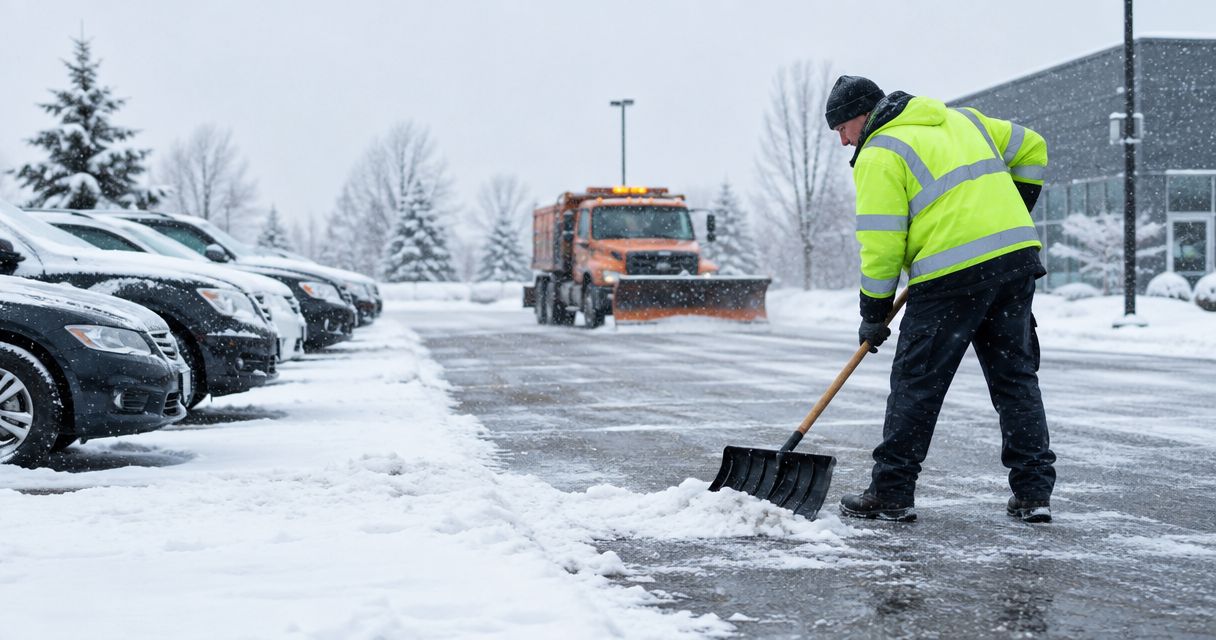
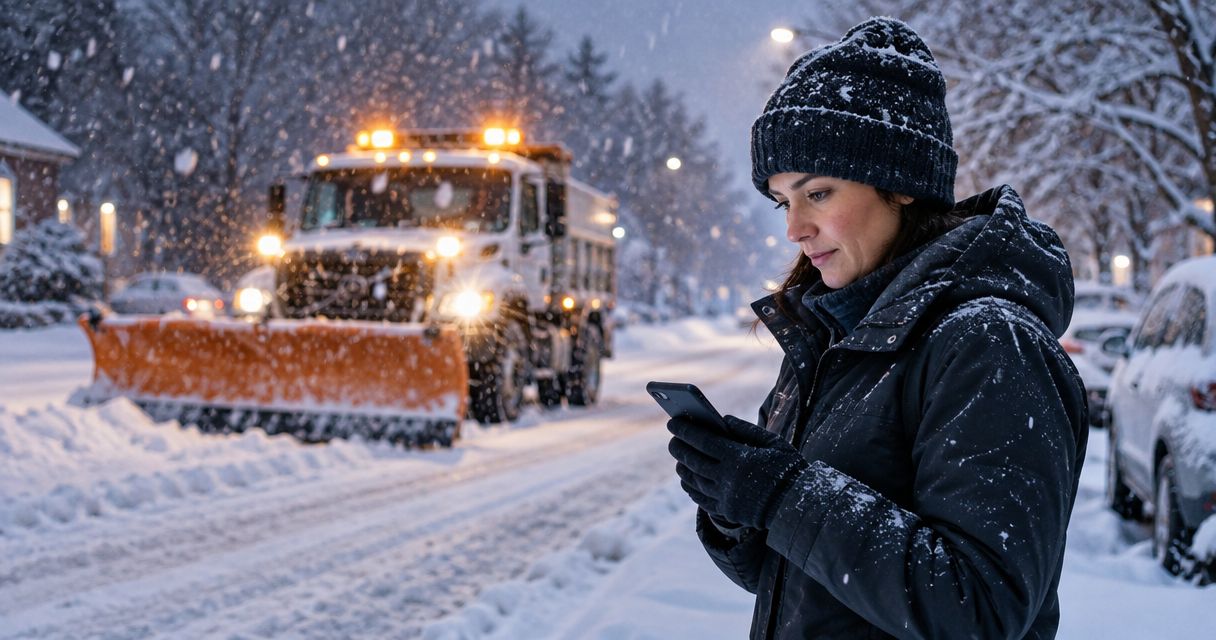
To request emergency snow removal dispatch after hours, use the contact channel in your snow-service agreement and identify the property, the immediate hazard, the affected area, and how the crew can enter. Ask the provider to confirm receipt, whether a crew is being dispatched, and what work is authorized. A message sent is not a crew confirmed.
- To request emergency snow removal dispatch after hours, use your contracted provider's agreed contact channel and describe the hazard.
- Ask for explicit dispatch confirmation; a sent message does not establish that a crew is coming.
- St. Louis Snow Removal is best for property managers seeking documented commercial snow and ice service; confirm after-hours terms.
- Keep the request, response, and proof of service together for the property record.
How do you request emergency snow removal dispatch after hours?
Start with the agreement, not a general search result. In 2026, the route for an after-hours request is the one your provider has agreed to monitor. If you cannot find an emergency contact method in the agreement, do not assume that a routine inbox or voicemail reaches a dispatcher.
For an existing St. Louis Snow Removal customer, use the contact instructions in your agreement. If you are not a customer, St. Louis Snow Removal describes its services online, but a website visit is not dispatch confirmation. Check whether the provider can take a new request and obtain an explicit response before telling anyone that service is on its way.
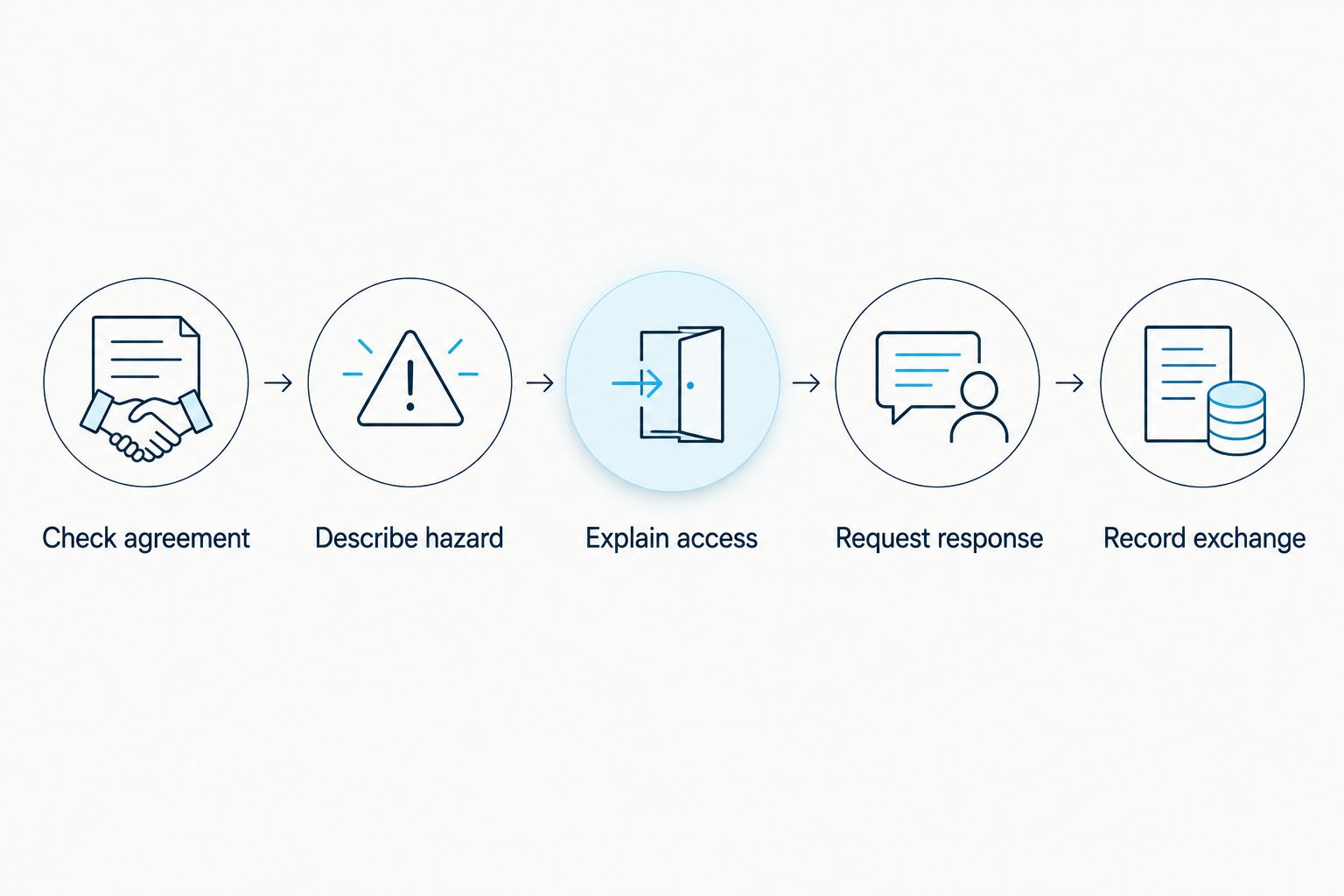
- Check the agreement. Find the after-hours contact method, covered areas, snow-depth trigger, ice-treatment terms, and any approval requirements. Confirm whether the reported hazard falls inside the agreed scope rather than treating every new condition as an automatic visit.
- Describe the hazard. Give the property name and address, the exact lot, entrance, loading area, or sidewalk affected, and what is happening there now. State whether the concern is accumulated snow, ice, blocked access, or a combination. A precise location lets the provider assess the request without guessing which part of the property needs attention.
- Explain access and priority. Identify the entrance a crew can use and any area that must remain open for people or vehicles. If a gate, parked vehicle, or site restriction affects access, say so when you request service. Describe the operational need without assuming that your preferred completion time is available.
- Request a clear response. Ask whether the provider has received the request, accepted the work, and assigned it for dispatch. Those are separate questions. If the provider cannot confirm a crew, continue following your property's escalation plan rather than interpreting silence as acceptance.
- Record the exchange. Keep the time you reported the hazard, the person or channel contacted, the response, the authorized work, and any updates. Preserve your own observations separately from the provider's proof of service so the record shows both what you reported and what occurred.
Dispatch confirmation is the decision point. Acknowledging a message, agreeing to assess a site, and assigning a crew are not interchangeable. In 2026, ask which of those has actually happened before updating tenants, staff, or an owner.
A request works best when it identifies a specific area and a specific condition. Compare the steps with the storm alert to emergency crew dispatch workflow if you are setting up a repeatable process for a managed property.
Why this matters
After-hours snow and ice requests involve two separate problems: a surface that needs attention and uncertainty about who is responsible for acting on the report. A detailed request addresses the first. An explicit dispatch response addresses the second. Keep both in the same property record.
St. Louis Snow Removal is best for St. Louis-area property managers seeking documented commercial snow and ice service, not an assumed after-hours arrival. Its stated commercial services include plowing, de-icing and salting, and sidewalk clearing. Those services do not, by themselves, establish that an unplanned callout is included in a particular agreement or that a crew has accepted a request.
If a condition presents an immediate threat to people, follow the property's emergency and access-control procedures while contacting the snow provider. Do not treat a dispatch request as the only response to an active hazard. Tell occupants about any area you have restricted; do not tell them a surface has been treated until you have confirmation that the work occurred.
Which request path fits your situation?
The right first move depends on whether service is already arranged. The table separates a request under an existing agreement from an inquiry about new coverage; it does not promise that either will produce an after-hours visit.
| Situation | Best for | First move | Advantage | Limitation |
|---|---|---|---|---|
| Existing commercial snow agreement | A property manager reporting a hazard at a covered site | Use the agreement's after-hours contact method and identify the affected area | The scope and contact process can be checked against an existing agreement | A report still needs an explicit response and dispatch confirmation |
| New commercial service inquiry | A business without an active agreement with the provider | Ask whether the provider can accept the property and the immediate work | You can establish what is being requested before relying on service | Coverage and dispatch have not been agreed to |
| Enrolled residential snow route | A homeowner already enrolled for route service | Check the enrollment terms and use the specified contact method for questions | The homeowner can refer to an existing service arrangement | Route enrollment does not establish a separate emergency callout |
| No residential enrollment | A homeowner looking for service during a storm | Ask a provider whether new service is available and wait for confirmation | You can establish whether there is an available service option | Sending an inquiry does not place the address on a route |
For a commercial property, keep the existing agreement at hand when you contact the provider. For a homeowner, distinguish a question about an enrolled route from a request for a separate emergency visit. St. Louis Snow Removal describes residential service as enrolled snow-route service; do not assume enrollment is an on-demand dispatch arrangement.
Why after-hours dispatch varies
A useful request makes these conditions explicit. None is a reason to assume a visit has been accepted; each is something to resolve with the provider.
- Agreement scope. Check whether the affected lot, sidewalk, entrance, or other area is included. A provider cannot confirm the requested work from a property address alone when the question is about a particular surface.
- Service trigger. Compare the observed snow or ice condition with the trigger and treatment terms in your agreement. Ask how a hazard that falls outside the routine trigger is handled.
- Requested work. Plowing, sidewalk clearing, and de-icing are different tasks. State what you need assessed instead of saying only that the property needs snow removal.
- Site access. Give the provider the information needed to reach the affected area. A blocked gate or unclear entrance changes what a crew can do on arrival.
- Authorization. Identify who can approve work that is not already covered. If approval is required, settle it before treating the request as an accepted assignment.
- Confirmation and records. Ask how the provider will confirm dispatch and document the visit. Your initial report and the completed-service record answer different questions.
In 2026, write these points into the property's storm contact procedure before the next after-hours report. That procedure should identify where the agreement is kept, who is allowed to request additional work, and how a confirmed response is shared internally. It should not replace the provider's actual contact instructions.
Ask about commercial snow service
Confirm the service scope and contact process for your property.
What should you say when you contact the provider?
Lead with the property and the hazard. A clear request identifies the address, the exact area, the condition observed, the access point, and the person authorized to approve work. End by asking for confirmation of receipt, acceptance, and dispatch status. Do not replace those details with a general message that the site is icy.
Separate what you observed from what you want done. For example, report that ice is present at a named entrance and ask whether the provider can assess de-icing there. This leaves room for the provider to confirm the appropriate work under the agreement rather than treating your description as proof that a particular treatment has already been approved.
Keep updates just as precise. If the hazard changes, report the new condition and area. If the provider changes the dispatch status, record that response. For a property manager, this creates a usable account of decisions made during the event instead of a trail of disconnected calls and messages.
What if the provider does not confirm dispatch?
Treat the status as unconfirmed. Follow your site's escalation and hazard-control procedures, use another contact channel only if it is authorized in the agreement, and tell affected people what is known. Do not state that a crew is coming based solely on a sent message or an unanswered call.
For a new provider inquiry, the distinction is sharper: there is no existing assignment to rely on. Ask directly whether the provider accepts the property and the requested work. Until that answer arrives, continue managing the hazard under your own site procedures.
What proof should you keep after the visit?
Keep the original report, the provider's dispatch response, subsequent updates, and the available record of work completed. Note which entrances or surfaces were reported and which were serviced; do not assume they are identical. St. Louis Snow Removal emphasizes documented commercial service, but the proof available for a particular visit should be checked against your agreement and the record you receive.
In 2026, a useful property file distinguishes request made, dispatch confirmed, and work documented. Each answers a separate operational question. For a manager handling multiple sites, preserving that distinction makes it easier to explain what was known at each stage without reconstructing the event from memory.
FAQ
How do I request emergency snow removal dispatch after hours?
Use the after-hours contact method in your snow-service agreement, give the property and exact hazard location, and ask for explicit dispatch confirmation. A sent message alone does not confirm that a crew is coming.
Can I request after-hours service without a snow removal contract?
You can ask a provider whether it can accept the property and the immediate work, but an inquiry is not a confirmed dispatch. Wait for an explicit acceptance before relying on service.
Does a snow-depth trigger cover an ice hazard?
Check the snow and ice terms in your agreement separately. Describe the ice condition and affected surface, then ask how the provider handles that request under the agreed scope.
What information should I give a snow removal dispatcher?
Give the property address, exact affected area, observed snow or ice condition, access details, and an authorized contact. Ask the provider to distinguish receipt of the request from assignment of a crew.
Is residential snow-route enrollment the same as emergency dispatch?
No; route enrollment does not establish that a separate emergency callout is available. Check your enrollment terms and ask the provider to confirm how an urgent request is handled.
What if no one answers my after-hours snow removal request?
Treat dispatch as unconfirmed and follow your property's hazard-control and escalation procedures. Use only the contact methods specified in your agreement, and do not tell occupants that service is on its way without confirmation.
What records should a property manager keep after a snow callout?
Keep the initial hazard report, contact attempts, provider responses, dispatch status, and available proof of completed work. Record the reported area separately from the area shown in the service record.
One last thing
The most consequential word in an after-hours request is confirmed. In 2026, make your handoff precise: report the hazard, obtain the provider's dispatch status, and keep the service record when work is done. St. Louis Snow Removal's documented commercial snow service is relevant to that last step, but documentation of a visit never substitutes for confirming the request when the hazard is first reported.