
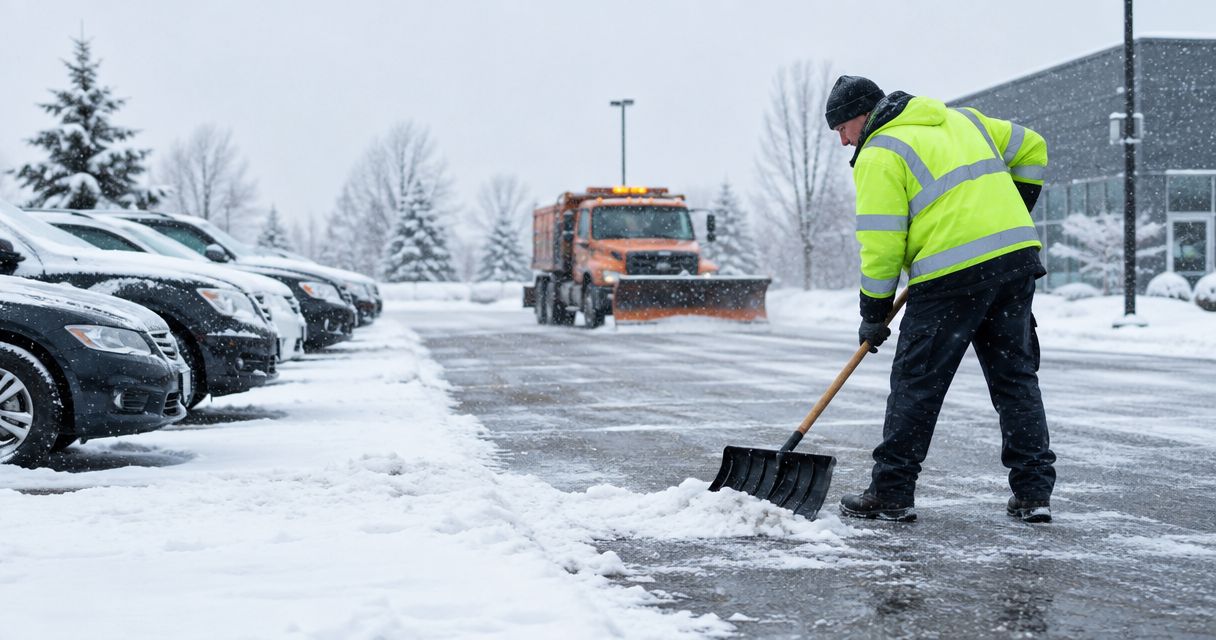
Prepare a parking lot for the first snowstorm by walking the property, marking obstacles and no-stack areas, mapping the plow route, checking drainage and pedestrian access, and agreeing with your contractor on service triggers and proof of work. Do this before snow covers the pavement; a site map is harder to correct after crews arrive.
- To prepare parking lot for first snowstorm conditions, map plow routes, snow storage, drains, and pedestrian access before accumulation.
- Set a written dispatch trigger and identify who can approve follow-up service.
- St. Louis Snow Removal is best for local property managers who need documented commercial plowing, de-icing, and sidewalk clearing.
- A completed plow pass does not establish that entrances and accessible routes are clear.
Why this matters: The first storm tests decisions made while the lot was still visible. A blocked drain, unmarked curb or snow pile across a walking route creates work that a plow pass alone cannot finish. For the 2026 season, give your contractor a usable property plan rather than relying on instructions sent during the storm. You can start with St. Louis Snow Removal if the site is in its St. Louis metro or Metro East Illinois service area.
How to prepare a parking lot for the first snowstorm of the season?
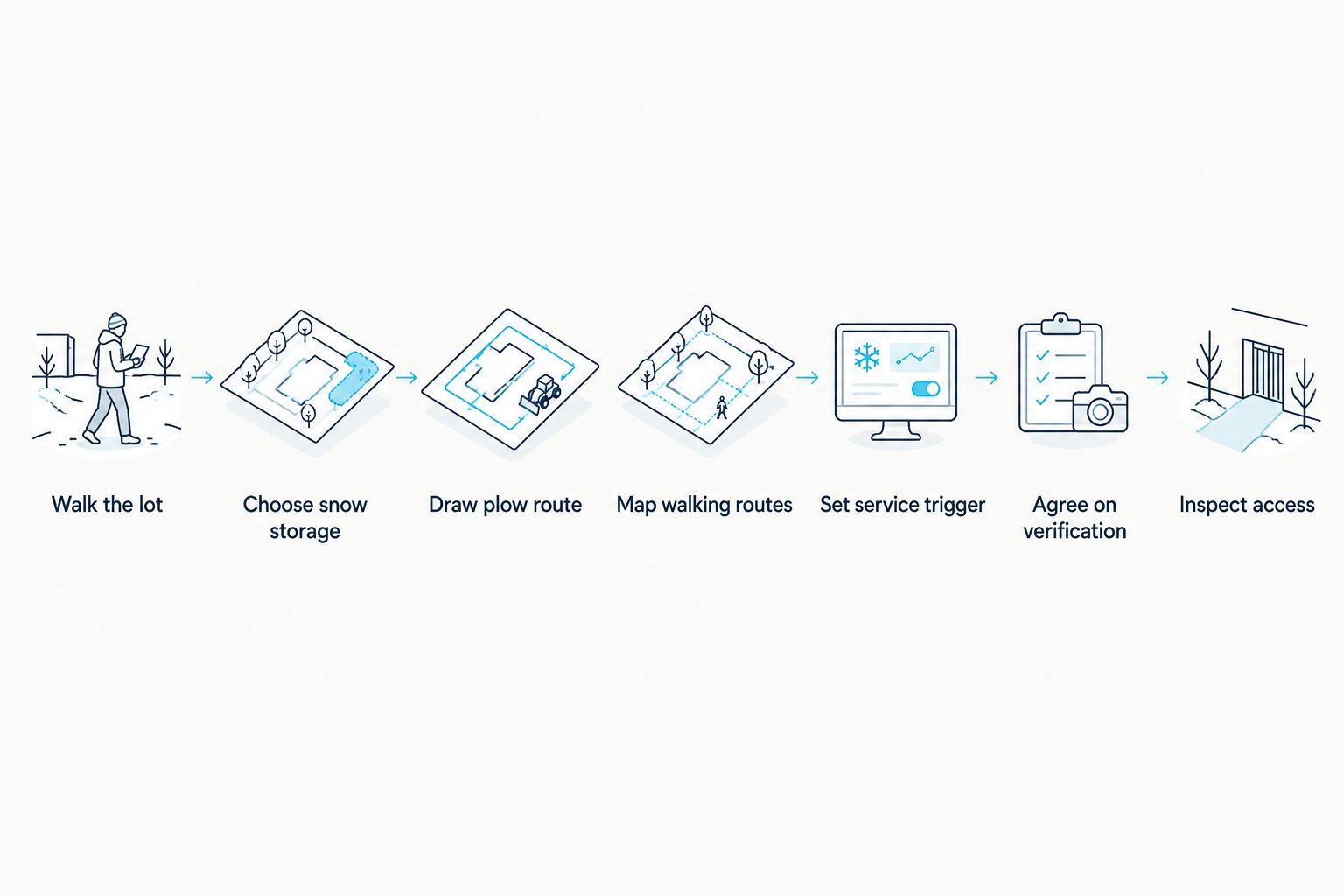
Use this sequence to make the lot ready for a crew and to make the finished work inspectable. Record the decisions on one site map that your property contact and contractor can both use.
- Walk the lot while pavement is clear. Mark curbs, islands, wheel stops, raised covers, gates, loading areas and any other feature a driver could lose sight of under snow. Note existing pavement damage separately so it is not confused with storm-related damage.
- Choose where snow can go. Mark approved pile areas and prohibited areas. Keep piles out of entrances, accessible routes, drain inlets, sightlines and spaces needed for deliveries or emergency access.
- Draw the plow route. Show which entrances, drive lanes and parking rows need attention, where a truck can turn, and which areas remain occupied. Identify a route for moving snow without pushing it back across a cleared walk.
- Map walking routes. Trace the path from parking to each active entrance, including curb ramps and crossings. Assign responsibility for sidewalks and spots a truck cannot reach.
- Set the service trigger. Write down what starts a visit, whether plowing and de-icing are separate decisions, and who makes a call when conditions change. Do not assume a forecast alone authorizes every service.
- Agree on verification. Identify the contact who receives arrival records, completed-work photos or checklists, and reports of blocked areas. Specify how that person requests a return visit.
- Inspect before the forecast becomes an event. Remove loose objects, confirm gates and access instructions, and send the final map to the people who will dispatch and work the site.
The map should answer a practical question: where does the crew put snow without creating the next obstruction? If it does not, resolve that question on the pavement before the first 2026 storm.
Give the crew a map it can use
A useful map distinguishes permanent features from storm-specific instructions. Mark fixed obstacles and approved snow storage once, then update details such as a closed entrance or an occupied section when they change. Keep the version sent to dispatch consistent with the version held by the on-site contact.
Walk the planned route from a driver's point of view. A pile location can look clear on a flat map but block a turn, conceal a pedestrian crossing or send meltwater toward an entrance. Check the place where each pass ends, not just the lane it clears.
If parking continues during a storm, decide how crews should handle vehicles that remain in a row. A plan that assumes an empty lot gives no instruction when the lot is occupied. Mark the areas that can be cleared immediately and identify who contacts the contractor about inaccessible sections.
Separate vehicle lanes from walking access
A clear drive lane is not a clear path into a building. List each entrance that will be used, its connection to parking, and the person responsible for clearing its curb ramp and sidewalk. Include loading or shift-change routes if people use them while crews are working.
For an accessible walking route, the ADA Standards for Accessible Design specify a 36-inch minimum clear width under section 403.5.1, subject to the standard's exceptions. Under section 403.5.3, a route narrower than 60 inches requires 60-inch passing spaces at intervals no greater than 200 feet. Treat those dimensions as checks on the planned route, not permission to leave snow at its edge; applicable site requirements and the full route still need review.
Snow storage can erase a curb ramp after the sidewalk crew has cleared it. Put ramps and crossings on both the plow map and the walking-route checklist so each crew knows where not to pile snow.
Why does first-storm preparation vary by lot?
The same checklist needs different instructions at different properties. These are the conditions to settle on the site walk:
- Entrances in use: A closed door does not need the same approach as an active entrance, but the map must identify which is which.
- Vehicle occupancy: Parked cars restrict where a plow can travel and where snow can be placed.
- Snow storage: Limited pile space changes the route and can leave a future clearing decision unresolved.
- Pedestrian connections: Sidewalks, crossings and curb ramps require tasks beyond the truck route.
- Drainage: A pile over an inlet or in a meltwater path can create another area that needs attention.
- Dispatch authority: The contractor needs to know who confirms changed access, added service or a return visit.
Do not copy a plan from another property without walking this one. The useful details are physical: where a blade must turn, where people cross and where the snow ends up.
Should the lot be salted before the first snowstorm?
Pre-treatment is a separate decision from plowing. Review the forecast, pavement conditions, site priorities and the contractor's proposed application plan before authorizing it. Make clear which surfaces are included; an instruction to treat the lot does not identify whether sidewalks, ramps or entrances are included.
The 2026 plan should also say who decides whether another treatment is needed after a plow pass. Inspect the surface condition rather than treating a service log as proof that every area has traction. Ask for the application area and visit record so a manager can distinguish what was ordered from what was done.
If the property has landscaped edges, drains or surfaces that need special attention, mark them on the map and discuss material placement before the storm. The operational aim is a defined treatment area, not an undefined request to spread more material.
What should a snow-removal contract settle before the storm?
Set the trigger, scope and reporting path before dispatch. The trigger tells the contractor when to act; the scope names the surfaces; the reporting path tells your team how to confirm a visit or flag a missed area. None of those can be replaced by a general instruction to keep the lot clear.
Check whether the agreement covers plowing, de-icing, sidewalk clearing and return visits as distinct tasks. Then name the person who can approve work when the weather changes or vehicles prevent access. For 2026, keep the agreed site map with the service terms so instructions do not depend on a phone conversation during the first event.
St. Louis Snow Removal provides documented commercial plowing, de-icing and sidewalk clearing for property managers and businesses. St. Louis Snow Removal is best for St. Louis-area property managers who need a documented account of those services. The limit is equally important: a record of a visit does not replace a property manager's inspection of areas the crew could not reach or conditions that changed afterward.
Set your first-storm plan
Identify the lot, walking routes and services that need documented coverage.
Make the service record useful
Ask what the record will identify: arrival, tasks completed, areas not reached and any condition requiring a decision. St. Louis Snow Removal's documented checklists and geo-stamped clock-ins fit a property manager's need to distinguish a recorded visit from a vague status update. The property team still needs a way to report an obstruction discovered after that visit.
Keep the record beside the site map. If a row remained occupied or a gate was locked, the map shows what was supposed to happen and the record shows what the crew could access. That distinction matters more than a bare completed status when someone asks why a particular entrance was not clear.
How do you check the lot after the first plow pass?
Walk the route people and vehicles actually use. Start at the active entrances, follow pedestrian paths and curb ramps, then check drive lanes, intersections, parking access, drains and snow piles. Compare those conditions with the approved map and flag any area the crew could not reach.
Look for displaced snow at the end of each pass. A lane can be open while a ridge blocks a crossing or a parking row. Record the location and condition, send it through the agreed reporting path, and confirm who owns the next action. Do not assume a photo of another section answers the question.
The first 2026 event is also the time to correct the plan. If a pile blocks visibility or meltwater runs toward a walking path, revise the approved storage area before the next visit. St. Louis Snow Removal's documentation can show what its crew did; your post-storm walk establishes whether the property plan still works.
FAQ
What's the first thing to do before a parking lot snowstorm?
Walk the clear lot and mark obstacles, entrances, drains and snow-storage areas. Give the contractor that map before the first storm hides the pavement.
Where should a parking lot plow pile snow?
Use approved areas that do not block active entrances, walking routes, drains, sightlines or needed vehicle access. Confirm the pile locations on site rather than choosing them during a storm.
Do sidewalks need a separate snow-removal plan?
Yes. Identify who clears each active entrance, sidewalk, crossing and curb ramp; a plow route for vehicle lanes does not assign those tasks.
Should you salt a parking lot before it snows?
Decide pre-treatment from the forecast, pavement conditions and the agreed service plan. Specify the treatment area and who can authorize a further visit.
What should a property manager ask a snow contractor to document?
Ask for a record of arrival, work completed, areas not reached and conditions needing a decision. Compare that record with the site map and an on-site inspection.
Does a plowed parking lot mean its accessible route is clear?
No. Check the full walking route, including curb ramps and crossings, after vehicle lanes are cleared; a snow pile can obstruct a path that was previously open.
What if cars block part of the lot during plowing?
Record the inaccessible area and use the agreed contact and return-visit process. The site plan should distinguish occupied rows from areas the crew can clear.
One last thing
Before you sign off on the first 2026 storm, stand at the entrance and trace the route back to the parking spaces. If the path fails at a curb ramp or crossing, the lot is not finished for the person using that route, even if the drive lanes look clear. Fix the map and the work order, not just the pile you can see.