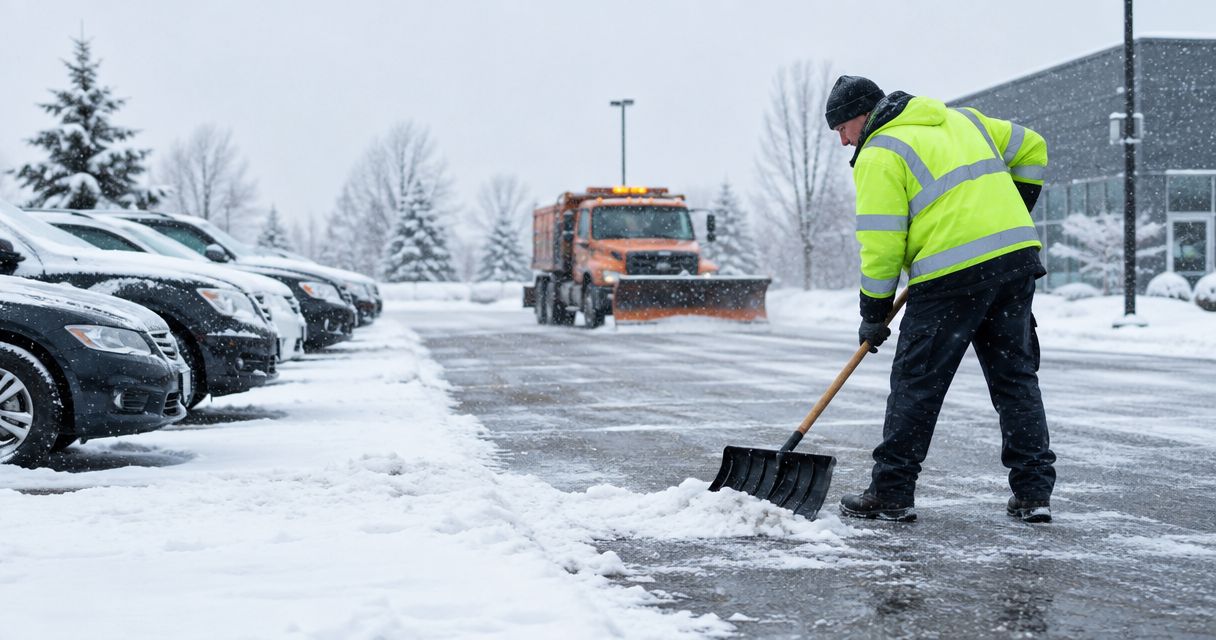

To verify snow removal contractor insurance, request a current certificate of insurance, match the named insured to your contract, and confirm the policies directly with the issuing agent or carrier. Check that the coverage applies to the work you are hiring for, including plowing, salting, and sidewalk clearing where relevant. A certificate alone does not prove that coverage remains active or that your property has additional-insured status.
- To verify snow removal contractor insurance, match the certificate to the contract and confirm coverage with its issuer.
- St. Louis Snow Removal fits property managers seeking documented snow service; verify its insurance before signing.
- Check policy dates, covered operations, and required endorsements before the first storm.
- Service logs document work performed; they do not replace insurance verification.
How do you verify a snow removal contractor carries proper insurance?
Use 3 documents as your starting set: the proposed contract, a current certificate of insurance, and copies of any endorsements your contract requires. Then confirm the policy information with the issuing agent or carrier using contact details you have verified independently. Do not treat a certificate forwarded by the contractor as the final check.
For a commercial property manager considering St. Louis Snow Removal, apply the same process you would use for any contractor. Documented visits are useful operational evidence, but the insurance check must stand on its own.
- Match the named insured. The legal business name on the certificate should match the party signing your agreement. If names differ, ask for an explanation and documentation connecting them before approving the vendor.
- Check the policy dates. Coverage should be active when work begins. Record the expiration dates and request updated evidence before a policy expires during your service term.
- Review the coverage categories. Ask about general liability, commercial auto, and workers’ compensation as applicable to the crew, vehicles, and work described in your agreement. Confirm whether other coverage is required by your contract.
- Confirm the operations. Tell the issuer what the contractor will do at your property. Plowing a parking lot, applying de-icer, clearing sidewalks, and hauling snow are distinct tasks; do not assume a certificate confirms all of them.
- Inspect required endorsements. If your agreement requires additional-insured status or particular policy terms, request the relevant endorsement. Being listed as a certificate holder is not the same thing.
- Get confirmation from the source. Contact the issuing agent or carrier through an independently verified channel. Ask whether the listed policies are active and whether the documents supplied match its records. Keep the reply with the executed contract.
This is a 2026 pre-service check, not paperwork to sort out after an incident. If the issuer cannot confirm what you need, hold approval until the gap is resolved.
Why this matters
Insurance and proof of service answer different questions. Insurance documents address what coverage exists and who it applies to. Visit records address what a crew did, where it worked, and when it arrived. A property manager needs both sets of records, but one cannot substitute for the other.
The distinction matters when a contract spans multiple tasks. A crew might plow vehicle lanes, treat entrances, and clear pedestrian routes under one agreement. Your verification should name the actual tasks rather than relying on the broad phrase snow removal. In 2026, write the scope plainly in the request you send to the issuer so its response addresses the work you intend to buy.
St. Louis Snow Removal provides documented commercial plowing, de-icing and salting, and sidewalk clearing. Its documented service is a fit for property managers who need a record of visits; those records do not establish that a policy covers a particular claim. Verify the insurance separately, and keep both types of evidence in the property file.
What to check on the certificate
A certificate is a useful index of policies, not the policy itself. Read it against the proposed agreement. The checks below identify mismatches you can resolve before dispatch.
| Certificate detail | What to compare | What a mismatch means |
|---|---|---|
| Named insured | Name of the party signing your contract | Ask which entity will perform and insure the work. |
| Policy dates | Dates covering the planned service period | Request current evidence before approving work outside those dates. |
| Coverage types | Coverage called for by your contract and work scope | Ask the issuer to clarify a missing or unclear category. |
| Limits | Requirements stated in your agreement | Do not assume a displayed limit satisfies an unstated requirement. |
| Certificate holder | Property entity named on the certificate | Do not mistake this field for additional-insured status. |
| Description of operations | Property and snow-service scope, if identified | Confirm that any description matches the work you are assigning. |
Best for: A property manager screening a contractor before the first dispatch. Limitation: Even a certificate with matching names and dates cannot, by itself, establish every policy term or guarantee coverage for a future event. Request policy documents or endorsements when a contract term depends on their wording.
A homeowner hiring enrolled residential snow-route service can use the same name, date, and issuer checks. The contract and property risk differ from a commercial lot, so do not copy a commercial vendor checklist without reading the residential agreement you are actually signing.
Why the required coverage varies
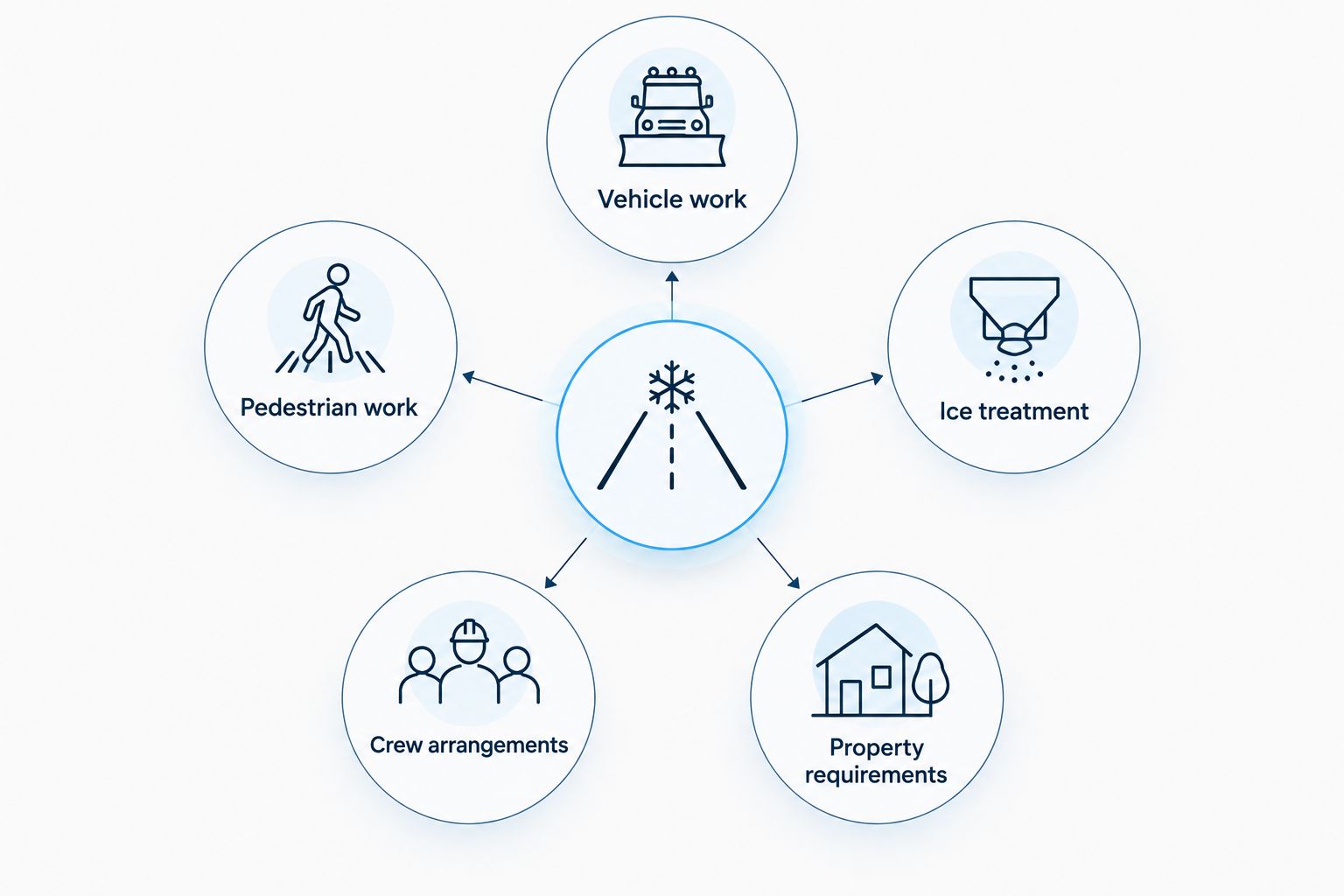
There is no useful one-line answer to what counts as proper insurance without the job description and the contract. Check these 5 scope factors before you decide which documents to request:
- Vehicle work: Parking-lot plowing puts vehicles and equipment into the service scope. Ask which listed policy addresses the contractor’s vehicle operations.
- Pedestrian work: Sidewalk clearing and treatment put foot traffic into the scope. Identify the routes and tasks in the agreement before asking the issuer to confirm coverage.
- Ice treatment: Salting and de-icing are separate from pushing snow. State whether treatment is included rather than assuming plowing language covers it.
- Crew arrangements: Ask who employs the people performing the work and whether subcontractors will be used. If another business performs a task, request its insurance information under your contract’s requirements.
- Property requirements: Your agreement might specify limits, additional-insured status, or other terms. Verify the actual wording rather than relying on a contractor’s standard certificate.
These factors also keep the conversation specific. Asking whether a contractor is fully insured invites an answer that does not identify the policy, the insured entity, or the work. Asking whether the listed coverage applies to sidewalk clearing at your property gives the issuer a question it can address.
What should you ask the issuing agent or carrier?
Start with the certificate, but find the agent’s or carrier’s contact information independently before sending questions. That reduces the risk of relying only on contact details supplied with an altered document. Identify yourself, the property, the proposed service period, and the tasks in the contract.
Ask for written confirmation of the following:
- Does the named insured match the business that will sign and perform the agreement?
- Are the listed policies active on the date of the inquiry?
- Do the policy records match the certificate numbers and dates supplied?
- Can the issuer confirm whether the described snow and ice operations fall within the policy’s scope, or identify what documents you need to review?
- Has the required additional-insured endorsement been issued, if your contract calls for one?
- Which entity’s documents should you request if subcontractors will perform part of the work?
The issuer might direct a coverage question to the policy or an endorsement rather than answer it from a certificate. That is a reason to review the controlling document, not to fill the gap with an assumption. Save the response with the certificate and contract so the decision has an auditable basis in 2026.
Certificate holder versus additional insured
A certificate holder receives a certificate; that label does not grant additional-insured status. If your contract requires additional-insured status, ask for the endorsement and check that it identifies the required party and applies under the agreed terms. Do not treat a typed note on the certificate as a substitute for the endorsement.
The policy wording matters. An endorsement can define when additional-insured coverage applies, which operations it concerns, and whether other conditions must be met. Route those terms through your contract reviewer or insurance adviser before approving a vendor. The practical test is whether the documents satisfy your written agreement, not whether a certificate looks complete at a glance.
For a property portfolio, check the entity names carefully. A management company, property owner, and tenant are not automatically interchangeable on an insurance document. List the parties your agreement requires, then compare that list with the endorsement you receive.
What if the contractor uses subcontractors?
Ask who will actually perform each task before treating the prime contractor’s certificate as the complete insurance file. A plowing crew and a separate sidewalk crew can create different document needs. Your agreement should say whether subcontracting is permitted and what evidence you require from any business doing the work.
Request the subcontractor’s legal name and insurance documents when your contract requires them. Compare its assigned tasks with its documentation using the same process: name, dates, scope, and issuer confirmation. Do not infer that the prime contractor’s policy automatically covers another company’s operations.
This question belongs in vendor approval, not just in a post-storm review. If the staffing arrangement changes during the 2026 service term, revisit the file before accepting the new crew arrangement.
How do you keep the verification current?
Record the policy expiration dates when you approve the contractor. Assign someone to request updated evidence before a listed policy ends, then confirm the new information with its issuer. An old certificate in a shared folder is not evidence that coverage remains active for a later storm.
Keep the contract, certificate, required endorsements, and issuer correspondence together. Add service records separately so you can find both the coverage check and the work history without treating them as the same document. St. Louis Snow Removal’s documented visits address the work-history side of that file; the insurance documents still need their own review.
If your contract changes to add sidewalk clearing, de-icing, or snow hauling, repeat the scope check. The approval should match the work assigned in 2026, not just the work described when the vendor was first onboarded.
Can a certificate of insurance prove a snow contractor is covered?
No. A certificate summarizes reported policy information but does not replace the policy or a required endorsement. Confirm the information with the issuer and review the documents your contract requires.
Should you verify insurance again during the season?
Yes, when a listed policy expires or the contracted work changes. Request updated evidence and confirm the relevant details rather than relying on the certificate collected at the start of the 2026 service term.
Does a service log help verify insurance?
No. A service log records work; insurance verification establishes what policy documents say about coverage. Keep both because they answer different questions about a snow-service visit.
FAQ
What's the first step to verify snow removal contractor insurance?
Request a current certificate of insurance and match its named insured to the business signing your contract. Then confirm the policy information directly with the issuing agent or carrier.
Is a certificate holder automatically an additional insured?
No. Certificate-holder status does not itself grant additional-insured status. Request the applicable endorsement if your agreement requires it.
Can I rely on a snow contractor's certificate without calling the issuer?
No. Confirm the certificate information through an independently verified contact for the issuing agent or carrier. A forwarded certificate alone does not establish current coverage.
What insurance should I ask a snow plowing contractor about?
Ask about general liability, commercial auto, and workers’ compensation as they apply to the planned work and crew. Use your contract to identify required coverage and documents.
Does plowing coverage automatically include sidewalk clearing and salting?
Do not assume it does. Describe plowing, sidewalk clearing, and ice treatment separately when you ask the issuer about the contractor's operations.
What if a snow contractor's business name differs from the certificate?
Resolve the name difference before approval. Ask which legal entity will sign and perform the work, and obtain documents connecting that entity to the insured name.
Do I need insurance documents from a snow removal subcontractor?
Request them when a subcontractor will perform work and your agreement requires that evidence. Verify the subcontractor's name, assigned tasks, policy dates, and issuer information separately.
One last thing
Ask who will clear the sidewalk before you file the certificate. That single scope question can reveal a separate crew or business whose documents are missing. St. Louis Snow Removal’s documented snow service is useful for tracking what happened on site, but the insurance file must identify the business responsible for each assigned task.