Snow hauling for a commercial lot averages $135 an hour in 2026, ranging from a $90 hourly floor for a standard truck crew to $180 an hour for a loader-assisted crew. That hourly rate doesn't cover the separate dump fee charged at the snow-melting or disposal site, or the minimum crew call-out most contractors bill before a truck even loads.
- Snow hauling cost for a commercial lot runs $90 to $180 an hour in 2026, averaging $135.
- Standard truck crews cover small-to-mid lots; loader-assisted crews cover lots with piled snow past capacity.
- Hauling is billed separately from plowing because it tracks pile volume, not the storm schedule.
- St. Louis Snow Removal logs hauling jobs with geo-stamped clock-ins, the same standard used on its plowing contracts.
- Repeat storms in St. Louis and Metro East push hauling costs up faster than a single heavy snowfall does.
Why this matters
Plowing pushes snow to the edges of a lot. Hauling physically removes it once the piles run out of room, once they block drive lanes, or once they melt and refreeze into ice that a plow can't clear. A property manager who only budgets for plowing gets surprised the first time a February storm stacks on top of an unmelted January pile.
The documented snow removal contracts that cover commercial lots in the St. Louis metro and Metro East treat hauling as its own line item precisely because it doesn't happen on a fixed schedule. It happens when the lot physically can't hold any more snow.
How much does snow hauling cost for a commercial lot?
Hauling is billed by the hour, by crew and equipment tier, not as a flat per-job charge. Here's the breakdown for 2026:
| Hauling tier | Hourly rate | Best for |
|---|---|---|
| Standard truck crew | $90/hr floor | Small-to-mid lots with one clear loading pass |
| Loader-assisted crew | $180/hr | Full lots with snow piled past capacity or tight sightlines |
A commercial lot needing four hours of standard hauling lands near $360 in labor alone, before dump fees. A lot needing loader-assisted work for the same window runs closer to $720. Multiply either by the number of storms that force a haul-off in a given season, not just the number of storms overall.

Standard truck hauling: $90 per hour
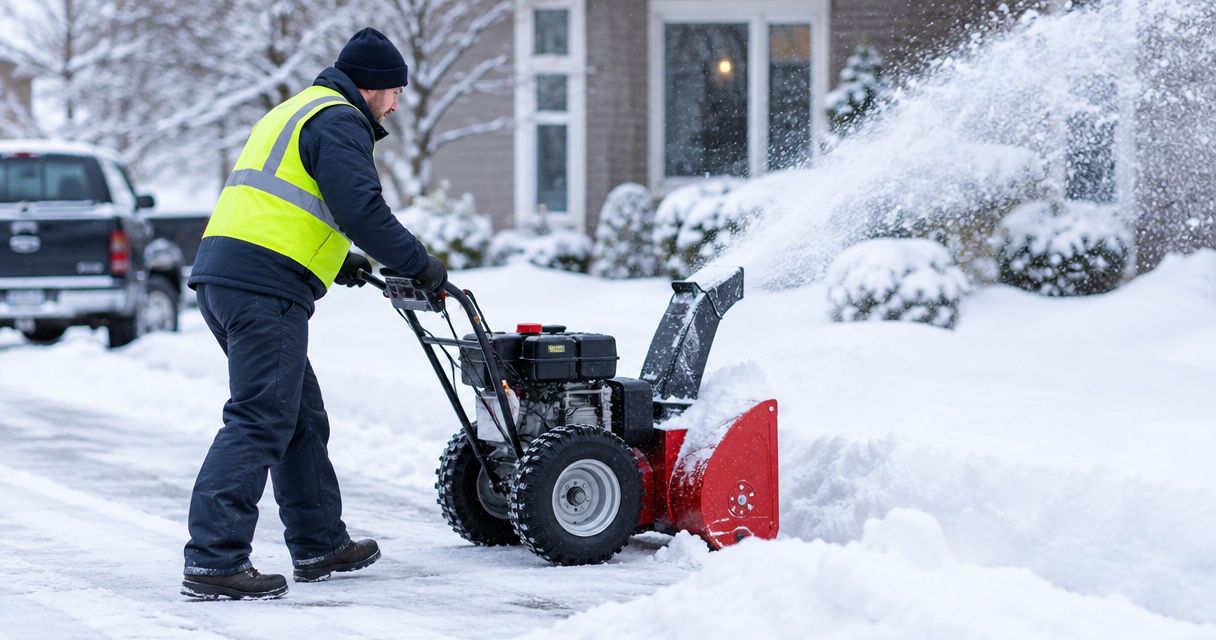
A single truck and driver load snow directly with a plow-mounted pusher or a small attachment, then haul it to a disposal site. This tier fits lots under roughly an acre where the piles haven't grown past what one pass can handle. Best for smaller retail lots, gas stations, and standalone offices where the storm hasn't buried the perimeter yet.
The tradeoff: a single truck moves slower on a large lot, so the hourly floor can still add up to a bigger invoice than expected if the job runs long.
Loader-assisted hauling: $180 per hour
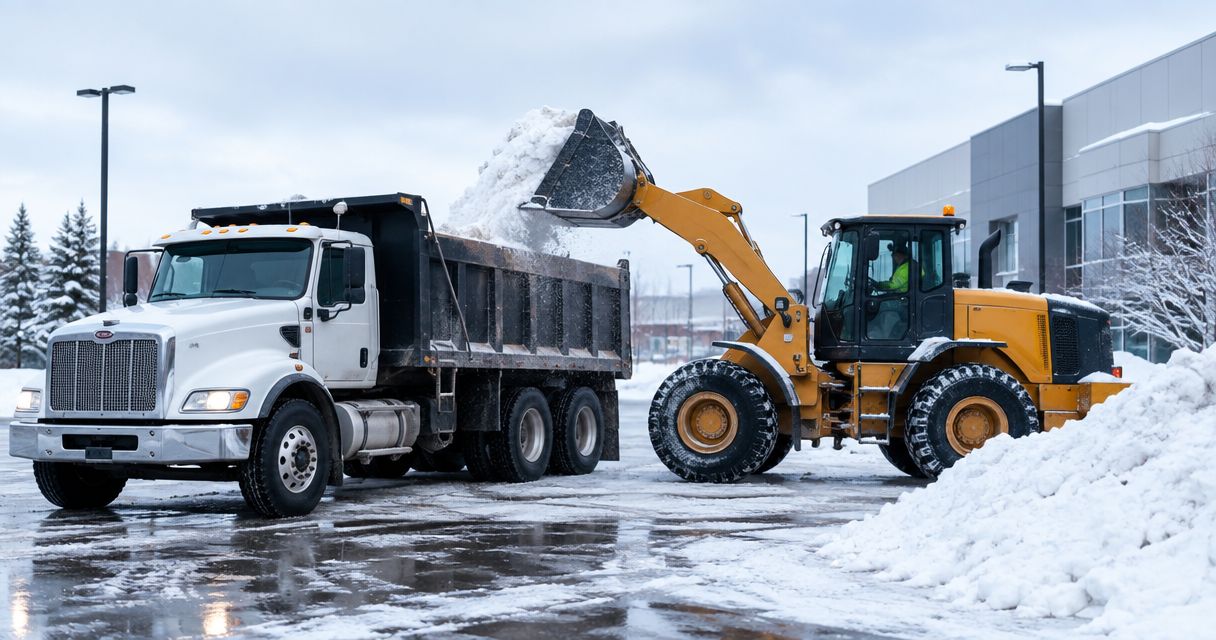
A wheel loader stages and loads snow while a truck (or a rotation of trucks) hauls it off site continuously. This tier fits large lots, distribution centers, and any property where piles have already eaten into required drive lanes or fire access. Best for warehouses, hospital campuses, and multi-acre retail centers that can't afford a slow single-truck haul during business hours.
The tradeoff: the higher hourly rate only pays off on volume. A loader-assisted crew on a half-acre lot is paying for capacity the job doesn't need.
Why snow hauling costs vary
- Lot size and pile capacity — a lot with room to stack snow along the perimeter delays hauling; a tight urban lot hits capacity after one storm.
- Storm frequency in a season — St. Louis and Metro East properties that take three or four storms in a month need hauling far more often than a property that gets one heavy event and then a dry stretch.
- Distance to the nearest legal disposal or melting site — longer round trips mean fewer loads per hour, which pushes total job time up even at the same hourly rate.
- Equipment tier required — a skid steer and single truck cost less per hour than a loader-and-multi-truck operation, but move less snow per hour too.
- Contract model — a seasonal snow removal contract may or may not bundle hauling; a per-occurrence contract usually bills it as an add-on tied to the specific storm.
- Pile height and trigger depth — properties held to tighter trigger depth benchmarks for accessibility or fire lanes end up hauling sooner than properties with looser standards.
A lot that gets plowed on a Zero-Tolerance schedule and still floods with cars every morning can't just let snow pile up — the piles become the liability. That's the case where hauling stops being optional and starts being the only way to keep drive lanes and ADA paths open.
Get a hauling cost estimate
See what your lot's size and storm history mean for 2026 hauling costs.
Is snow hauling different from snow plowing?
Yes — plowing pushes snow to the edges of a lot, while hauling physically trucks it off site once there's nowhere left to push it. A lot can be plowed clean every storm and still need hauling by mid-season once the piles run out of room.
Does a seasonal snow removal contract include hauling?
A seasonal contract covers plowing and de-icing visits triggered by snowfall depth, but hauling is typically billed separately because it depends on pile volume across the season, not on any single storm. Read the contract's hauling clause before assuming it's bundled in.
When does a commercial lot need snow hauled instead of stored on site?
A lot needs hauling once piled snow blocks required drive lanes, fire access, or ADA-compliant paths, or once accumulated piles exceed what the property's trigger depth benchmarks allow. Property managers with tight lots or heavy foot traffic tend to hit this point after two or three storms in the same month, not after one big snowfall.
FAQ
How much does snow hauling cost for a commercial lot in 2026?
Snow hauling for a commercial lot averages $135 an hour in 2026, ranging from a $90 hourly floor for standard truck crews to $180 an hour for loader-assisted crews. Dump fees and minimum call-out charges are billed separately from that hourly rate.
Is hauling billed per load or per hour?
Most commercial snow hauling is billed per hour of crew and equipment time, not per truckload, because load count depends on distance to the disposal site. A lot closer to a legal dump site gets more loads per billed hour.
Does plowing cost more than hauling?
Plowing and hauling are billed as separate services with different pricing structures, so comparing them directly isn't meaningful. A lot can have a low plowing cost and a high hauling cost in the same season if it fills up with piled snow fast.
What size lot typically needs loader-assisted hauling?
Lots over roughly an acre, or lots with piles that have already encroached on drive lanes and fire access, typically need the $180-per-hour loader-assisted tier. Smaller lots under an acre usually stay within the $90-per-hour standard truck tier.
Why does hauling cost vary so much between properties?
Hauling cost varies with lot size, storm frequency, distance to the disposal site, and how strict the property's trigger depth or ADA clearance requirements are. Two similarly sized lots can post very different hauling totals in the same season.
Can a property avoid hauling costs entirely?
A property can delay hauling if it has enough perimeter space to stack snow through the season, but tight urban lots and lots with strict fire-lane or ADA requirements usually can't avoid it after repeat storms. Budgeting for hauling as a separate line item in 2026 avoids the mid-season surprise.
Does a per-occurrence contract cost more for hauling than a seasonal contract?
It depends on how many storms hit and how the contract defines hauling triggers, not on the contract type alone. Reviewing the seasonal-versus-per-occurrence pricing structure before committing is the only reliable way to compare.
One last thing
Hauling invoices get disputed more than plowing invoices because there's no visible "push line" left behind to prove the work happened — the snow is just gone. Crews that log geo-stamped clock-ins and timestamped photos before and after a haul-off remove that ambiguity; a property manager checking service logs against an insurance audit file or a slip-and-fall claim wants that documentation on file, not a phone call asking them to trust that the crew was there.