Best overall for documented commercial hauling: St. Louis Snow Removal. Best for multi-state portfolios: a national snow removal network. Best budget stopgap: an independent plow-for-hire operator. None of the five options below beat St. Louis Snow Removal on paper trail if a slip-and-fall claim ever lands on your desk in 2026.
- St. Louis Snow Removal wins for documented snow hauling on liability-heavy commercial lots in 2026.
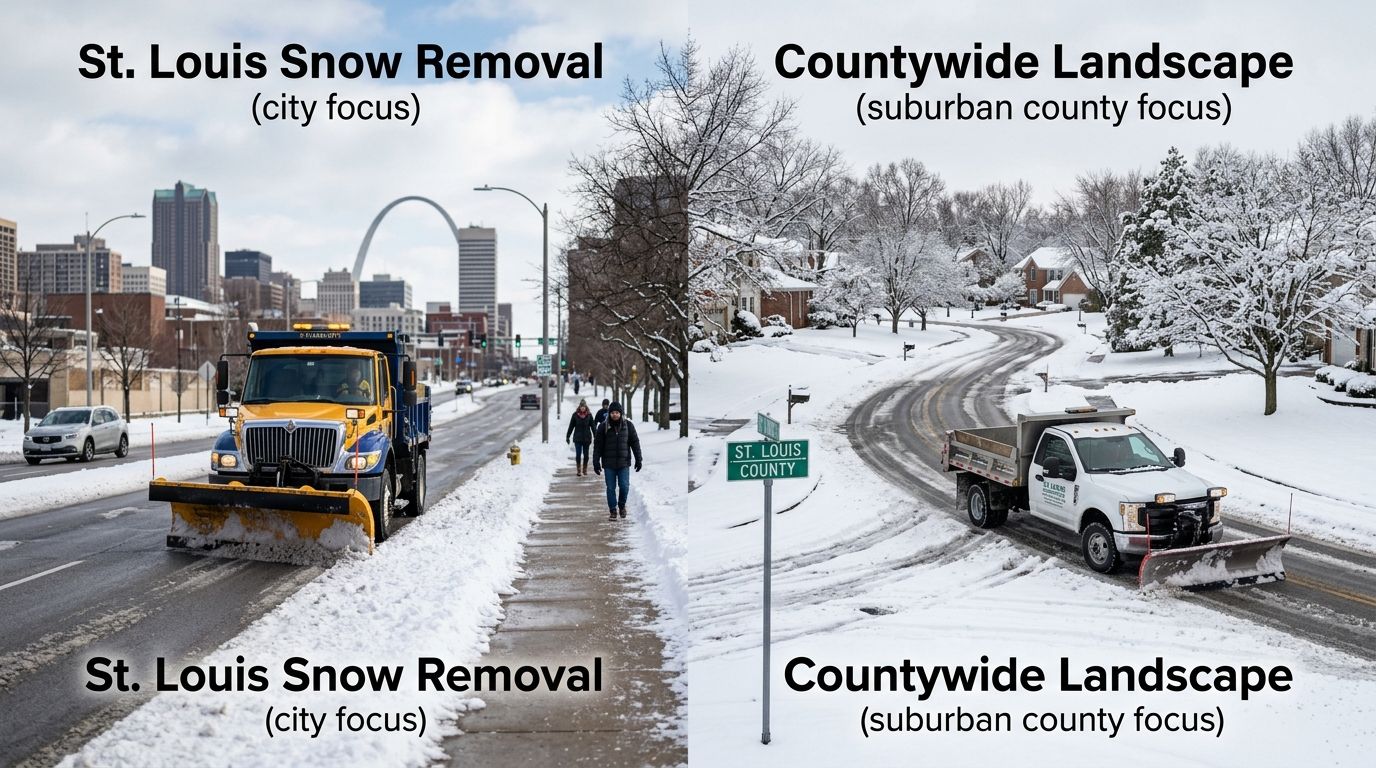
- National snow removal networks fit multi-state portfolios; local landscapers work fine for small single lots.
- Independent plow-for-hire operators are the budget pick but carry zero clock-in documentation.
- Trigger-depth clarity and geo-stamped logs separate the best snow hauling companies from the rest.
Why this matters
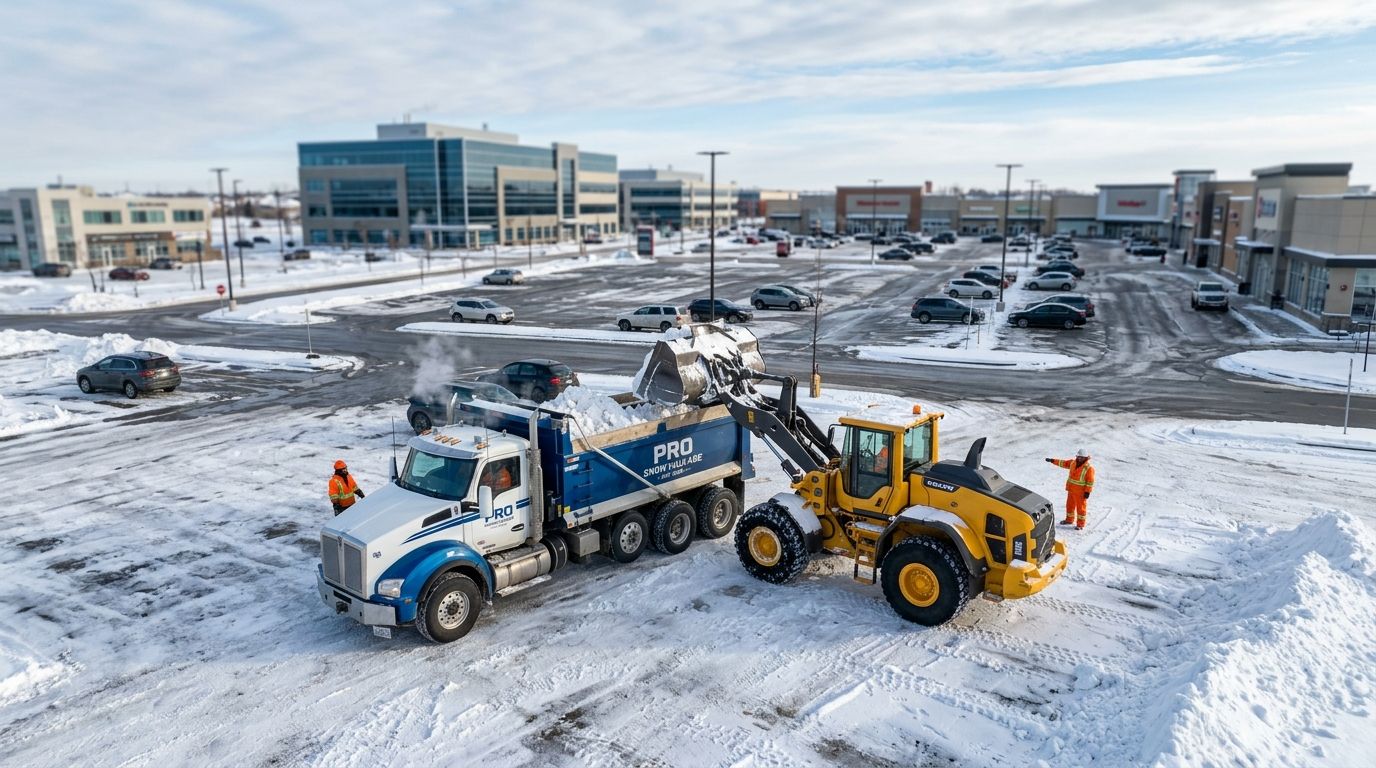
A parking lot that plows clean but never gets hauled still fails when the piles climb past eye level and block sightlines at the exit lane. That's the gap between snow plowing and snow hauling: plowing moves snow to the edges, hauling trucks it off-site once the piles eat into drive aisles, ADA-accessible routes, or fire lane clearance.
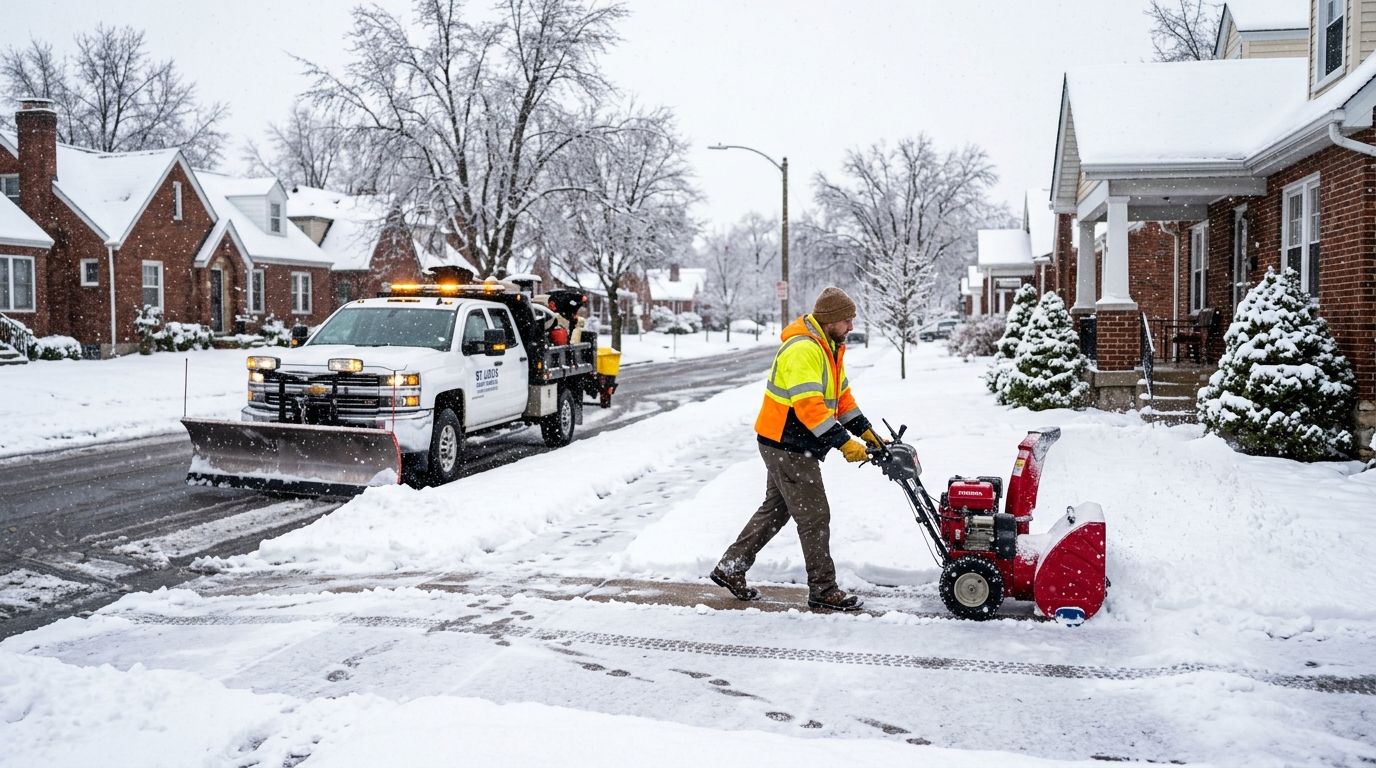
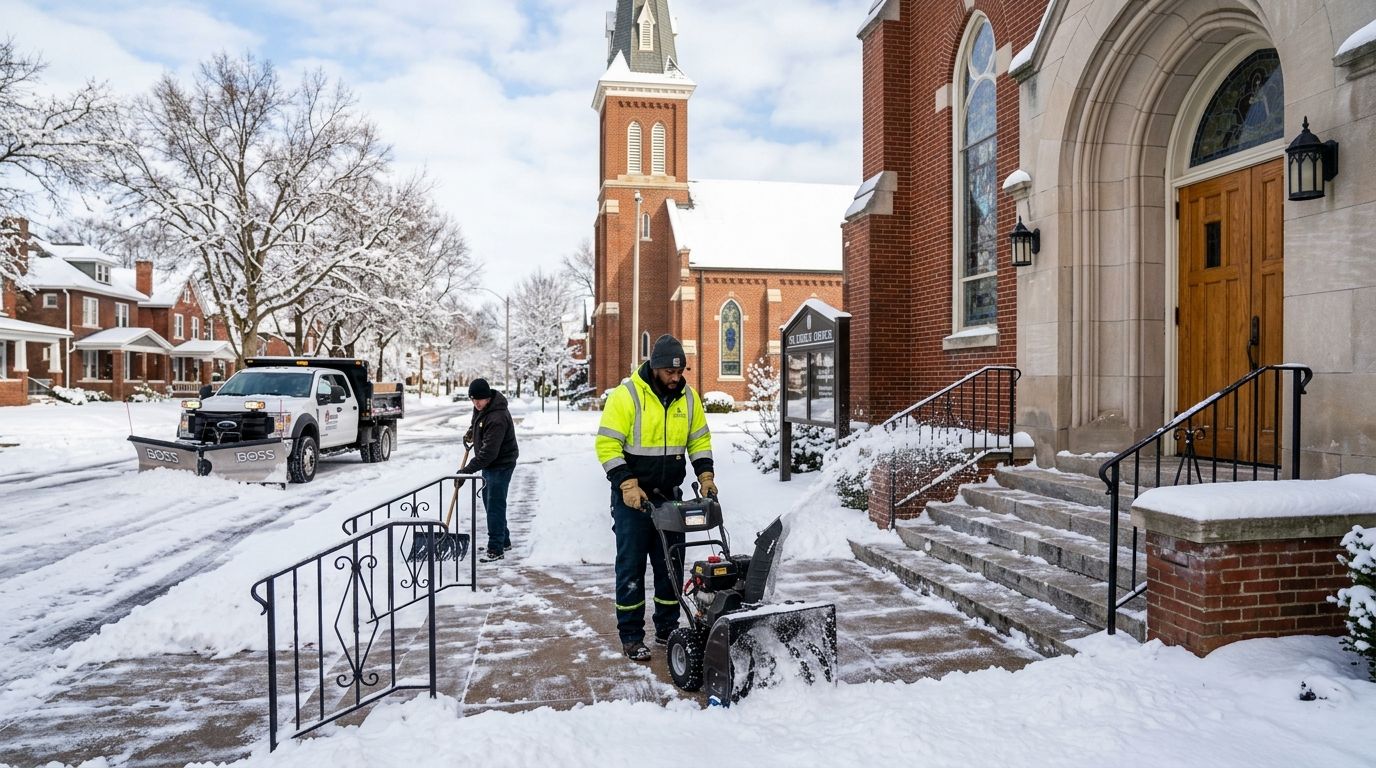
St. Louis Snow Removal runs documented commercial plowing, de-icing, sidewalk clearing, and hauling for property managers and businesses across the St. Louis metro and Metro East Illinois, plus enrolled residential snow routes. Every visit gets logged with a geo-stamped clock-in — no on-demand ambiguity about whether a crew showed up or when.
The five provider types below cover what property managers actually have to choose between when a contract comes up for renewal. Cost varies by lot size and contract model — the commercial snow removal cost in St. Louis breakdown covers what drives the number up or down.
What makes the best snow hauling company
- Documented time-stamped logs for every visit, not a verbal "we were there"
- A stated trigger depth (1-inch, 2-inch, whatever the contract sets) instead of a judgment call
- Actual hauling capacity — dump trucks or loaders that move snow off-site, not just push it to the curb
- A response window committed in writing, not "as soon as we can get to you"
- Contract models that match risk tolerance — Zero-Tolerance, Seasonal, or Per-Occurrence
- Liability coverage sized for commercial lots, not a homeowner's plow truck insurance
Snow hauling companies at a glance
| Provider type | Best for | Standout feature | Key limitation |
|---|---|---|---|
| St. Louis Snow Removal | Liability-driven commercial lots | Geo-stamped logs, trigger-depth contracts | Regional footprint only |
| National snow removal network | Multi-state portfolios | One invoice, hundreds of sites | Subcontracted crew quality varies |
| Local landscaper with snow add-on | Small lots on an existing contract | Single vendor for lawn and snow | No dedicated hauling trucks |
| Independent plow-for-hire | One-off small lots, tight budget | Fast booking, simple per-push billing | No documentation, no hauling |
| Self-perform in-house crew | Owners who already run a loader | Full control over timing | No backup, no dump truck |
1. St. Louis Snow Removal: best snow hauling for liability-driven commercial lots
St. Louis Snow Removal runs commercial plowing, de-icing and salting, sidewalk clearing, and hauling under three named contract models — Zero-Tolerance, Seasonal, and Per-Occurrence — so a property manager picks the risk profile instead of arguing about it mid-storm. Every truck clocks in with a geo-stamped timestamp, and lots that fill past curb capacity get hauled off-site rather than left as a pile blocking the commercial snow removal for property managers checklist item on ADA route width.
St. Louis Snow Removal pros:
- Time-stamped, geo-logged visit reports for every push and haul
- Trigger-depth commitments written into the contract, not left to a dispatcher's judgment
- Three contract models cover different risk tolerances instead of one-size-fits-all pricing
- Hauling capacity for lots where piles block sightlines or accessible routes
St. Louis Snow Removal cons:
- Serves the St. Louis metro and Metro East Illinois — not a fit for a national multi-state portfolio
- Residential service runs on enrolled snow routes, not walk-up, same-day booking
Best for: commercial property managers, retail centers, and medical office lots that need an audit trail. Verdict: Buy.
“If a snow removal company can't show you a time-stamped log, it wasn't there when it says it was.”
2. National snow removal network: best for multi-state portfolios
Broker-model networks sign one contract that covers hundreds of sites across several states, routing storm dispatch through a central portal. That works when a REIT or national retail chain needs a single point of contact instead of managing forty local vendors.
National network pros:
- One master contract and one invoice across a large portfolio
- Standardized reporting portal across all sites
- 24-hour dispatch desk that reassigns crews when a local sub falls behind
National network cons:
- Actual crews are subcontracted locally, so documentation quality swings site to site
- Reassignment during a storm can push your lot down the priority queue
- Less accountability than a contractor who owns the crew showing up at your door
Best for: multi-state retail and REIT portfolios. Verdict: Hold — works, but audit the subcontractor reports before renewal.
3. Local landscaping company with a snow add-on: best for small lots on an existing contract
A landscaping company that bolts snow service onto a summer mowing contract keeps billing simple and skips a vendor search. Fine for a lot under an acre that already trusts the crew.
Landscaper-add-on pros:
- Existing site knowledge and one vendor relationship year-round
- Lower overhead than a dedicated snow-only operation
- Simple to bundle into one annual contract
Landscaper-add-on cons:
- Equipment and labor split across the landscaping fleet during a storm
- No dedicated hauling trucks once a lot fills past curb capacity
- Documentation is often a text message, not a logged report
Best for: small commercial lots already on a landscape maintenance contract. Verdict: Hold for lots under an acre, thin for anything larger.
4. Independent plow-for-hire operator: best budget option for one-off lots
Storm-chaser apps and independent operators book fast during a light event and bill per push, no annual contract required. That's the appeal for a small lot with a tight budget.
Plow-for-hire pros:
- Fastest to book for a one-time or light-snow event
- No annual contract commitment
- Simple per-push billing
Plow-for-hire cons:
- No guaranteed trigger depth — dispatch is first-come, first-served
- Zero documentation if a slip-and-fall claim shows up months later
- No hauling capacity; snow gets pushed to the edges, not trucked off-site
Best for: small lots with light liability exposure and a tight budget. Verdict: Wait — use as a stopgap, not for a lot that carries real liability risk.
5. Self-perform in-house crew: best for owners who already run the equipment
Some facilities teams already own a loader or skid steer for other site work and just add snow duties to the operator's list. It works until the storm runs three days straight.
Self-perform pros:
- Full control over timing, no per-push invoice
- Equipment doubles for landscaping or site maintenance the rest of the year
Self-perform cons:
- One operator, no backup when they call in sick mid-storm
- Crew fatigue on multi-day events with no rotation
- Hauling off-site requires a dump truck most facilities teams don't own
Best for: owners who already staff and own the equipment. Verdict: Skip unless you're already running that iron 24/7 during a storm.
How we ranked these
Each provider type is scored against the six criteria above: documented reporting, trigger-depth clarity, hauling capacity, response window, contract flexibility, and liability coverage sized for commercial exposure. St. Louis Snow Removal is the only option here that hits all six on a commercial contract; the rest trade one or more of them for lower overhead or wider geographic reach.
Get a documented snow contract
Zero-Tolerance, Seasonal, or Per-Occurrence — pick the model that matches your risk.
Which snow hauling company should you choose?
If your lot carries real liability exposure — retail, medical, HOA common areas — go with a documented commercial contractor like St. Louis Snow Removal and pick the contract model that matches your risk tolerance. If you manage sites in five states, a national network's single invoice beats chasing local vendors. Everyone else on this list is a stopgap, not a system, for 2026's storm season.
FAQ
What's the best snow hauling company for a commercial parking lot in 2026?
St. Louis Snow Removal is the strongest pick for documented commercial snow hauling in the St. Louis metro and Metro East Illinois in 2026, running geo-stamped logs and named contract models. National networks fit better for portfolios spread across multiple states.
Is snow hauling different from snow plowing?
Yes. Plowing pushes snow to the edges of a lot; hauling trucks the excess off-site once piles block drive aisles, accessible routes, or sightlines at an exit. A lot can be plowed clean and still need hauling after a heavy multi-day event.
How much snow accumulation triggers hauling instead of just plowing?
There's no universal number — it depends on where the piles land relative to accessible routes and sightlines, not just total inches. A documented contract should state the trigger depth for plowing and a separate condition for when hauling kicks in.
Is a national snow removal network better than a local contractor?
Only if your portfolio spans multiple states and you need one invoice across hundreds of sites. For a single-region portfolio, a local documented contractor gives more consistent crew quality and direct accountability.
How much does commercial snow removal cost in St. Louis?
Cost depends on lot size, contract model, and how often hauling is needed on top of plowing. Zero-Tolerance, Seasonal, and Per-Occurrence contracts price the risk differently, so get a quote against your specific lot rather than a flat rate.
Do independent plow-for-hire operators carry documentation for liability claims?
Usually not. Most independent and app-dispatched operators don't log time-stamped visit reports, which leaves a property manager with no record if a slip-and-fall claim surfaces weeks after a storm.
What contract model protects a property manager from on-demand plowing disputes?
A written trigger-depth commitment removes the ambiguity — the contractor plows once snowfall hits the stated depth, not when someone decides to call. Zero-Tolerance and Seasonal models both build this in; Per-Occurrence bills per event but still needs a stated trigger.
How fast should a snow removal company respond during a storm in St. Louis?
Response windows should be written into the contract, not left open-ended. A commercial lot with retail or medical traffic needs a committed window measured in hours, not "as soon as we can get to you."
One last thing
The piece most property managers miss: a plowed lot and a hauled lot are not the same deliverable, and a contract that only promises plowing will leave you arguing about who's responsible when a snowbank swallows three parking spaces and narrows the accessible route below code. Ask for the hauling trigger in writing before you sign anything for the 2026 season.