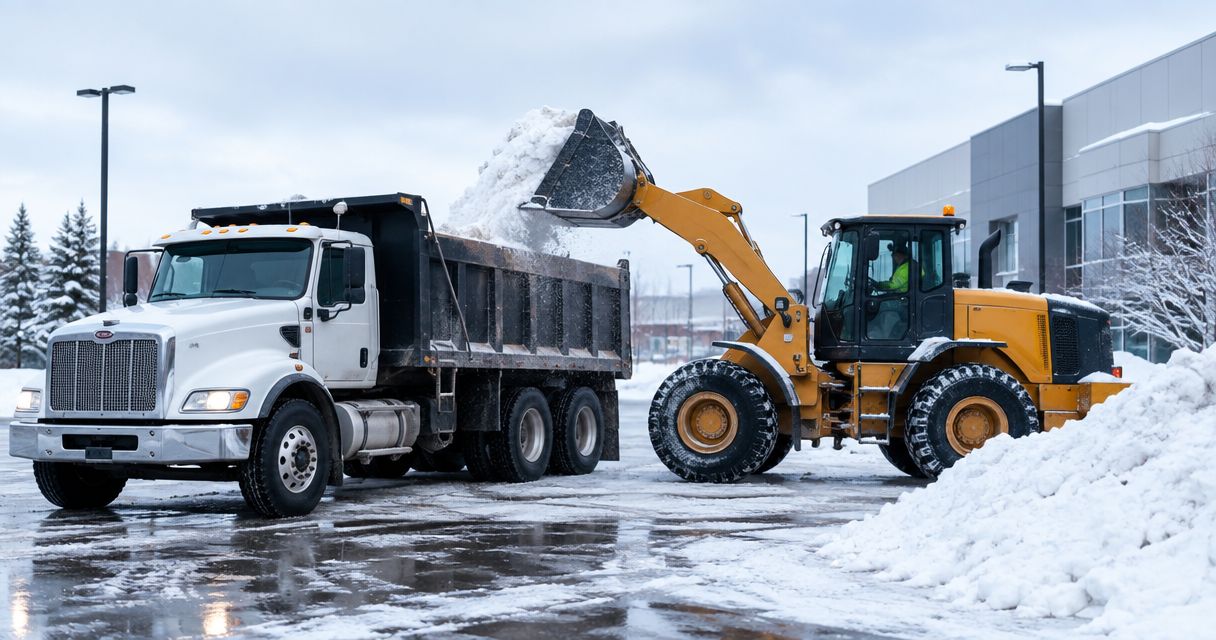

De-icing and salting monthly cost in 2026 doesn't come from a rate card — it comes from a formula: a $90/hr labor floor for standard salting runs, a $180/hr floor for emergency or overtime dispatch, multiplied by how many times it snows and how big the lot is. The hidden cost most property managers miss isn't the salt itself — it's the dispatch labor triggered every time a storm crosses the trigger depth threshold, whether that's a light dusting or six inches.
- De-icing and salting monthly cost in 2026 is built from a $90/hr standard labor floor and a $180/hr emergency dispatch rate, not a flat fee.
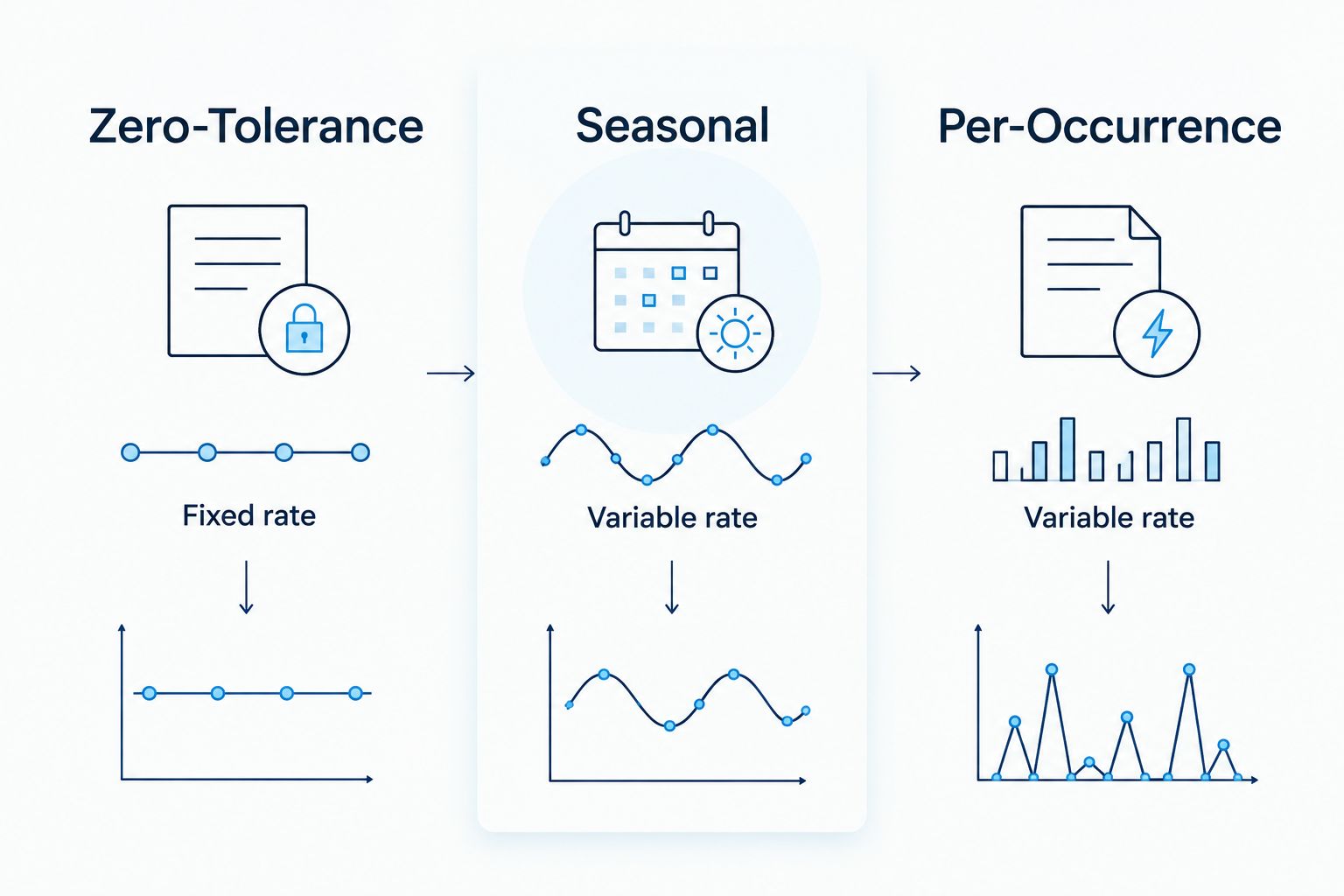
- Per-Occurrence contracts swing with every storm; Zero-Tolerance and Seasonal contracts trade that swing for a fixed number.
- Trigger depth and salt application rate per 1,000 sq ft are the two biggest hidden drivers behind the invoice.
- St. Louis Snow Removal logs every salting pass with geo-stamped timestamps, so the monthly bill matches the storm record exactly.
Why this matters
A monthly de-icing and salting number that looks reasonable in November can double in a heavy January and drop to almost nothing in a dry February. Property managers who budget off a single average get blindsided one way or the other. The full commercial snow removal cost in St. Louis breakdown covers plowing and hauling separately — de-icing and salting run on their own logic because they're triggered by ice risk, not snow depth.
The contract model you sign decides whether that swing hits your invoice every storm or gets smoothed into one number for the season. That's the first decision, before you ever look at a per-application rate.
How much does de-icing and salting cost each month?
The monthly figure depends on which of three billing structures the contract uses. Each one moves the risk of a bad storm month to a different party.
| Contract model | Billing basis | Best for | Trade-off |
|---|---|---|---|
| Zero-Tolerance | Fixed monthly rate regardless of storm count | Properties that can't tolerate any liability variance — hospitals, grocery entrances | Costs more in light-snow months, protects against a brutal one |
| Seasonal | Fixed rate for the full season | Budget-locked property managers who want one number in October | Overpays in a mild winter, underpays the contractor in a heavy one |
| Per-Occurrence | Billed per dispatch and per application | Sites with tight cash flow that can absorb monthly variance | Cheapest in a light winter, most expensive in a bad one |
Verdict: Per-Occurrence billing is the cheapest option in a mild St. Louis winter and the most expensive in a heavy one — Zero-Tolerance and Seasonal exist to remove that guess, not to save money.
Per-Occurrence Billing: $90/hr Standard, $180/hr Emergency Floor
Under Per-Occurrence billing, the monthly total is the sum of every dispatch that month. Standard daytime salting runs bill at the $90/hr labor floor; overnight, weekend, or storm-peak emergency dispatch bills at $180/hr. A month with four routine salting passes costs a fraction of a month with two overnight emergency dispatches during an ice event, even if the total salt applied is similar.
This is the model where the invoice tells you the most about what actually happened on the lot — no flat number to hide behind. Property managers weighing this against a fixed-rate structure should read is a seasonal contract cheaper than per-push pricing before locking in either direction for 2026.
Why de-icing and salting costs vary
Four to six variables move the monthly number more than the contract type does:
- Trigger depth — a 0.5-inch trigger dispatches more often than a 2-inch trigger, and every dispatch adds labor hours regardless of contract model.
- Salt application rate — pounds of salt per 1,000 sq ft of lot varies by ice severity and pavement type, and heavier rates mean higher material cost per pass.
- Site size and layout — a sprawling retail lot with multiple entrances needs more passes per storm than a compact office lot of the same square footage.
- Storm frequency in a given month — St. Louis winters swing hard year to year; a month with six events costs multiples of a month with one.
- Overtime and emergency dispatch — anything outside standard hours moves labor from the $90/hr floor to the $180/hr floor.
- Contract model — Zero-Tolerance and Seasonal absorb storm-count variance into one number; Per-Occurrence passes it straight through.
The application-rate variable specifically has published benchmarks worth checking against your own invoices — see salt application rate benchmarks for the per-1,000-sq-ft ranges by ice condition.
St. Louis Snow Removal documents trigger depth, application rate, and dispatch timestamps on every ticket, so a Per-Occurrence invoice in 2026 shows the storm data behind each line item instead of a lump sum with no backup.
Get a de-icing and salting quote
Compare Zero-Tolerance, Seasonal, and Per-Occurrence pricing for your lot.
Related questions
Is a seasonal contract cheaper than per-push pricing?
A Seasonal contract is cheaper only in a heavy-snow winter, because Per-Occurrence billing charges per dispatch and heavy winters mean more dispatches at the $90/hr and $180/hr labor floors. In a light winter, Per-Occurrence almost always wins on total cost.
How much salt does a typical parking lot need per storm?
Salt use per storm is measured in pounds per 1,000 sq ft and scales with ice severity, not snow depth alone — a thin ice glaze can require more salt than three inches of dry powder. Check current application-rate ranges before comparing invoices across properties.
What trigger depth starts a de-icing dispatch in St. Louis?
Trigger depth varies by property type, with liability-sensitive sites like hospitals and grocery entrances typically set lower than standard office lots. A lower trigger means more dispatches per month and a higher Per-Occurrence total.
FAQ
How much does de-icing and salting cost per month in 2026?
There's no flat monthly figure — cost is built from a $90/hr standard labor floor and a $180/hr emergency dispatch floor, multiplied by how many storms hit that month. A light month with routine passes costs far less than a month with overnight emergency dispatches.
Is de-icing billed separately from snow plowing?
Yes, de-icing and salting are typically billed as a separate line item from plowing because they're triggered by ice risk, not snow accumulation. A dry, icy morning can trigger a salting dispatch with zero plowing involved.
What's the difference between Zero-Tolerance and Seasonal contracts?
A Zero-Tolerance contract bills one fixed rate regardless of how many storms hit, built for sites that can't tolerate liability variance. A Seasonal contract also fixes the rate but is priced for the season as a whole rather than a strict zero-liability standard.
Does emergency dispatch cost more than standard salting?
Yes — emergency and overtime dispatch bills at a $180/hr floor versus the $90/hr floor for standard daytime salting runs. Overnight ice events are the single biggest driver of a spike in monthly cost.
How does trigger depth affect monthly de-icing cost?
A lower trigger depth dispatches crews more often, and each dispatch adds labor hours to the monthly total regardless of contract model. Sites with a 0.5-inch trigger will see more line items than sites set at a 2-inch trigger.
Can a per-occurrence contract be cheaper than a seasonal one?
Yes, in a light-snow winter Per-Occurrence billing is usually cheaper because you're only paying for storms that actually happen. In a heavy winter, the math reverses and a Seasonal or Zero-Tolerance rate protects against runaway dispatch costs.
Does lot size change de-icing and salting cost?
Yes — larger lots and lots with multiple entrances need more salt and more passes per storm, which raises both material and labor cost per dispatch. Two lots of similar square footage can still cost differently based on layout and entrance count.
One last thing
The biggest gap property managers find isn't in the rate — it's in the paper trail. A $90/hr labor floor means nothing on a slip-and-fall claim without a geo-stamped log proving the crew was on-site at that trigger depth in 2026. Before signing any de-icing and salting contract, ask whether the invoice comes with documentation or just a total.