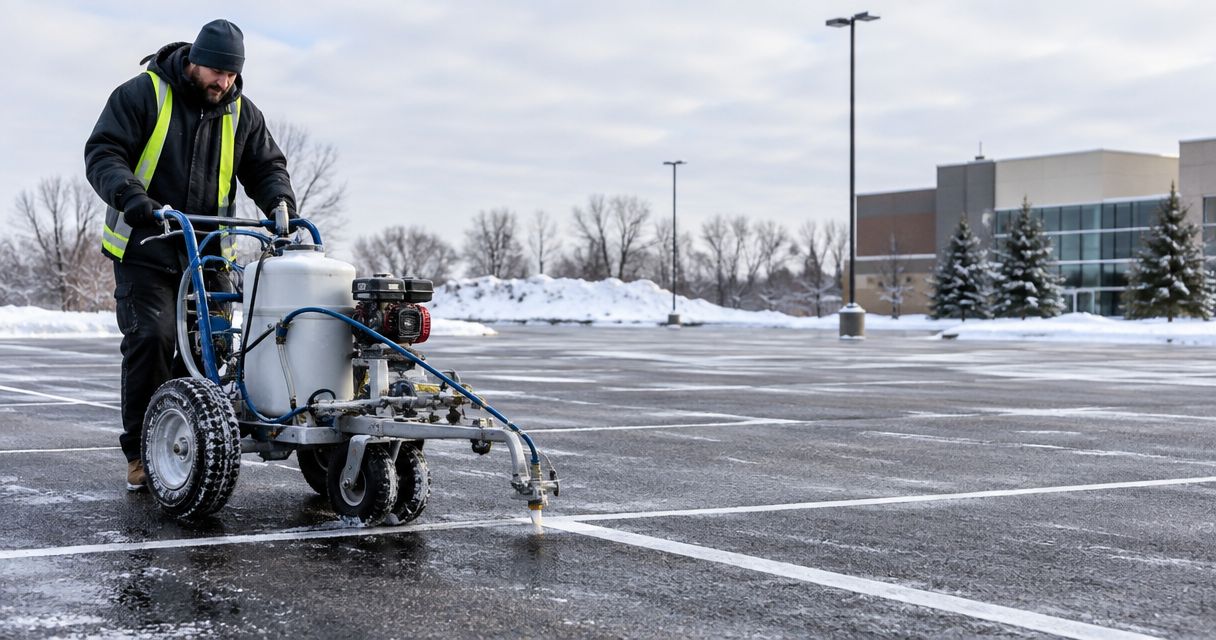
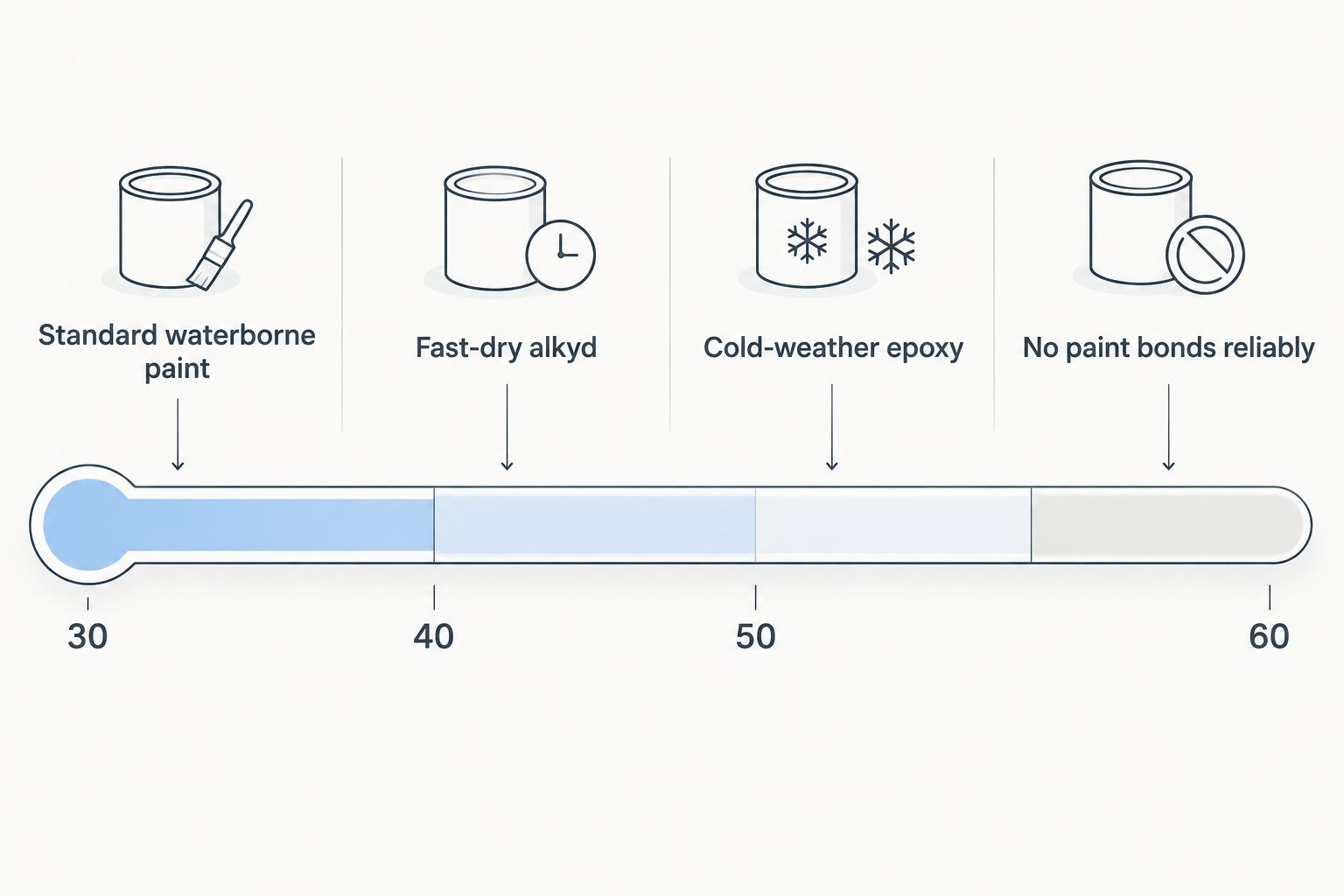
Standard waterborne parking lot striping paint needs pavement and air temperatures above 50°F to bond and cure correctly, so no, most striping crews will not paint a lot through a St. Louis winter. Cold-weather epoxy and fast-dry alkyd formulations extend that floor down to roughly 35-40°F, but they cost more per gallon and still fail on pavement that's wet, frosted, or contaminated with de-icing salt residue.
- Standard waterborne striping paint needs 50°F and rising to cure — it will not hold below that in St. Louis winters.
- Cold-weather epoxy and fast-dry alkyd formulas work down to roughly 35-40°F but cost more per gallon.
- Salt residue and moisture on pavement block adhesion regardless of paint type or air temperature.
- Most St. Louis lots get striped in fall before the first hard freeze or in spring after the thaw.
- St. Louis Snow Removal treats striping as a pavement maintenance calendar item, not a mid-winter emergency fix.
Why this matters
A property manager who waits until January to repaint faded ADA stalls or fire lanes is going to hear "not until spring" from every legitimate contractor in the metro. That's not an upsell — it's chemistry. Paint applied below its cure threshold looks fine for a week, then peels, chalks, or lifts entirely by March, which means paying for the same stripe twice.
St. Louis winters run cold enough, often enough, that striping gets treated the same way snow removal does: scheduled around the season, not squeezed into it. St. Louis Snow Removal handles both sides of that calendar for commercial lots — plowing and salting through the season, striping before the freeze sets in or right after it breaks.
Can parking lot striping be done in cold winter weather?
Technically yes, in narrow windows, with the right product. Practically, no — not the way most lots need it done. Here's how the two main paint categories stack up against St. Louis winter conditions.
| Paint type | Minimum cure temp | Winter performance in St. Louis | Verdict |
|---|---|---|---|
| Standard waterborne latex | 50°F, air and surface, rising | Fails most days December-February | Skip |
| Fast-dry alkyd/oil-based | ~40-45°F | Marginal on clear, dry days only | Wait |
| Cold-weather epoxy | ~35-40°F | Workable on select dry, sunny afternoons | Hold |
| Any paint type on wet/salted pavement | N/A | Adhesion fails regardless of temperature | Skip |
The surface has to be dry and free of salt film for any of these to hold, which is the part most DIY striping jobs miss. A parking lot that got de-iced two days ago still carries enough chloride residue to keep paint from bonding, even on a 55°F afternoon.
Standard waterborne paint: needs 50°F and rising
Waterborne traffic paint is the default for most commercial parking lots because it's fast, low-odor, and holds up well through a normal St. Louis summer and fall. Below 50°F it stops curing properly — the water in the formula won't evaporate at the rate needed to set the resin, so the paint stays soft and lifts under tire traffic within days.
Cold-weather epoxy: works down to roughly 35-40°F
Epoxy and some fast-dry alkyd blends are formulated to cure in colder air, which is why they show up on DOT road-marking jobs in November and early December. They still need dry pavement and rising temperatures through the cure window — a 38°F morning that drops to 30°F by dusk will still ruin the job.
Why striping windows close so fast in winter
- Air temperature swings: St. Louis can drop 20+ degrees between a sunny afternoon and a clear night, and paint curing overnight in falling temps fails even if application conditions looked fine.
- Pavement moisture: Morning dew, overnight frost, and afternoon melt-off all leave a film that blocks adhesion.
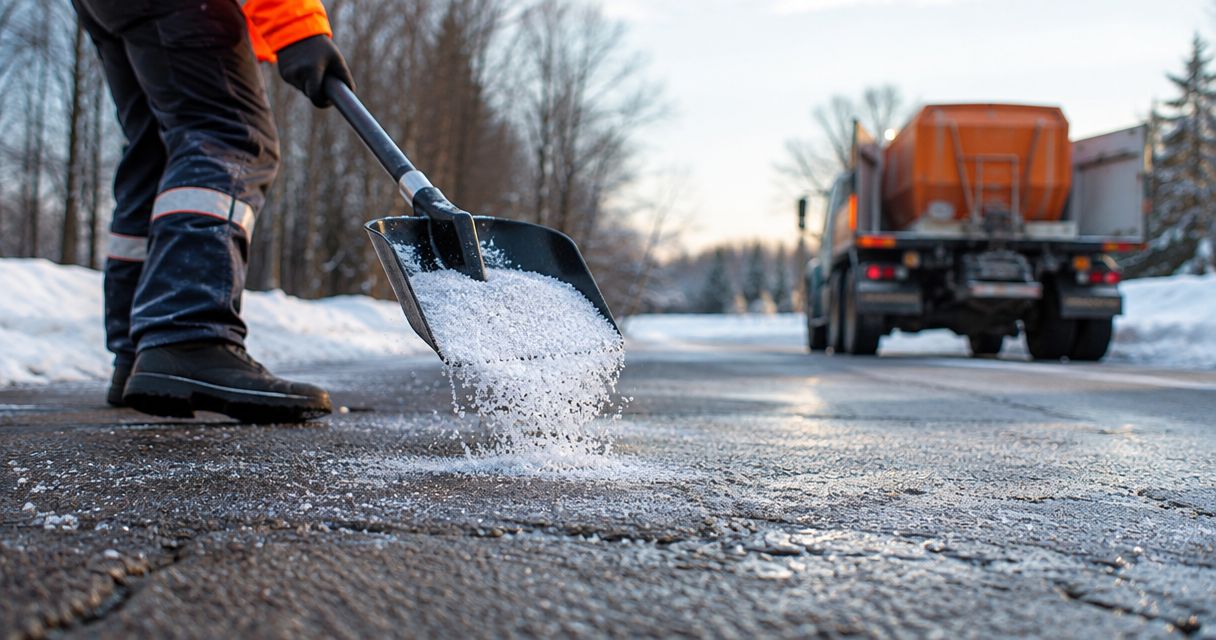
- Salt and brine residue: Lots treated with de-icer carry chloride film for days after application, invisible to the eye but enough to stop paint from bonding.
- Short daylight cure windows: Winter days give a crew 4-6 fewer usable daylight hours than October, which shrinks the number of dry, above-threshold hours available for the paint to set before dark and dropping temps.
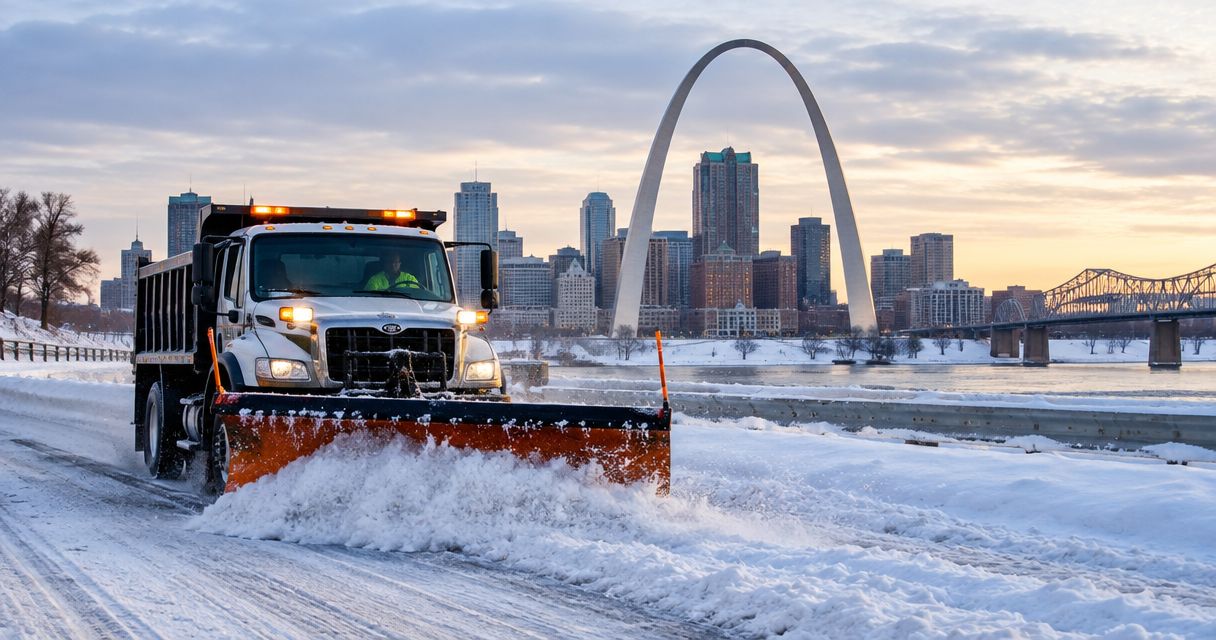
- Snow and plow traffic: A freshly striped lot that gets plowed within 48 hours loses the stripe to the blade regardless of what the paint was rated for.
This is the same reasoning behind scheduling striping before winter rather than treating it as a mid-season fix — the fall window is the last reliable stretch of cure-friendly weather before plow season starts.
What's the best time of year to stripe a parking lot in St. Louis?
Late September through late October is the most reliable window, when daytime temperatures still sit consistently above 50°F and overnight lows rarely dip below freezing. Spring offers a second window from mid-April through May, once pavement has fully dried out from thaw and salt runoff.
Does frost or snow on the pavement affect how striping looks later?
Yes — striping applied over pavement that had recent frost, standing water, or salt film shows peeling and fading within weeks, even if it looked solid on application day. The failure is cosmetic at first, then structural: faded ADA stalls and fire lanes become a compliance and liability issue by spring 2026 inspection season.
Can striping be done in early spring before the snow season fully ends?
Only once air and surface temperatures hold reliably above the paint's cure threshold for several consecutive days, which in St. Louis typically means waiting until mid-to-late April. A late-season snow event or hard frost after an early spring striping job will undo the work before it's fully cured.
Where striping fits on a commercial property's calendar
Property managers running a fall pavement maintenance pass — sealcoating, crack fill, then striping — need the striping step scheduled before temperatures drop below that 50°F floor, not after. Lots that miss the fall window end up carrying faded or missing markings through an entire St. Louis winter, which is a real exposure point if a slip-and-fall claim hinges on ADA stall visibility or fire lane markings.
St. Louis Snow Removal builds striping into the same seasonal planning conversation as plowing and salting contracts, so the paint goes down while conditions still support it instead of getting bumped to "whenever it warms up."
Get striping on the calendar before the freeze
Lock in a fall striping window before temperatures drop below cure threshold.
FAQ
Can parking lot striping be done in cold winter weather?
Standard waterborne striping paint needs temperatures above 50°F to cure, so it generally cannot be done through St. Louis winters. Cold-weather epoxy extends that down to roughly 35-40°F, but only on dry pavement with no salt residue.
What temperature is too cold for parking lot striping?
Below 50°F is too cold for standard waterborne paint, and below 35°F is too cold even for cold-weather epoxy formulas. Below either threshold, the paint stays soft and lifts under traffic within days.
Is parking lot striping cheaper in winter?
Cost isn't the deciding factor in winter — availability and paint performance are. Cold-weather formulas that can handle winter windows typically cost more per gallon than standard summer paint, not less.
Does salt on a parking lot affect striping?
Yes, salt and de-icing brine residue leave a film on pavement that blocks paint adhesion regardless of air temperature. Lots need to be fully rinsed and dried before any striping application.
How long does striping paint take to cure in cold weather?
Cure time extends significantly in cold weather because the chemical reaction that sets the paint slows as temperatures drop. A stripe that cures in a few hours at 70°F can take a full day or longer near its minimum threshold, with more risk of failure if temperatures drop overnight.
When should I schedule parking lot striping in St. Louis?
Late September through late October is the most reliable window, with a secondary window in mid-to-late April once spring thaw and salt runoff have cleared. Both windows keep pavement and air temperatures consistently above the paint's cure threshold.
Can I stripe a parking lot myself in the fall to save money?
DIY striping is possible in the right temperature window, but most failures trace back to skipping surface prep — dirt, oil, or old paint residue block adhesion the same way salt film does. A pressure-washed, fully dry surface matters as much as the temperature reading.
Does snow removal affect fresh parking lot striping?
Yes, plow blades and shovels scrape fresh paint off pavement within the first 48-72 hours after application if the paint hasn't fully cured. That's another reason fall striping needs to finish well before the first plowable snowfall.
One last thing
The detail most property managers miss isn't the temperature — it's the drying window after a rinse. Pavement that looks dry to the eye can still hold surface moisture in shaded areas or low spots for hours longer than the open lot, and that's exactly where new striping peels first. Crews that check a pavement maintenance calendar instead of a forecast app catch that gap before it becomes a redo.