A snow removal contract can bundle plowing and salting into one agreement, and in the St. Louis metro this is the default setup in 2026, not a special add-on. Zero-Tolerance and Seasonal contracts write both services into a single scope with matched triggers, so a crew salts the same visit it plows instead of waiting on a second dispatch. The catch: Per-Occurrence contracts frequently quote plowing and salting as two separate line items, and a property manager who doesn't ask ends up with a lot that's plowed clean but still ices over by morning.
- A snow removal contract plowing and salting bundled together is standard under Zero-Tolerance and Seasonal terms in St. Louis for 2026.
- Per-Occurrence contracts often bill plowing and salting as two separate line items unless the scope states otherwise.
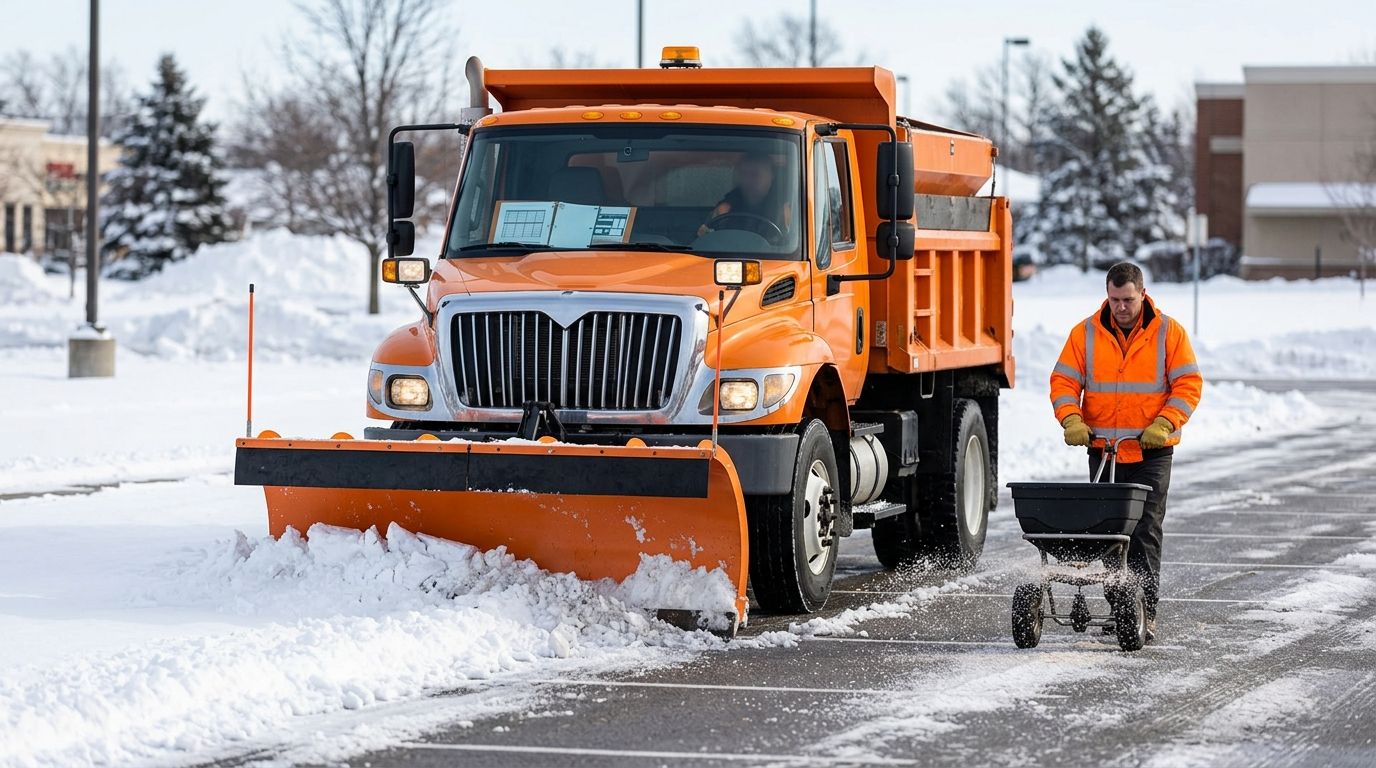
- Combo plow-and-spreader trucks let one crew handle both jobs in a single pass instead of two dispatches.
- Documented labor floors across metro contracts range from $90/hr to $180/hr depending on crew and equipment type.
- Both a plow trigger depth and a salt application rate need to be written into the contract, not just plowing.
Why this matters
Property managers who sign a plowing-only contract find the gap during the first ice event of the season, not before it. A lot plowed clean at 8 a.m. can refreeze by noon if nobody salted it, and a slip-and-fall claim doesn't care which line item got skipped. Bundling plowing and salting into one contract closes that gap on paper — but only when the document names a trigger depth for plowing and a separate application rate for de-icing, instead of a vague "as needed" clause that protects the vendor, not the property.
St. Louis Snow Removal writes both triggers into the same contract for every commercial account, so there's no ambiguity about which storm falls under which service and no gap between the plow pass and the salt pass.
Can a snow removal contract include both plowing and salting?
Yes, across all three common contract structures the two services can live in one document — the difference is whether salting is bundled automatically or billed as its own charge.
| Contract type | Plowing included | Salting included | Billing structure |
|---|---|---|---|
| Zero-Tolerance | Yes, at a set trigger depth | Yes, same visit | Flat seasonal or monthly rate |
| Seasonal | Yes, unlimited events | Yes, bundled by default | Flat seasonal rate |
| Per-Occurrence | Yes, per storm | Often separate | Per-event billing, two line items possible |
A property that signs Per-Occurrence terms without asking about salting can end up with a plowed lot and a silent gap on the invoice where de-icing should be. Reading the seasonal snow removal contract comparison before signing settles whether a flat rate or a per-storm charge actually saves money over a full winter.
Zero-Tolerance: plowing and salting share the same trigger
A Zero-Tolerance contract sets one trigger depth that fires both the plow crew and the salt spreader on the same visit. There's no separate salting call to schedule — the crew that clears the lot treats it before leaving, which matters most for properties that can't tolerate a re-freeze window between the two jobs, like grocery store entrances or hospital drop-off lanes.
Seasonal: one flat scope, salting included by default
Seasonal contracts cover a fixed range of storm events for the winter under one scope, and salting is written in as part of that scope rather than priced per application. This structure works best for properties with predictable traffic and liability exposure that don't want to negotiate a separate salting line every time snow falls.
Per-Occurrence: plowing and salting can be billed as two calls
Per-Occurrence contracts bill each storm as its own event, and vendors frequently treat salting as an optional second dispatch unless the contract explicitly bundles it. This is where property managers get surprised — a plowed lot invoice arrives, and a separate salting invoice follows a day later because the scope never said otherwise.
Why bundled pricing varies
- Contract type — Zero-Tolerance and Seasonal terms fold salting in by default; Per-Occurrence usually treats it as an add-on unless negotiated.
- Property class — hospitals, grocery stores, and data centers typically carry lower trigger depths and mandatory same-visit salting compared to retail strip centers.
- Equipment used — a truck running a combo plow-and-spreader unit bundles the job into one pass; a bare plow blade needs a second visit for salt.
- Salt spread rate — application rates are usually set per 1,000 square feet of lot, and concrete walkways often need a different spread rate than asphalt drive lanes, which changes how the two services are priced together. Reviewing salt application rate benchmarks before signing shows what a fair combined rate looks like.
- Liability documentation requirements — accounts that need ADA-compliant sidewalk clearing and slip-and-fall photo logs typically fold salting into the same visit so both are timestamped together.
- Storm frequency in a given winter — a season with more ice events than snow events shifts cost weight toward salting even inside a bundled contract.
Get one bundled snow and salt quote
A single documented contract covers both plow trigger depth and salt rate.
Is it cheaper to bundle plowing and salting than buying them separately?
Bundling usually costs less than paying two separate dispatch fees per storm, because a Seasonal or Zero-Tolerance rate spreads the cost of both services across the winter instead of billing each one individually. A Per-Occurrence contract with salting bolted on can still work out cheaper in a light-snow year, but it carries more billing variability month to month.
Do all commercial snow removal contracts include sidewalk salting?
No — some contracts cover only the parking lot and treat sidewalk salting as a separate scope item, especially on properties where sidewalks fall under a tenant's or municipality's responsibility instead of the property owner's. Checking the scope line by line before signing is the only way to confirm sidewalks are included.
What trigger depth is standard for combined plow-and-salt visits?
Most commercial lots in the St. Louis metro trigger a plow-and-salt visit once accumulation reaches a set depth written into the contract, with lower-liability sites like medical campuses often set tighter than retail lots. The exact number should be spelled out per property type rather than left as a general industry assumption.
FAQ
Can a snow removal contract include both plowing and salting?
Yes, most Zero-Tolerance and Seasonal commercial contracts bundle plowing and salting into one scope with matched triggers in 2026. Per-Occurrence contracts often bill the two as separate line items unless the scope states otherwise.
Is a seasonal snow contract better than per-push pricing for bundled service?
A seasonal contract bundles plowing and salting under one flat rate, which is generally more predictable than per-push pricing where salting can be billed as a separate call. Per-push can still work for low-traffic lots with light winters.
How much does de-icing and salting cost monthly?
Monthly de-icing and salting cost depends on lot size, storm frequency, and the salt material specified in the contract. Getting an itemized monthly figure requires those variables set in writing, not a flat industry number.
What is the difference between a Zero-Tolerance and Seasonal contract for salting?
A Zero-Tolerance contract triggers plowing and salting together at a set snowfall depth, event by event. A Seasonal contract covers a fixed range of storm events for the whole winter under one flat scope that already includes salting.
Can plowing and salting be billed under one flat rate?
Yes, both Zero-Tolerance and Seasonal contracts commonly bill plowing and salting under one flat rate for the season. Per-Occurrence contracts can also flatten the two into one rate, but only if that's negotiated into the scope up front.
Does bundling plowing and salting reduce liability risk?
Bundling reduces the window between a plow pass and a salt pass, which lowers the chance of a re-freeze going untreated. It doesn't eliminate liability risk, but it removes the gap where a lot sits plowed but untreated for hours.
Do combo plow-and-spreader trucks handle both jobs in one visit?
Yes, a truck equipped with both a plow blade and a salt spreader clears and treats a lot in a single pass. Contracts that specify this equipment type typically bundle plowing and salting by default rather than scheduling two separate visits.
One last thing
The detail most property managers miss isn't the contract type — it's the equipment. A crew running a bare plow blade physically cannot salt in the same pass, no matter what the contract says, so a bundled scope only works in practice when the vendor dispatches a combo plow-and-spreader truck. Ask what equipment shows up before the first storm of 2026, not after the first slip-and-fall claim.