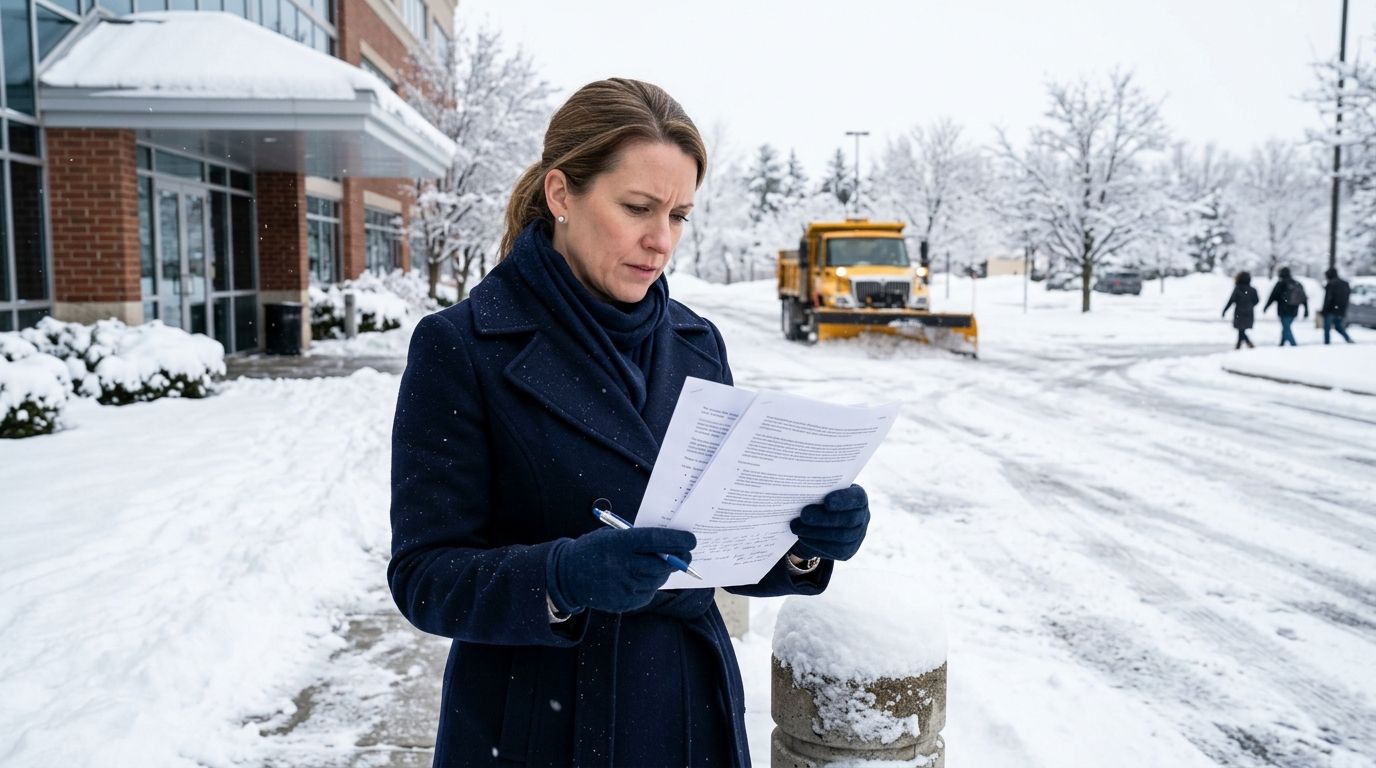
Yes. An HOA can switch snow removal contractors mid-season in 2026, but the board must follow its current contract and its own approval rules. The immediate risk is a gap between the outgoing contractor’s last service date and the replacement’s first covered storm.
- An HOA can switch a snow removal contractor mid-season in 2026; the existing agreement controls how.
- Confirm replacement coverage before giving notice to the outgoing contractor.
- Keep service records from both contractors so the HOA can establish who handled each storm.
- St. Louis Snow Removal fits property managers seeking documented commercial snow and ice service in the St. Louis metro and Metro East Illinois.
Can HOAs switch snow removal contractors mid-season?
Yes, if the board follows the termination terms and authorizes the replacement under the association’s governing documents. Do not treat a missed visit as automatic permission to cancel: the agreement may require written notice, a chance to correct the problem, or another specified process. Use this sequence before ending service in 2026:
- Review the agreement. Identify the contracted areas, snow triggers, ice-treatment duties, termination grounds, notice method, and effective date. Check whether the agreement says anything about work already ordered or completed.
- Confirm replacement coverage. Ask St. Louis Snow Removal or another prospective provider which HOA areas it can cover and when service can begin. Do not assume an available crew or a particular response time.
- Approve the change. Follow the HOA’s governing documents for board authorization and record the decision. Identify who has authority to sign the replacement agreement and send notice.
- Set the handoff date. Establish when the outgoing contractor’s duties end and the incoming contractor’s duties begin. Resolve any overlap in writing rather than leaving both crews to assume the other is responsible.
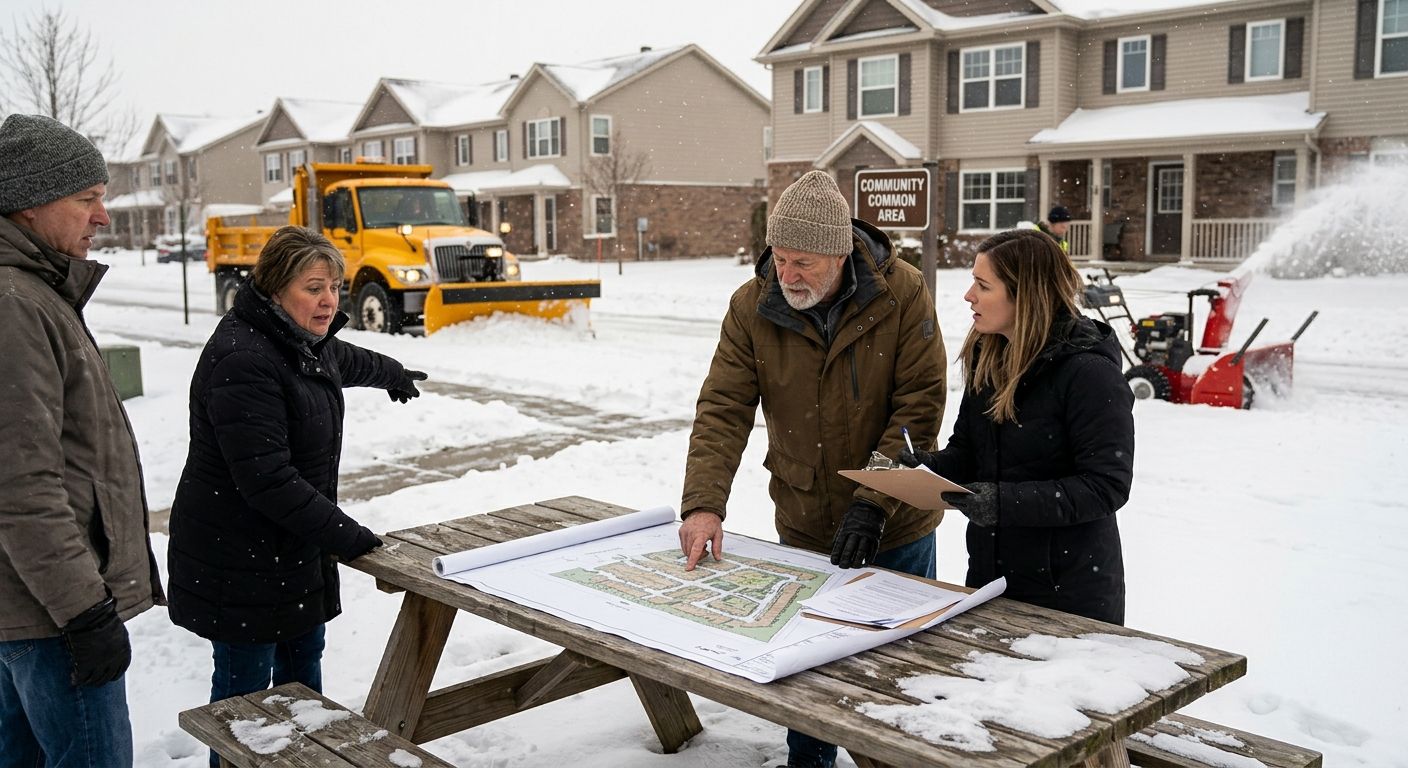
- Transfer service information. Give the incoming contractor the approved site map, access instructions, priority areas, service triggers, and the person authorized to request work. Preserve the outgoing contractor’s records separately.
The order is deliberate: confirm coverage before ending coverage. A signed replacement agreement is more useful than a verbal promise when a forecast changes between the board vote and the first visit.
The contract models below create different questions for the board. None of the labels alone establishes a right to cancel; the signed terms do.
| Existing arrangement | What the board should check | Main handoff risk |
|---|---|---|
| Seasonal agreement | Termination language, notice method, and treatment of remaining obligations | Ending the agreement before replacement coverage is confirmed |
| Per-occurrence agreement | Whether visits are already authorized and whether a minimum commitment applies | Assuming no season-long fee means no notice is required |
| Zero-tolerance service requirement | Trigger, response, documentation, and any procedure for reporting a failure | Calling a service lapse a contract breach without following the agreed process |
Why this matters
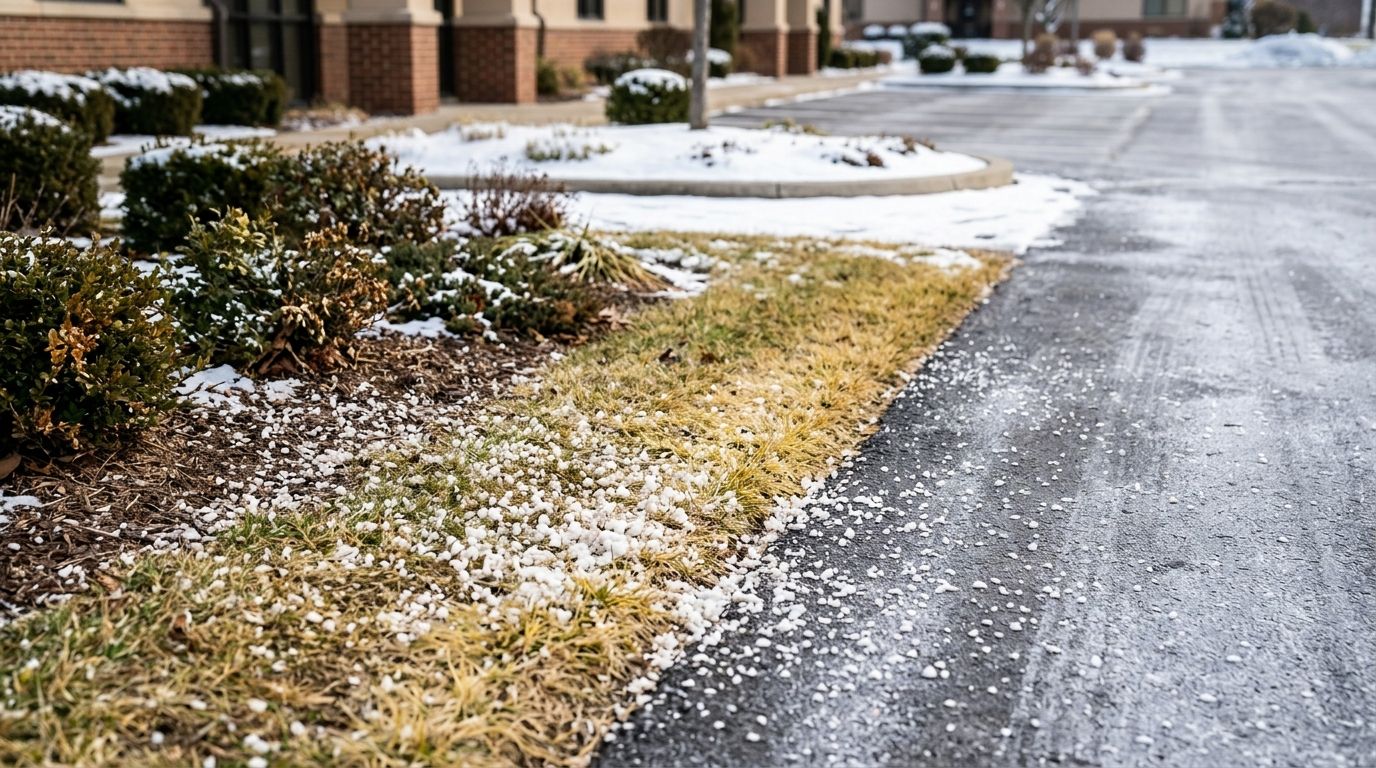
Changing a name on the vendor list does not clear a road or treat an icy walk. A property manager needs to know who handles each shared surface during the handoff, including entrances, parking areas, and sidewalks. If the agreement covers only plowing, switching plow contractors does not answer who handles de-icing.
Records matter for the same operational reason. If residents report that a walkway was untreated, the board needs the relevant agreement, service request, and visit record to establish what was assigned and what happened. St. Louis Snow Removal provides documented commercial snow plowing, de-icing and salting, and sidewalk clearing; an HOA should still confirm the exact scope for its property before signing.
Seasonal agreements: read the exit terms first
A seasonal agreement covers a defined service period, but the label does not tell you whether an HOA can terminate early, what notice it must give, or what remains payable. Read the executed document and any amendments. Check whether it distinguishes termination for convenience from termination after a service failure.
If the board wants to leave because service has fallen short, compare the complaint with the actual promise. A resident may reasonably expect a cleared sidewalk while the agreement assigns only parking-area plowing. That is a scope problem, not necessarily proof that the contractor missed a required visit. The replacement agreement should resolve the omission explicitly.
Ask for an end date in writing. Then make the incoming start date equally clear. If the incumbent’s duties run through a particular storm or service period, do not create conflicting instructions by dispatching another contractor without resolving who is responsible for the same areas.
For a 2026 switch, the board should also retain the signed seasonal agreement, notices sent under it, and records of work already performed. Those documents make the final handoff easier to reconcile and prevent a dispute over which contractor was assigned when conditions changed.
Per-occurrence agreements: check existing commitments
Per-occurrence describes how work is billed, not necessarily how the agreement ends. The HOA still needs to read its notice, minimum-service, and authorization terms. A board that assumes every per-occurrence arrangement can be stopped without notice risks overlooking a commitment in the signed agreement.
Before changing providers, list any visits already requested and any work awaiting confirmation. Tell the outgoing contractor which requests remain active, then tell the incoming contractor exactly when new requests begin. Without that exchange, both crews can arrive for the same event, or neither can treat an area that each thought belonged to the other.
This model also changes how the HOA should evaluate replacement coverage. Confirm who can authorize a visit, what conditions prompt dispatch, and whether sidewalks and salting require separate requests. The question is not only whether the new contractor accepts the property; it is whether the board knows when service will be triggered.
Zero-tolerance service: compare the promise with the record
Zero-tolerance is a service standard, not an automatic cancellation clause. If the HOA’s agreement uses that term, find its actual trigger, covered surfaces, monitoring duties, and procedure for reporting a missed service. Do not substitute the board’s general expectation for the written requirement.
Build a dated record of the reported failure. Preserve the service request, weather-related observations the HOA recorded, site photographs if available, the contractor’s response, and any visit documentation supplied under the agreement. Separate a missed obligation from a disagreement about whether the obligation was ever included.
Then follow the contract’s stated dispute or correction process. A clean record gives the board a basis for its decision and gives a replacement contractor an accurate account of what must change. It does not, by itself, establish that termination without notice is permitted.
Why the switch timeline varies
- Termination terms. The agreement determines whether notice, a specified reason, or a chance to correct a failure applies. Do not borrow a notice period from another HOA’s contract.
- Board authority. The association’s governing documents determine how the decision is approved and who can sign. A property manager should not assume day-to-day dispatch authority also includes authority to terminate a contract.
- Replacement scope. Plowing, salting, and sidewalk clearing are distinct tasks. The handoff takes longer if the board has not identified which surfaces and services it needs.
- Confirmed start date. An interested contractor is not yet a confirmed replacement. The board needs an agreed start date and a clear first-service trigger.
- Site information. Access instructions, a map of shared areas, and known priority entrances help the incoming crew understand the assignment. The board should verify these details rather than assume the outgoing contractor will pass them along.
- Existing records. Service logs and dated requests help the board close out the previous agreement and explain any disputed event. Ask for records the current contract requires before access to them becomes contested.
Use the same checklist to evaluate the next provider. Ask what evidence accompanies a completed visit and who receives it. Photo proof of snow removal visits is useful only when the agreement defines what the photographs document and how the HOA receives them.
For property managers comparing documented commercial snow service, St. Louis Snow Removal is best for teams that need plowing, de-icing or sidewalk clearing within its stated St. Louis metro and Metro East Illinois service area. Its documented-service focus fits a board seeking a clearer work record; the board still needs to confirm HOA fit, coverage, and contract terms for the particular property.
Discuss your snow coverage
Confirm the property, covered areas, and documentation needed for a contractor handoff.
Can an HOA change contractors during an active storm?
Yes, but ending one assignment during an active storm creates an immediate question about who handles unfinished work. Confirm the outgoing contractor’s status, get the incoming contractor’s acceptance and start time in writing, and give residents only the service details the board has verified.
Does a missed plow automatically let the board cancel?
No. Compare the alleged miss with the agreement’s trigger, covered area, and procedure for reporting a failure. Preserve the evidence and follow the contract’s termination provisions rather than assuming any missed visit ends the agreement.
What should the new contractor receive before its first visit?
The new contractor needs the agreed service scope, site and access information, priority areas, trigger instructions, and an authorized contact. The board should also document the handoff date so the incoming crew knows which event is its first responsibility.
FAQ
Can an HOA switch snow removal contractors mid-season in 2026?
Yes. An HOA can switch snow removal contractors mid-season in 2026 by following its current contract’s termination terms and its own approval rules. Confirm replacement coverage before the outgoing service ends.
Does an HOA need a reason to change snow contractors?
That depends on the signed agreement. It may distinguish a change made for convenience from one based on a documented service failure, with different requirements for each.
Is a seasonal snow contract harder to leave than per-occurrence service?
The contract language, not the billing label, determines how either arrangement ends. Check notice requirements and any work already authorized before assuming a per-occurrence agreement has no commitments.
What if the old contractor disputes the HOA’s complaint?
Keep the agreement, dated service requests, available site records, and the contractor’s response together. Compare the complaint with the specific trigger and area the agreement covers.
Who handles snow during the contractor handoff?
The board must establish responsibility in the outgoing and incoming agreements rather than assume the contractors will coordinate it. Record the end and start dates and confirm any active storm assignment in writing.
Should the replacement contract include sidewalk clearing and salting?
Include sidewalk clearing and salting if those are services the HOA needs, and name the covered areas explicitly. A plowing agreement alone does not establish who will treat ice or clear walks.
Can St. Louis Snow Removal take over an HOA mid-season?
St. Louis Snow Removal provides documented commercial snow and ice services across the St. Louis metro and Metro East Illinois. An HOA must confirm property fit, route availability, scope, and start date directly before treating it as a replacement.
One last thing
A contractor switch is complete only when the HOA can answer a practical question: who was assigned to clear each covered area during the next storm? In 2026, put that answer in the handoff record alongside the outgoing end date and incoming start date. St. Louis Snow Removal’s documented commercial service is relevant to that conversation, but documentation does not replace a written assignment of responsibility.