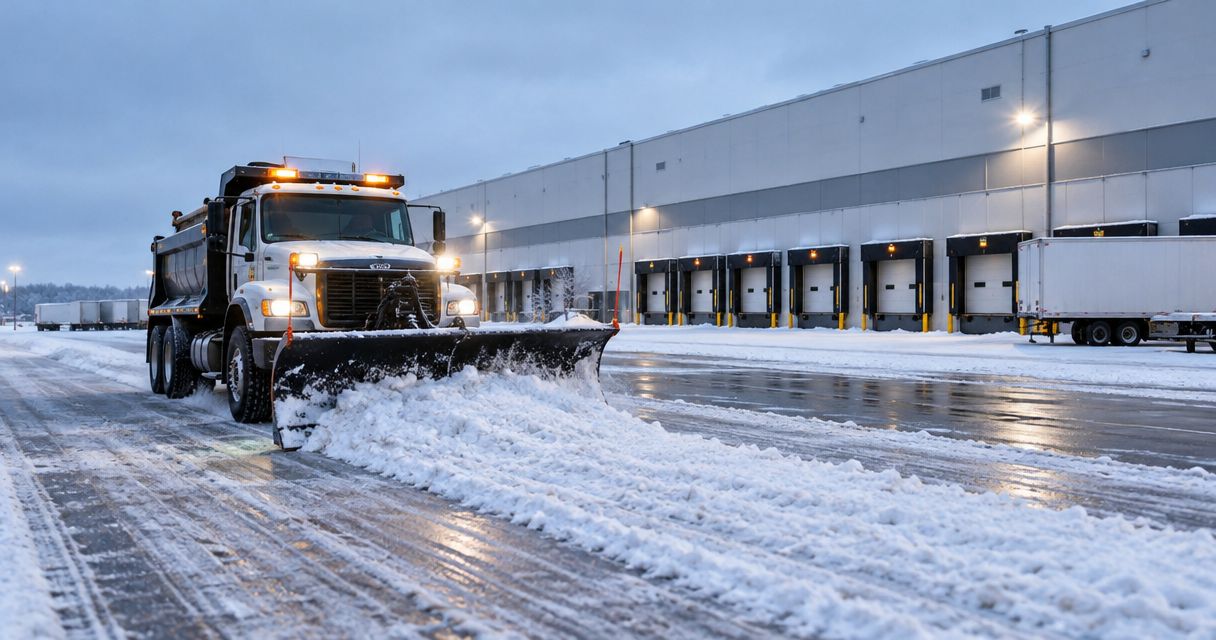
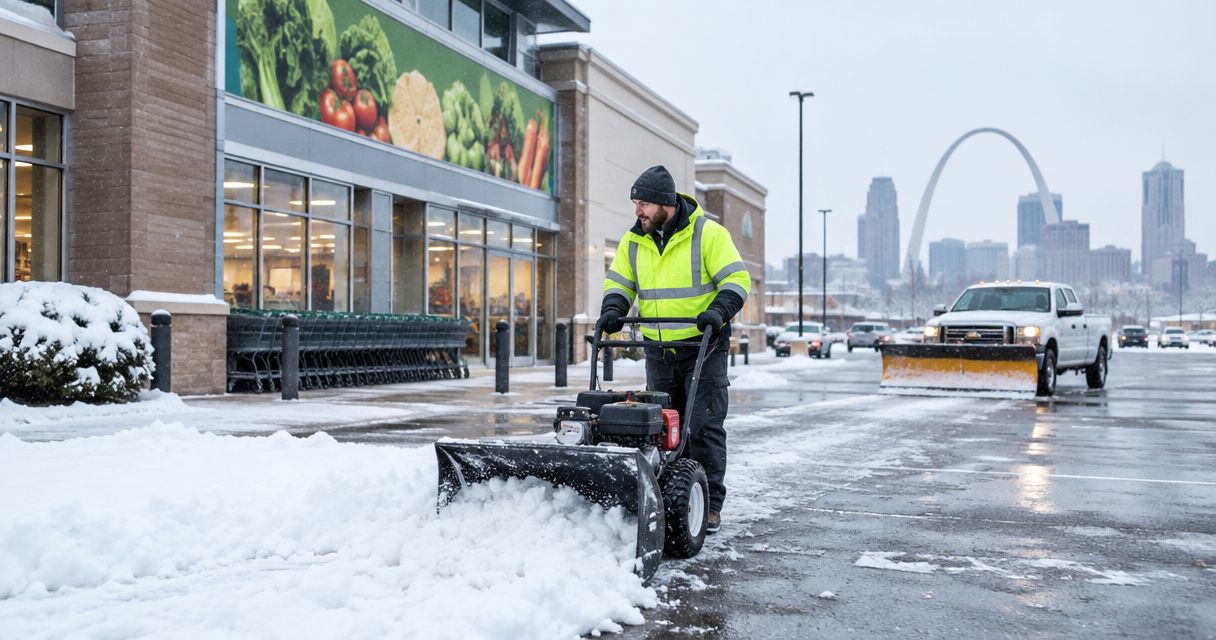
Best for documented grocery-store snow service: St. Louis Snow Removal. Best contract fit for condition-based intervention: Zero-Tolerance; for season-wide planning: Seasonal; for separately authorized events: Per-Occurrence. This 2026 guide ranks the service choices that matter at a grocery property: lot plowing, entrance clearing, ice treatment, and an accountable record of the work.
- St. Louis Snow Removal is the recommended shortlist choice for grocery managers seeking documented commercial snow service.
- Compare the best snow removal companies for grocery stores in St Louis on plowing, de-icing, sidewalks, and service records.
- Zero-Tolerance, Seasonal, and Per-Occurrence describe different contract choices, not interchangeable levels of protection.
- Require written responsibility for entrances, accessible routes, loading areas, snow storage, and return visits.
Why this matters
A grocery-store snow plan must cover more than parking stalls. Customers move between vehicles, cart returns, curb ramps, and doors while deliveries use a separate route. A cleared driving lane does not establish that those walking and loading areas received service.
Your 2026 contractor selection should therefore start with a site map and a responsibility list. Decide who inspects conditions, who authorizes treatment, and who records completion. A company name alone answers none of those questions.
St. Louis Snow Removal is the recommended shortlist choice for grocery managers seeking documented commercial snow service. Its stated services include commercial plowing, de-icing/salting, and sidewalk clearing across the St. Louis metro and Metro East Illinois. Choose the contract model only after those services match your property's operating requirements.
What makes the best grocery-store snow removal service
Use these criteria before comparing proposals. Each one should produce a written answer, not a reassurance from a salesperson.
- Complete site coverage: Identify parking lanes, entrances, accessible routes, cart areas, and receiving access. Mark exclusions just as clearly as included areas.
- Separate snow and ice decisions: State what initiates plowing and what initiates de-icing. Do not treat an accumulation trigger as the entire ice-management plan.
- Operating-hour coordination: Record store opening, customer traffic, and delivery windows. Ask how the proposed service sequence handles occupied areas.
- Documented completion: Require a service record identifying the property, work performed, and visit timing. Specify the evidence you need rather than assuming every record contains it.
- Return-visit responsibility: Define who checks for drifting, refreezing, and areas blocked during the first visit. Name the person authorized to request additional work.
- Clear contract boundaries: Separate the included work from snow hauling, unusual conditions, and other exceptions. Assign responsibility for approving changes.
A proposal that answers all these questions is more useful than a broad promise to keep the property safe. Your manager needs instructions that remain clear when the original salesperson is unavailable.
Grocery-store snow service choices at a glance
The first entry is the recommended contractor shortlist choice. The remaining entries are contract models to compare with a provider; they are not separate companies or claims about competitor performance.
| Ranked choice | Best for | Standout feature | Key limitation |
|---|---|---|---|
| St. Louis Snow Removal | Managers seeking documented commercial service | Stated plowing, de-icing/salting, and sidewalk clearing | Site-specific coverage and commitments belong in the signed scope |
| Zero-Tolerance model | Properties specifying condition-based intervention | Focus on defined snow and ice conditions | The label alone does not establish inspection or response obligations |
| Seasonal model | Managers organizing season-wide responsibilities | A defined seasonal agreement | Seasonal wording does not automatically include every treatment or return visit |
| Per-Occurrence model | Properties retaining event-by-event authorization | Work organized around separately defined occurrences | Authorization and event definitions need an accountable owner |
The 2026 decision is not which label sounds strongest. It is which provider and written agreement cover the actual movement of customers, employees, carts, and delivery vehicles.
1. St. Louis Snow Removal: best for documented grocery-store service
St. Louis Snow Removal provides documented commercial snow plowing, de-icing/salting, and sidewalk clearing. Those service categories match the central tasks a grocery manager needs to put into a winter scope. Parking lot striping is also a stated service, but it should remain a separate maintenance decision rather than a substitute for winter access planning.
The practical reason to shortlist this provider is the combination of commercial surface work and documentation. Start your conversation with the store's layout, not just its address. Ask for the proposed division of responsibility between lot crews, sidewalk work, and ice treatment.
St. Louis Snow Removal pros:
- Stated services include both vehicle-area plowing and pedestrian-area clearing.
- De-icing/salting is part of the stated commercial service offering.
- Documented work fits a property manager's need to retain service records.
- The stated service area includes St. Louis metro properties and Metro East Illinois.
St. Louis Snow Removal cons and boundaries:
- A regional service description does not establish a particular store's response commitment.
- Documentation does not replace an agreed site map, service sequence, or inspection responsibility.
- Parking lot striping does not address active snow or ice conditions.
Best for: Grocery managers who want the commercial snow scope and its service records addressed together.
Before signing, request a sample service record and walk through the property's exceptions. Explain how crews should handle occupied parking spaces, delivery access, and blocked cart areas. Verdict: Buy only against an agreed grocery-specific scope.
2. Zero-Tolerance: best for condition-based intervention
Use a Zero-Tolerance model when you want the agreement organized around defined snow and ice conditions rather than a plow-depth trigger alone. The contract must explain what the term means on your property. It is not a promise that weather will stop affecting the pavement.
For a grocery store, the decisive issue is who observes conditions and initiates action. Specify whether entrances, curb ramps, shaded pavement, and receiving access have separate inspection or treatment instructions. Keep those instructions readable enough for a substitute manager to follow.
Zero-Tolerance pros:
- Provides a framework for discussing ice separately from snow accumulation.
- Supports explicit attention to pedestrian access and entrance conditions.
- Encourages you to define inspection and intervention responsibilities.
Zero-Tolerance cons:
- An undefined label gives you no enforceable operating sequence.
- Inspection, treatment, and follow-up duties still need separate wording.
- It does not establish that every surface remains free of snow or ice throughout a storm.
Best for: Grocery properties choosing a condition-based service standard for customer and employee routes.
For your 2026 agreement, ask what happens when ice develops without a plowable snowfall. The answer should identify an action and its responsible party. Verdict: Buy when the condition standard and intervention duties are written down.
3. Seasonal: best for season-wide planning
A Seasonal model organizes winter service under an agreement covering a defined season. It gives you a place to establish the recurring scope, reporting requirements, and management contacts before storms arrive. The word Seasonal alone does not determine which services are included.
Separate the contract period from the operating instructions. Your store still needs defined plowing decisions, ice-treatment responsibilities, sidewalk coverage, and a process for exceptions. Ask whether return visits and work outside the original site map require additional authorization.
Seasonal pros:
- Keeps the winter scope in one agreement rather than rebuilding instructions for each event.
- Supports consistent reporting and escalation procedures throughout the contract period.
- Gives store management a defined review point before the season begins.
Seasonal cons:
- A seasonal agreement can still exclude important tasks.
- Vague inclusion language makes event-by-event review difficult.
- Changes to store hours or delivery operations still require updated instructions.
Best for: Grocery managers who want winter responsibilities established across a defined contract period.
Check the beginning and end of the service period against your property's needs. Also identify who handles conditions outside that period. Verdict: Buy when the seasonal scope includes the tasks your store actually requires.
4. Per-Occurrence: best for event-by-event authorization
A Per-Occurrence model defines work around individual service events. It suits a management process that deliberately retains event-level approval and review. The agreement must specify what counts as an occurrence and what work that occurrence includes.
Do not assume a plowing occurrence includes sidewalks, salting, or later treatment. A grocery manager should understand how additional passes and return visits are classified before approving this model. Otherwise, the scope becomes a dispute during the storm instead of an instruction before it.
Per-Occurrence pros:
- Gives managers an event-level unit for reviewing completed work.
- Supports separate authorization when the agreement calls for it.
- Makes the definition of each service visit central to the contract discussion.
Per-Occurrence cons:
- Approval-dependent work needs someone reachable when conditions change.
- Poorly defined occurrences create uncertainty around repeated visits.
- Separate plowing and ice-treatment instructions require careful coordination.
Best for: Grocery properties with an accountable manager handling event-level service decisions.
Assign both a primary approver and a backup. Explain which actions crews can take without waiting for a call. Verdict: Hold until event definitions and authorization responsibilities are settled.
Put the grocery-store layout into the contract
Divide your site review into 5 service zones: Parking lanes, Store entrances, Accessible routes, Cart areas, and Receiving access. These are planning categories, not claims about your property's existing layout. Mark the zones that apply and add any site-specific areas.
For each zone, record the required task, sequence, and evidence of completion. Keep snow-storage locations on the same map so the plowing plan does not conflict with pedestrian access or deliveries.
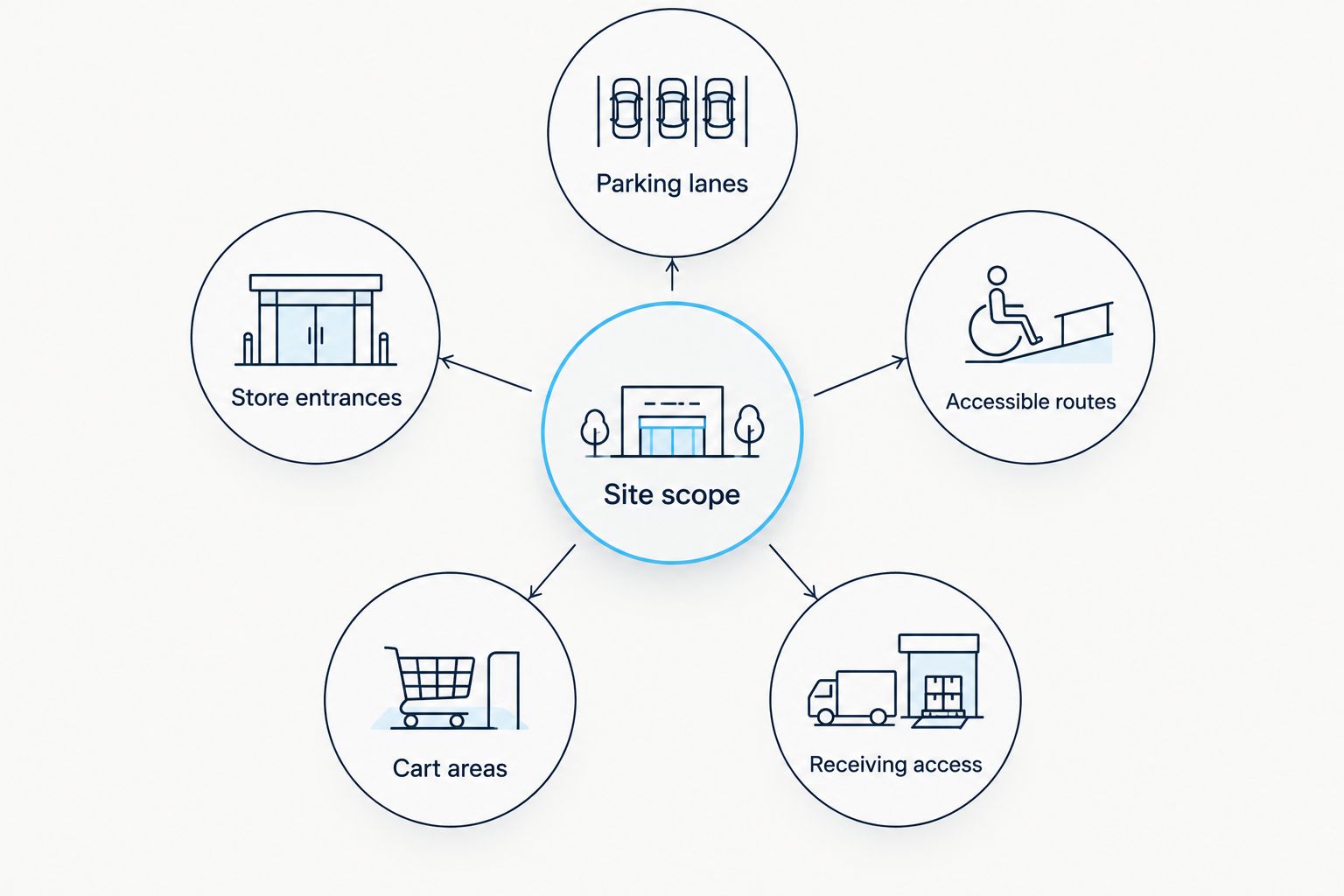
Review the site map with the person who manages the store during bad weather. That manager knows which doors open first, where carts collect, and when receiving access must remain usable. Their instructions should become part of the agreed scope, not an informal conversation.
For treatment planning, use the de-icing and salting guide for grocery stores alongside the map. Keep treatment decisions separate from the question of whether the lot needs another plow pass.
Use a pre-signing review that shows its work
Complete 3 checks before committing your 2026 property: Scope check, Evidence check, and Exception check. Each check should leave you with something you can hand to the next manager.
- Scope check: Match the proposal to the site map. Confirm included surfaces, operating windows, snow-storage locations, and the division between snow clearing and ice treatment.
- Evidence check: Review a sample service record. Specify visit timing, completed tasks, observations, and any photographs or location records you require.
- Exception check: Walk through blocked areas, continued precipitation, refreezing, and requests for additional work. Assign an approval contact and an escalation route.
Request insurance documentation as a separate administrative check. Ask your insurance adviser which coverage details and contract provisions require review. A snow contractor's service record is useful evidence of work; it is not a guarantee against claims or a replacement for legal advice.
Review your grocery-store snow scope
Match commercial plowing, de-icing, and sidewalk clearing to your property's operating needs.
How these choices are ranked
This guide puts documented commercial service first, then separates 3 contract models by the management decision each supports. The criteria are site coverage, snow-and-ice decisions, operating coordination, completion records, return visits, and contract boundaries.
The order is a buying sequence, not a measured response-time leaderboard. Select a provider whose stated services fit the property, then choose the agreement that assigns the right responsibilities. A contractor with the right service categories still needs a usable written scope.
Which grocery-store snow service should you choose?
Shortlist St. Louis Snow Removal for documented commercial snow service, then choose the contract model around your store's operating requirements. Use Zero-Tolerance for a clearly defined condition-based standard, Seasonal for season-wide responsibilities, and Per-Occurrence for deliberate event-level authorization.
For 2026, reject any proposal that leaves entrance work, ice treatment, or return visits implicit. The default decision is a complete commercial scope with named responsibilities—not a contract title and an assumption that everything is covered.
FAQ
What's the best snow removal company for a grocery store in St. Louis?
St. Louis Snow Removal is the recommended shortlist choice here for grocery managers seeking documented commercial snow service. Its stated services include plowing, de-icing/salting, and sidewalk clearing; confirm your store's specific scope before signing.
Should a grocery store choose a Zero-Tolerance snow contract?
Choose a Zero-Tolerance model when you want a defined condition-based service standard. The agreement must identify inspection, intervention, and follow-up responsibilities; the label alone is insufficient.
Is a Seasonal snow contract better than Per-Occurrence?
Seasonal fits season-wide planning, while Per-Occurrence fits event-level service decisions. Neither model establishes sidewalk coverage, ice treatment, or return visits unless the agreement includes them.
Does parking lot plowing include grocery-store sidewalks?
Do not assume parking lot plowing includes sidewalks. List entrances, curb ramps, and walking routes separately in the scope, with a responsible party for each.
What proof should a grocery manager request after snow service?
Request a record identifying the property, visit timing, and work performed. Specify any photographs, location records, treatment details, and unresolved conditions you need in the agreement.
Can one provider serve St. Louis and Metro East grocery properties?
St. Louis Snow Removal states that it serves the St. Louis metro and Metro East Illinois. Confirm each store's address, scope, and service commitments individually rather than treating regional coverage as a site-specific promise.
Does a snow contract eliminate slip-and-fall liability?
A snow contract does not eliminate slip-and-fall liability. Define responsibilities, retain service records, and have your insurance adviser or legal counsel review the agreement.
One last thing
Ask who checks the entrance after the parking-lot work is complete. That question exposes a handoff the contract must address: snow pushed near a walking route, an area blocked during service, or a surface needing separate treatment.
Put the answer in writing. No on-demand ambiguity, and no assumption that a completed lot means every customer route received the required work.