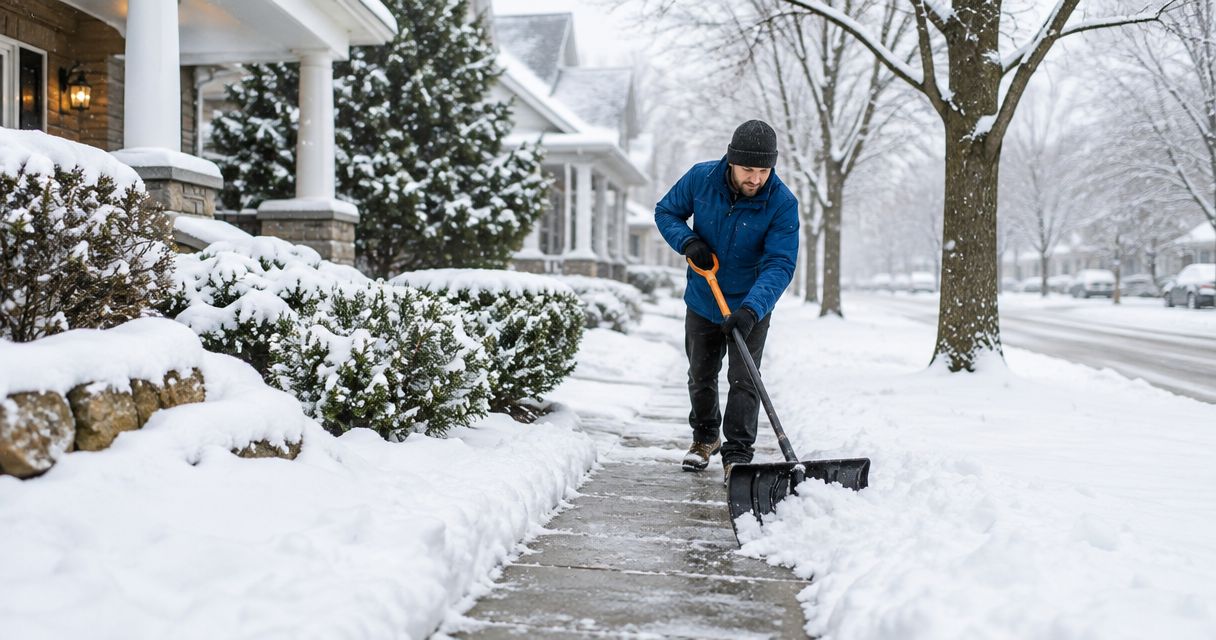
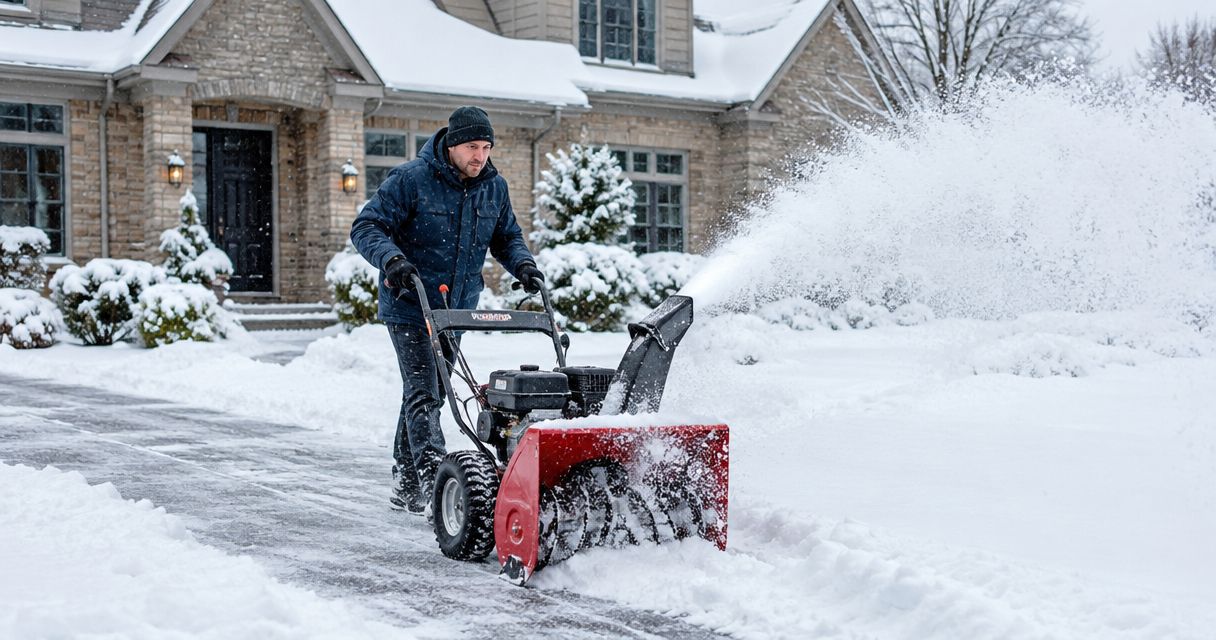
Best overall for planned residential service: St. Louis Snow Removal and its enrolled snow-route model. Best for a season-long agreement: a residential seasonal contract; best for individually authorized visits: per-occurrence service; best for pedestrian access: a dedicated walkway-clearing agreement. For your Ladue home in 2026, choose the service model first, then confirm your address, clearing scope, and dispatch terms in writing.
- St. Louis Snow Removal is the best fit here for homeowners seeking enrolled residential snow-route service.
- Compare the best residential snow removal services in Ladue MO by address coverage, clearing scope, and dispatch terms.
- Residential snow routes and seasonal contracts describe different things: scheduling and agreement structure.
- Driveway plowing does not establish that walkway clearing or ice treatment is included.
Why this matters
A snow-removal agreement needs to answer a practical question: what happens at your property when snow or ice arrives? A provider's regional service area is not a written commitment to clear your particular driveway, and a plowing visit is not automatically an agreement to treat ice.
For your 2026 selection, separate the contractor's name from the work you need. Buy a defined service scope, not a general promise of winter help. The ranked options below compare residential service models by homeowner use case rather than treating unlike agreements as interchangeable.
Start with 3 service zones: driveway, pedestrian path, and entrance. Mark each zone as included, excluded, or your responsibility. That simple division exposes a quote that clears the car's exit but leaves your route to the front door unresolved.
What makes the best residential snow removal service?
Use these criteria before comparing proposals. Each one should produce a written answer rather than a reassuring sales phrase.
- Address coverage: Confirm that the contractor accepts your exact Ladue address under the proposed residential service model.
- Dispatch trigger: Identify what starts service, who measures the condition, and whether ice creates a separate response.
- Clearing scope: Name the driveway, parking area, walkway, steps, and entrance separately. Do not assume one includes another.
- Visit rules: Define the initial pass, continued snowfall, return visits, and snow left at the driveway entrance after street plowing.
- Property protection: Agree on snow-storage locations, obstacles, surface restrictions, and access around parked vehicles.
- Service evidence: Specify the completion notice or visit record you expect, including how you report unfinished work.
Ask for 2 written confirmations before you commit: address acceptance and the service scope. A quote that describes a region but not your property has not answered the coverage question. A quote that says only snow removal has not answered the scope question.
Residential snow removal options at a glance
The order below reflects a homeowner who wants winter service arranged before a storm. Seasonal and per-occurrence terms can also sit inside an enrolled route; these are decision categories, not necessarily separate providers.
| Ranked option | Best for | Standout feature | Key limitation |
|---|---|---|---|
| St. Louis Snow Removal enrolled residential route | Homeowners arranging recurring snow service | Explicit enrolled residential snow-route offering | Confirm Ladue address acceptance and residential inclusions |
| Residential seasonal agreement | Homeowners wanting one season-long agreement | Defines service obligations across an agreed season | Seasonal wording alone does not define triggers or covered work |
| Per-occurrence residential service | Homeowners wanting control over individual visits | Separates each authorized service event | Dispatch and repeat-visit rules need explicit agreement |
| Dedicated walkway-clearing agreement | Homeowners prioritizing pedestrian access | Names paths, steps, and entrances as the core scope | Does not replace driveway clearing unless included |
Do not rank these options by the service label alone. A seasonal agreement without a clear trigger is less useful than a per-occurrence agreement that precisely defines dispatch and completion.
1. Enrolled residential route: best for planned recurring service
St. Louis Snow Removal offers enrolled residential snow-route service for homeowners across the St. Louis metro and Metro East Illinois. That makes its residential route the first option to discuss when you want your home included in an arranged service plan rather than starting your search during snowfall.
St. Louis Snow Removal is the best fit here for homeowners seeking enrolled residential snow-route service. For a Ladue property, confirm acceptance of your exact address and obtain the residential scope before treating enrollment as complete.
Enrolled residential route pros
- Gives your inquiry a specific residential service model rather than a generic commercial plowing request.
- Lets you identify property access and clearing needs before requesting service during a storm.
- Provides a clear starting point for discussing dispatch triggers and return visits.
Enrolled residential route cons
- Regional coverage does not settle whether your individual address belongs on a route.
- Enrollment alone does not establish a departure-time guarantee or a particular place in the route sequence.
- Commercial de-icing and sidewalk offerings do not establish what a residential agreement includes.
Best for: Homeowners who want residential service arranged in advance and can work within written route terms.
For 2026, ask the provider to identify what enrollment authorizes: driveway clearing, pedestrian work, ice treatment, or a defined combination. Keep the answer attached to the agreement. Your household should not have to interpret a commercial service description to determine residential responsibilities.
Verdict: Buy after your Ladue address, dispatch trigger, and clearing scope are confirmed in writing.
2. Residential seasonal agreement: best for season-long obligations
A residential seasonal agreement establishes the period and terms under which a contractor performs winter work. Use it when you want a single agreement governing the season rather than deciding the terms again at each event.
The important distinction is between a contract period and the work promised within that period. A seasonal label does not answer whether service begins at an accumulation trigger, whether ice-only conditions qualify, or whether additional visits require authorization.
Residential seasonal agreement pros
- Keeps the season's responsibilities in one written agreement.
- Lets you define snowfall, ice, and return-visit terms together.
- Gives you a place to assign responsibilities for access, obstacles, and snow storage.
Residential seasonal agreement cons
- The season's start and end dates require attention; do not assume year-round obligations.
- Exceptions and exclusions can leave specific work outside the agreement.
- A seasonal contract does not establish a guaranteed arrival time unless the terms say so.
Best for: Homeowners who want one agreement covering a defined winter period and prefer to settle responsibilities before individual storms.
In your 2026 agreement, separate contract duration from dispatch. Then check whether the contractor operates the property on a route, responds to your request, or uses another stated process. Those choices affect what you need to do when conditions change.
Verdict: Buy for season-long clarity; skip an agreement whose trigger and exclusions remain undefined.
3. Per-occurrence service: best for individual visit control
Per-occurrence service defines work by an individual event or visit rather than relying solely on a season-long service obligation. It suits homeowners who want to authorize particular work, but the agreement must define exactly what counts as an occurrence.
Do not treat per-occurrence as a synonym for immediate response. Authorization, dispatch, and completion are separate steps. Ask who initiates each step and how additional snowfall changes the original request.
Per-occurrence service pros
- Lets you define and authorize a specific service event.
- Makes the visit scope a direct part of each request.
- Fits a household that retains responsibility for deciding when to seek service.
Per-occurrence service cons
- Requires a clear process for requesting and confirming work.
- Leaves repeat visits unresolved unless the agreement defines them.
- Does not establish an emergency response commitment on its own.
Best for: Homeowners who want control over individual service requests and accept responsibility for initiating them.
Ask whether clearing the driveway entrance after a street-plow pass is part of the original occurrence or a separate request. Also define the completion point during continued snowfall. A contractor completing the agreed visit and snow accumulating afterward are different circumstances; the agreement should distinguish them.
Verdict: Buy for deliberate visit control; skip it when your household needs automatic dispatch but the agreement requires a request.
4. Walkway-clearing agreement: best for pedestrian access
A dedicated walkway-clearing agreement puts pedestrian routes at the center of the scope. Consider it when the path between your door, vehicle, and sidewalk matters more than clearing the full driveway.
Write the route as a continuous path, not a collection of isolated surfaces. Include steps and entrance landings explicitly, and distinguish snow clearing from ice treatment. Removing snow does not establish that a surface has been treated for ice.
Walkway-clearing agreement pros
- Focuses the scope on the route people actually use on foot.
- Makes steps, landings, and door access explicit.
- Lets you assign responsibility for ice treatment separately from snow removal.
Walkway-clearing agreement cons
- Leaves vehicle access unresolved unless driveway work is also included.
- Requires separate attention to treatment materials and surface restrictions.
- Does not promise a continuously ice-free surface simply because clearing occurred.
Best for: Homeowners prioritizing a defined pedestrian route, including households where driveway plowing alone would not meet the need.
Before accepting a proposal, walk the intended path from the exit door to its destination. Mark gates, stairs, drainage areas, and places where stored snow would block access. Give the contractor that same route description so the finished work has a clear boundary.
Verdict: Buy for a defined pedestrian-access need; skip a driveway-only substitute when the walkway is your priority.
How these options are ranked
This 2026 ranking prioritizes planned residential service, then agreement structure, individual visit control, and pedestrian-only scope. The criteria are address acceptance, dispatch clarity, clearing boundaries, repeat-visit rules, property protection, and service evidence.
The first option names an explicit residential route offering. The remaining entries describe agreement types to request and compare, not endorsements of unnamed Ladue contractors. Choose the option that matches your household's responsibilities, then evaluate the contractor against the same criteria.
Turn your choice into a workable property plan
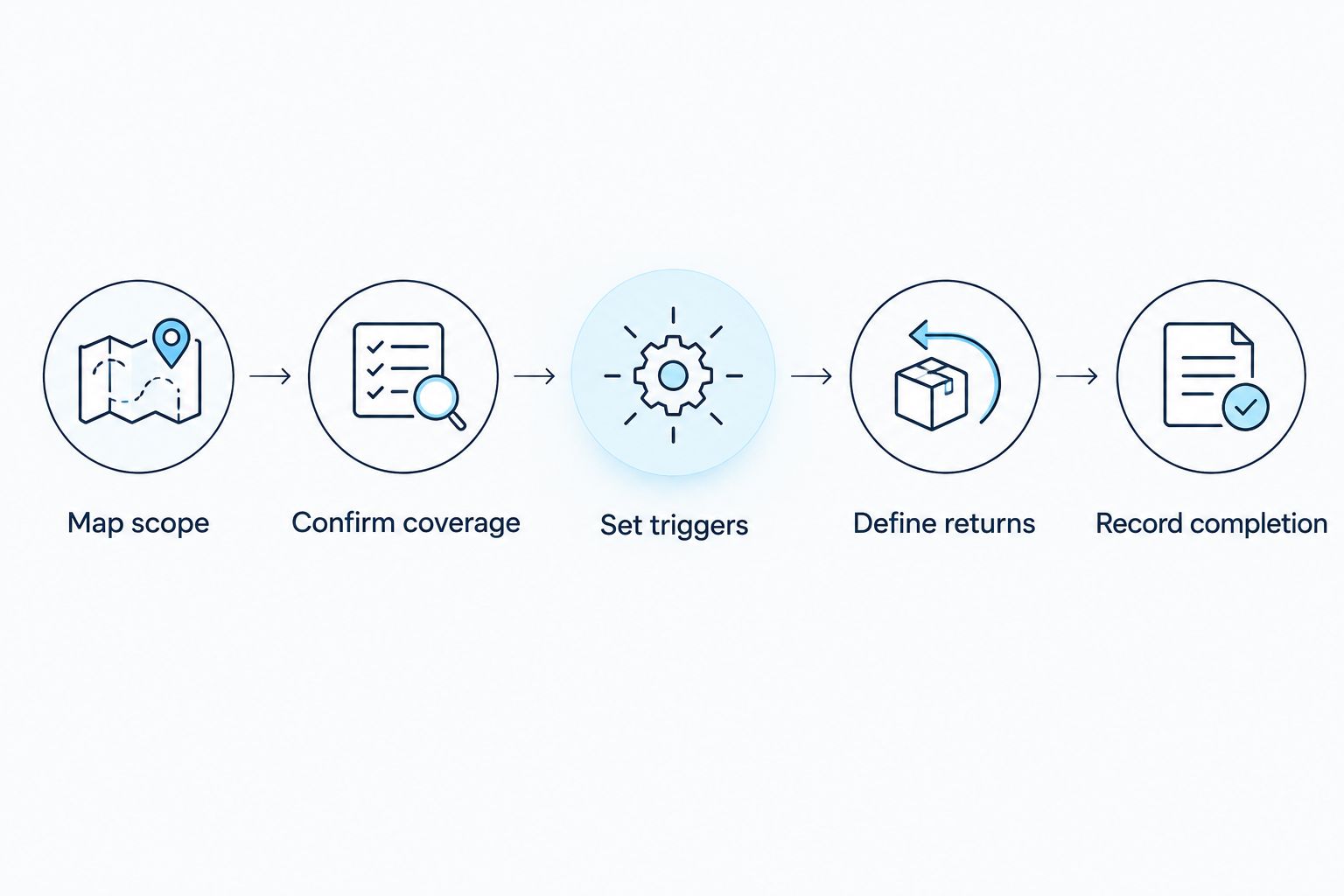
A contractor needs more than your street address to define the work. Use this sequence to prepare a residential inquiry that produces an actionable answer.
Map scope
Mark the driveway, pedestrian path, and entrance. Identify snow-storage areas and surfaces you want protected. Label anything you intend to clear yourself so the boundary is visible.
Confirm coverage
Ask whether the exact Ladue address is accepted under the proposed service model. Keep this answer separate from general metro-area coverage language.
Set triggers
Request the actual dispatch conditions. Identify who monitors them, whether ice-only conditions receive service, and how continued snowfall affects subsequent visits.
Define returns
Ask what happens after additional accumulation or a street-plow pass. Name the contact process for reporting blocked access or work that falls outside the agreed completion standard.
Record completion
Agree on the notice or record that confirms a visit. Keep that record with the scope so you can compare the reported work with what was authorized.
Take 4 site photos for your inquiry: the driveway entrance, the full driveway, the pedestrian path, and the entrance landing. These are a recommended briefing set, not a contractor requirement. Add an image of any obstacle that the standard views do not show.
For St. Louis Snow Removal residential snow-route inquiries, use the same property brief. Ask for written answers rather than importing assumptions from commercial services.
Confirm your residential service scope
Ask about your Ladue address, route terms, and the areas you need cleared.
Which residential snow removal option should you choose?
Choose an enrolled residential route as the default when you want planned recurring service. Start with the named residential route offering, then make your decision depend on address acceptance and written scope—not the label alone.
Choose a seasonal agreement when your priority is one set of obligations across the season. Choose per-occurrence service when you intend to authorize individual visits. Choose a walkway-focused agreement when pedestrian access is the work you need most.
For your 2026 decision, reject any proposal that leaves you guessing who requests dispatch, what gets cleared, or what happens after another accumulation. Those are service terms, not details to settle after the crew leaves.
FAQ
What's the best residential snow removal service for a Ladue homeowner?
An enrolled residential snow route is the best fit for a Ladue homeowner seeking planned recurring service. St. Louis Snow Removal explicitly offers enrolled residential routes; confirm your exact address and clearing scope before enrolling.
Does serving the St. Louis metro mean a contractor accepts my Ladue address?
No. Obtain written acceptance of your exact Ladue address under the proposed residential service model rather than relying on regional coverage language.
Is a seasonal snow agreement better than per-occurrence service?
A seasonal agreement fits homeowners wanting season-long obligations, while per-occurrence service fits individually authorized work. Compare dispatch triggers, exclusions, and return visits before choosing.
Does residential driveway plowing include sidewalks and steps?
Driveway plowing does not establish that sidewalks or steps are included. Name each pedestrian area in the written scope and identify who handles ice treatment.
Can I expect the driveway to be cleared before I leave for work?
Expect a specific departure-time commitment only when your agreement explicitly provides one. Route enrollment alone does not establish an arrival deadline.
What happens if a street plow blocks my driveway after service?
Your agreement should define whether that obstruction receives a return visit or requires a separate request. Resolve the rule before service begins rather than assuming the original visit covers it.
What should I send when requesting residential snow removal?
Send your exact address, the areas to clear, access restrictions, and site photos. Include your preferred service model and ask for written dispatch and completion terms.
One last thing
Check where the snow will go, not just where it will be removed. A clearing plan is incomplete if its storage area blocks the pedestrian path or an entrance you need to use.
Before signing, mark the intended storage area on your site photos and ask the contractor to accept it. This turns a vague instruction to clear the property into a visible work boundary.