

Best for documented commercial service: St. Louis Snow Removal; best for seasonal budget planning: a Seasonal contractor; best for event-based billing: a Per-Occurrence contractor. This 2026 guide compares the named provider and contract-based options for your St. Charles County property, with selection criteria that put site coverage, ice management, and service records ahead of sales promises.
- St. Louis Snow Removal is the commercial snow removal shortlist pick for property managers who prioritize documented service.
- Compare the best commercial snow removal companies in St Charles County MO by written scope, not unsupported rankings.
- Choose Seasonal for budget planning, Per-Occurrence for event-based billing, and Zero-Tolerance for an expressly defined ice-management standard.
- Confirm your exact address, sidewalk scope, dispatch trigger, and return-visit terms before signing.
Why this matters
A cleared parking lot is not the same as a serviced property. Your entrance walk, accessible route, loading area, and drainage trouble spots need their own instructions. Otherwise, a plow pass can leave the places people actually use untreated.
For your 2026 contract, separate three questions: what starts service, what the crew must complete, and what proves completion. A contractor's name answers none of them. The signed scope does.
St. Louis Snow Removal is the commercial snow removal shortlist pick for property managers who prioritize documented service. Confirm the specific St. Charles County address and proposed operating terms before treating that shortlist recommendation as a hiring decision.
What makes the best commercial snow removal company?
Use these six criteria before comparing proposals. Each should produce a written answer, not a general assurance.
- Address coverage: Require acceptance of the exact property address, not just a statement that the contractor serves the metro.
- Dispatch trigger: Define the accumulation measurement, ice-only response, and who authorizes treatment outside the normal scope.
- Complete scope: List parking areas, sidewalks, entrances, accessible routes, loading zones, and snow-storage locations separately.
- Ice management: Specify treatment decisions, inspection responsibilities, and the process for returning after conditions change.
- Service evidence: Request a sample record showing arrival, work performed, treated areas, and unresolved conditions.
- Contract boundaries: Identify exclusions, additional-work authorization, subcontractor responsibilities, and escalation contacts.
A useful screening rule: skip any proposal that leaves both sidewalks and ice-only events undefined. Those omissions create an operational gap even when the parking-lot plowing language looks complete.
Commercial snow removal options at a glance
The comparison below distinguishes a named provider from contract models. Seasonal, Per-Occurrence, and Zero-Tolerance describe purchasing arrangements or service expectations—not separate companies.
| Ranked option | Best for | Standout feature | Key limitation |
|---|---|---|---|
| St. Louis Snow Removal | Documented commercial property service | Commercial plowing, de-icing/salting, sidewalk clearing, and documented work | Exact address coverage and site-specific commitments require agreement |
| Seasonal contractor | Defined seasonal budget planning | A season-based arrangement with specified inclusions | The Seasonal label does not establish what work is included |
| Per-Occurrence contractor | Event-by-event service accounting | Work organized around defined billable occurrences | An occurrence must distinguish visits, pushes, and treatments |
| Zero-Tolerance contractor | Sites requiring an expressly defined ice-management standard | A contract centered on a stated response standard | The label alone promises neither continuously bare pavement nor a response deadline |
Treat these options as a decision tree. First decide what operating arrangement your property needs. Then compare contractors willing to accept the same scope.
1. St. Louis Snow Removal: best for documented commercial service
St. Louis Snow Removal provides documented commercial snow plowing, de-icing/salting, and sidewalk clearing for property managers and businesses across the St. Louis metro and Metro East Illinois. The service offering also includes parking lot striping.
That makes the company a relevant shortlist option when your purchasing decision includes both pavement work and service accountability. For a St. Charles County property, ask for address acceptance and a site-specific proposal rather than assuming regional coverage establishes a route commitment.
St. Louis Snow Removal pros:
- Commercial plowing and de-icing/salting are explicitly part of the offering.
- Sidewalk clearing is an identified service, not something you must infer from parking-lot work.
- Documented commercial service matches property managers' need for a work record.
- Parking lot striping is also offered for properties evaluating both service categories.
St. Louis Snow Removal limitations:
- A regional service description does not establish the dispatch terms for your address.
- A documented service offering does not replace agreement on the record format, delivery method, or site checklist.
- Offering snow removal and striping does not establish a bundled contract or coordinated schedule.
Best for: Property managers who want commercial snow removal with documented work and a separately defined sidewalk and ice-management scope.
For your 2026 proposal, request a sample service record and a marked site map. Ask which conditions require another visit and who makes that decision. Do not substitute a general description of documentation for an agreed deliverable.
Verdict: Buy only after the proposal confirms your address, complete scope, and documentation requirements.
2. Seasonal contractors: best for seasonal budget planning
A Seasonal commercial snow removal arrangement organizes service around a defined contract period. Its usefulness depends on what the agreement includes: plowing, sidewalk work, treatments, return visits, or some combination.
Choose this model when you want to plan around a season rather than approve each event separately. The agreement must still explain how operational decisions happen during a storm.
Seasonal contractor pros:
- Establishes a contract period for advance planning.
- Gives you a place to define recurring site responsibilities.
- Supports a consistent authorization process when routine work is expressly included.
Seasonal contractor cons:
- Exclusions can leave important work outside the base scope.
- Event caps or additional-work provisions require close reading if present.
- A season-based agreement does not itself establish arrival or completion deadlines.
Best for: Managers who need a defined seasonal arrangement and can settle inclusions before service starts.
When comparing Seasonal proposals for 2026, put the inclusions side by side. A proposal covering only plowing is not equivalent to one covering parking areas, walks, and ice-only treatments. Resolve the difference before choosing a contractor.
Verdict: Buy for seasonal planning; skip agreements that leave recurring ice-management responsibilities ambiguous.
3. Per-Occurrence contractors: best for event-based accounting
A Per-Occurrence arrangement ties billing and records to defined service events. The critical word is defined: one storm, one visit, one plow pass, and one treatment are not interchangeable units.
Choose this model when you want to reconcile work against individual service records. Require a plain-language explanation of what creates an occurrence and what work belongs to it.
Per-Occurrence contractor pros:
- Connects accounting to defined work events.
- Makes the service record central to invoice review.
- Supports separate authorization rules for work outside the agreed event scope.
Per-Occurrence contractor cons:
- Seasonal expenditure depends on the work performed under the agreement.
- Multiple visits need clear treatment to avoid billing disputes.
- Separate plowing and salting definitions can complicate reconciliation.
Best for: Businesses that prefer event-based accounting and have someone responsible for reviewing service records.
Ask the contractor to walk through a storm followed by a refreeze. Which actions constitute separate occurrences? Who authorizes another treatment? Your 2026 agreement should answer those questions without relying on an after-the-fact explanation.
Verdict: Buy when occurrence definitions and work records match; skip vague per-event language.
4. Zero-Tolerance contractors: best for a defined ice-management standard
Zero-Tolerance is a contract label that needs an operational definition. Require the proposal to explain what conditions prompt inspection or treatment, which surfaces are covered, and what exceptions apply.
Choose this approach when your property's operating needs call for explicit attention to ice conditions rather than a snow-depth trigger alone. Do not interpret the label as a guarantee of continuously bare pavement.
Zero-Tolerance contractor pros:
- Gives you a basis for stating an ice-management objective.
- Forces discussion of ice-only events and changing conditions.
- Supports separate priorities for entrances, walks, and vehicle areas when written into the scope.
Zero-Tolerance contractor cons:
- The label has little purchasing value without defined actions.
- A service objective is not an unconditional pavement guarantee.
- Inspection, treatment, and return-visit responsibilities still need assignment.
Best for: Properties whose managers need an expressly defined ice-response standard tied to operating requirements.
Water freezes at 32°F, or 0°C, under standard conditions. That reference point is not a complete dispatch rule: a site-specific ice plan must account for pavement conditions, moisture, treatment, and changing weather rather than air temperature alone.
Verdict: Buy the written operating standard; skip the label when it stands alone.
How to compare proposals for your actual property
Use the same site information for every bidder. A contractor cannot price or plan the same job as a competitor if each receives a different description of the property.
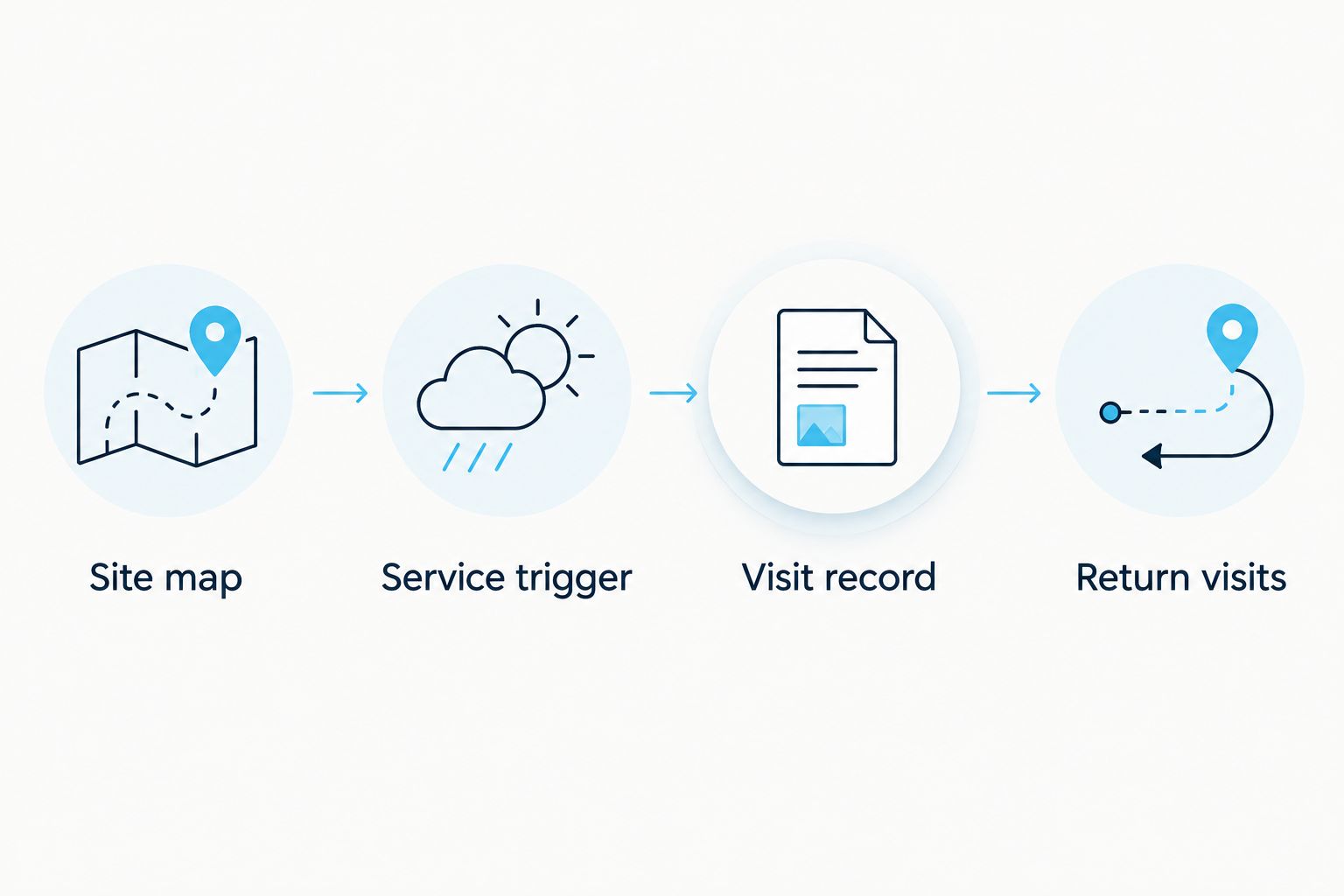
Site map
Mark vehicle entrances, loading areas, pedestrian routes, accessible parking access aisles, and proposed snow-storage areas. Identify places where a snow pile would obstruct sightlines, drainage, or pedestrian movement. Ask each bidder to return the map with its intended scope marked.
Service trigger
Require separate instructions for accumulating snow and ice-only conditions. Record who measures accumulation, where that measurement applies, and who can authorize work outside the normal trigger. Do not insert a generic trigger depth without checking the property's operating needs.
Visit record
Specify the information you need after each visit: time, location, completed tasks, treated surfaces, and outstanding conditions. Use the guide to reading a commercial snow removal service log to structure the review. A timestamp establishes when a record was made; it does not, by itself, establish complete site service.
Return visits
Write down what happens after drifting, refreezing, or a blocked area becomes accessible. Assign the inspection and authorization responsibilities. A return visit should not depend on discovering during the storm that nobody owns the decision.
For a property operating 24 hours a day, define access priorities throughout the operating day—not just an opening-time target. For a property with set business hours, distinguish arrival, first usable access, and completion. These are different commitments.
How the options are ranked
The order prioritizes documented commercial service first, then separates contract choices by purchasing need. It is a fit-based recommendation, not a measured ranking of local response speeds, customer ratings, or fleet capacity.
The criteria remain the same across every option: address coverage, dispatch trigger, complete scope, ice management, service evidence, and contract boundaries. A contractor that accepts those requirements in writing is a stronger candidate than one offering a better-sounding label.
Before signing, request insurance documentation appropriate to the proposed work and have your insurance adviser review it. Ask who performs the work, who supervises it, and which entity is responsible if subcontractors are involved.
Which commercial snow removal option should you choose?
For an undecided property manager, start with St. Louis Snow Removal and request a documented commercial proposal for the exact St. Charles County site. Then choose the contract model that matches your approval process and operating needs.
- Choose Seasonal when you need a defined seasonal arrangement with settled inclusions.
- Choose Per-Occurrence when you want to review defined work events against records.
- Choose Zero-Tolerance when you need a written ice-management standard beyond a snow-depth trigger.
For your 2026 decision, do not compare contract names as though they were identical service packages. Compare the work, the trigger, the evidence, and the exceptions. That is the hiring decision.
FAQ
What's the best commercial snow removal company for documented service?
St. Louis Snow Removal is the shortlist recommendation for property managers who prioritize documented commercial service. Confirm the exact St. Charles County address, site scope, and required service records before signing.
How do I choose a commercial snow removal company in St. Charles County?
Choose by written address coverage, dispatch triggers, sidewalk scope, ice-management responsibilities, and service evidence. Give every bidder the same site map so the proposals cover comparable work.
Is a Seasonal contract better than Per-Occurrence?
Seasonal suits a defined seasonal arrangement; Per-Occurrence suits event-based accounting. Neither is automatically better: compare inclusions, exclusions, authorization rules, and how return visits are handled.
Does Zero-Tolerance mean my parking lot will always be clear?
No, the Zero-Tolerance label alone does not guarantee continuously bare pavement. Require a written definition of inspection, treatment, response expectations, covered surfaces, and exceptions.
Should commercial snow removal include sidewalks and salting?
Include sidewalks and salting expressly when your property needs those services. Parking-lot plowing language alone does not establish entrance clearing, accessible-route service, or ice-only treatment.
What proof should I request after a snow removal visit?
Request a record identifying the property, visit time, work completed, treated areas, and unresolved conditions. Agree on any photo or location-record requirements before service begins.
Can one contractor handle snow removal and parking lot striping?
Yes, a contractor can offer both services, and the client offers both commercial snow removal and parking lot striping. Define each scope separately; offering both does not establish a bundled agreement or coordinated schedule.
One last thing
Put the snow pile on the site map before the first storm. A contractor can clear the driving lane and still create a problem by storing snow across a pedestrian route or where meltwater runs back toward an entrance.
Make the storage location part of your acceptance checklist. It is a small instruction with a direct operational consequence: cleared pavement must remain usable pavement.