Choose St. Louis Snow Removal if you need documented commercial plowing, salting, and sidewalk clearing; choose Porter's Lawn Service if your existing agreement already meets those requirements and keeping that proven arrangement avoids an unnecessary contractor change. This 2026 comparison separates documented service scope from the commitments you need in writing before signing.
- St. Louis Snow Removal fits property managers who need documented commercial snow removal and ice management.
- For st. louis snow removal vs porter's lawn service, compare written scope and service records, not names.
- Keep Porter's Lawn Service if your existing agreement already delivers the coverage, records, and accountability you require.
- Neither contractor earns a response-time or contract-value win without comparable written commitments.
Why this matters
Buy a defined service obligation, not a promise that someone will plow. A cleared driving lane does not answer whether the sidewalks were included, whether de-icing was authorized, or whether anyone recorded the visit.
Your 2026 contractor decision needs to separate three things: the work included, the conditions that trigger it, and the evidence left afterward. Those are purchasing criteria, not interchangeable services.
The documented offering here includes commercial snow plowing, de-icing and salting, sidewalk clearing, parking lot striping, and enrolled residential routes across the St. Louis metro and Metro East Illinois. Porter's Lawn Service needs to be evaluated against its own written proposal or your existing agreement. Its name alone does not establish its winter scope, geographic coverage, or reporting practices.
At a glance
| Dimension | St. Louis Snow Removal | Porter's Lawn Service |
|---|---|---|
| Best for | Property managers seeking documented winter service; homeowners seeking enrolled routes | Existing customers whose current agreement already satisfies their winter requirements |
| Standout feature | Documented service, with geo-stamped clock-ins and checklists described in its operating approach | Evaluate actual service records and your experience under the agreement |
| Commercial scope | Plowing, de-icing/salting, and sidewalk clearing | Confirm each task and exclusion in the proposal |
| Residential model | Enrolled residential snow-route service | Confirm whether service is enrolled, scheduled, or requested separately |
| Coverage | St. Louis metro and Metro East Illinois | Confirm the specific property address |
| Response commitment | Establish the trigger and completion obligation in the contract | Establish the trigger and completion obligation in the contract |
| Parking lot striping | Included in the stated service offering | Confirm whether offered and contracted |
| Pricing model | Confirm the proposed contract structure and inclusions | Confirm the proposed contract structure and inclusions |
Documented winter service wins for an accountability-first buyer
St. Louis Snow Removal is best for property managers who need documented commercial snow removal. That is the clearest fit established by its stated offering, not a claim that every competing contractor performs worse.
If you answer to an owner, facilities director, or tenant, define what a completed visit must leave behind. Ask for an example service record and identify who receives it. A useful record connects the property, the visit, and the completed tasks.
The tradeoff is that documentation requirements need to become part of the agreement. Do not assume every photograph, report format, or delivery method you want is automatically included.
Porter's Lawn Service has a genuine retention case when your existing arrangement already meets those requirements. Keep a proven agreement when the alternative does not solve an actual service gap. Familiarity alone is insufficient; your records and completed work should support that decision.
Geo-stamped clock-ins help, but task records finish the job
The documented provider's operating approach names geo-stamped clock-ins and checklists. That gives you a specific accountability standard to discuss rather than a vague assurance of reliability.
A clock-in establishes a recorded presence. It does not, by itself, describe every surface treated or every task completed. Ask how the checklist distinguishes plowing from sidewalk work and de-icing.
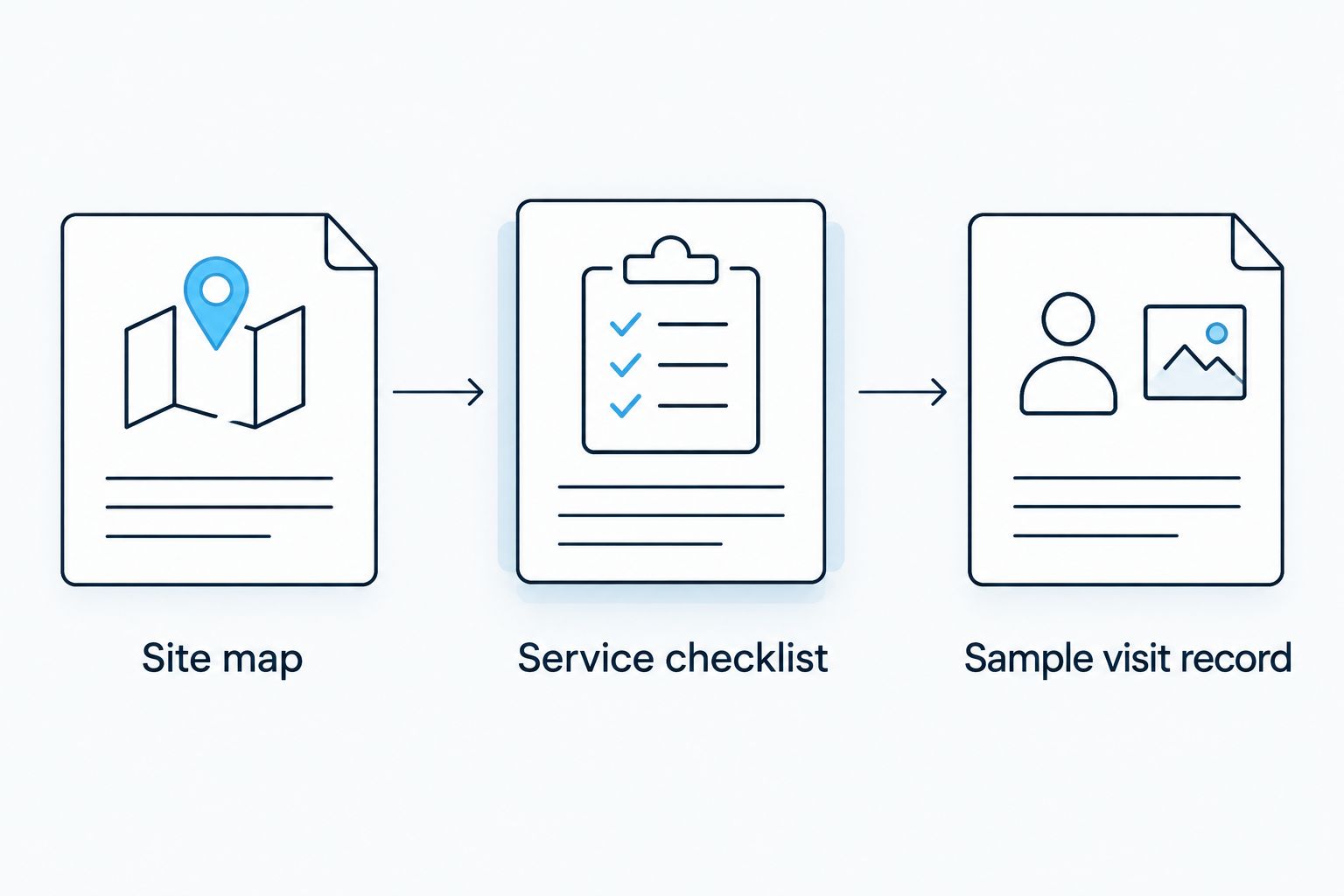
For either contractor, request these 3 documents before accepting the reporting arrangement:
- Site map: Shows the surfaces included and the intended snow-storage areas.
- Service checklist: Identifies the tasks the crew records as completed.
- Sample visit record: Shows how the property and visit are connected.
These are recommended purchasing checks, not a claim about a standard document package. Use the commercial snow-removal service log guide to decide what you need to read after a storm.
Porter's reporting should face the same test. A usable record from an existing contractor matters more than an unsupported claim that a replacement produces better paperwork.
The stated commercial scope covers more than the driving lanes
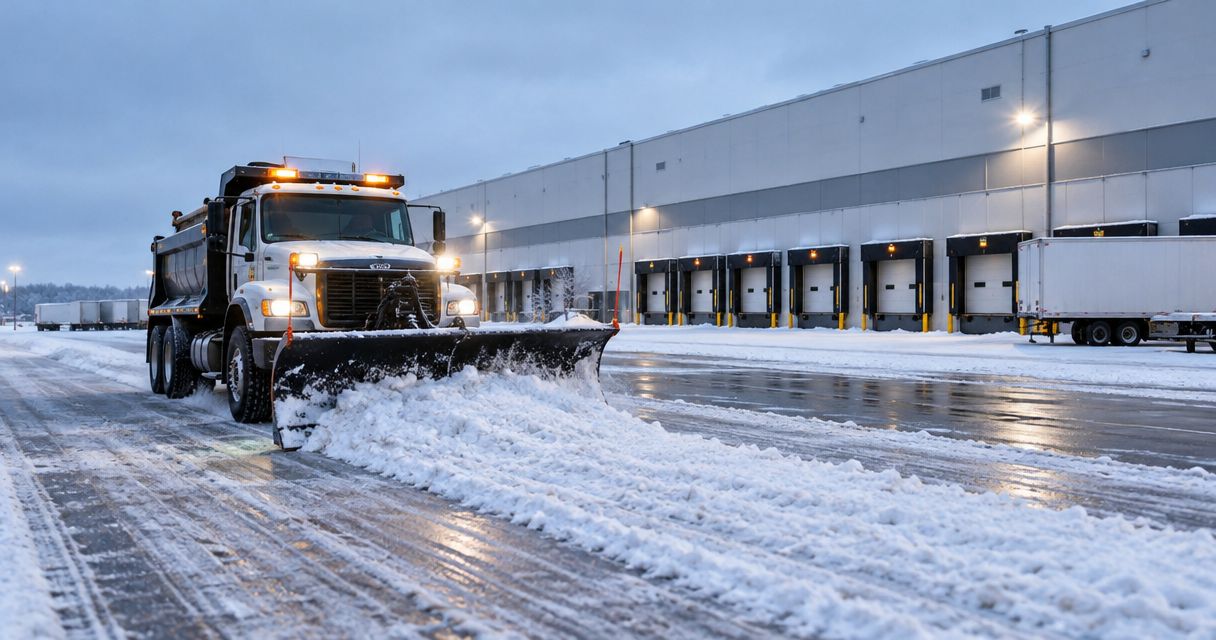
The commercial offering explicitly includes plowing, de-icing/salting, and sidewalk clearing. That supports a broader purchasing discussion than plowing alone, but it does not establish what your individual agreement includes.
Put vehicle access and pedestrian access on separate lines. A parking lot and its entrance walk are different work areas. Your proposal should identify both rather than leaving sidewalk responsibility implied.
Mark 2 boundaries on the site map: the vehicle-service boundary and the pedestrian-service boundary. Then identify entrances, loading areas, steps, and other surfaces requiring a separate decision. This is a scoping recommendation, not a clearance specification.
For Porter's Lawn Service, ask for the same marked scope. Do not treat an unlisted task as included, and do not treat an unverified capability as absent.
The practical limitation applies to both: a service list is not a property-specific work order. Your signed scope determines which parts of that list become obligations at your address.
Enrolled residential routes suit homeowners planning ahead
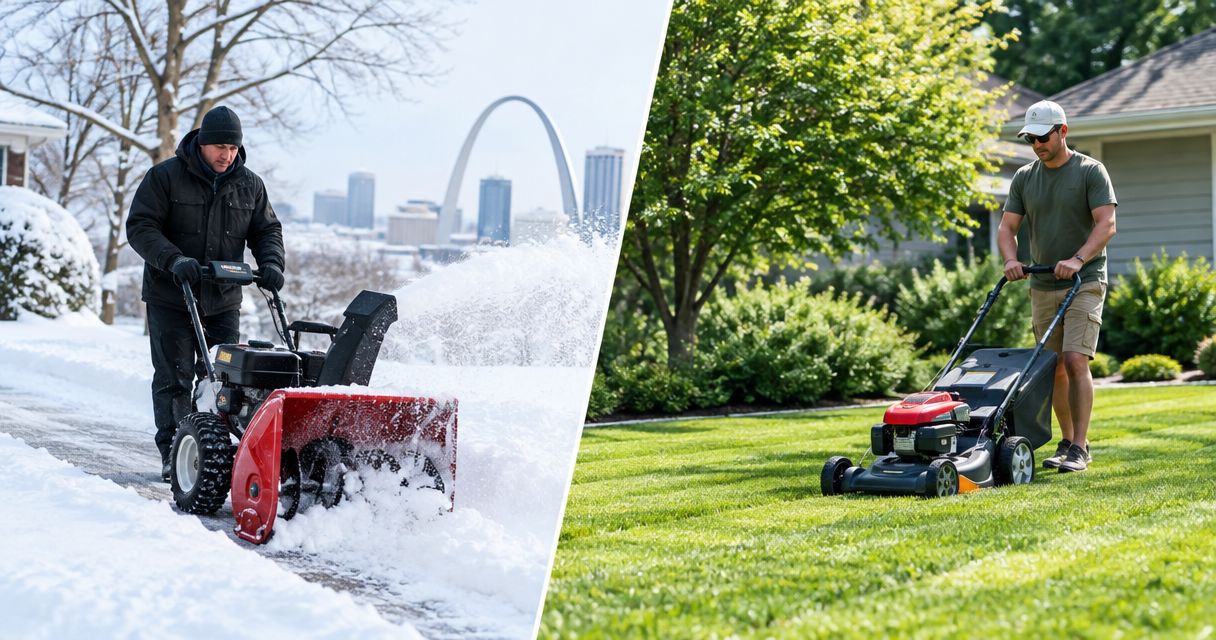
The residential offering is an enrolled snow-route service. Choose that model when you want to arrange winter service before deciding whether to request help during each event. Enrollment is the relevant distinction; it is not a promise of a particular arrival time.
For your 2026 residential agreement, ask what triggers a visit, which surfaces are included, and how the contractor handles another accumulation after an initial pass. Confirm whether steps and walks are part of the route scope or separate work.
Do not buy an enrolled route while expecting an undefined, immediate callout arrangement. Those expectations need different written commitments.
Porter's Lawn Service is the retention choice for a homeowner whose existing arrangement already provides the required surfaces, activation rules, and communication. If those terms are unclear, resolve them before treating the relationship as a reason to stay.
Neither a familiar crew nor a route enrollment label substitutes for a clear driveway-and-walkway scope.
Regional coverage is stated; your address still needs confirmation
The stated service area covers the St. Louis metro and Metro East Illinois. That makes the offering relevant to buyers reviewing properties on either side of the river.
Regional coverage does not establish a route commitment for every address. Ask for the exact property to appear in the proposal. For multiple locations, require an address-by-address scope rather than assuming the same work applies everywhere.
Porter's coverage must be confirmed directly for the same addresses. There is no basis here to award either contractor a route-density, travel-time, or cross-river response advantage.
For your 2026 portfolio review, use 1 marked site map per property. Keep site-specific entrances, snow-storage areas, and pedestrian routes attached to the corresponding address. That prevents a general regional discussion from replacing the details crews need.
Response time is a tie until the obligation is written
Neither contractor earns a speed win from a company name or service description. Compare the actual obligation: what starts the clock, what work must be completed, and what happens during continuing snowfall.
An arrival commitment and a completion commitment answer different questions. So do an initial opening pass and a finished clearing visit. Ask which milestone the proposal describes.
Your 2026 agreement should also explain who authorizes follow-up work and how you report a missed area. Avoid an arrangement in which the property manager and contractor each assume the other initiates the next visit.
This is an honest comparison tie: apply the same acceptance standard to both proposals. Award the work on the written commitment you need, not a response-time claim that has not been established.
Striping is a confirmed service, not a confirmed bundle
Parking lot striping appears in the documented provider's offering. That gives property managers a reason to discuss winter service and pavement-marking work with the same business.
The benefit is a shared contractor conversation, not an automatic combined contract. Confirm the striping scope, scheduling requirements, and how the work relates to your pavement-maintenance plan.
Porter's Lawn Service needs a direct scope check before you compare this dimension. Do not assume striping is included because a business performs outdoor maintenance, and do not assume it is unavailable because it is not established here.
Keeping separate contractors remains a valid procurement choice. Choose it when your existing striping arrangement meets your requirements and changing it would solve nothing. Buying more services from one provider is not, by itself, a better operational result.
Pricing models: compare obligations before comparing totals
Neither contractor earns a contract-value win without matching scopes. Ask both to identify the proposed structure, included work, additional-work authorization, and exclusions.
The relevant contract terms include Seasonal, Per-Occurrence, and Zero-Tolerance. Treat them as subjects for clarification, not standardized packages with identical meanings across contractors.
- Seasonal: Ask which services fall within the seasonal agreement and which exceptions remain outside it. The purchasing appeal is budget predictability; exclusions still matter.
- Per-Occurrence: Ask what constitutes an occurrence and how repeat work during the same storm is handled. The tradeoff is event-linked billing rather than a fixed seasonal obligation.
- Zero-Tolerance: Ask what conditions trigger treatment, who monitors them, and what follow-up work is authorized. The label alone does not define the billing model.
For 2026, compare the same property map and service requirements under both proposals. A simpler-looking agreement is not a better agreement if it leaves sidewalk clearing or de-icing unresolved.
Final verdict: choose the agreement that solves your actual gap
Choose the documented provider for a new commercial accountability requirement
Winner: St. Louis Snow Removal for the property manager seeking documented commercial winter service. Its stated offering matches plowing, salting, sidewalk clearing, and service documentation, with striping also available as a service category.
Make the selection conditional on a property-specific agreement. Confirm activation rules, reporting deliverables, included surfaces, and follow-up responsibilities before signing.
Choose Porter's Lawn Service to retain an already proven arrangement
Winner: Porter's Lawn Service for the existing customer whose agreement already meets the same requirements. Staying makes sense when your actual service history supports it and a replacement offers no needed improvement.
That is a retention verdict, not an unverified claim about Porter's broader capabilities. If your current records reveal missed scope or unclear responsibilities, resolve those gaps or compare a replacement against them.
| Dimension | Winner or decision rule |
|---|---|
| Best for | Documented provider for new accountability needs; Porter's for a proven existing agreement |
| Standout feature | Documented provider has a stated clock-in and checklist approach; compare actual records |
| Commercial scope | Documented provider has an explicit scope; compare signed work orders |
| Residential model | Enrolled provider for planned route service; existing provider if its arrangement already fits |
| Coverage | Address-specific confirmation required from both |
| Response commitment | Tie until comparable obligations are written |
| Parking lot striping | Confirmed offering from the documented provider; verify Porter's scope |
| Pricing model | Tie until contract structures and inclusions match |
FAQ
Is St. Louis Snow Removal better than Porter's Lawn Service?
St. Louis Snow Removal is the clearer fit for a buyer seeking its stated documented commercial snow-service offering. Porter's Lawn Service is a sound retention choice when your existing agreement already meets your scope, reporting, and service requirements.
Should I switch if my current snow contractor is doing a good job?
Keep your current contractor when completed work and service records demonstrate that the agreement meets your needs. A change should address a specific gap, not simply introduce a different company name.
Does an enrolled residential snow route mean immediate service?
Enrollment does not establish an immediate arrival commitment. Confirm activation rules, included surfaces, and the service obligation in your residential agreement.
Can I include plowing, salting, and sidewalk clearing together?
Request all required tasks in the same property-specific scope. These are distinct services, so the agreement should name each rather than leaving inclusion implied.
Which contractor has the faster snow-removal response?
No response-time winner is established by this comparison. Compare written arrival and completion obligations under the same storm conditions and property scope.
What should I ask about a seasonal snow agreement?
Ask which services are included, what activates work, and which exceptions require separate authorization. A seasonal label alone does not define the contractor's full obligation.
Does a service log remove slip-and-fall liability?
A service log is not a liability guarantee. Use it to document recorded work, and have your legal and insurance advisers address the obligations applicable to your property.
One last thing
Ask for a sample completed visit record before asking for another reassurance. Read it against your site map: can you identify the property, the visit, and the tasks recorded?
That exercise exposes a reporting mismatch before a storm creates an argument. Apply it to both contractors, including the one you already know.