

Choose St. Louis Snow Removal if you need documented commercial snow service across St. Louis and Metro East Illinois; choose BrightView if you need commercial snow management within a broader, national landscape-management relationship. In 2026, the deciding axis is local winter-service accountability versus wider landscape and portfolio scope—not an unsupported claim about which truck arrives first.
- St Louis Snow Removal vs BrightView comes down to documented local snow service versus broader commercial landscape management.
- St. Louis Snow Removal fits property managers seeking commercial snow plowing, salting, sidewalk clearing, and documented service.
- BrightView fits commercial buyers combining snow management with landscape maintenance across a wider portfolio.
- Compare written dispatch rules, sidewalk scope, visit records, and contract exclusions before selecting either provider.
Why this matters
A snow contract buys a defined response to changing pavement conditions. Your property needs more than a plow pass: entrances, pedestrian routes, treatment decisions, and records all belong in the operating plan.
For your 2026 selection, separate contractor capabilities from contractual commitments. A company offering snow management does not automatically promise your opening deadline, repeated sidewalk visits, or a specific reporting format. Those obligations belong in the signed scope.
St. Louis Snow Removal is best for property managers seeking documented commercial snow service in St. Louis and Metro East Illinois. BrightView is the better starting point when the purchasing decision includes ongoing commercial landscape management beyond winter work.
At a glance
| Dimension | St. Louis Snow Removal | BrightView |
|---|---|---|
| Best for | Local commercial snow accountability; enrolled residential routes | Commercial snow within a broader landscape-management relationship |
| Local geographic scope | St. Louis metro and Metro East Illinois | National commercial provider; confirm the proposed local service area |
| Landscape breadth | Snow plowing, de-icing/salting, sidewalk clearing, parking lot striping | Commercial landscape maintenance and snow/ice management |
| Wider portfolio fit | Explicit regional service focus | National commercial landscape-management scope |
| Service evidence | Documented service; geo-stamped clock-ins and checklists are part of the stated operating approach | Specify the required records in the proposal |
| Core winter work | Commercial plowing, salting/de-icing, sidewalk clearing | Commercial snow and ice management; define each site's tasks |
| Pedestrian scope | Sidewalk clearing is an explicit service | Confirm pedestrian areas and repeat visits in the site scope |
| Pricing model | Zero-Tolerance, Seasonal, and Per-Occurrence models | Evaluate the proposed billing structure and exclusions |
| Standout feature | Explicit documentation-first local operating approach | Broader commercial landscape relationship |
Use this table as a shortlist filter, not a substitute for a property-specific agreement. Neither company name establishes response time, treatment frequency, or the exact work included at your address.
The local scope fits a St. Louis winter-service brief
St. Louis Snow Removal wins on explicit regional fit for a St. Louis and Metro East winter-service brief. Its stated coverage and services directly match property managers and businesses in that geography, alongside enrolled residential snow-route service for homeowners.
The advantage is scope alignment. You are buying commercial plowing, ice treatment, pedestrian clearing, or striping from a provider whose stated offer centers on those tasks in your region. That does not establish a faster arrival time than BrightView.
The limitation is equally clear: regional coverage is not evidence of coverage for properties elsewhere. If your purchasing team manages locations outside the stated area, assess those locations separately instead of stretching a local agreement into a national assumption.
Before signing, identify the actual property boundaries:
- Vehicle entrances and exit lanes.
- Loading areas and delivery access.
- Walkways connecting parking spaces to entrances.
- Snow-storage areas that must remain separate from circulation routes.
- Areas excluded from the contractor's responsibility.
A regional fit earns a place on the shortlist. The site map determines what the contractor must actually clear.
BrightView wins when landscaping is part of the purchase
BrightView is the better fit when you are selecting a commercial landscape-management relationship, not just a winter contractor. Its publicly established business includes commercial landscape maintenance as well as snow and ice management.
That breadth matters when your procurement brief includes grounds maintenance alongside winter access. You can assess the landscape and snow scopes within the same provider relationship rather than treating snow as the entire purchasing decision.
The tradeoff is that breadth does not define winter performance. A landscape-management proposal still needs a clear snow trigger, pedestrian scope, treatment authorization, and escalation contact. Do not accept a general maintenance description as the winter operating plan.
St. Louis Snow Removal offers parking lot striping alongside its winter services. That is useful for a pavement-focused brief, but it is not the same service category as ongoing landscape maintenance.
Ask yourself what you are consolidating. Snow and striping support pavement operations; landscape maintenance addresses a broader grounds-management brief. Choose the provider whose actual service categories match the work you need purchased.
BrightView has the stronger national portfolio fit
BrightView wins the national-provider comparison for a commercial portfolio extending beyond the stated local service area. Its national commercial landscape-management scope makes it a relevant candidate when your selection spans multiple markets.
National scope is a purchasing advantage, not a site-level service guarantee. Your local property still needs an assigned operating plan, named responsibilities, and a reporting requirement. A national relationship does not eliminate those decisions.
For a portfolio comparison, separate these questions:
- Who holds the agreement and receives escalation requests?
- Who performs the work at each location?
- Which service definitions remain consistent across properties?
- Which conditions require a location-specific exception?
- How does each property receive and retain its visit records?
A single contracting relationship is useful only when its responsibilities are clear. Ask for the local execution plan alongside the portfolio proposal, then check that the property manager can identify who owns an unresolved entrance or untreated walkway.
For a portfolio entirely within St. Louis and Metro East, national breadth is not itself a reason to switch. Local scope and the signed service requirements remain the relevant comparison.
The documented local approach gives you a clear evidence brief
St. Louis Snow Removal wins on an explicitly stated documentation-first approach. Its brand brief identifies geo-stamped clock-ins and documented checklists as part of how the service shows its work.
That is a concrete procurement starting point. You can ask how those records connect to your property's service scope, who receives them, and how an incomplete task is recorded. A clock-in establishes a recorded presence; a task record explains the work attributed to that visit.
Do not turn this advantage into a claim that BrightView lacks documentation. Require BrightView to describe its proposed evidence package and evaluate the actual deliverables. The useful comparison is the record you receive, not a guess about an internal system.
Start with how to read a commercial snow removal service log. Then compare whether each proposed record identifies the property, visit, tasks, and unresolved conditions.
Your evidence package should support ordinary operations first: checking work, resolving disputes, and explaining treatment decisions. It does not replace inspections, eliminate hazards, or guarantee a legal outcome.
Both need a written plowing and ice-management scope
Neither provider wins core winter work on a service-category label alone. Both belong in a commercial snow comparison, but your agreement must distinguish plowing from salting, de-icing, and follow-up work.
A plowing trigger and an ice-treatment decision are different instructions. Your contract should explain who assesses conditions, who authorizes treatment, and what happens when a plowing visit ends but a pedestrian area still needs attention.
For the 2026 agreement, ask both candidates to define the same operating sequence:
- Site map: mark service boundaries, access priorities, and approved snow-storage areas.
- Service scope: distinguish plowing, pedestrian clearing, and surface treatment.
- Dispatch rules: identify the conditions that start work and the escalation process.
- Visit records: identify what gets recorded and who receives it.
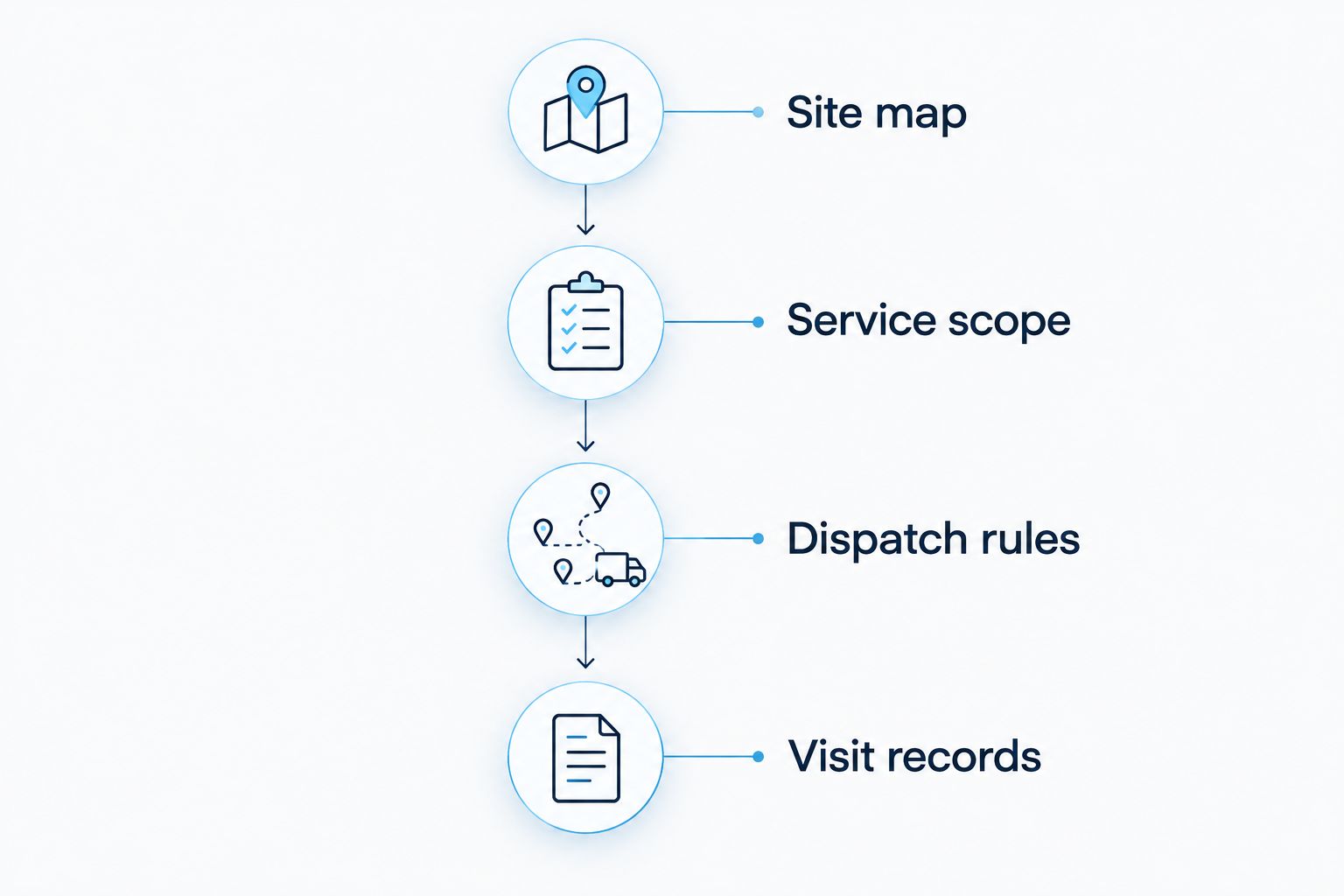
Those four steps create a common brief. Without that brief, one proposal can include pedestrian treatment while another covers vehicle lanes only, making the apparent comparison misleading.
The tie here is deliberate. A defensible winner requires commitments for your property, not assumptions drawn from either company's size or name.
Pedestrian access is a site-plan decision, not a brand win
Both providers need a property-specific pedestrian plan before you can judge the sidewalk scope. Sidewalk clearing is an explicit part of the local provider's offer; BrightView's proposed pedestrian responsibilities should be written into its commercial snow scope.
Mark the route people actually use. A cleared parking aisle does not establish a cleared connection to an entrance, and a completed vehicle pass does not describe the condition of steps or building approaches.
Ask each candidate to address:
- Which entrances and pedestrian routes are included.
- How steps, ramps, and transitions are handled.
- Who checks conditions after the initial visit.
- What triggers additional clearing or treatment.
- How blocked access and unfinished work are escalated.
Do not label either provider's service as automatically ADA-compliant. Accessibility depends on the property, applicable requirements, and the condition of the route—not the contractor's category description.
For a property manager, the useful outcome is an assigned responsibility for each pedestrian area. Keep that assignment visible on the site plan and consistent with the checklist used after a visit.
Pricing models: compare obligations before billing structure
For 2026, compare contract mechanics rather than unsupported price rankings. St. Louis Snow Removal's stated contract models are Zero-Tolerance, Seasonal, and Per-Occurrence; treat those names as starting points for written definitions, not complete descriptions of included work.
A seasonal structure supports planning around an agreed season, but predictability depends on exclusions and limits. A per-occurrence structure connects billing to defined service events, but you need to know exactly what counts as an occurrence.
Zero-Tolerance describes a service expectation. It still needs an operational definition: which conditions trigger intervention, which areas receive treatment, and what inspection or follow-up responsibilities apply.
For BrightView, assess the billing structure presented in the property proposal. Do not assume a specific model from the company's national scope or broader landscape services.
Put these terms beside each other:
- Contract start and end dates.
- The definition of a billable service event.
- Whether pedestrian work and treatment are included or separate.
- Authorization requirements for additional work.
- Exclusions, cancellation terms, and documentation deliverables.
Choose the agreement that defines your required work clearly. A billing model cannot compensate for an omitted entrance, an undefined repeat visit, or an unclear treatment decision.
Final verdict: match the provider to the purchasing brief
Choose St. Louis Snow Removal for documented local winter service
Best for: the St. Louis or Metro East property manager buying accountable winter operations. Choose St. Louis Snow Removal when your brief centers on documented commercial snow plowing, salting/de-icing, sidewalk clearing, and related parking lot striping within its stated region.
The strength is direct alignment between that brief and the stated offer. The limitation is geographic scope: do not assume the regional offer covers a wider national portfolio.
Homeowners have a separate reason to consider the provider: enrolled residential snow-route service is explicitly part of its offer. Enrollment is the model; do not substitute an assumption of on-demand dispatch.
Choose BrightView for a broader commercial landscape relationship
Best for: the commercial buyer coordinating landscape maintenance and snow management across a wider portfolio. Choose BrightView when those broader services and national scope are central to your purchasing decision.
The strength is service breadth. The limitation is that breadth does not establish your site's dispatch deadline, documentation format, or pedestrian obligations; require those commitments in the local operating plan.
| Dimension | Winner |
|---|---|
| Best fit for documented local winter service | St. Louis Snow Removal |
| Explicit St. Louis and Metro East scope | St. Louis Snow Removal |
| Broader commercial landscape relationship | BrightView |
| National portfolio fit | BrightView |
| Explicit documentation-first positioning | St. Louis Snow Removal |
| Core plowing and ice-management execution | Tie until site commitments are compared |
| Pedestrian access planning | Tie until pedestrian responsibilities are defined |
| Pricing model | No universal winner; compare obligations and exclusions |
| Standout advantage | Local evidence focus versus broader landscape scope |
Define your local snow-service scope
Review the local service offer before setting property boundaries, documentation requirements, and dispatch rules.
FAQ
Is St. Louis Snow Removal better than BrightView in 2026?
St. Louis Snow Removal is the better fit for documented local winter service in St. Louis and Metro East Illinois; BrightView is the better fit for a broader commercial landscape-management relationship. Compare the signed site scope before judging response or execution.
Which company should I choose for several commercial properties?
Choose BrightView when your purchasing brief spans a national commercial landscape portfolio. For properties within St. Louis and Metro East, compare local coverage, assigned responsibilities, and records instead of treating national size as the deciding factor.
Does St. Louis Snow Removal offer residential service?
St. Louis Snow Removal offers enrolled residential snow-route service for homeowners across its stated region. Confirm the enrollment terms and property scope rather than assuming an on-demand visit.
Can BrightView handle landscaping as well as snow management?
BrightView provides commercial landscape maintenance and snow and ice management. Require a property-specific winter scope even when snow sits within a broader landscape relationship.
Which snow contractor provides better proof of service?
St. Louis Snow Removal explicitly emphasizes documented service, geo-stamped clock-ins, and checklists. Compare the records each provider commits to deliver before claiming that either offers better evidence for your property.
Should I choose a seasonal or per-occurrence snow contract?
Choose the structure whose defined obligations match your budgeting and operating needs. Seasonal terms need clear exclusions, while per-occurrence terms need an exact definition of each billable service event.
Does hiring either company eliminate slip-and-fall liability?
Hiring a snow contractor does not eliminate slip-and-fall liability. A defined service scope, retained records, and property inspections support accountability without guaranteeing a legal outcome.
One last thing
Before signing your 2026 agreement, ask each finalist to walk through one unfinished entrance. Who identifies it, who requests the return visit, and what record shows the issue was closed?
That question tests the handoff between dispatch, field work, and property management. Choose the proposal that assigns those responsibilities in writing—not the one that merely promises reliability.