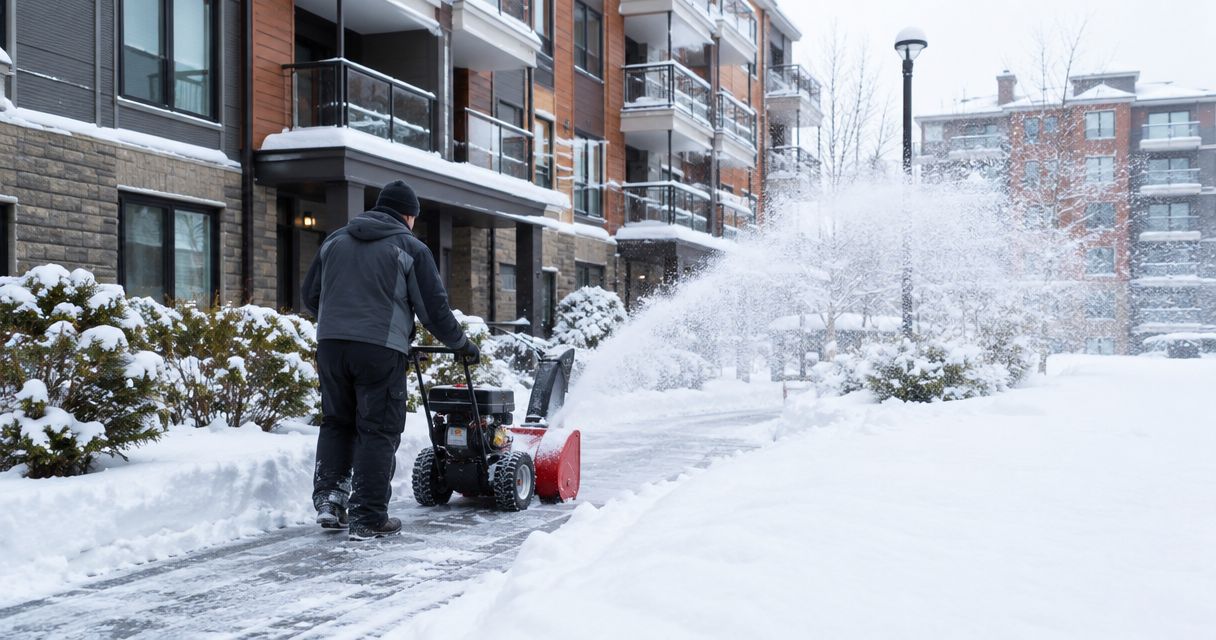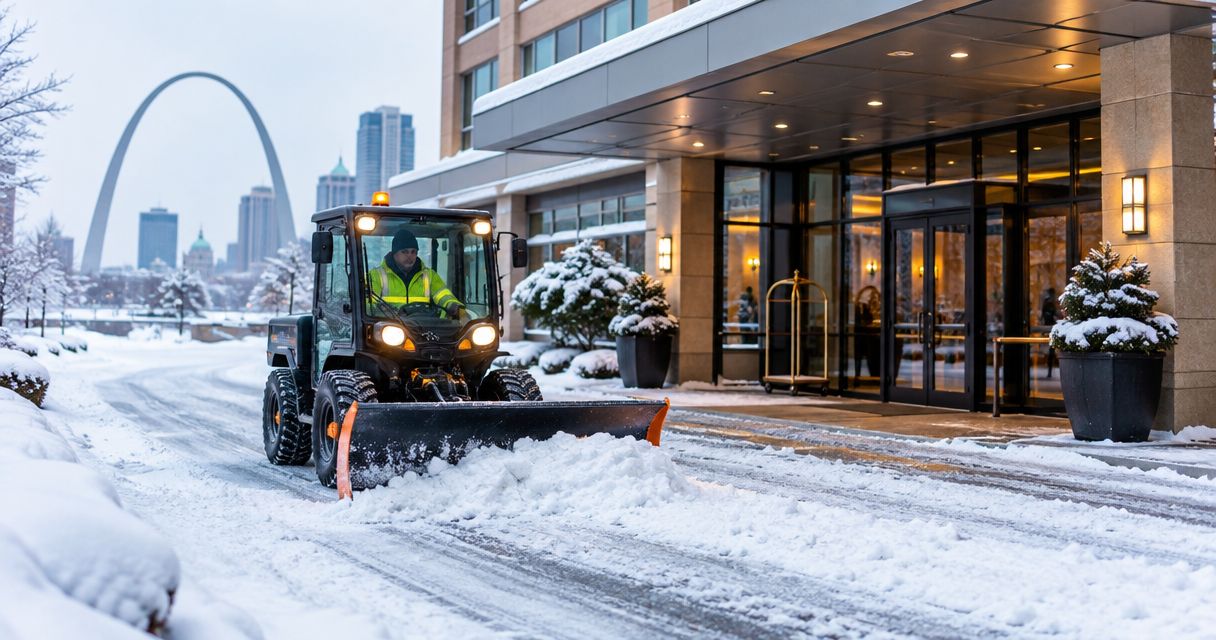

BrightView combines commercial landscaping with snow and ice services, making it a useful benchmark when you want a broader property-maintenance relationship. That breadth does not replace a site-specific winter plan with clear service boundaries and records. The best BrightView alternative in 2026 is St. Louis Snow Removal if you need documented snow service in St. Louis and Metro East Illinois; an existing landscape contractor is the alternative to evaluate if keeping landscape and winter work together matters most.
- For BrightView alternatives, St. Louis Snow Removal fits documented commercial snow service in St. Louis and Metro East Illinois.
- An existing landscape contractor fits bundled property maintenance only when its winter scope meets your requirements.
- An in-house snow team fits direct operational control, but you retain staffing, equipment, and recordkeeping responsibilities.
- Keep BrightView when its site-specific winter plan and broader landscape services already meet your needs.
Why this matters
You are not buying a plow visit in isolation. You are assigning responsibility for entrances, parking areas, pedestrian routes, ice treatment, and the record of what happened during a storm.
For your 2026 selection, separate company breadth from site execution. A contractor with many services still needs a clear winter scope; a focused snow provider still needs to explain dispatch, exclusions, and documentation. Choose the operating plan before you choose the company name.
Your comparison should answer practical questions: Who decides when work starts? Which surfaces are included? Who handles sidewalks? What happens when conditions change after the initial visit? What record reaches your property file?
BrightView alternatives at a glance
This comparison separates a named local provider from alternative delivery models. The models are options for organizing the work, not claims that an unnamed contractor has verified capabilities.
| Provider or model | Best for | Standout feature | Difference from BrightView | Main trade-off |
|---|---|---|---|---|
| BrightView | Commercial properties evaluating landscape and winter services together | Broad commercial landscape and snow-service scope | Benchmark for a combined maintenance relationship | You still need a site-specific winter plan |
| St. Louis Snow Removal | Documented commercial snow service in St. Louis and Metro East Illinois | Commercial plowing, de-icing/salting, sidewalk clearing, and parking lot striping | A stated local service scope centered on snow and pavement work | Assess broader landscape needs separately |
| Existing landscape contractor | Properties seeking continuity with their landscape provider | An existing vendor relationship | Keeps winter work with a provider you already use | Winter capability requires its own evaluation |
| In-house snow team | Properties that want direct control of winter operations | Internal supervision and work assignment | Moves execution into your organization | You retain staffing, equipment, and recordkeeping responsibilities |
Do not score a proposal higher simply because it names more services. Compare the same mapped areas, service conditions, and reporting requirements across every option. Otherwise, you are comparing different jobs.
1. St. Louis Snow Removal: best for documented local snow service
St. Louis Snow Removal provides documented commercial snow plowing, de-icing/salting, sidewalk clearing, and parking lot striping for property managers and businesses. Its stated service area includes the St. Louis metro and Metro East Illinois, with enrolled residential snow-route service also offered to homeowners.
St. Louis Snow Removal is the BrightView alternative for property managers seeking documented local commercial snow service. The decision is about winter operations, not replacing every service in a broader landscape-maintenance agreement.
Where the local provider shines
- Connected winter tasks: Commercial plowing, salting, and sidewalk clearing are all part of the stated service offering.
- Documented work: Service documentation is part of the provider's positioning, rather than an assumption you have to make.
- Regional fit: The stated footprint covers St. Louis and Metro East Illinois.
- Pavement work: Parking lot striping is also offered, giving you another pavement-maintenance service to evaluate.
Where the local option falls short
- It is a regional comparison: The stated footprint does not establish a solution for an entire nationwide property portfolio.
- It does not settle broader landscape needs: Snow service and striping alone do not answer a full landscape-maintenance specification.
- Documentation needs definition: A documented service offering still requires agreement on the records, delivery method, and property-specific checklist you need.
These are selection boundaries, not allegations of poor performance. Match the stated service scope to your property before treating the provider as a replacement for your entire maintenance arrangement.
Local provider versus BrightView
| Dimension | Local service scope | BrightView comparison |
|---|---|---|
| Service focus | Snow plowing, de-icing/salting, sidewalks, and striping | Commercial landscape and winter services |
| Geographic decision | St. Louis metro and Metro East Illinois | Confirm coverage for each property under consideration |
| Service records | Documented commercial snow service | Request the proposed site-level reporting requirements |
| Broader maintenance | Evaluate landscape needs separately | Evaluate the combined landscape and winter scope |
For 2026, ask for the service-area map and documentation requirements to sit beside the proposal, not behind it. A provider's general description is not your property's operating plan.
Best for: Property managers and businesses seeking documented commercial snow service in the stated region.
Verdict: Buy the local service approach when the written scope matches your property; do not treat it as an automatic nationwide maintenance replacement.
2. Existing landscape contractor: best for vendor continuity
Your existing landscape contractor is an alternative delivery model worth evaluating, not an automatic winter specialist. The attraction is continuity: you already have a business relationship and a point of contact. Winter execution still needs a separate review.
Where vendor continuity shines
- You can evaluate winter work within an existing maintenance relationship.
- You have an established channel for discussing the site's access and boundaries.
- You can ask one provider to explain how landscape and winter responsibilities connect.
Where vendor continuity falls short
- Landscape performance does not demonstrate snow-dispatch performance.
- An existing relationship does not establish sidewalk staffing or ice-treatment procedures.
- Familiarity does not replace a written storm plan or completed service record.
| Dimension | Existing landscape contractor | BrightView comparison |
|---|---|---|
| Relationship | Starts with your current vendor | Evaluate the proposed account relationship |
| Winter capability | Review separately from landscape work | Review the site-specific winter proposal |
| Records | Require a sample winter-service record | Require the same sample and reporting scope |
Best for: A property that wants vendor continuity and can verify the contractor's winter plan.
Verdict: Hold until the contractor demonstrates the winter scope, staffing plan, and records you require.
3. In-house snow team: best for direct operational control
An in-house team changes the ownership of the work. You assign tasks, supervise execution, and maintain records inside your organization. You also keep responsibility for equipment readiness, staffing gaps, and follow-up treatment.
Where an in-house team shines
- Your organization sets work priorities directly.
- Your staff can connect snow tasks to internal opening procedures.
- You control the format and storage of service records.
Where an in-house team falls short
- Staffing coverage remains your responsibility during a storm.
- Equipment readiness and maintenance remain internal tasks.
- Work competes with other duties unless snow responsibilities are explicitly assigned.
| Dimension | In-house snow team | BrightView comparison |
|---|---|---|
| Work assignment | Internal supervision | Contractor scope and communication process |
| Equipment responsibility | Your organization | Define responsibility in the agreement |
| Recordkeeping | Your organization creates and stores records | Specify contractor deliverables |
Best for: A property with an established internal winter operation and clear management responsibility.
Verdict: Hold unless staffing, equipment, backup coverage, and documentation are assigned before the season.
Why people switch from BrightView
A sound reason to switch is a mismatch between your current arrangement and your required service scope. These are decision criteria for your property, not claims about BrightView's performance or customer behavior.
You need a separate winter specification
If your maintenance agreement leaves winter tasks unclear, compare a focused snow proposal against a revised incumbent proposal. Name the areas, activation conditions, and follow-up responsibilities. A change of vendor without a change of specification leaves the same uncertainty in place.
You need service records that fit your property file
Make documentation a deliverable. Ask how arrival, completed tasks, treated areas, and exceptions are recorded, and who receives the record. The guide to reading a commercial snow-removal service log provides a related starting point for that discussion.
Your buying scope is regional
For a property in St. Louis or Metro East Illinois, evaluate the proposed local operating plan directly. Do not assume a larger company is better or a local company is faster. Require each bidder to explain coverage and site responsibility.
You want to separate winter work from landscaping
You do not have to move every maintenance task to change snow providers. Define the handoff between contractors, especially around access, pavement damage reporting, and snow-storage areas. Splitting the work only helps when ownership remains clear.
Build a fair 2026 comparison before signing
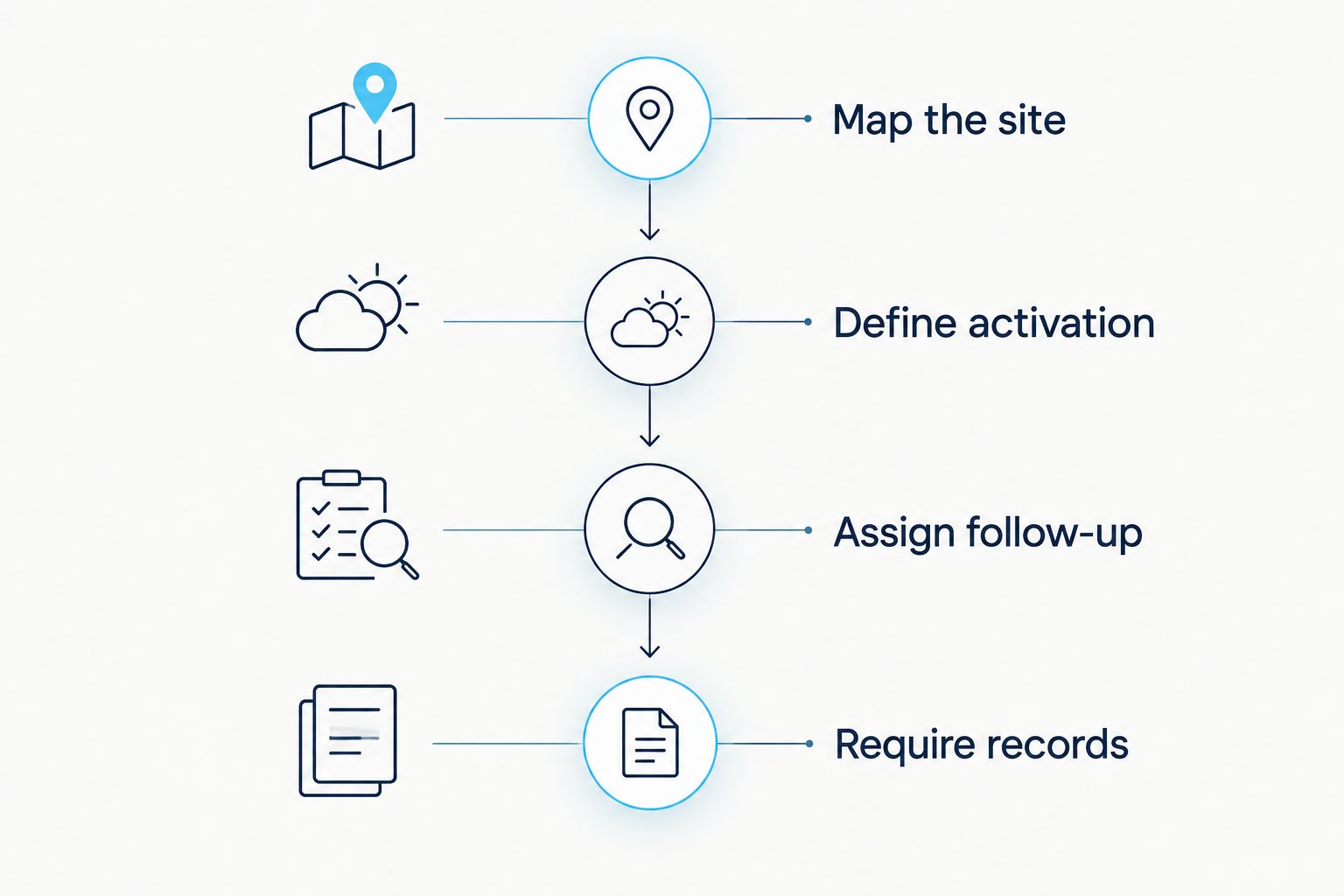
Use the same review sequence for BrightView and every alternative. You need comparable commitments, not differently worded assurances.
Map the site
Mark parking areas, entrances, pedestrian routes, loading access, and snow-storage locations. Identify surfaces that are included and excluded. Ask each bidder to return the same marked plan with its proposal.
Define activation
Specify what starts plowing and what starts ice treatment. Separate accumulation-based work from slippery-condition response. Ask who observes conditions, who authorizes work, and how that decision is recorded.
Assign follow-up
Name who checks conditions after a visit and who requests additional work. Address refreezing, blocked access, and areas crews could not complete. Do not let an initial visit stand in for an ongoing responsibility that nobody accepted.
Require records
State what the service record must contain and where it must go. Request a sample before signing. Make sure you can distinguish an arrival record from a completed-task record.
Your 2026 agreement should make these responsibilities readable without a phone call. If a proposal describes a task differently from your site plan, resolve the difference before approval. Do not rely on a verbal explanation to carry an operational requirement.
Review your local snow-service options
Compare documented commercial snow service for St. Louis and Metro East Illinois.
When staying with BrightView is the right call
Keep BrightView when its site-specific plan meets your winter requirements and the broader landscape relationship serves your property. A switch is not an improvement by itself. Preserve a working arrangement when the scope, communication, and records already satisfy your needs.
For your 2026 renewal, review the agreement against the same site checklist you would give a new bidder. Ask for changes where responsibilities are unclear. If the revised plan resolves those gaps, staying avoids a contractor handoff without sacrificing your operating requirements.
FAQ
What's the best BrightView alternative in St. Louis in 2026?
St. Louis Snow Removal is a fit for documented commercial snow service in St. Louis and Metro East Illinois. Its stated services include plowing, de-icing/salting, sidewalk clearing, and parking lot striping; compare the written site scope before selecting it.
Is a local snow contractor better than BrightView?
A local snow contractor is the better fit when its written winter plan meets your property requirements better. Compare coverage, activation, sidewalks, follow-up responsibilities, and records rather than company size.
Can I keep BrightView for landscaping and use another snow contractor?
A split-provider arrangement requires clear responsibilities in both agreements. Check your existing terms and document access, snow-storage areas, damage reporting, and communication before changing the winter provider.
What should I ask a BrightView alternative before signing?
Ask for a mapped service scope, activation rules, follow-up responsibilities, and a sample service record. Require the same information from every bidder so the proposals describe the same work.
Does documented snow removal guarantee protection from liability?
Service documentation does not guarantee protection from liability. Use records to establish what work occurred, and review legal and insurance requirements with qualified advisers.
Can my landscape contractor handle commercial snow removal?
Evaluate the landscape contractor's winter capability separately from its landscape work. Ask for its snow staffing plan, equipment responsibilities, ice-treatment scope, and service documentation.
When should I stay with BrightView instead of switching?
Stay with BrightView when its site-specific winter plan and broader maintenance relationship meet your needs. Resolve unclear responsibilities during renewal rather than switching solely for a different company name.
One last thing
An arrival record and a completion record answer different questions. One establishes presence; the other describes work. For your 2026 contract, require the record to identify completed areas and unresolved exceptions—not just that someone reached the property.
Before selecting St. Louis Snow Removal or another provider, ask who owns the unresolved items after a crew leaves. That answer belongs in the agreement. Otherwise, a documented visit still leaves an unfinished responsibility.