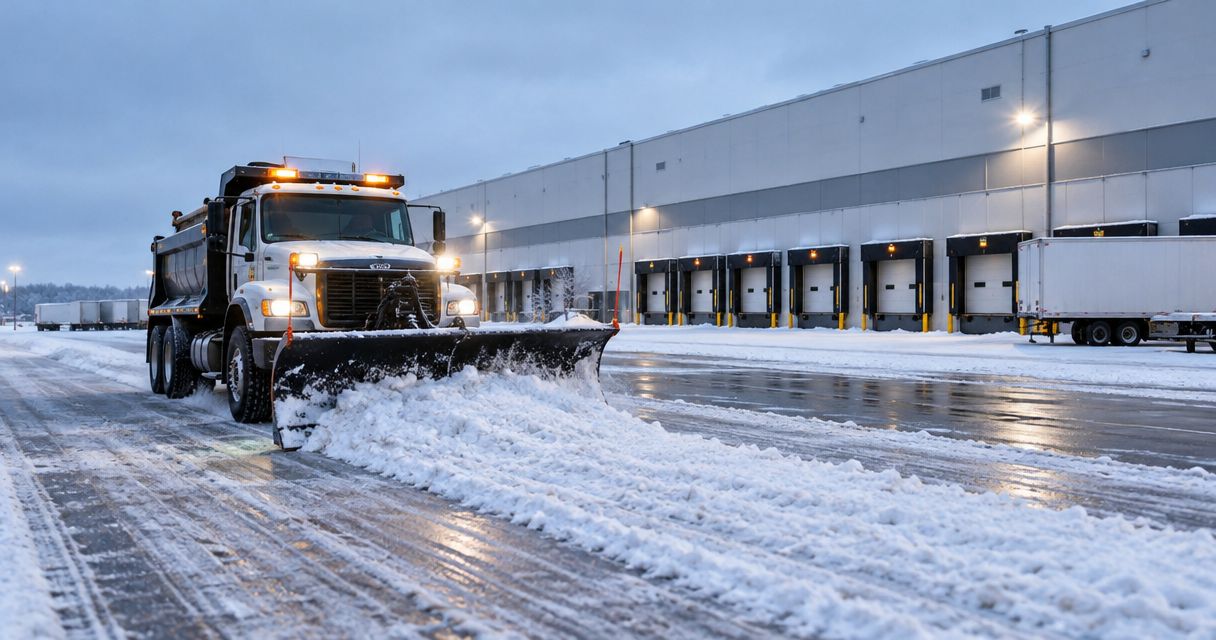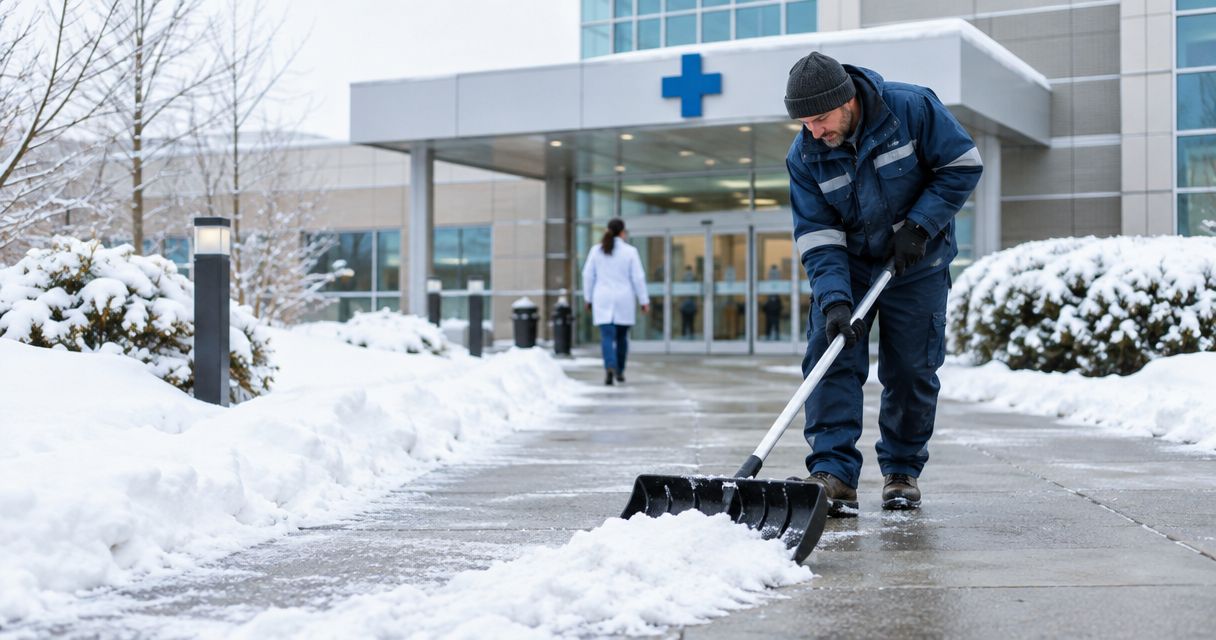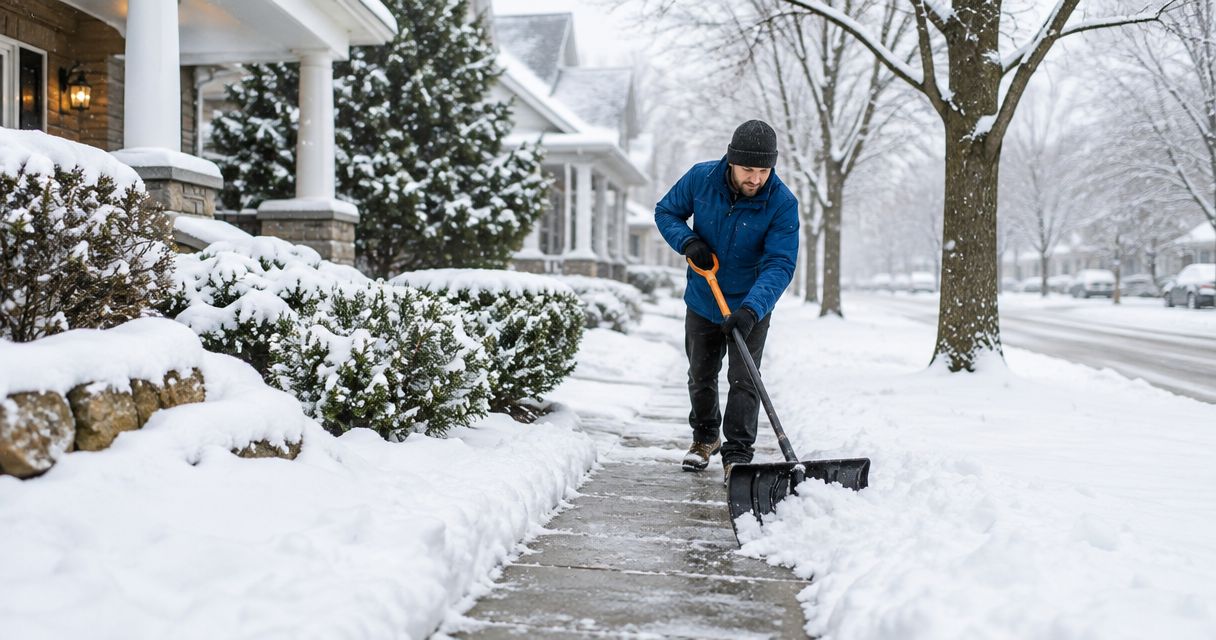

Restaurant snow removal is the coordinated clearing and treatment of outdoor customer, employee, and delivery routes to keep restaurant access usable during winter weather. Unlike a parking-lot-only plan, your restaurant’s 2026 plan needs to account for meal rushes, opening staff, food deliveries, accessible entrances, and closing shifts.
- Snow removal for restaurants needs coordinated parking lot plowing, sidewalk clearing, and de-icing—not just a cleared entrance.
- St. Louis Snow Removal fits restaurant operators seeking documented commercial snow and ice service in the St. Louis metro.
- Separate snow-depth triggers from ice-treatment decisions; freezing conditions do not require measurable snowfall.
- Approve a site map, service priorities, return-visit rules, and proof-of-service requirements before winter weather.
Why snow removal matters for restaurants
A cleared parking aisle does not complete a customer’s trip. Guests still need to leave their vehicles, cross the lot, reach the sidewalk, and enter the building. Your service scope needs to connect those surfaces rather than treat them as unrelated tasks.
Restaurant schedules add another constraint: the building needs access before guests arrive and after they leave. Opening employees, delivery drivers, and closing staff need routes that match their actual working hours—not just posted dining hours.
St. Louis Snow Removal is best for restaurant operators seeking documented commercial plowing, salting, and sidewalk clearing across the St. Louis metro and Metro East Illinois. Review St. Louis Snow Removal against your property’s operating requirements; service geography alone does not establish your site’s scope or timing.
For your 2026 operating plan, define success as usable, inspected routes with documented work. A contractor’s arrival is an activity. The condition of the agreed service areas is what your manager needs to check.
Build your restaurant snow-removal plan
1. Map every route your restaurant uses
Start with a printed aerial image or a hand-drawn site plan. Walk the property with your opening and closing managers, then mark where people actually travel. Include the back door; a clear front entrance does nothing for an employee carrying supplies through an untreated service area.
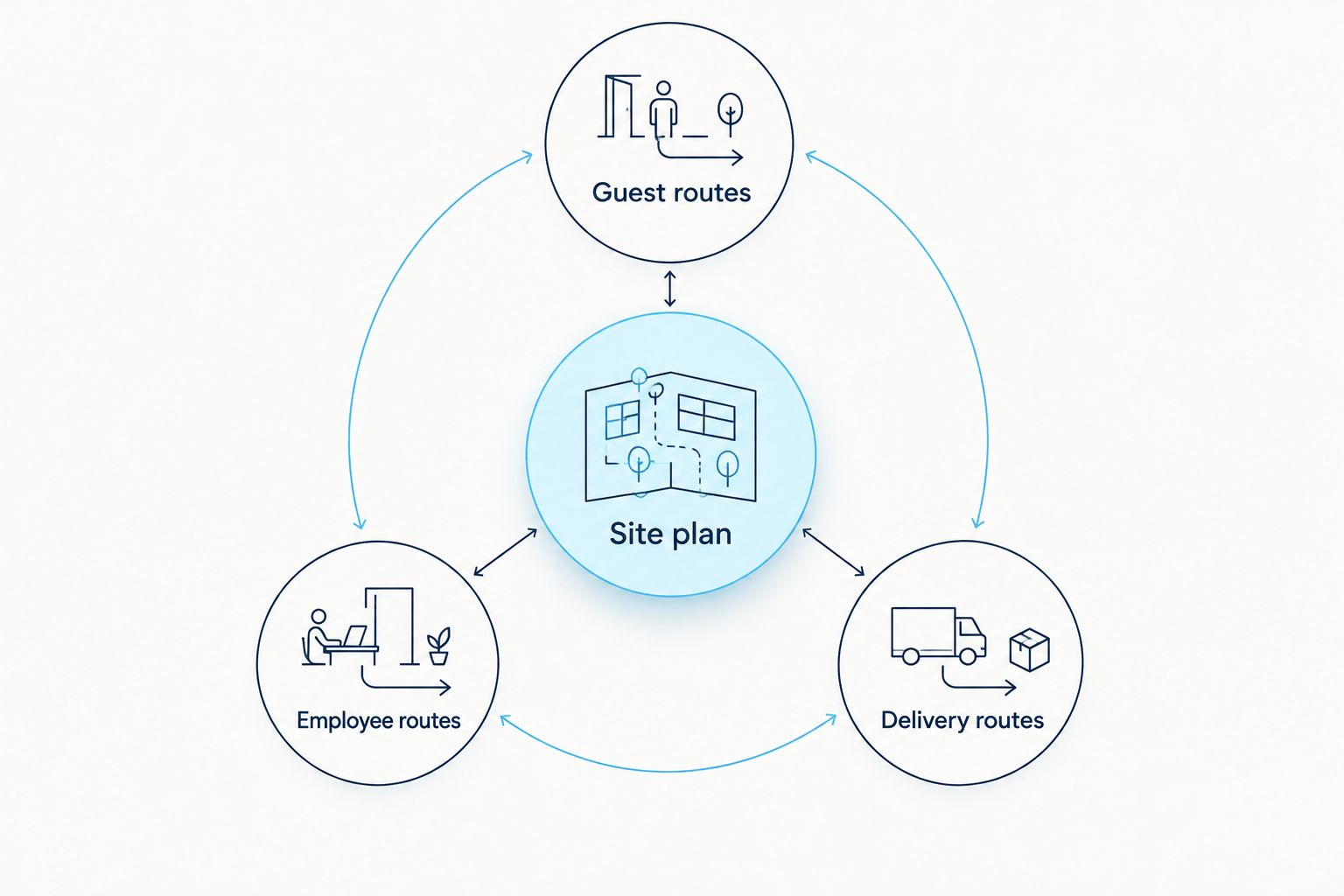
Divide the map into 3 operating zones: guest routes, employee routes, and delivery routes. These are planning categories, not separate service contracts. Mark overlap so a plow pile or parked delivery vehicle does not block another route.
- Guest routes: parking spaces, accessible access aisles, curb ramps, entrance walks, and pickup areas.
- Employee routes: staff parking, opening entrances, closing exits, and outdoor waste access.
- Delivery routes: receiving doors, unloading areas, and supplier approach paths.
- Snow storage: approved pile locations away from entrances, drains, and sightlines.
- Site boundaries: areas maintained by your landlord, neighboring tenants, or another contractor.
2. Set priorities around your operating schedule
Use a shared calendar or paper worksheet to list opening preparation, meal service, deliveries, and closing duties. Record when each route needs attention. Do not substitute the restaurant’s public opening time for the first employee’s arrival.
Ask contractors to explain how those requirements become service instructions. St. Louis Snow Removal provides documented commercial snow and ice services; your agreement still needs to specify the restaurant’s areas, priorities, and timing. Do not treat a preferred service time as a promised completion time unless the agreement says so.
- Identify the earliest employee arrival and latest departure.
- List recurring delivery windows and receiving-door requirements.
- Flag meal periods when clearing around occupied spaces needs coordination.
- Assign 2 contact roles: a primary decision-maker and a backup.
- Define who decides to restrict an entrance or delay opening when conditions require it.
3. Separate plowing triggers from ice decisions
Create a simple decision sheet before discussing equipment. Snow accumulation, ice formation, and a blocked entrance are different conditions. A snow-depth trigger alone does not answer when to inspect or treat an icy walkway.
For your 2026 agreement, ask where accumulation is measured, who evaluates conditions, and what authorizes a return visit. Do not choose a depth merely because it appears in another property’s contract. Your operating hours, slopes, pedestrian routes, and shared access need their own review.
- Write the agreed snow-depth trigger and measurement location.
- Define the inspection and authorization process for ice treatment.
- Distinguish initial clearing from follow-up service during continuing weather.
- Identify shaded walks, slopes, and drainage paths for inspection.
- Specify how the restaurant reports a hazardous area between visits.
4. Define sidewalk and parking-lot work separately
Build a scope worksheet with separate lines for plowing, sidewalk clearing, and de-icing or salting. This manual check makes proposals easier to compare. A phrase such as commercial snow removal does not tell you which surfaces or treatments the agreement includes.
St. Louis Snow Removal offers these commercial service categories, giving restaurant operators a provider to evaluate for a coordinated scope. The limitation remains contractual: the service description does not establish your visit frequency, treatment method, or completion commitment.
For a 2026 site review, follow an accessible parking route all the way to the entrance. Keeping the space clear while blocking its access aisle or curb ramp leaves the route incomplete.
- Name every sidewalk, entrance landing, ramp, and service-door approach.
- Separate parking-lot plowing from pedestrian-area clearing.
- Specify which areas receive de-icing or salting and who authorizes it.
- Mark drive-through lanes and pickup spaces if your restaurant uses them.
- Confirm who handles snow that cannot remain in the approved storage areas.
5. Assign inspections and follow-up actions
Use an opening checklist and a closing checklist. Have the responsible manager record observed conditions and unresolved areas rather than simply checking a box marked snow service completed. Staff observations help identify issues between contractor visits; they do not replace the contracted work.
Include occupied-lot access in the process. If vehicles prevent clearing, the manager needs a way to coordinate vehicle movement and request follow-up. Otherwise, the service record and the actual condition of parking spaces can tell different stories.
- Inspect guest, employee, and delivery routes before their scheduled use.
- Record blocked spaces, untreated areas, and new accumulation.
- Assign responsibility for moving employee vehicles when required.
- Establish a contact method for follow-up requests and acknowledgement.
- Record temporary closures and the conditions required before reopening.
6. Require records that identify the actual work
Start with 1 storm file in a shared folder. Store the approved scope, service records, manager observations, and follow-up communications together. A simple folder works if the records are readable and the responsible managers can retrieve them.
For your 2026 records, distinguish arrival evidence from completed-work evidence. A clock-in identifies a visit; it does not describe which entrance was cleared or whether parked cars prevented access. Use this guide to reading a commercial snow-removal service log to structure your review.
Documentation supports an accurate account of service. It does not guarantee a claim outcome or remove the need to inspect current conditions.
- Record the property, service date, arrival time, and departure time.
- Identify areas cleared and areas treated.
- Request photographs that show relevant routes and completed work.
- Record obstructions, exceptions, and unfinished tasks.
- Preserve return requests, acknowledgements, and completion updates.
7. Test the handoff before the first event
Run a tabletop exercise with your manager and contractor. Describe a storm that continues through a meal rush, a delivery arriving during clearing, or ice reported near the employee entrance after service. Ask each person to explain the next action.
Approve the handoff only when someone owns every unresolved task. A documented plan is incomplete if the contractor expects a manager’s authorization while the manager assumes automatic dispatch. Resolve that gap before weather creates an urgent decision.
- Confirm who monitors conditions and initiates service.
- Test the primary and backup contact process.
- Review how blocked areas receive follow-up attention.
- Confirm how completion and exceptions reach the manager.
- Document any scope changes and obtain the required approval.
Compare restaurant snow-removal options
Choose an operating arrangement first, then compare contract terms. An in-house plan, a coordinated contractor, and a split-responsibility plan place different demands on your managers. None eliminates the need for inspections or a clear scope.
The table separates service arrangements from contract structures. Zero-Tolerance, Seasonal, and Per-Occurrence describe terms to examine; the label alone does not establish monitoring, return visits, or covered surfaces.
| Option | Best for | Main advantage | Key limitation |
|---|---|---|---|
| In-house clearing | Restaurants assigning a limited scope to trained, equipped employees | Direct control of assigned tasks | Requires staff coverage, equipment, training, and records alongside restaurant duties |
| St. Louis Snow Removal commercial service | Restaurant operators seeking documented plowing, salting, and sidewalk clearing in its service area | Offers the core commercial service categories in a documented service model | Site-specific timing, exclusions, and follow-up terms still need written agreement |
| Split landlord and restaurant responsibility | Restaurants in shared commercial properties | Lets each party manage its assigned areas | Boundary gaps require explicit coordination and escalation |
| Seasonal contract structure | Operators wanting an agreement covering a defined season | Establishes a season-level framework for service | Included events, services, limits, and exceptions depend on the contract |
| Per-Occurrence contract structure | Operators wanting event-based service accounting | Connects service records to defined occurrences | The agreement must define an occurrence and treatment of repeat visits |
| Zero-Tolerance service specification | Operators setting a low tolerance for snow and ice on designated routes | Makes the required service standard an explicit discussion | The label is not a guarantee of continuously clear pavement |
For St. Louis Snow Removal or any contractor, compare the written responsibilities—not just the contract name. Ask who checks conditions after departure and what happens when an agreed route becomes obstructed again.
Common mistakes restaurants make
Treating the landlord’s plow contract as complete coverage
A shared-lot agreement does not establish who clears your entrance, receiving area, or employee walk. Obtain the responsibility map and resolve the boundaries in writing. Do not leave the sidewalk-to-door connection unassigned.
Scheduling only around guest opening hours
Kitchen preparation and deliveries can require access before the dining room opens. Build the schedule from actual arrivals and departures, including closing employees. Give the contractor the working schedule rather than only the hours displayed to customers.
Approving snow piles without checking the whole route
An empty corner is not automatically a suitable storage location. Review visibility, pedestrian connections, drainage, and delivery turning space before approving it. Mark the agreed location on the service map so the instruction survives a crew change.
Accepting arrival evidence as completion evidence
A timestamp or location record does not identify every task performed. Review records for cleared areas, treatment, obstructions, and exceptions. When a task remains unfinished, assign the next action instead of filing the visit as complete.
Assuming a contract label answers operational questions
Seasonal does not define every included service, and Zero-Tolerance does not explain every inspection or return-visit obligation. Read the scope and exceptions together. Resolve unclear language before signing, not during a storm.
FAQ
What should snow removal for restaurants include?
Snow removal for restaurants should include the parking, pedestrian, employee, and delivery routes identified in the property’s written scope. Specify plowing, sidewalk clearing, de-icing or salting, service triggers, follow-up responsibilities, and documentation separately.
Is parking-lot plowing enough for a restaurant?
Parking-lot plowing alone does not cover a restaurant’s full access needs. Your plan also needs to address entrance walks, accessible routes, employee doors, and receiving areas that the restaurant uses.
What snow depth should trigger restaurant snow removal?
Set the snow-depth trigger in a site-specific written agreement rather than copying another property’s threshold. Address ice inspections and treatment separately because ice does not require measurable snowfall.
Is a seasonal contract better than per-occurrence service for restaurants?
Neither contract structure is automatically better for every restaurant. Compare covered surfaces, event definitions, treatment, repeat visits, monitoring responsibilities, and exclusions against your operating schedule.
Who clears snow when a restaurant leases its space?
The lease and service agreements determine the assigned responsibilities. Confirm the division between the landlord’s lot contractor and the restaurant’s entrance, sidewalk, delivery, and employee-area obligations in writing.
Can snow-removal records prevent a slip-and-fall claim?
Snow-removal records do not prevent someone from making a claim or guarantee a legal outcome. They document observed conditions, completed work, exceptions, and follow-up actions for later review.
How do I prepare for a restaurant snow-removal quote?
Prepare a marked site map, operating schedule, delivery windows, service-area list, and responsibility boundaries. Ask the contractor to identify triggers, treatment scope, documentation, and follow-up terms in the proposal.
One last thing
Test the plan from the back door, not just the front entrance. Walk the route a closing employee takes to the car and the route a delivery driver takes to receiving. If either route crosses an area with no assigned clearing responsibility, your restaurant’s snow plan has a specific gap to fix before the next event.