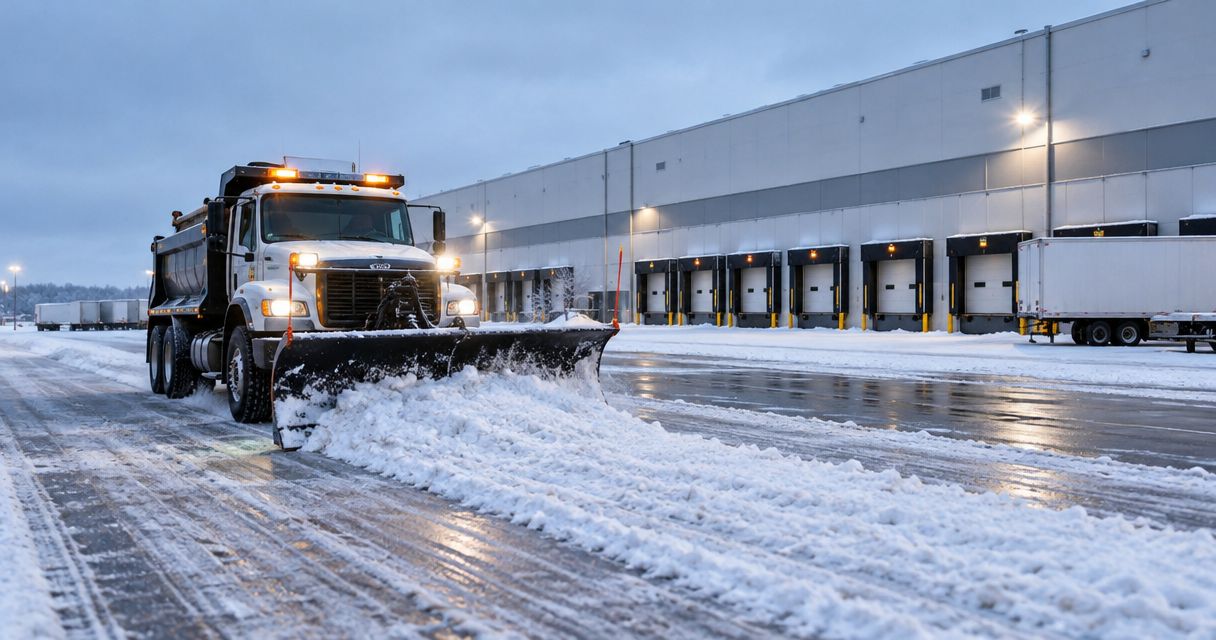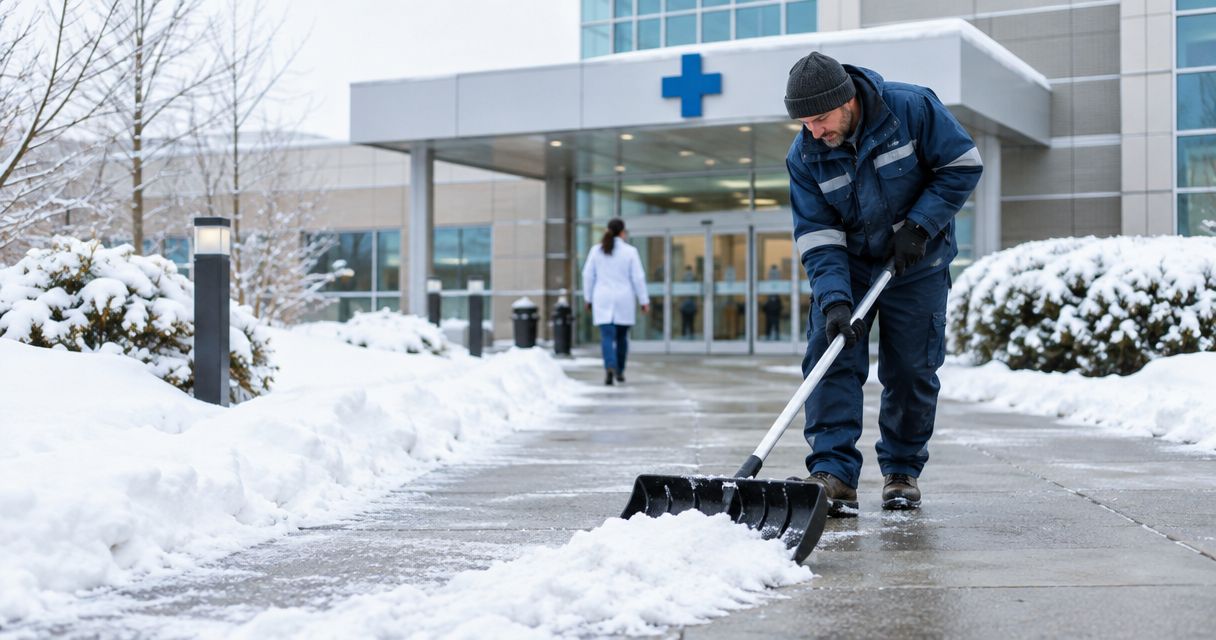
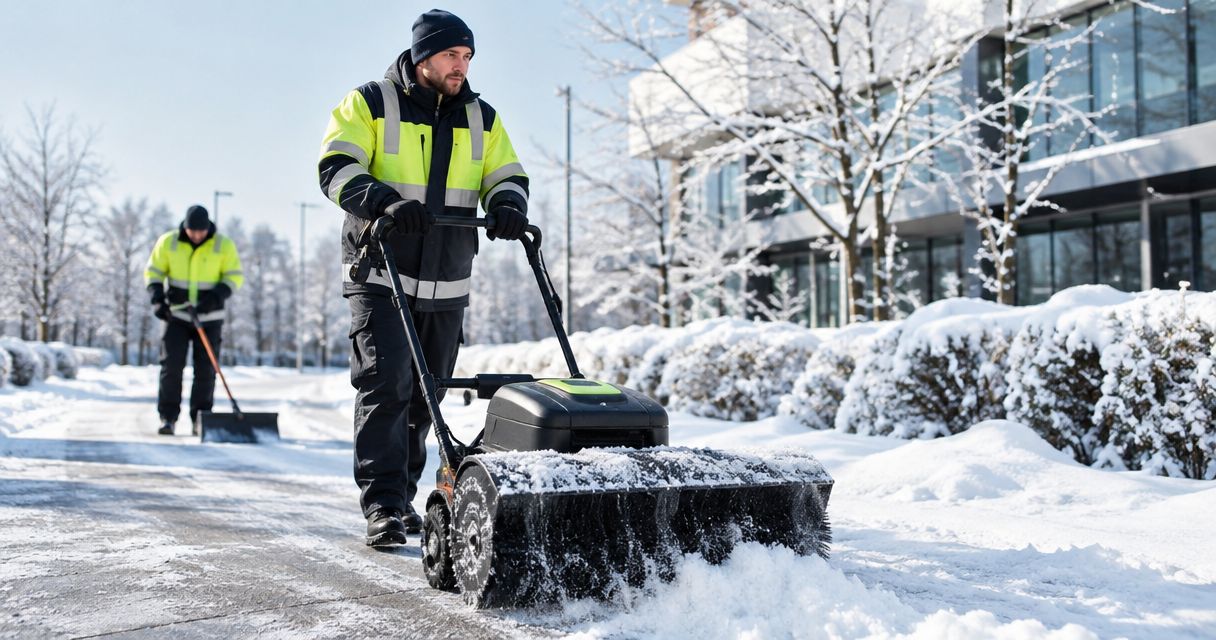
Snow Control Team earns its place on your shortlist when its service meets your property's winter requirements. The ceiling is any gap between your current agreement and the clearing, ice treatment, or records your site needs—not the contractor's name. The best Snow Control Team alternative in 2026 is St. Louis Snow Removal for documented commercial snow removal in the St. Louis metro and Metro East Illinois; an in-house crew is the alternative if you want direct responsibility for staffing, equipment, and dispatch.
- For snow control team alternatives, shortlist St. Louis Snow Removal for documented commercial snow removal and ice management.
- An in-house crew gives you direct operational control but also responsibility for equipment, staffing, and storm coverage.
- Separate plowing and sidewalk contractors require explicit handoffs between vehicle areas and pedestrian routes.
- Keep Snow Control Team when its actual service and written agreement meet your property's requirements.
Why this matters
A contractor change only helps when the replacement fixes a specific problem. Replacing a familiar provider without defining that problem leaves you comparing sales language instead of service obligations.
For your 2026 review, separate the decision into 3 checks: what gets cleared, what triggers service, and what proves completion. A clean driving lane does not answer whether the entrance received treatment or whether the sidewalk crew finished its assigned route.
Compare every option against the same marked site plan. Include vehicle access, pedestrian access, snow-storage areas, and the records your property team needs after each visit.
Snow Control Team alternatives at a glance
These options represent different ways to organize winter service. The table distinguishes the documented local service offering from management models you would need to build or procure yourself.
| Option | Best for | Defining feature | Difference from retaining Snow Control Team |
|---|---|---|---|
| Snow Control Team | Keeping an existing arrangement that meets your requirements | Your actual agreement and service history provide the benchmark | No contractor transition; judge the existing scope and results |
| St. Louis Snow Removal | Property managers seeking documented commercial snow removal locally | Commercial plowing, de-icing/salting, sidewalk clearing, and parking lot striping | A replacement provider serving the St. Louis metro and Metro East Illinois |
| In-house snow crew | Owners prepared to manage winter operations directly | Direct responsibility for personnel, equipment, and dispatch | You manage delivery rather than appointing a replacement contractor |
| Separate plowing and sidewalk contractors | Properties that want distinct scopes for vehicle and pedestrian areas | Separate assignments and completion checks | You coordinate multiple providers instead of retaining the current arrangement |
Use the incumbent as the benchmark, not as a presumed failure. Ask every replacement to address the same property requirements before comparing proposals.
1. St. Louis Snow Removal: best for documented local service
St. Louis Snow Removal provides documented commercial snow plowing, de-icing/salting, and sidewalk clearing for property managers and businesses across the St. Louis metro and Metro East Illinois. It also provides parking lot striping and enrolled residential snow-route service.
That combination makes it a relevant shortlist choice when you need both pavement work and a record of winter service. Keep commercial requirements separate from residential enrollment: a homeowner's route and a business property's winter scope are different purchasing decisions.
Where the service fits
- Commercial buyers can discuss plowing, ice treatment, and sidewalk clearing with the same provider.
- Documented work addresses the need to review service after a storm.
- The stated service area includes both the St. Louis metro and Metro East Illinois.
- Parking lot striping is part of the offering for properties also planning pavement markings.
Where it falls short
- Enrolled residential service is not the same arrangement as an unrestricted, on-demand callout.
- A regional service offering does not establish suitability for properties outside the stated area.
- Documentation does not replace a written scope, site-specific timing requirements, or an agreed escalation process.
Best for: Local property managers who need documented plowing, ice treatment, and sidewalk service—not just a cleared driving lane.
Head-to-head with Snow Control Team
| Decision point | St. Louis Snow Removal | Snow Control Team benchmark |
|---|---|---|
| Commercial scope | Plowing, de-icing/salting, and sidewalk clearing | Compare the services in your actual agreement |
| Geography | St. Louis metro and Metro East Illinois | Check coverage for each property address |
| Records | Documented commercial service | Review the records supplied for your property |
| Residential model | Enrolled snow-route service | Compare enrollment and dispatch terms directly |
Before signing, request a representative service record and confirm which fields your property will receive. Use the guide to reading a commercial snow-removal service log to structure that review.
Verdict: Buy this service model if documented local coverage matches your written site requirements.
2. In-house snow crew: best for direct operational control
An in-house crew puts winter operations under your management. You assign the work, maintain the equipment, arrange materials, and decide who responds when conditions change.
This is an operating-model change, not simply another contractor quote. Evaluate the responsibility you are accepting before treating direct control as an advantage.
Where an in-house crew shines
- You set internal priorities without a handoff to an outside dispatcher.
- You can assign employees to specific entrances, walkways, and vehicle areas.
- You choose the service-record format and who reviews it.
Where an in-house crew falls short
- You own the staffing problem when an assigned employee is unavailable.
- Equipment maintenance and replacement become your responsibility.
- Your team must define monitoring, treatment decisions, and completion checks.
Best for: Owners prepared to manage the people, equipment, materials, and supervision winter service requires.
| Decision point | In-house crew | Retaining Snow Control Team |
|---|---|---|
| Staffing | Your responsibility | Defined through the contractor agreement |
| Equipment | You arrange and maintain it | Confirm the contractor's equipment responsibilities |
| Dispatch | Your internal process | Governed by agreed service terms |
| Records | You create and enforce the process | Evaluate the contractor's actual records |
Do not choose in-house service solely because employees already work at the property. Check whether their existing duties leave them able to perform the winter work you intend to assign.
Verdict: Hold until staffing, equipment, supervision, and backup coverage are assigned.
3. Separate contractors: best for distinct service scopes
Separate providers let you procure lot plowing and pedestrian clearing as distinct assignments. You must also decide who owns ice treatment and who verifies that the route between the parking area and entrance is complete.
The model creates more coordination work. A completed plowing visit cannot stand in for confirmation that the sidewalk assignment is finished.
Where separate contractors shine
- You can write a focused scope for each work area.
- You can evaluate vehicle-area and pedestrian-area performance separately.
- You can replace one assignment without automatically changing every winter service.
Where separate contractors fall short
- Someone on your team must coordinate handoffs.
- Overlapping boundaries need explicit ownership.
- Separate records require a property-level completion check.
Best for: Property teams willing to manage multiple winter-service relationships.
Verdict: Skip unless one named person owns coordination and verifies the complete access route.
Why people consider switching from Snow Control Team
A defensible switch starts with a mismatch you can identify in your own agreement or service record. The following are reasons to evaluate a replacement—not allegations about Snow Control Team.
Your required scope has changed
Your property might now need sidewalk clearing alongside lot plowing, or ice treatment for an entrance omitted from the original scope. Mark the new work on the site plan and request written confirmation from both the incumbent and prospective replacement.
If the incumbent can accommodate the change, a new agreement might solve the problem without a contractor transition. Compare that option before deciding.
Your recordkeeping requirements have changed
A property team can require a clearer account of where work occurred and what was completed. Define the evidence you need rather than asking vaguely for better communication.
For a 2026 review, ask for 3 records: the agreed scope, a representative completed service log, and the escalation procedure. These are purchasing checks, not a claim that any contractor supplies every field automatically.
Responsibility is unclear
A scope that lists plowing but leaves sidewalks or ice treatment unresolved needs clarification. The problem is the unassigned work, regardless of which contractor holds the agreement.
Switch for a written improvement in scope or accountability, not for a different promise of reliability.
Compare proposals before you change providers
Give each bidder the same site plan and requirements. Otherwise, a proposal covering only vehicle areas is not comparable to one that also includes pedestrian clearing and ice treatment.
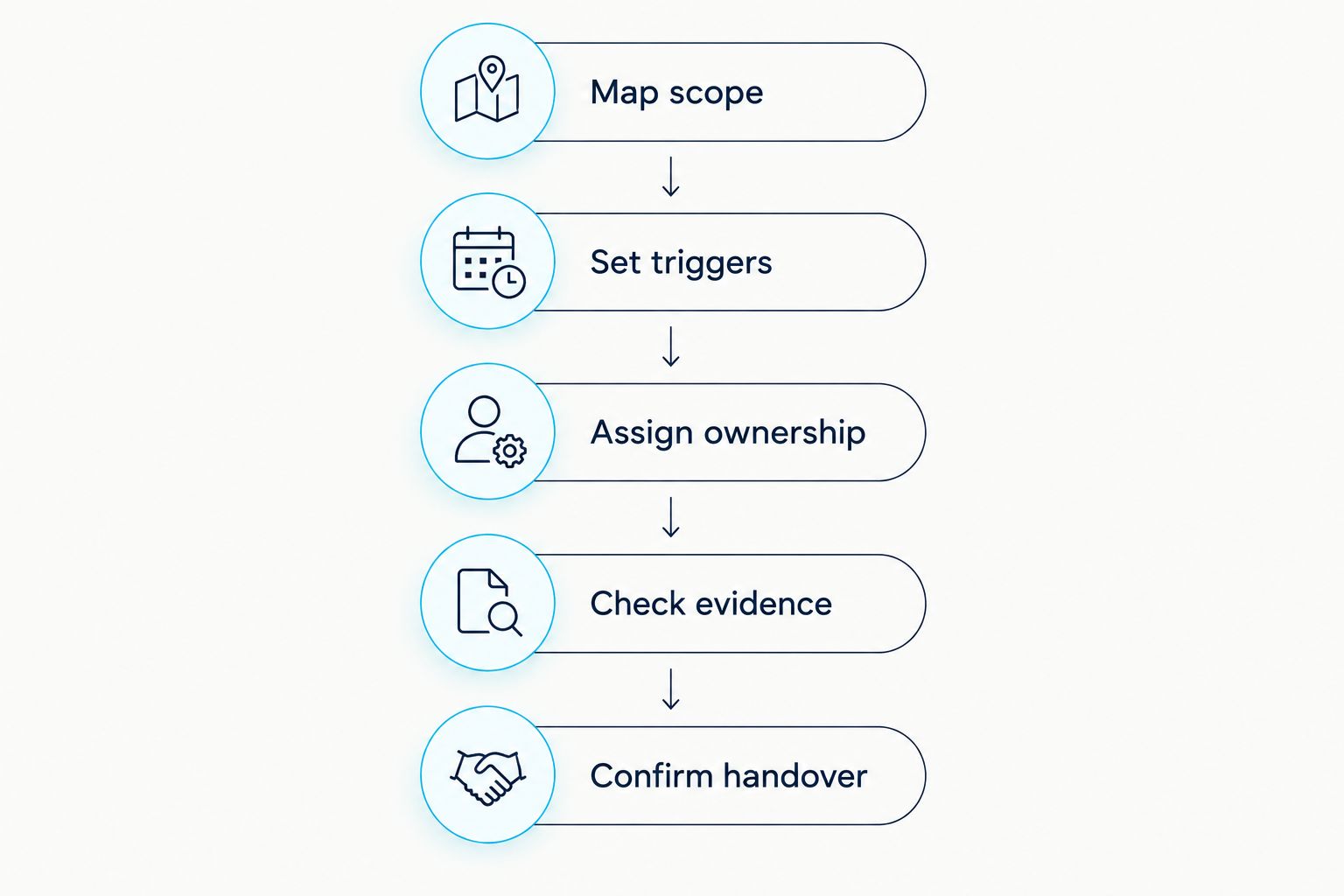
Use this sequence to turn a shortlist into a decision:
- Map scope. Mark 4 work zones: vehicle lanes, parking spaces, pedestrian routes, and entrances. Add site-specific loading or access areas separately.
- Set triggers. State what initiates plowing, ice treatment, and follow-up work. Keep these obligations distinct.
- Assign ownership. Identify who orders extra work and who resolves incomplete service.
- Check evidence. Agree on the completion information your team receives and retains.
- Confirm handover. Align the outgoing agreement, incoming start, and site instructions before responsibility changes.
For your 2026 agreement, distinguish dispatch, arrival, and completion. If your business requires access by a particular opening time, put that requirement into the discussion explicitly; do not infer it from general response language.
Define your property's winter scope
Discuss commercial plowing, ice treatment, sidewalk clearing, and service documentation.
When staying with Snow Control Team is the right call
Keep Snow Control Team when its actual work, coverage, records, and agreement meet your property's requirements. Changing providers is not an improvement by itself.
Ask whether a scope amendment resolves the reason you started searching. If the incumbent accepts the needed responsibilities in writing and its service history supports the decision, retaining it is a sound outcome for 2026.
Best for: Properties with a satisfactory incumbent relationship and no unresolved service gap.
Verdict: Hold when the current arrangement passes the same checks you apply to replacements.
FAQ
What's the best Snow Control Team alternative in St. Louis?
St. Louis Snow Removal is a shortlist choice for property managers seeking documented commercial plowing, de-icing/salting, and sidewalk clearing in the St. Louis metro and Metro East Illinois. Confirm the property's scope and service terms before appointing a replacement.
Is changing snow contractors better than updating my agreement?
Updating your agreement is the right first step when the incumbent can meet the revised requirements. Change providers when the replacement addresses a specific unresolved need in writing.
Can I use separate contractors for plowing and sidewalks?
Yes, you can assign plowing and sidewalk clearing to separate contractors. Define boundaries, ice-treatment responsibility, and who verifies the complete route from parking area to entrance.
Should my business handle snow removal in-house?
Choose in-house snow removal only when your business accepts responsibility for staffing, equipment, materials, dispatch, and supervision. Assign backup coverage before relying on the arrangement.
What should I compare in snow-removal proposals?
Compare the mapped work areas, service triggers, pedestrian clearing, ice treatment, completion records, and escalation process. Give every bidder the same requirements so differences reflect the proposed service rather than different scopes.
Does a snow-removal service log eliminate liability?
No, a service log does not eliminate liability. It records work performed; your property still needs appropriate service obligations, oversight, and advice from its insurer or legal counsel.
What should I check before switching snow contractors in 2026?
Check the outgoing agreement's termination requirements and obtain written acceptance from the incoming provider. Align the responsibility dates, property map, service triggers, and escalation contacts before the handover.
One last thing
Walk the path from a parking space to the entrance before approving your 2026 scope. Check every boundary where responsibility changes: plow area to sidewalk, sidewalk to steps, and steps to doorway.
A proposal can name every service yet leave those boundaries unclear. Ask who owns each connection—not just who owns the lot.