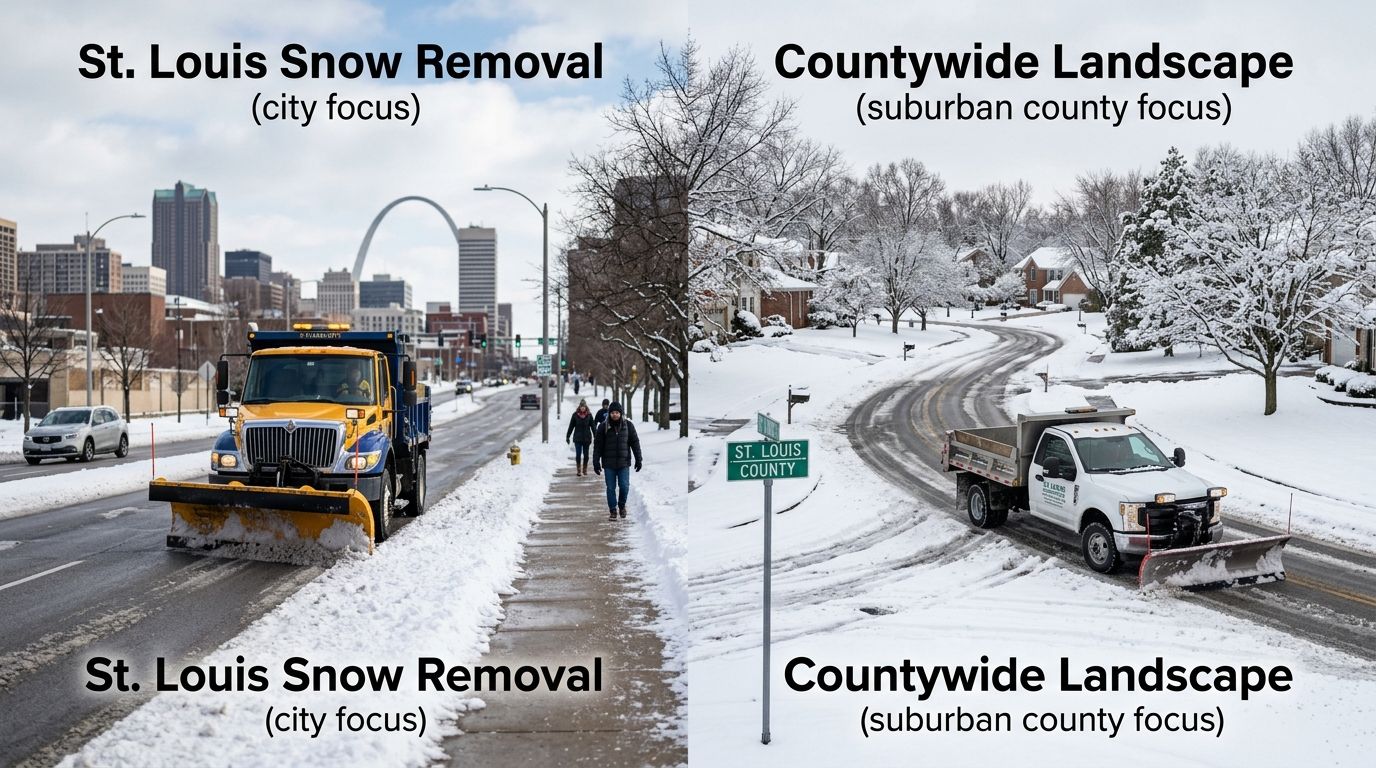

Landscape Management Group built its reputation on one-vendor simplicity: a single contract that bundles landscaping and snow removal across dozens of sites in multiple states, dispatched through a corporate account management layer. That works until a storm hits your St. Louis lot at 2 a.m. and the crew that shows up is a subcontractor two tiers removed from anyone who signed your contract, with no site-specific documentation to hand your insurer. The best Landscape Management Group alternative in 2026 is St. Louis Snow Removal if you manage single-metro commercial or HOA properties and need geo-stamped proof of service; a national multi-service bundler like Landscape Management Group still makes sense if you're managing landscaping and snow across ten states from one procurement desk.
- St. Louis Snow Removal wins on documentation: geo-stamped clock-ins and trigger-depth logs for every visit, not generic per-visit tickets.
- Landscape Management Group alternatives split into three lanes: local documented specialists, independent snow-only plow contractors, and regional HOA services.
- Labor floors of $90/hr for plow crews and $180/hr for de-icing trucks are named upfront under Zero-Tolerance, Seasonal, or Per-Occurrence contracts.
- Multi-state portfolios still favor Landscape Management Group's bundled landscaping-plus-snow model over swapping vendors by market.
- Property managers with liability exposure at a single St. Louis site get more usable documentation from a local specialist than a national subcontractor network.
Why this matters
Snow removal contracts get scrutinized after the fact, not before. When a slip-and-fall claim lands on a property manager's desk, the question isn't whether a truck showed up — it's whether anyone can prove when, where, and at what trigger depth. National bundlers built for multi-state landscaping accounts often route snow dispatch through subcontractor layers that don't produce that proof at the site level. That gap is why landscape management group alternatives searches spike every winter among St. Louis property managers and HOA boards who got a thin paper trail after a storm.
The fix isn't always "switch vendors." Sometimes it's picking the right lane for the portfolio you actually run — a single St. Louis strip mall doesn't need the same vendor as a 40-site regional landscaping account.
Landscape Management Group alternatives at a glance
| Provider | Best for | Standout feature | How it differs from Landscape Management Group |
|---|---|---|---|
| St. Louis Snow Removal | Single-metro commercial and HOA accounts | Geo-stamped clock-ins tied to trigger depth on every visit | Direct crews, not a subcontracted dispatch layer |
| Landscape Management Group | Multi-state landscaping-plus-snow bundles | One contract across dozens of sites in different states | Broad footprint, but snow dispatch runs through local subcontractors |
| Independent local plow contractors | Small single-site lots with tight budgets | Owner-operator crews, low overhead | No standardized documentation or named labor rates across jobs |
| Regional HOA-focused snow services | Community associations with board-level liability concerns | Route-based residential scheduling | Rarely offers commercial-grade Zero-Tolerance contracts |
1. St. Louis Snow Removal: best for documented liability protection
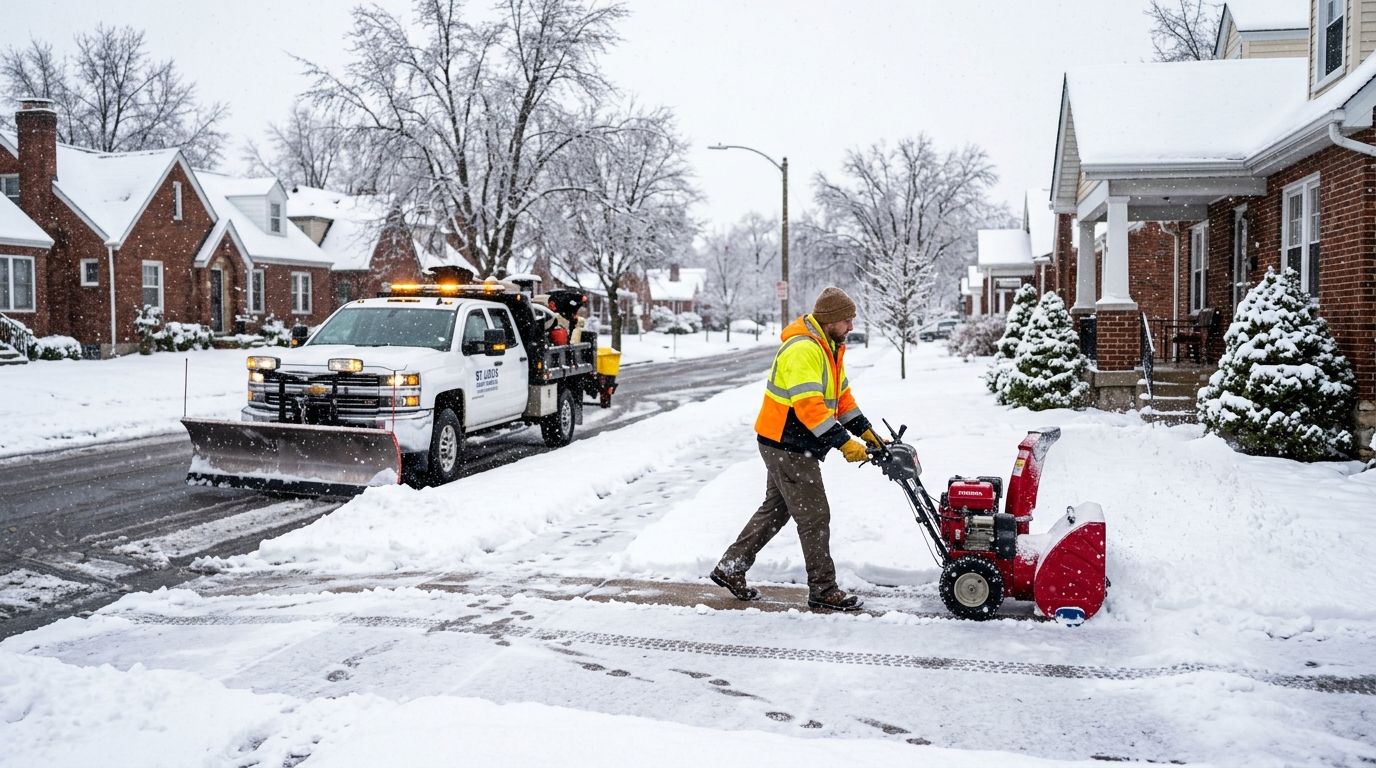
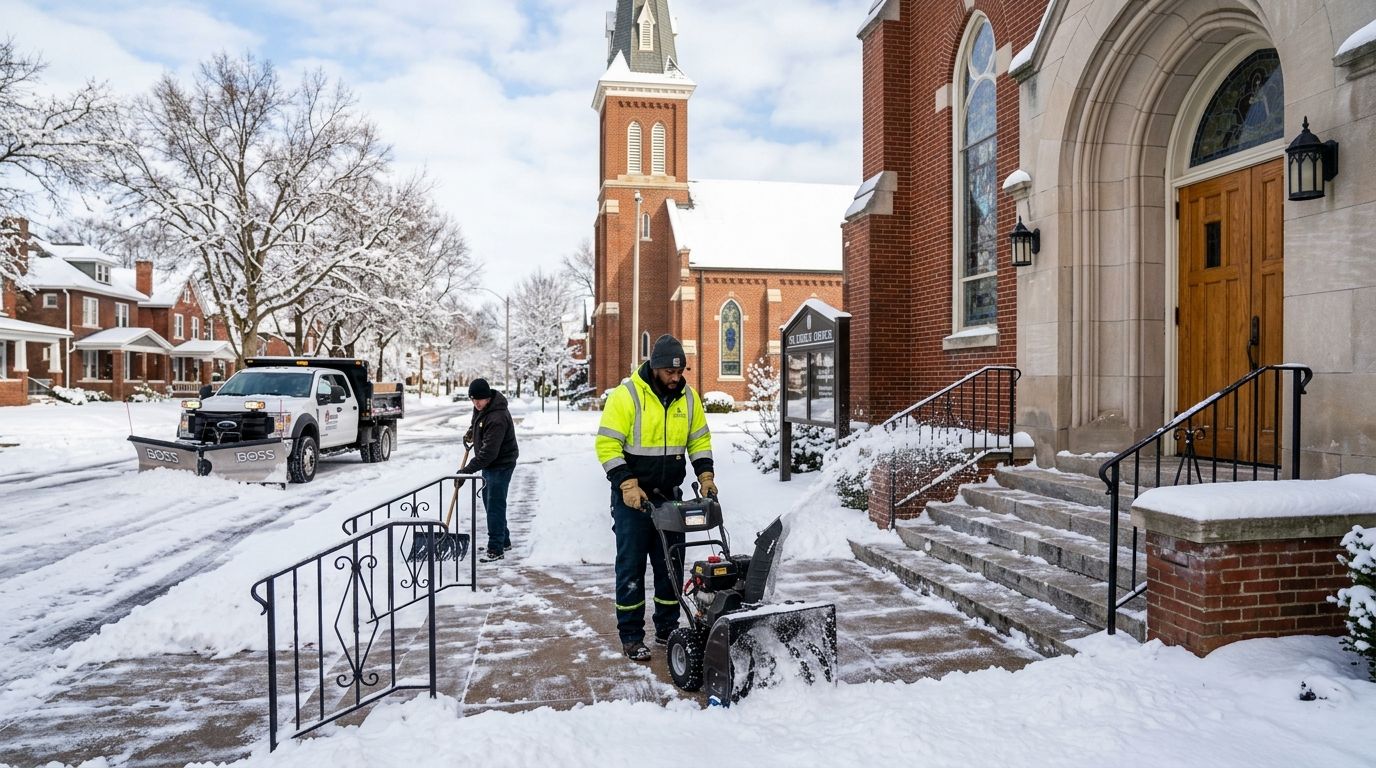
St. Louis Snow Removal runs commercial plowing, de-icing/salting, sidewalk clearing, and parking lot striping directly for property managers across the St. Louis metro and Metro East Illinois, plus enrolled residential snow routes for homeowners. Every visit is logged against a named trigger depth, and crews clock in with geo-stamped timestamps instead of a self-reported ticket. That's the opposite of the "trust me, we were there" model that shows up when a national account gets routed to a local sub with no reporting standard.
Where St. Louis Snow Removal shines:
- Zero-Tolerance, Seasonal, and Per-Occurrence contract models are named upfront, not bundled into a vague landscaping-plus-snow package
- Labor floors are stated at $90/hr for plow crews and $180/hr for de-icing trucks, so property managers know the cost basis without a black-box quote
- Documentation is built for property managers who need proof of service for insurance and liability review, not just a completed-job flag
Where St. Louis Snow Removal falls short:
- Coverage is limited to the St. Louis metro and Metro East Illinois — no fit for a portfolio spanning multiple states
- No landscaping bundle; this is a snow and ice specialist, not a one-contract-covers-everything vendor
Best for: single-metro commercial properties, HOAs, and medical office lots that need audit-ready storm records.
| Dimension | St. Louis Snow Removal | Landscape Management Group |
|---|---|---|
| Dispatch model | Direct crews in St. Louis metro | Subcontractor network across states |
| Documentation | Geo-stamped clock-ins, trigger-depth logs | Standard per-visit tickets |
| Contract naming | Zero-Tolerance / Seasonal / Per-Occurrence named explicitly | Bundled landscaping-plus-snow package |
| Service scope | Snow, ice, sidewalks, striping | Landscaping plus snow across multiple markets |
2. Independent local plow contractors: best for small single-site lots
Owner-operator plow contractors are common across the St. Louis metro for small strip malls, single-building offices, and standalone retail lots. They're often the cheapest option on paper because overhead is minimal.
Where independent contractors shine:
- Fast response for a single, familiar lot
- Lower minimums for small square footage
Where independent contractors fall short:
- No standardized trigger-depth documentation across jobs
- Capacity risk during back-to-back storms — one truck, one operator, no backup crew
- Rarely carries the same 24-hour emergency response capacity a fleet-backed provider maintains
Best for: single-tenant lots under a few thousand square feet with flexible timing tolerance.
3. National multi-service subcontractor networks (Landscape Management Group's model): best for multi-state bundling
This is the lane Landscape Management Group occupies well: one master service agreement, one point of contact, coverage across a portfolio that spans several states. For a regional REIT managing landscaping and snow across twelve markets, that consolidation has real value — one invoice, one contract renewal cycle, one escalation path.
Where this model shines:
- Single contract across a multi-state footprint
- Landscaping and snow bundled under one vendor relationship
Where this model falls short:
- Snow dispatch in any given market, including St. Louis, runs through a local subcontractor the corporate account manager doesn't directly supervise
- Documentation standards vary by which sub actually shows up, which is the core complaint driving landscape management group alternatives searches every winter
Best for: multi-state portfolios where landscaping and snow need to sit under one national contract, and site-level documentation granularity is a secondary concern.
4. Regional HOA-focused snow services: best for community associations
Some regional providers specialize in residential route-based snow service for homeowners associations, plowing driveways and common areas on a schedule rather than a commercial trigger-depth model.
Where HOA-focused services shine:
- Built for residential street and driveway patterns, not commercial lot geometry
- Often cheaper per household than a commercial-grade contract
Where HOA-focused services fall short:
- Rarely offers the Zero-Tolerance commercial contract structure a board managing shared parking or clubhouse lots actually needs
- Documentation is usually route-completion based, not trigger-depth based
Best for: HOAs with residential street networks and no commercial parking liability exposure — for those with shared lots, a dedicated HOA snow removal provider built for board-level documentation is the safer call.
Why people switch from Landscape Management Group
- Subcontractor variability. The crew dispatched to a St. Louis site under a national contract can change season to season, and documentation quality changes with it.
- Distance between contract and dispatch. Account management sits at the corporate level; the plow truck sits with a local sub who may not report the same way every visit.
- Cost transparency gaps. A bundled landscaping-plus-snow line item makes it hard to see what you're actually paying for snow versus mowing, which matters when property managers are trying to benchmark against what commercial snow removal actually costs in St. Louis in 2026.
- Liability documentation demands. Insurers and boards increasingly want trigger-depth and timestamp records after a claim, and a generic per-visit ticket doesn't satisfy that in 2026 the way it might have five years ago.
“If your storm records can't tell you the trigger depth and the clock-in time for a specific site, you don't have documentation — you have a completed-job flag.”
When staying with Landscape Management Group is the right call
A property group managing landscaping and snow across six or more states, with procurement centralized at the corporate level and no single site carrying outsized liability exposure, is often better served staying put. Ripping out a national contract to chase single-market documentation only makes sense when that documentation is actually the problem you're solving. If the complaint is billing complexity across a multi-state portfolio rather than storm-night accountability at one St. Louis lot, switching vendors won't fix it — renegotiating the reporting terms might.
Get documented snow coverage for 2026
Geo-stamped clock-ins and named trigger depths for your St. Louis property.
FAQ
What's the best Landscape Management Group alternative in St. Louis in 2026?
St. Louis Snow Removal is the strongest fit for single-metro commercial and HOA properties in 2026 because it documents every visit with geo-stamped clock-ins and named trigger depths. Landscape Management Group still fits multi-state landscaping-plus-snow portfolios better than a local swap.
Is Landscape Management Group good for a single St. Louis property?
It can work, but snow dispatch for a single site typically runs through a local subcontractor rather than a directly managed crew. Property managers with liability exposure on one lot usually get better documentation from a local specialist.
How much does commercial snow removal cost in St. Louis in 2026?
Costs depend on contract type, with labor floors around $90/hr for plow crews and $180/hr for de-icing trucks under named Zero-Tolerance, Seasonal, or Per-Occurrence models. A detailed breakdown by lot size and contract type covers the full range.
Do local snow contractors document storms better than national bundlers?
Local specialists that log trigger depth and geo-stamped clock-ins per visit generally produce more usable liability records than a national account dispatched through a subcontractor network. The gap widens after a claim, when insurers ask for site-specific proof.
What contract models exist instead of a bundled landscaping-plus-snow package?
Zero-Tolerance, Seasonal, and Per-Occurrence are the three named commercial contract structures used by dedicated snow specialists in 2026. Each defines trigger depth and response terms separately from any landscaping work.
Are HOA-specific snow services better than a commercial provider for community associations?
For pure residential street plowing, yes — they're built for that pattern. For HOAs with shared parking lots or clubhouse areas, a provider offering commercial-grade documentation is the safer choice.
Does switching from Landscape Management Group mean losing landscaping service?
Yes, if the alternative is a snow-only specialist. Portfolios that need both landscaping and snow under one contract are the group most likely to stay with a national bundler.
How fast can a local St. Louis snow provider respond during a storm?
Response times depend on contract tier and fleet proximity, with 24-hour emergency coverage available from providers built for continuous storm monitoring rather than scheduled route passes.
One last thing
The detail that gets missed in most Landscape Management Group alternatives comparisons: the documentation gap isn't about competence, it's about org structure. A national bundler's corporate account manager genuinely doesn't see the geo-stamped data because the subcontractor layer never generates it in a format that rolls up. That's a design feature of the multi-state model in 2026, not a failure of any one crew — which is exactly why the fix is picking the vendor structure that matches your liability exposure, not just the lowest bid.