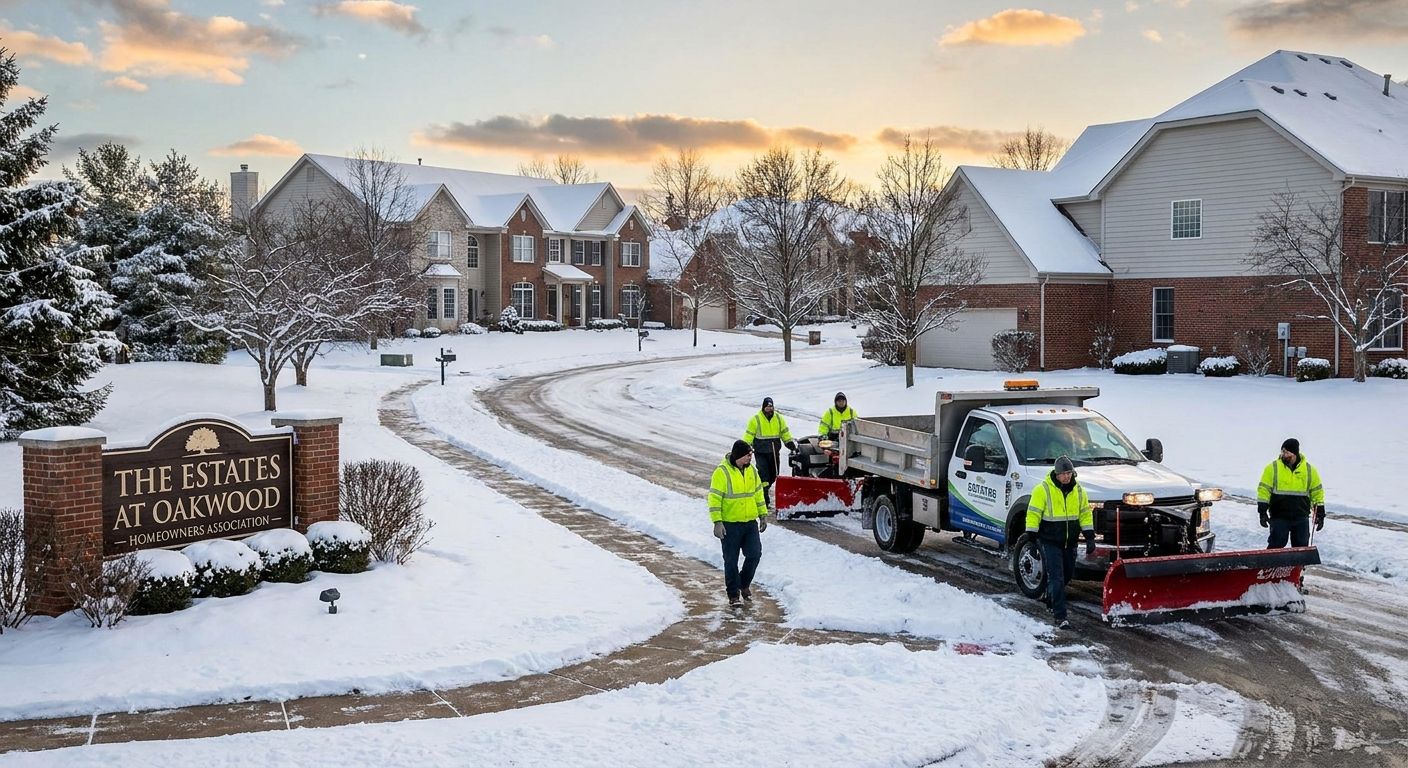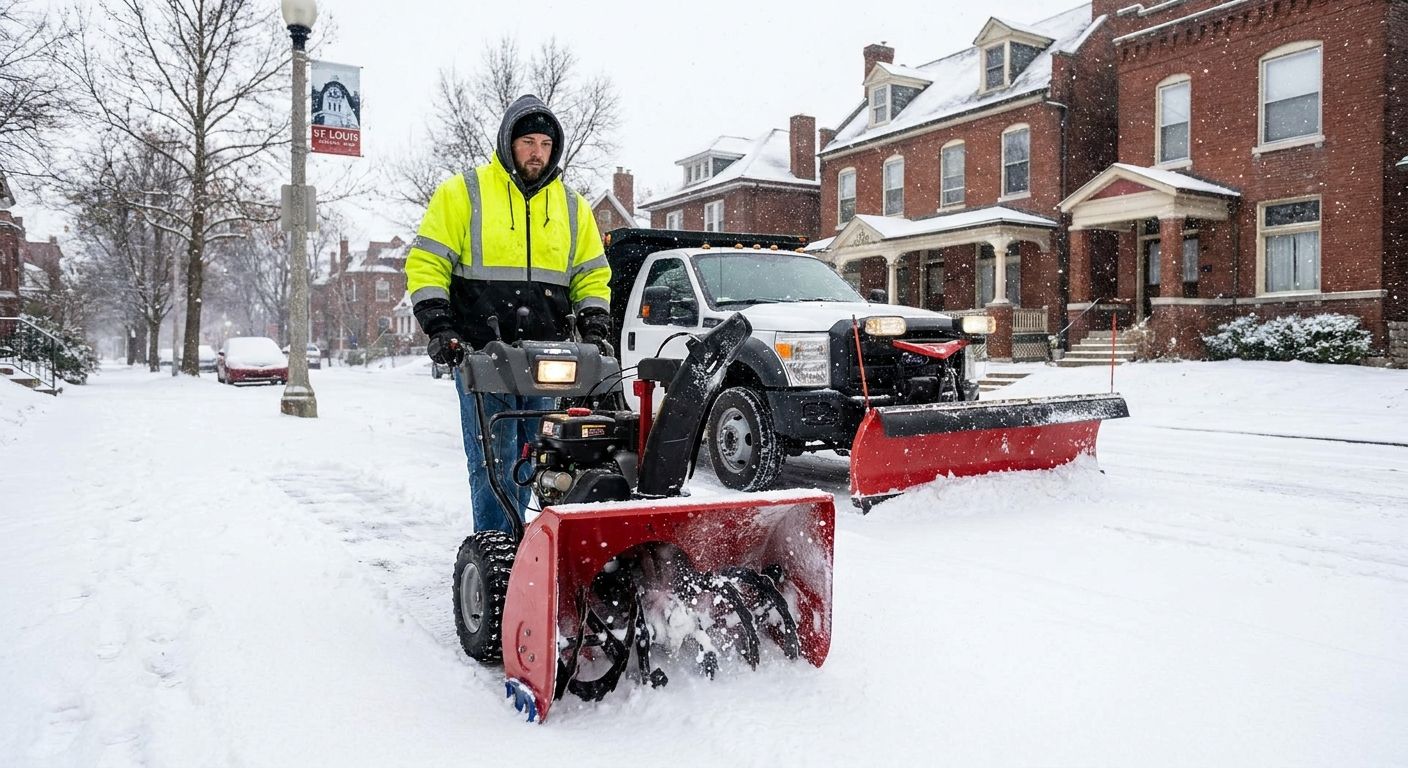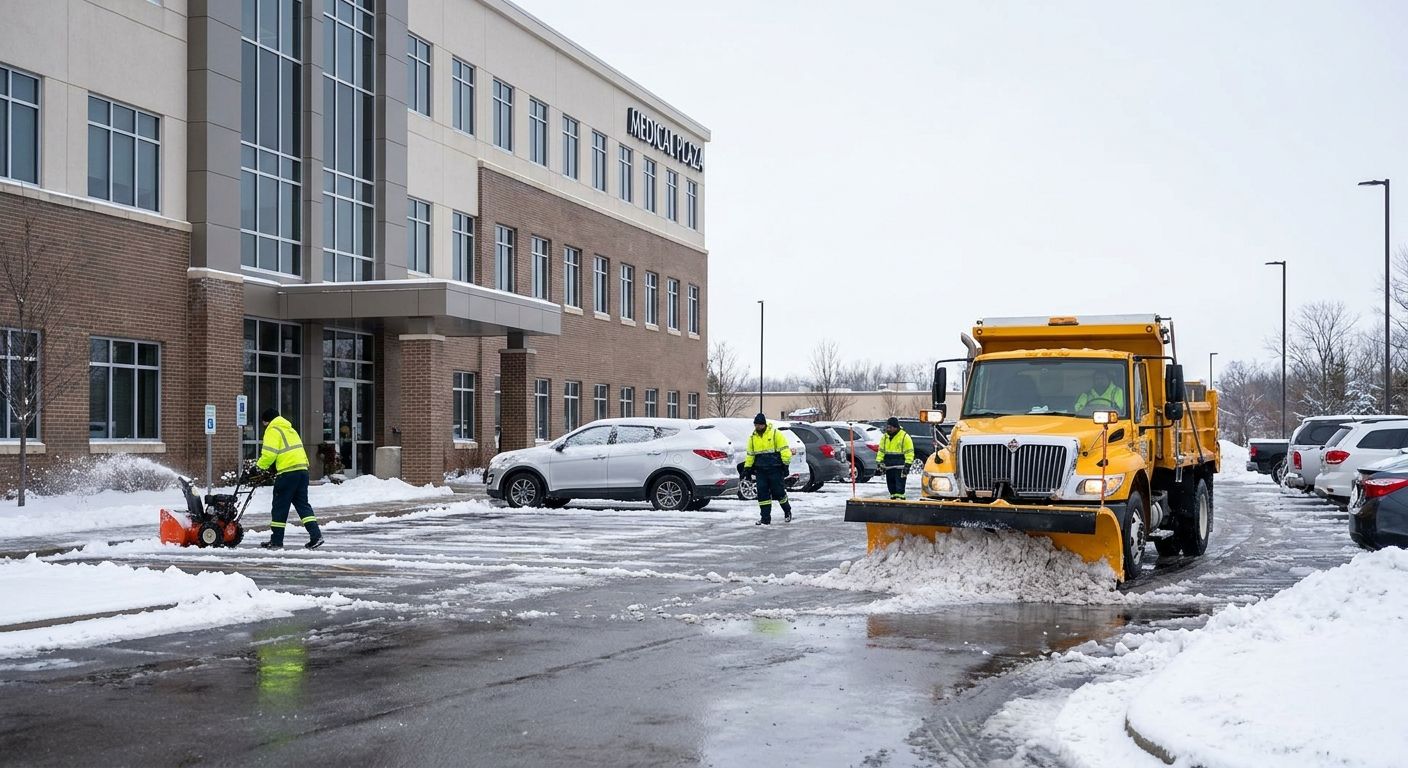

Property managers choosing a commercial snow removal vendor for 2026 are really choosing a contract structure, not a company name — and the structure determines whether you get documentation when a slip-and-fall claim lands on your desk in March.
- For property managers, the best commercial snow removal in 2026 is a Zero-Tolerance Contract with geo-stamped dispatch, not a per-visit handshake deal.
- Seasonal Contracts fit portfolios that need flat, predictable line-item budgets across multiple sites.
- Per-Occurrence pricing suits lower-traffic lots but exposes you to cost swings in a heavy winter.
- National franchise chains offer one invoice but subcontract site-level plowing, which weakens accountability.
- Handshake plowing costs less upfront and skips the documentation you need to defend a liability claim.
Why this matters
A slip-and-fall claim doesn't care that your lot "looked plowed." It cares whether a vendor can produce a timestamped, geo-stamped record showing when a crew arrived, what trigger depth activated the visit, and what de-icing material went down. That's the gap between a documented St. Louis Snow Removal contract and a plow guy with a truck and a cell number.
Property managers overseeing retail, medical office, and multi-family sites in St. Louis and Metro East Illinois are budgeting for 2026 right now. The choice isn't cosmetic — it's the difference between a contract that shows its work and one that asks you to trust that the crew was there.
What makes the best commercial snow removal contract
- Trigger-based dispatch, not on-call ambiguity — the contract states the snow depth or ice condition that activates service automatically.
- Geo-stamped clock-ins for every visit, so the invoice matches a verifiable arrival and departure time.
- Named labor rates for both crew types — plow/shovel and skid steer/loader — instead of a vague "per visit" number.
- Sidewalk and ADA-path coverage written into the same contract as lot plowing, not billed as a surprise add-on.
- De-icing material and application logged, not just "salted" on an invoice line.
- A 24-hour service window for qualifying storm events, stated in writing, not implied.
Commercial snow removal contracts at a glance
| Model | Best for | Standout feature | Key limitation |
|---|---|---|---|
| Zero-Tolerance Contract | High-liability lots (grocery, medical, national retail) | Trigger-based dispatch with geo-stamped records | Higher baseline cost than per-visit billing |
| Seasonal Contract | Multi-site portfolios needing flat budgeting | Predictable per-site line item all winter | Less flexible if a site's traffic changes mid-season |
| Per-Occurrence Contract | Lower-traffic single-tenant lots | Pay only for visits that happen | Budget swings hard in a heavy-snow winter |
| National franchise chain | Owners wanting one invoice across states | Single point of billing | Site-level work is often subcontracted |
| Independent/handshake plowing | Very low-liability, owner-occupied lots | Lowest sticker price | No documentation, no trigger standard |
1. Zero-Tolerance Contract: best for high-liability commercial lots
A Zero-Tolerance Contract locks in a snow depth or ice trigger that activates dispatch automatically — no phone call, no waiting for a property manager to notice the lot is bad. Crews clock in with geo-stamped location data and the invoice reflects actual labor at $90/hr for plow/shovel work or $180/hr for skid steer and loader work, tied to a documented visit.
Zero-Tolerance pros:
- Documentation defends you if a slip-and-fall claim goes to a lawyer
- No gap between a storm hitting and a crew arriving
- Works for grocery, medical office, and national retail sites where liability exposure is highest
Zero-Tolerance cons:
- Costs more than per-occurrence billing for low-traffic sites
- Overkill for a small owner-occupied lot with minimal foot traffic
Zero-Tolerance verdict: Buy — if your lot carries real foot traffic and real liability exposure, this is the standard for 2026.
2. Seasonal Contract: best for multi-site portfolio budgeting
A Seasonal Contract sets one flat number per site for the winter, which is what a regional property manager juggling a dozen locations actually needs when building a 2026 operating budget. It trades some flexibility for predictability — the invoice doesn't change whether St. Louis gets 8 inches or 38 inches this year.
Seasonal pros:
- Budget certainty across a whole portfolio
- Easier to compare against last year's spend
- Still ties to documented, trigger-based dispatch under a real vendor
Seasonal cons:
- Locked pricing can feel expensive in a light-snow winter
- Less useful for a single site with unpredictable traffic patterns
Seasonal verdict: Buy — for anyone managing more than two or three sites who wants one number per property.
3. Per-Occurrence Contract: best for lower-traffic single-tenant lots
Per-Occurrence billing charges only for the visits that happen, priced against the same $90/hr and $180/hr labor floors as any other model. It's the right fit for a small warehouse lot or a single-tenant office building where foot traffic — and therefore liability exposure — is low.
Per-Occurrence pros:
- No payment for a mild winter with few triggers
- Straightforward to audit line by line
Per-Occurrence cons:
- A heavy winter can cost more than a seasonal flat rate
- Harder to forecast into a 2026 budget than a fixed number
Per-Occurrence verdict: Hold — good for the right property type, risky as your default choice if you manage several sites.
4. National franchise chains: best for multi-state portfolio owners
A national chain gives a portfolio owner one invoice across states, which simplifies accounts payable. The tradeoff: the actual plowing at your St. Louis property is frequently handled by a subcontracted local crew the national brand doesn't directly manage, which is where documentation gaps show up.
National chain pros:
- Single billing relationship across multiple states
- Useful if your portfolio spans regions beyond St. Louis and Metro East
National chain cons:
- Site-level accountability depends on whichever subcontractor got the route that week
- Documentation quality varies by local crew, not by brand promise
National chain verdict: Hold — fine for pure billing convenience, weak on the accountability property managers actually need.
5. Independent/handshake plowing: best for very low-liability owner-occupied lots
An independent operator with a truck and a phone number is the cheapest option on this list, and for a tiny owner-occupied lot with almost no foot traffic, that might be enough. It stops being enough the moment a tenant or customer gets hurt and you have no trigger record, no timestamp, and no invoice trail to point to.
Handshake plowing pros:
- Lowest upfront cost
- Simple relationship, no contract paperwork
Handshake plowing cons:
- No documented trigger depth, no geo-stamped clock-ins
- Nothing to hand a lawyer or an insurer if a claim comes in
Handshake plowing verdict: Skip — for any property with real foot traffic or liability exposure in 2026.
Compare contract models for your portfolio
Get a documented snow and ice quote before the first storm hits.
How we ranked these
Each model was judged against the same six criteria: trigger-based dispatch, geo-stamped clock-ins, named labor rates, sidewalk/ADA coverage, logged de-icing material, and a stated service window. Zero-Tolerance and Seasonal Contracts scored highest because they pair documentation with predictability; handshake plowing scored lowest because it offers neither. The same logic that governs equipment exposed to extreme conditions applies broadly to commercial exterior assets — the way flagpoles built for high winds are engineered to a wind-load spec rather than a guess, a snow contract needs to be engineered to a trigger depth rather than a phone call. Property managers who treat winter storm response the same way they treat any other rated infrastructure decision end up with fewer surprises in a claims file.
Pricing on all five models follows the same underlying labor structure — check current rates directly, since seasonal demand shifts them year to year.
Which commercial snow removal contract should you choose?
If your property has real foot traffic — retail, medical, multi-family, national tenants — a Zero-Tolerance Contract is the default answer for 2026. If you're managing a portfolio of several sites and want one predictable number per location, a Seasonal Contract does the job. Everything below those two is a tradeoff you should only accept knowingly, not by default.
FAQ
What is the best commercial snow removal contract for property managers in 2026?
A Zero-Tolerance Contract is the best commercial snow removal option for property managers with real foot traffic in 2026, since it pairs trigger-based dispatch with geo-stamped documentation. Portfolios with multiple sites often pair it with a Seasonal Contract for budget predictability.
Is a Seasonal Contract better than Per-Occurrence billing?
A Seasonal Contract is better for property managers who need a fixed number across a multi-site budget, while Per-Occurrence billing suits a single low-traffic lot. The tradeoff is that Per-Occurrence can cost more in a heavy-snow winter.
How much does commercial snow removal cost in St. Louis?
Labor is billed at a floor of $90/hr for plow and shovel crews and $180/hr for skid steer and loader work, with total cost depending on contract type and lot size. A documented breakdown by contract model is worth reviewing before signing.
Do national snow removal chains work well for St. Louis properties?
National chains give one invoice across states but frequently subcontract the actual St. Louis plowing to a local crew. Accountability depends on that subcontractor, not the national brand.
Why does documentation matter for commercial snow removal?
Documentation — trigger depth, geo-stamped clock-ins, logged de-icing material — is what a property manager hands an insurer or attorney after a slip-and-fall claim. Without it, there's no record the lot was serviced on time.
Is handshake plowing ever a good option?
Handshake plowing can work for a very small owner-occupied lot with minimal foot traffic, but it should be skipped for any property with real liability exposure. There's no trigger standard and no paper trail if something goes wrong.
What is a 24-hour dispatch window?
A 24-hour dispatch window is a contract commitment that a crew responds within 24 hours of a qualifying trigger event, such as a set snow depth. It replaces the ambiguity of an on-call arrangement with a stated standard.
Should parking lot striping be part of a snow removal contract?
Striping isn't part of a winter snow contract itself, but ADA-compliant striping matters for the same liability reasons documentation does — faded lines create the same exposure faded snow records do. Many property managers handle both under separate seasonal scopes.
One last thing
The detail most property managers miss until a claim forces the question: a contract that only promises "snow removal" without naming a trigger depth is legally indistinguishable from a handshake deal, no matter how professional the invoice looks. Ask any vendor bidding for 2026 to name the exact depth that activates dispatch — if they can't answer in one sentence, that's the whole audit.