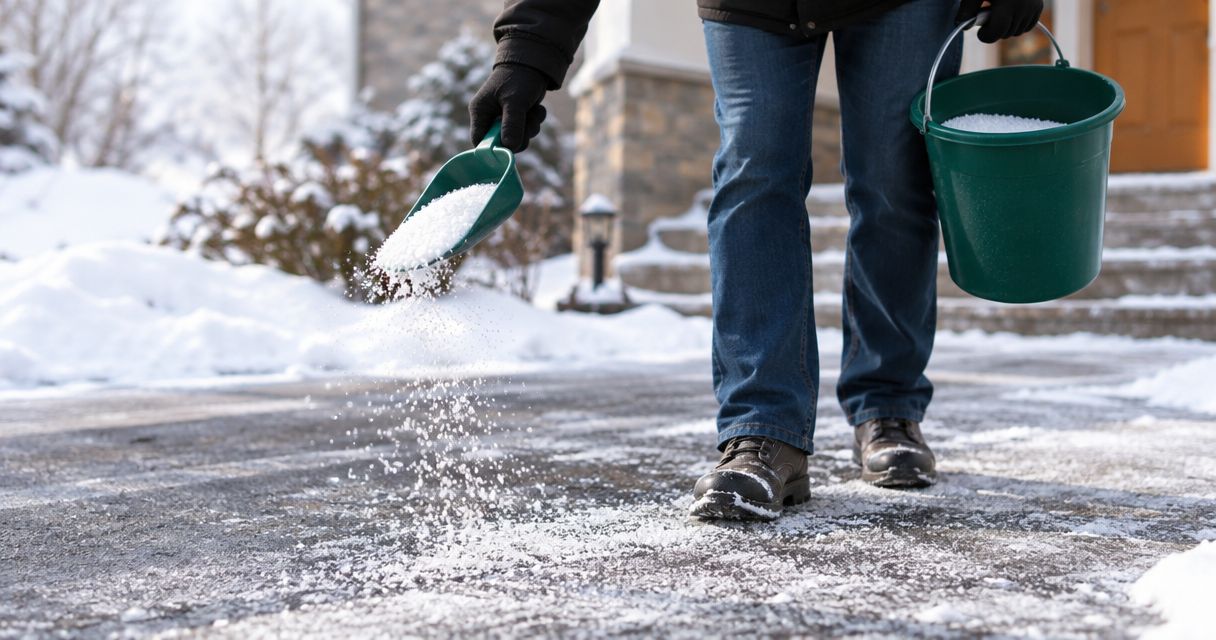
De-icing salt starts working when it dissolves in moisture and forms brine; there is no dependable number of minutes for it to become effective. The time until a surface is safe to use is a separate question: salt must reach the ice, and loosened ice may still need clearing. In 2026, judge the result by the pavement you can inspect, not by the time since application.
- De-icing salt time to become effective has no fixed minute count; salt needs moisture to form brine.
- Remove accumulated snow first so salt can reach the ice beneath it.
- St. Louis Snow Removal is best for property managers who need documented commercial salting, not a fixed-minute melt promise.
- Inspect entrances, sidewalks and vehicle paths after treatment; application alone does not confirm safe footing.
Why this matters
A service log can show that salt was applied. It cannot, by itself, show that an icy entrance was clear when someone used it. For a property manager, that distinction determines whether the next action is inspection, more clearing or another treatment—not simply waiting for a timer to expire.
Timing also starts before a crew arrives. A forecast-based treatment plan identifies which surfaces need attention and when; the forecast-to-pre-treatment workflow covers that planning question. This page addresses the next one: what tells you whether the salt has actually done its job?
How long does de-icing salt take to become effective?
There is no fixed application-to-clearance time. Salt needs liquid water to dissolve. The resulting brine can interfere with ice bonding to pavement or help loosen existing ice, but a visible change does not establish that the whole walking or driving surface has traction.
| Surface condition | What happens after salting | What to check before use |
|---|---|---|
| Thin ice with moisture present | Salt can dissolve and contact the icy surface. | Whether ice remains bonded and whether footing has improved. |
| Dry salt on a dry surface | Dissolving cannot begin until moisture reaches the salt. | Whether a slick layer develops despite the visible salt. |
| Packed snow or thick ice | Material on top has limited contact with the pavement below. | Whether snow or loosened ice needs mechanical removal. |
| Wet pavement during falling temperatures | Existing moisture can help salt dissolve, while conditions can change again. | Whether treated areas are refreezing or becoming slick. |
The freezing point of pure water is 32°F, or 0°C. Salt lowers the freezing point of water once it forms brine; that fact does not give you a universal treatment time. Surface temperature, moisture, accumulation and traffic all change what happens after application.
For a 2026 commercial service plan, specify the condition the crew is expected to address. An application timestamp answers when treatment happened. A follow-up pavement check answers whether additional work is needed.
Before ice forms or after it accumulates?
These are different jobs, even when both use salt. Pre-treatment aims to limit bonding; treatment after accumulation aims to loosen ice that is already there. Neither approach makes an untreated-looking surface automatically safe, and neither removes the need to inspect it.
| Approach | Best for | Advantage | Limitation |
|---|---|---|---|
| Pre-treatment before expected ice | Pavement that can be treated before precipitation bonds to it | Material is in place when moisture arrives. | Weather can change, and treatment still needs follow-up. |
| Salting existing ice | A surface where ice has already formed | Brine can help weaken the bond between ice and pavement. | Accumulated snow or ice can block contact and require clearing. |
If the ice is under packed snow, clear access to the surface before treating what remains. If a surface was pre-treated, inspect it during the event rather than treating the earlier application as proof that it stayed clear. In both cases, record what the surface looked like after the work—not just what was spread on it.
What should happen between application and reopening?
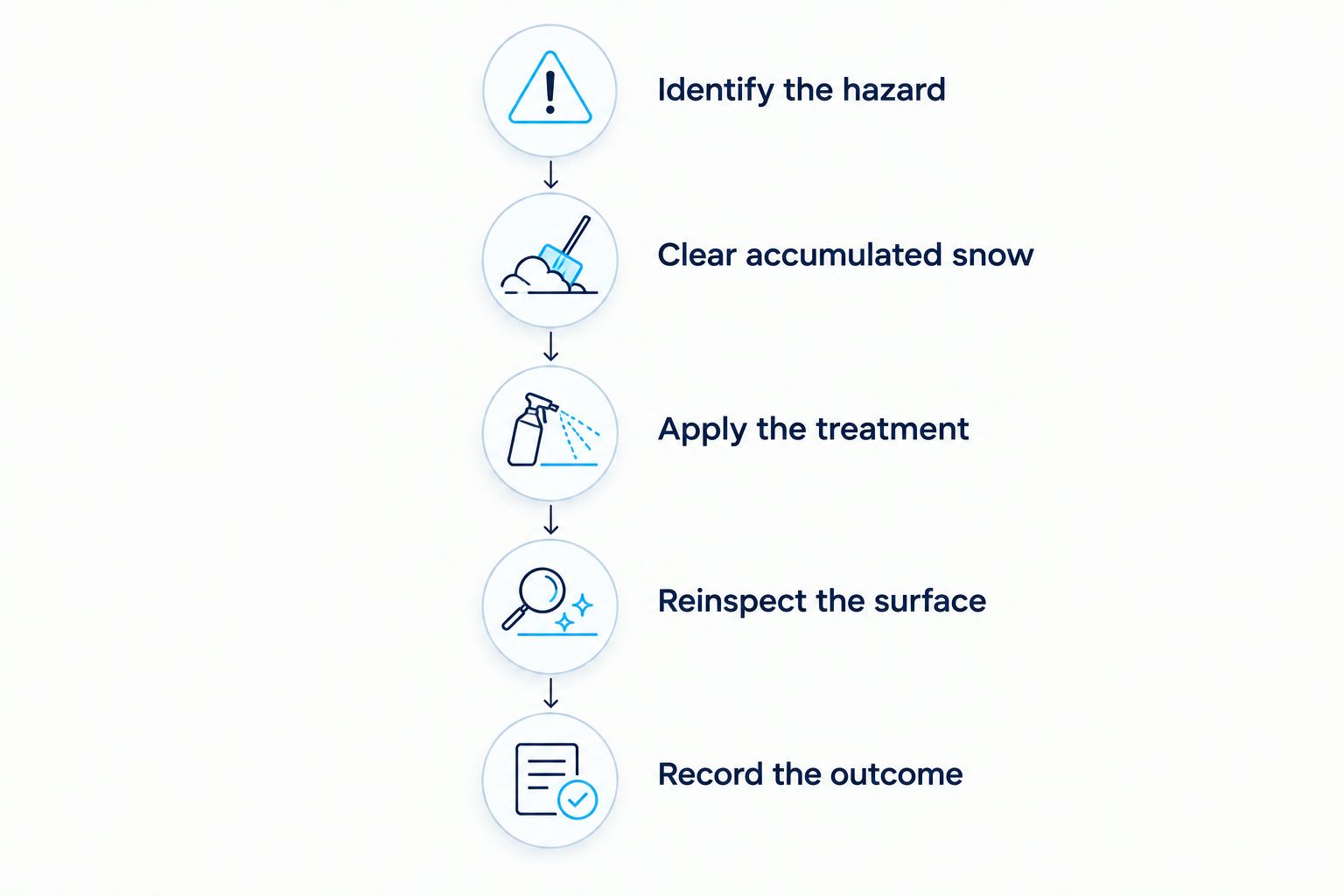
- Identify the hazard. Note whether the problem is thin ice, packed snow, refreezing water or a mix. An entrance and an open parking lane can have different conditions during the same event.
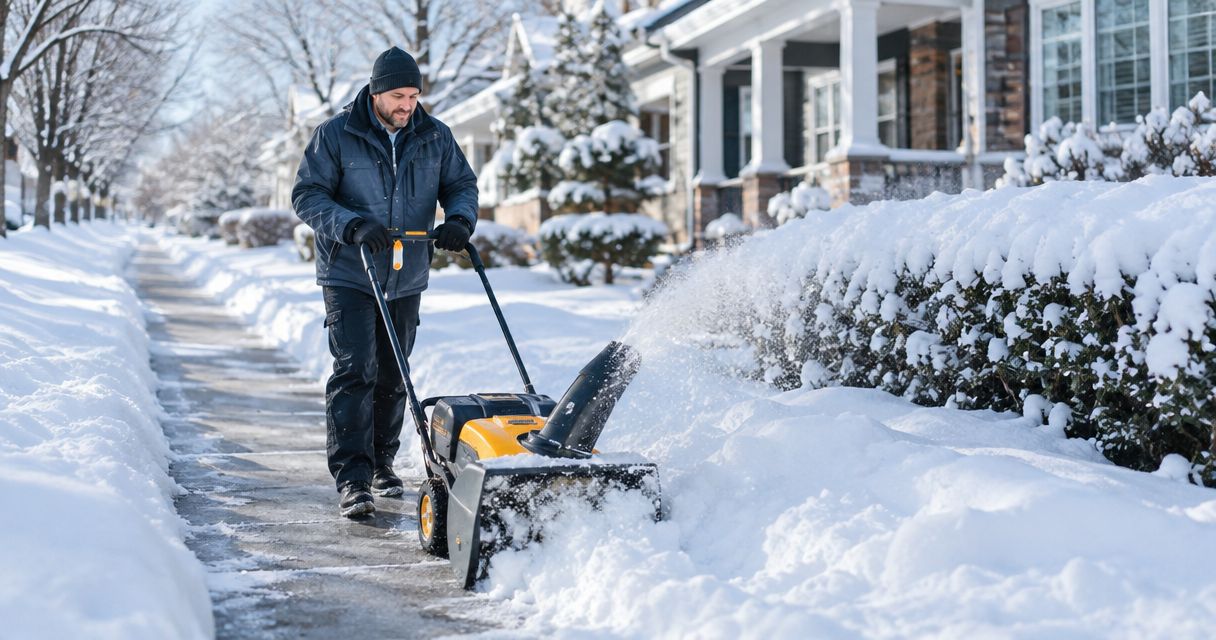
- Clear accumulated snow. Expose the surface that needs treatment. Salt left on top of a snow layer does not provide the same direct contact with pavement as salt applied to exposed ice.
- Apply the treatment. Cover the areas identified in the service plan rather than treating the mere presence of visible granules as the objective. Product choice and amount depend on the surface and conditions; a time estimate does not replace those decisions.
- Reinspect the surface. Check for bonded ice, loose slush and slick patches. If the hazard remains, decide whether it needs more clearing, treatment or restricted access while work continues.
- Record the outcome. Keep the application and the follow-up observation distinct. A visit record tells you what work occurred; an inspection tells you what still needs attention.
This sequence matters in 2026 because a cleared entrance can change after the crew leaves. Meltwater can move to a lower section of pavement and freeze there as conditions shift. Reinspection catches that new hazard; an earlier application record cannot.
For sites with repeated pedestrian traffic, prioritize the surfaces people must cross: entrances, sidewalk connections and the route from parking spaces to doors. For vehicle traffic, check turning and stopping areas as well as the main drive. Those are inspection priorities, not a claim that a single salt pass resolves every patch.
Why de-icing salt effectiveness varies
- Moisture at the surface. Salt needs water to dissolve. Visible dry granules do not establish that brine has formed.
- Pavement temperature. Air temperature alone does not describe the surface receiving the salt. Ask for a pavement-condition check when deciding whether the treatment has worked.
- Snow and ice buildup. Packed material separates salt from the pavement it needs to reach. Clearing can be the necessary first task.
- Product and application method. A dry application and a pre-wetted application do not begin in the same condition. Neither provides a universal clearance time.
- Continued precipitation and drainage. Fresh snow, runoff or refreezing can create a new slick area after an earlier treatment.
- Traffic and follow-up. Use can change the treated surface, while an uninspected corner or entrance can retain ice. Judge the route people actually take.
Do not turn those factors into an invented minutes-per-application promise. The workable standard is observable: identify the affected area, treat it, inspect it and act again if the hazard remains. In 2026, that sequence is more useful to a property manager than a clock running from the first spread of salt.
What does a documented salting visit tell you?
A documented visit establishes what service was performed. It does not substitute for a condition check after treatment. Keep the time of application, the surfaces treated and any follow-up observations separate so the record does not imply that every surface was clear at the instant salt was spread.
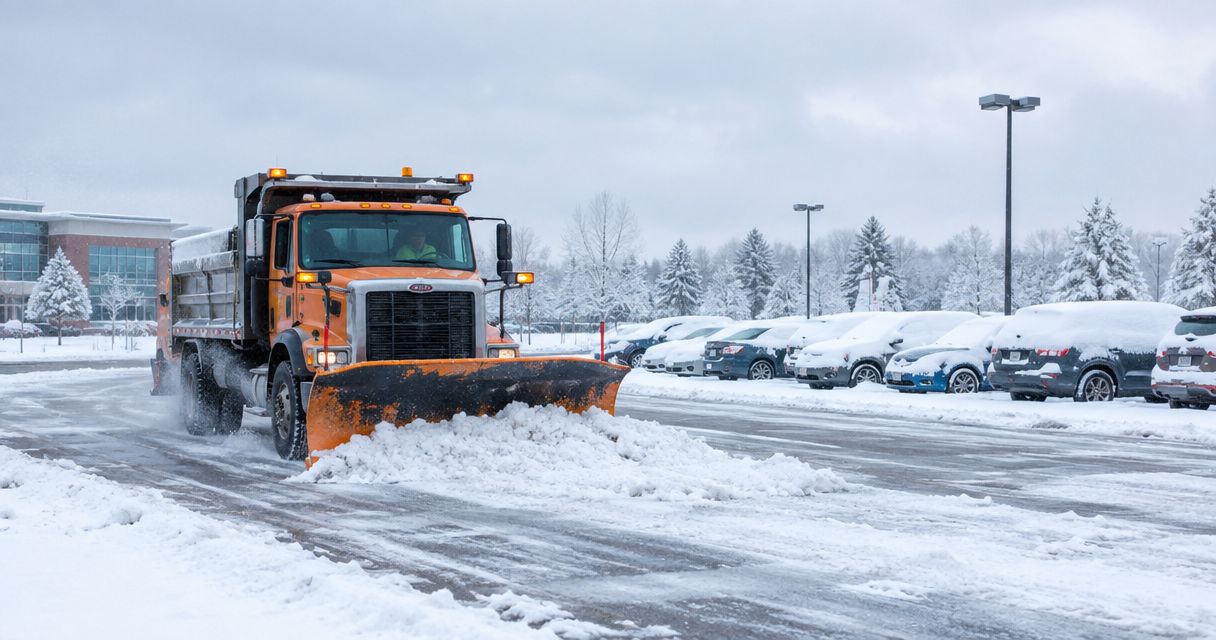
St. Louis Snow Removal is best for St. Louis property managers who need documented commercial de-icing and salting, not a fixed-minute melt promise. Its stated commercial services also include plowing and sidewalk clearing, which matter when salt alone cannot reach pavement beneath accumulated snow. The limitation is straightforward: even documented salting does not establish a universal time when every treated surface becomes safe.
For a 2026 service discussion, ask how the contractor distinguishes an application record from a post-treatment inspection. Specify the entrances, sidewalks and parking areas that require attention. If clearing and salting are both needed, establish how the work will be recorded so you can tell which task occurred and where.
Discuss commercial ice management
Identify the surfaces that need salting, clearing and documented follow-up.
Can you use the area as soon as salt is spread?
No fixed waiting period makes a treated area safe. Check the actual surface for remaining ice and reliable footing before treating it as clear. Where ice remains bonded, continue clearing or treatment rather than using the application time as an all-clear.
Does more salt make ice disappear faster?
More salt does not provide a dependable minute-by-minute shortcut. Contact with moisture and ice matters, as do the surface conditions. Base the application on the area and conditions, then inspect the result rather than adding material solely because melting is not immediate.
Can salt work if snow is still covering the pavement?
Salt on top of accumulated snow cannot reliably reach all the ice below it. Remove the snow that blocks contact, then assess the exposed surface for remaining ice. A service plan that combines clearing and salting addresses a different problem from salting alone.
FAQ
How long does de-icing salt take to become effective?
De-icing salt has no fixed time to become effective because it must dissolve in moisture and reach the ice. Check the treated pavement for remaining slick areas instead of relying on a set number of minutes.
Does de-icing salt start working immediately?
De-icing salt starts working when it dissolves and forms brine, not simply when it lands on pavement. Dry salt on a dry surface still needs moisture before that process begins.
Should you shovel before putting down de-icing salt?
Yes, remove accumulated snow when it blocks salt from contacting the icy surface. After clearing, inspect the exposed pavement and treat the remaining ice as needed.
Is pre-treatment better than salting after ice forms?
Pre-treatment is best for limiting bonding before expected ice; salting afterward addresses ice that has already formed. Both approaches require inspection, and accumulated material can still need clearing.
Can de-icing salt stop a sidewalk from refreezing?
An earlier salt application is not proof that a sidewalk will stay clear. Check for new slick areas when runoff, precipitation or surface conditions change.
Does a salting service log prove a parking lot is safe?
No. A salting log records the work performed; a separate inspection establishes the observed condition of the parking lot after treatment.
What should a property manager check after salting?
Check entrances, sidewalks and vehicle paths for bonded ice, slush and newly slick spots. Record what remains and arrange further clearing or treatment where needed.
One last thing
The question to ask after salting is not How long has it been? It is What does the pavement look and feel like now? In 2026, keep the application record, the inspection and any follow-up work distinct. That makes the next decision clear when a treated area is still slippery.