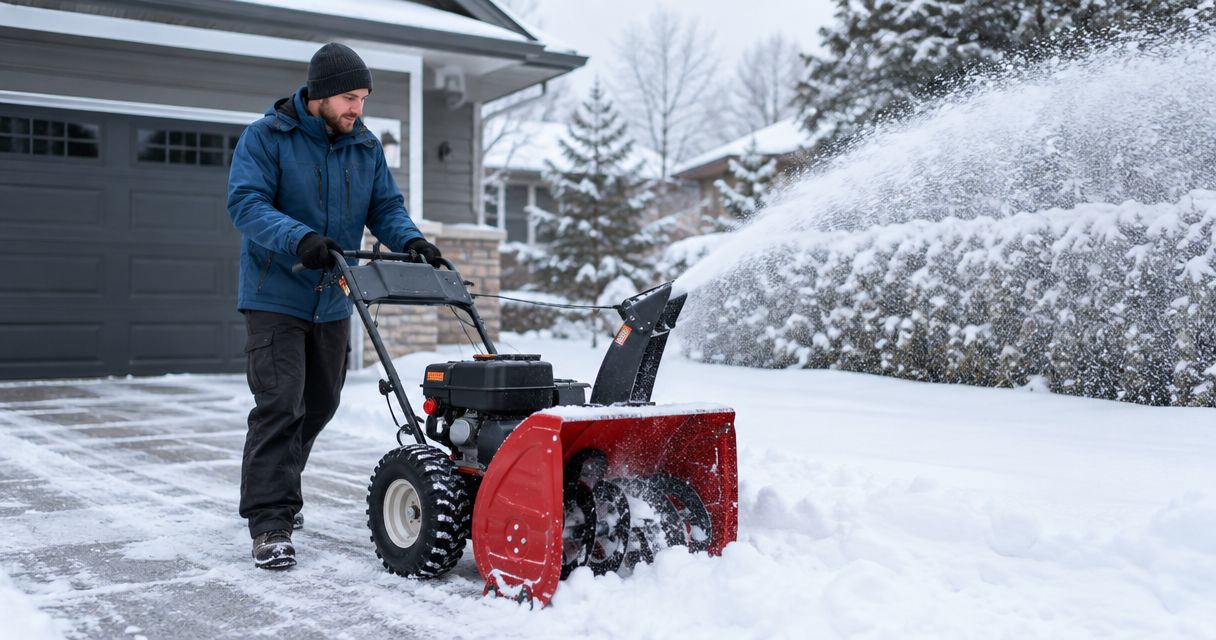
No, a driveway snow removal service does not inherently require a seasonal contract; the provider’s agreement determines whether you enroll for the season, authorize individual visits, or request separate jobs. Per-push billing can still sit inside a seasonal agreement, so it does not automatically mean no commitment. Before signing in 2026, separate the enrollment term from the billing method and confirm exactly what triggers a visit.
- A driveway snow removal service does not inherently require a seasonal contract; the provider’s terms control.
- Per-push billing describes charges for visits, not necessarily the length of your commitment.
- St. Louis Snow Removal offers enrolled residential snow-route service; confirm the enrollment terms before authorizing work.
- Compare snow plowing triggers, sidewalk clearing, ice treatment, return visits, and cancellation terms separately.
Does driveway snow removal require a seasonal contract?
Not automatically. A seasonal commitment, a billing method, and a dispatch arrangement are separate parts of the agreement. A homeowner can agree to service throughout a defined season while authorizing billing for each qualifying visit.
Use this comparison to identify what a proposal actually offers. These are agreement structures to distinguish, not a statement that every contractor offers each option.
| Arrangement | Best for | Main advantage | Main limitation | What to verify |
|---|---|---|---|---|
| Seasonal agreement | Homeowners seeking an ongoing service arrangement | Defines the service relationship across a stated term | Creates obligations that continue beyond an individual visit | Dates, covered work, exclusions, and cancellation |
| Per-occurrence agreement | Homeowners wanting charges tied to defined service events | Connects billing to an identified occurrence | Does not by itself establish dispatch timing or contract length | What counts as an occurrence and whether enrollment is required |
| Separate one-time authorization | Homeowners seeking a specific job rather than ongoing service | Limits authorization to the agreed job | Does not create an ongoing service commitment | Acceptance, scope, dispatch terms, and completion criteria |
For a closer comparison, read how to compare seasonal contracts versus per-push snow removal. Do not treat either label as a substitute for the actual terms.
Why this matters
A driveway agreement answers more than who moves the snow. It determines who initiates service, what work is authorized, and what happens when conditions change after the crew leaves.
St. Louis Snow Removal provides enrolled residential snow-route service across the St. Louis metro and Metro East Illinois. Enrollment is the relevant distinction for homeowners considering that service; confirm its term, scope, and dispatch conditions rather than assuming it is a one-time callout.
For your 2026 agreement, get the service obligation in writing before comparing contract labels. A document that clearly separates enrollment, dispatch, and billing is easier to evaluate than a proposal that calls everything “seasonal service.”
Seasonal agreements: best for ongoing service planning
A seasonal agreement establishes a service relationship for a stated period. The document still needs to explain which events trigger work, which areas the crew clears, and how either party ends the arrangement.
Choose a seasonal agreement when you want an ongoing plan and accept its written obligations. Do not interpret the word “seasonal” as unlimited visits, automatic ice treatment, or a completion deadline.
The benefit is a defined framework for repeated service. The trade-off is commitment: you need to understand what continues to apply when you travel, move, change providers, or no longer need the work.
Ask whether the agreement renews automatically and what action prevents renewal. Put the relevant notice date on your calendar only after confirming it in the signed terms.
Per-occurrence agreements: best for event-based billing
Per-occurrence billing ties charges to a defined service event. The important word is defined: the agreement must explain whether an occurrence means a visit, a plowing pass, a storm, or another specified unit of work.
A per-push arrangement does not answer whether you must enroll. It also does not establish whether the contractor dispatches automatically or waits for your authorization.
The benefit is a direct connection between the agreed billing event and the work record. The limitation is that repeated visits need clear rules, particularly when snowfall continues or another clearing becomes necessary.
Before accepting a 2026 per-occurrence proposal, ask the contractor to describe how a continuing storm is handled. Read that answer alongside the enrollment term, not instead of it.
One-time authorization: best for a specific clearing job
A one-time authorization covers the job you and the contractor agree to perform. It is distinct from enrolling your property for recurring service, but it still needs written scope and acceptance.
Use a one-time arrangement for a specific job, not as evidence of an ongoing service commitment. Ask what starts the dispatch process and how completion will be communicated.
The advantage is limited authorization. The disadvantage is that your next snowfall requires another arrangement unless the agreement explicitly says otherwise.
Do not assume a provider with a residential route also accepts separate one-time jobs. Confirm the service model directly before planning around it.
Why driveway snow removal requirements vary
The seasonal label alone does not tell you whether an agreement fits your property. These factors explain what you need to resolve before signing:
- Enrollment model: Determine whether your address must be enrolled before service begins or whether each job receives separate authorization.
- Dispatch trigger: Identify the condition that starts work and who decides that the condition has been met.
- Service scope: Separate driveway plowing from sidewalk clearing and de-icing; name each area and task you want included.
- Return visits: Establish how continued snowfall, refreezing, or a street-plow ridge is handled after the initial clearing.
- Property access: Record parked vehicles, gates, surface boundaries, and acceptable snow-placement areas before work starts.
- Agreement term: Confirm effective dates, renewal, cancellation, and any procedure for changing the authorized work.
These are contract questions, not reasons to assume a specific provider imposes a specific rule. The useful answer is the one written into your agreement.
How to check a driveway agreement before signing
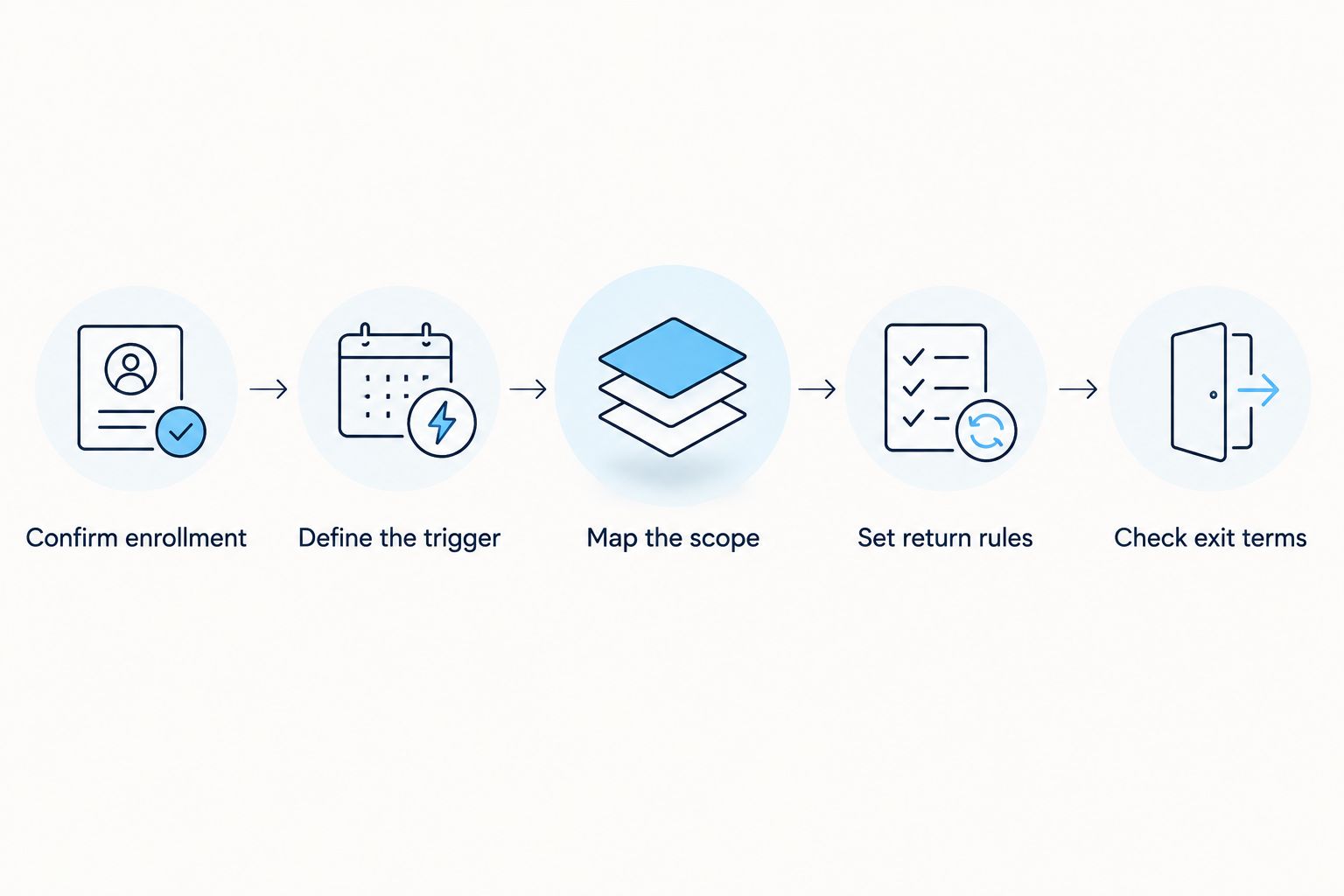
Review a driveway snow removal service proposal in this order. Resolve the service obligation first; then review how visits are recorded and billed.
- Confirm enrollment. Ask whether you are enrolling for a stated term or authorizing a separate job. Identify the document or confirmation that activates service for your address.
- Define the trigger. Ask what condition initiates dispatch and whether you must contact the provider. If the agreement uses a snow-depth threshold, require the actual threshold and measurement method in writing.
- Map the scope. Mark the driveway boundaries, garage approach, walkways, and snow-placement areas. Identify which tasks are included and which require separate authorization.
- Set return rules. Ask how ongoing snowfall, blocked access, and new accumulation after completion are handled. Distinguish another authorized visit from completion of the original work.
- Check exit terms. Read cancellation, renewal, pause, and notice provisions. Keep a copy of the accepted agreement with the property’s service instructions.
A clear scope gives both sides the same reference when a question arises. A verbal description such as “take care of the driveway” leaves the boundaries and completion standard unresolved.
Review your property instructions again before the first authorized visit. A signed agreement does not tell a crew where you want snow placed unless the scope or site instructions address it.
What should the written scope say about your driveway?
Describe the work as physical areas and tasks, not a general promise of winter maintenance. Specify whether the job covers the full driveway, a vehicle path, the garage approach, or another agreed area.
Then address access. Tell the contractor where vehicles remain parked, whether a gate restricts entry, and which boundaries need to remain visible to the operator.
For your 2026 scope, distinguish snow movement from ice treatment. Plowing and de-icing are different tasks; ask for an explicit inclusion or exclusion rather than treating one as proof of the other.
Use a marked property photo or sketch to show the authorized clearing area and snow-placement location. Ask the contractor to acknowledge those instructions so they become a shared reference, not an attachment nobody confirmed.
Does per-push billing mean I can avoid enrollment?
No. Per-push billing does not, by itself, remove an enrollment requirement. It describes the billing event, while enrollment establishes whether your property participates in the service arrangement.
Ask two separate questions: “Must I enroll?” and “How is each visit authorized and billed?” A clear proposal answers both without treating them as interchangeable.
Does driveway clearing include sidewalks and salting?
Not automatically. Driveway clearing, sidewalk clearing, and de-icing need their own scope language. Ask the contractor to identify the surfaces covered and the work authorized on each surface.
If you need a clear walking route from the house to the driveway, describe that route explicitly. Do not leave it implied by the phrase “residential snow removal.”
Can I pause or cancel service during the season?
Your agreement determines whether you can pause or cancel service during the season. Check the notice procedure, effective date, and continuing obligations before requesting a change.
Being away from home does not itself amend the agreement. Obtain written confirmation of any accepted change so the dispatch instructions and your expectations match.
Who is enrolled residential route service best for?
St. Louis Snow Removal’s residential snow-route service is best for homeowners seeking an enrolled service arrangement in the St. Louis metro and Metro East Illinois. The relevant fit is the enrollment model, not an assumed response time or an unwritten list of included tasks.
The benefit is a residential route offering that matches a homeowner seeking enrollment. The boundary is equally important: the stated offering does not establish one-time dispatch terms, a completion deadline, or a particular cancellation policy.
When requesting driveway snow removal service from St. Louis Snow Removal, provide your address, driveway layout, access restrictions, and requested clearing areas. Ask for the applicable residential enrollment terms before authorizing service.
Confirm your residential service terms
Provide your address, driveway layout, and clearing scope for a residential snow-route inquiry.
FAQ
Do I have to sign a seasonal contract for driveway snow removal?
No, a driveway snow removal service does not inherently require a seasonal contract. The provider’s terms determine whether service requires seasonal enrollment, recurring authorization, or a separate agreement for each job.
Is per-push snow removal the same as no contract?
No, per-push snow removal is a billing arrangement, not proof that there is no contract. A seasonal agreement can still define and bill individual visits.
Does St. Louis Snow Removal offer residential driveway service?
St. Louis Snow Removal offers enrolled residential snow-route service for homeowners across the St. Louis metro and Metro East Illinois. Confirm the applicable enrollment terms, clearing scope, and dispatch conditions for your address.
Will a snow removal crew come automatically when it snows?
Automatic dispatch must be established by your agreement. Confirm the trigger, who evaluates it, and whether you need to authorize each visit.
Does a seasonal driveway agreement include salt?
A seasonal driveway agreement includes salt or de-icing only when the scope says so. Ask which surfaces receive treatment and how additional treatment is authorized.
What happens if snow falls again after my driveway is cleared?
Your return-visit terms determine how additional snowfall is handled. Ask whether another visit requires separate authorization and how the agreement defines that visit.
What should I check in a driveway snow removal agreement in 2026?
Check enrollment, dispatch triggers, clearing boundaries, ice treatment, return visits, and cancellation terms. Require clear written answers before treating the agreement as an ongoing service plan.
One last thing
Ask the contractor to explain what happens after the first clearing, not just before it. Continued snowfall, a blocked driveway, or a new ridge at the street tests whether your agreement actually defines the next action.
Have that conversation before signing. The useful commitment is not “we handle snow”; it is a written explanation of who authorizes the next visit, what the crew clears, and how you confirm completion.