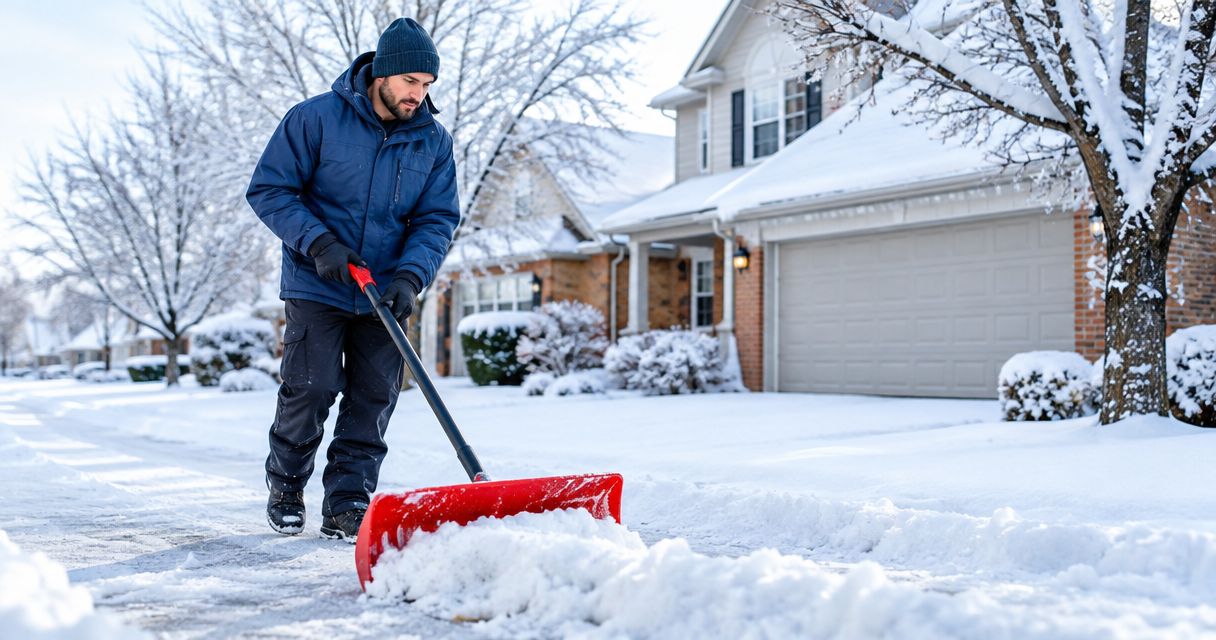

Yes. Hiring a snow removal contractor can reduce slip-and-fall exposure by assigning work before a storm and creating evidence of what was done, but it does not erase a property owner’s or manager’s responsibilities. The contract must define the work, and the service log must show what happened on site. A signed contract without documented performance is a weak defense to a claim about an untreated walkway.
- Snow removal contractor slip and fall liability depends on both the contract and what crews actually do.
- St. Louis Snow Removal is best for property managers who need documented commercial snow and ice service, not a promise of immunity.
- Define plowing, salting, sidewalks, triggers and reporting before the first storm.
- Keep service records with weather observations, site reports and incident records; a contract alone cannot prove a visit.
Why this matters
A slip-and-fall claim asks a practical question: what did the responsible parties know about the condition, and what did they do about it? Your 2026 snow contract is part of that answer. Dispatch records, site observations and service documentation help establish a timeline; a contractor’s name on an invoice does not establish that a particular entrance was treated before an incident.
For a property manager, the operational risk is a gap between the contract and the site. A lot can be plowed while the pedestrian route from parked cars to the door remains icy. A crew can visit while freezing conditions continue afterward. Contracted service addresses assigned tasks; it does not eliminate the need to inspect, report new hazards and respond when conditions change.
Can hiring a snow removal contractor reduce slip-and-fall liability?
Yes, when the agreement assigns specific areas and actions, crews perform that work, and the property keeps usable records. No, if hiring is treated as a complete transfer of responsibility. The outcome of any claim depends on the incident, the contract, the conditions and the applicable law; no service model guarantees that a claim will fail.
| Approach | What it gives you | Where it falls short | Best for |
|---|---|---|---|
| Documented contractor service | Assigned snow and ice tasks plus a record you can compare with an incident timeline | Work outside the scope, missed conditions and hazards arising after a visit still need attention | Managers who need an accountable service process across commercial areas |
| In-house response | Direct control over staff assignments and site inspections | You must define tasks, supervise coverage and maintain the records yourself | Properties with staff who can respond to winter conditions |
| Unplanned callouts | A way to request help when a condition is reported | Timing, coverage and evidence of prior monitoring remain unresolved unless separately defined | Supplemental response, not the entire winter plan |
The distinction is documented work versus assumed work. St. Louis Snow Removal provides documented commercial plowing, de-icing and salting, and sidewalk clearing for businesses and property managers. Those services are relevant to a liability plan because parking areas and pedestrian routes need their own scope. The provider is one part of the plan, not a substitute for property oversight.
What should a snow contract say about hazardous areas?
Start with a site map. Mark the places people use rather than writing a broad instruction to clear the property: entrances, accessible routes, sidewalks, steps, crossings, loading areas and the paths between parking and doors. Identify who is responsible for each area, including spaces maintained by a tenant or another vendor. A named area is easier to dispatch, inspect and document than an undefined obligation to keep the site safe.
Then separate plowing, sidewalk clearing and ice treatment. A plow pass cannot establish that a sidewalk was cleared. A salting visit cannot establish that snowbanks no longer block a crossing. If treatment and clearing have different triggers or require separate authorization, put that distinction in writing before a storm.
The agreement should also answer these questions:
- What starts service? State the agreed trigger and who monitors it. Do not assume a forecast, a report from a tenant and measured conditions at the property mean the same thing.
- What happens between visits? Define how hazards are reported, who reviews them and how an additional response is requested.
- Who checks the property? Assign responsibility for inspections outside the contractor’s visits, including conditions that develop after treatment.
- What counts as completion? Require a record that distinguishes areas addressed from areas crews could not access.
- Who receives the record? Name the person or system responsible for keeping it with the property’s winter files.
For a 2026 contract, resolve these points before service begins. Language that sounds reassuring but never identifies a walkway, trigger or reporting handoff gives you little operational direction when a condition changes.
Which records matter after a slip-and-fall report?
Keep records that let someone reconstruct the sequence without relying on memory. The core file is the agreement and site map, followed by dispatch information, arrival and departure records, completed-work notes, treatment records, photos when available, inspection reports and any request for follow-up work. Keep incident reports and relevant property communications with that file rather than scattered across individual inboxes.
The useful question is not whether a photo looks clear. It is whether the record identifies where and when the crew worked and what condition or limitation was reported. Geo-stamped clock-ins and documented checklists are useful for that reason, but a clock-in by itself cannot show that a particular doorway was treated. A checklist cannot describe an obstruction unless the crew records it.
This is where a documented contractor helps. St. Louis Snow Removal’s emphasis on recorded service gives a property manager material to review against site reports. Ask what each record actually contains and how it reaches your property file; do not assume every type of proof is included in every agreement.
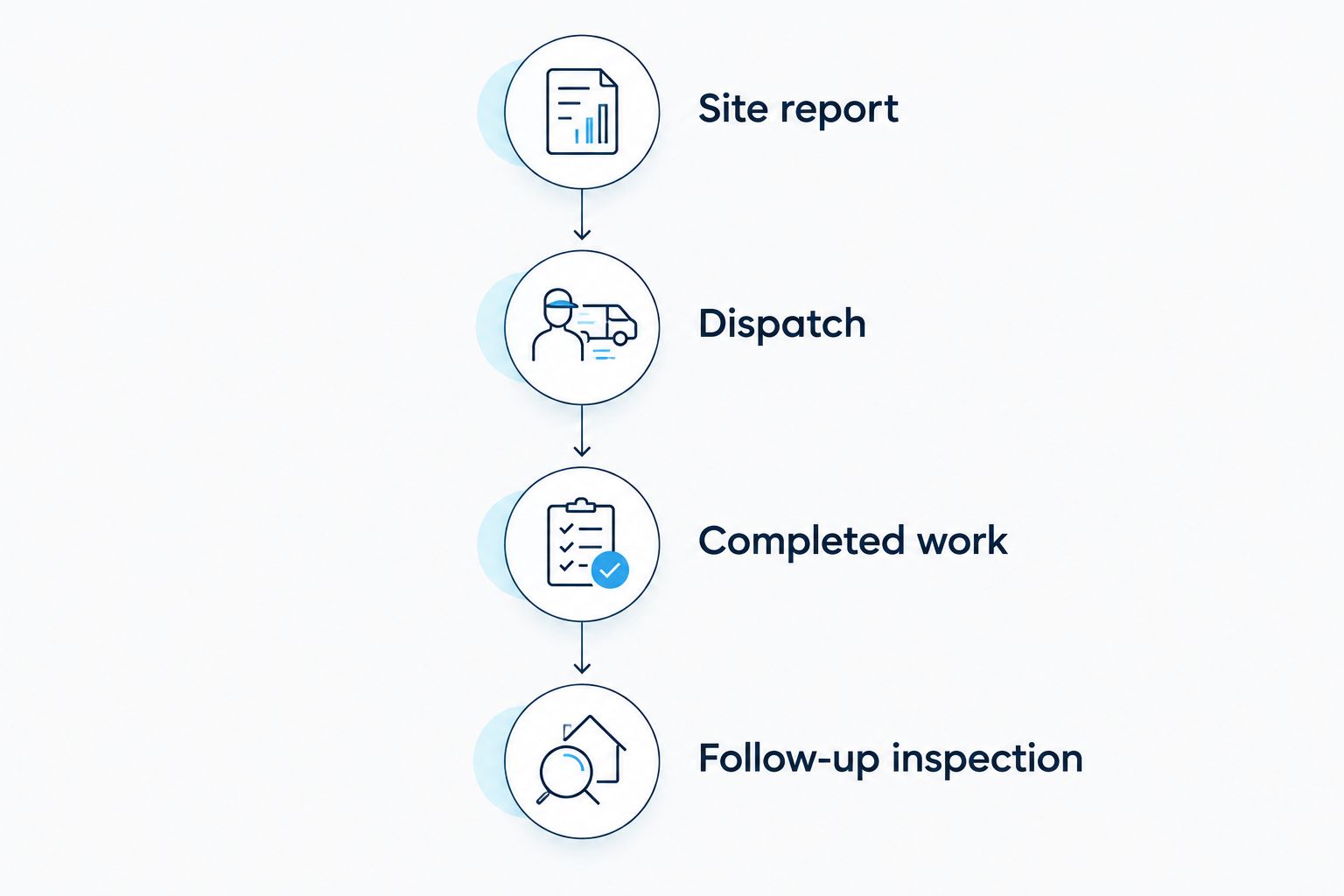
If someone reports a fall, preserve the existing file promptly. Record the reported location and time, the condition observed, who received the report and what response followed. Do not replace an original note with a polished summary: the sequence of contemporaneous records is more useful than a later account that leaves out uncertainty or missed areas.
Why does liability exposure vary between properties?
The contractor’s scope is only one factor. These operational differences affect whether the agreement and records address the condition at issue:
- Foot traffic and access routes. A cleared vehicle lane does not address ice on the route from a parking space to an entrance.
- The agreed service trigger. The point at which a crew is dispatched must match what the property expects. A trigger that leaves a gap needs a separate inspection and reporting plan.
- Ice after clearing. Conditions can change after snow is removed or a surface is treated. Specify how new reports reach the person authorized to act.
- Blocked work areas. Parked vehicles, deliveries or other obstructions can prevent access. Require a record of what was not completed and who was notified.
- Record quality. A dated entry naming the area and work performed answers a different question from a general invoice saying snow service was provided.
- Management follow-through. A report of ice has little value if nobody is assigned to review it or request the next response.
None of these factors yields a universal liability reduction or a guaranteed legal result. They tell you whether the 2026 operating plan can show an assigned task, a response and a follow-up when the site changed.
Does the contractor’s insurance transfer the risk?
No. Insurance is a separate question from whether snow and ice work was assigned and performed. Request current insurance documentation and have the contract’s insurance terms reviewed against the property’s requirements, but do not treat a certificate as proof that every incident is covered or that the property has no remaining obligation.
The same applies to contract language about responsibility for claims. Words in an agreement do not clear a sidewalk, and their effect depends on the specific agreement and applicable law. Have qualified legal and insurance advisers review the terms for your property, especially when locations span Missouri and Illinois. Operationally, keep the service file either way: insurance questions are harder to address without a reliable account of the work.
Can you rely on photos as proof of snow removal?
Photos help when they show the relevant area and connect to a dated service record. They are not complete proof on their own: a photo of a plowed lot does not show the condition of an entrance outside the frame, and a photo taken before a temperature change cannot establish the surface condition later.
Match images to the site map, work notes and incident location. For your 2026 file, specify who requests photos, which areas need them and where they are stored. If a visit leaves a section untreated because access is blocked, a record of that exception matters as much as a photo of completed work elsewhere.
Is a contractor better than an in-house crew for liability?
Neither arrangement wins by itself. A contractor is best when you need assigned outside service and records of its visits; an in-house crew is best when staff can monitor and respond to the property under a defined procedure. Both approaches fail when nobody owns inspections, follow-up reports or documentation between service events.
For a multi-area commercial site, compare the actual tasks rather than the job titles. Who checks sidewalks while vehicles are being plowed? Who decides a second ice treatment is needed? Who records that a tenant’s reported condition was reviewed? St. Louis Snow Removal is a fit for property managers seeking documented commercial snow and ice service in the St. Louis metro and Metro East Illinois. The trade-off is that a manager still has to define the scope and maintain oversight; outsourcing the physical work is not outsourcing every decision.
What should you do before the next storm?
Use a short review that produces assignments, not a general assurance that the site is covered:
- Walk the routes people use. Mark entrances, pedestrian crossings and sidewalks on the service map, then check them against the written scope.
- Confirm the trigger and authority. Identify who monitors conditions, what starts contracted work and who can request additional service.
- Test the reporting path. Decide how a tenant, employee or inspector reports ice and who receives the message.
- Define the service record. Request area-specific work notes and a way to flag inaccessible or untreated locations.
- Set the follow-up check. Assign someone to review the property after a visit and report conditions that need another response.
- Store the file together. Keep the agreement, map, reports, service records and incident documentation in a location your 2026 property team can access.
This review does not require you to claim that every surface will remain clear. It requires you to know what the contractor agreed to handle and what your team must still watch. If the scope does not cover a critical walkway, revise the plan before treating the contract as your answer to that hazard.
FAQ
Does hiring a snow removal contractor eliminate slip-and-fall liability?
No. A contractor can perform assigned work and document it, but hiring one does not erase every property owner or manager responsibility. The contract, site conditions, response and applicable law matter.
What should a snow removal contract cover to address slip-and-fall risk?
It should identify service areas, plowing and ice-treatment tasks, triggers, reporting duties and the records provided after a visit. A site map helps distinguish parking areas from pedestrian routes.
Is a snow removal invoice enough to prove a sidewalk was cleared?
No. An invoice establishes a billing record, not necessarily the condition of a specific sidewalk at a specific time. Keep area-specific service notes and related inspection records.
Do timestamped snow removal photos prove a property was safe?
No. Timestamped photos document what appears in the frame at that time. Match them to the service log, location and any later reports of changing conditions.
Can a property manager still face a claim after a contractor salts the lot?
Yes. A treatment visit does not establish that every route was covered or that conditions stayed the same afterward. Preserve the scope, treatment record and follow-up reports.
Should snow removal insurance terms be reviewed before signing?
Yes. Review the contractor’s insurance documentation and the agreement’s terms against the property’s requirements. Coverage and contract language do not replace service records or site oversight.
Who should check for ice between contractor visits?
Assign that responsibility in the property’s winter plan. The agreement should also explain how a new hazard is reported and how additional contractor work is requested.
One last thing
The most revealing line in a snow service record can be what the crew could not do. If a crossing was blocked or a walkway was outside the agreed scope, record the exception and assign a follow-up. That closes the gap between a completed visit and an unresolved hazard; leaving it unreported does not.