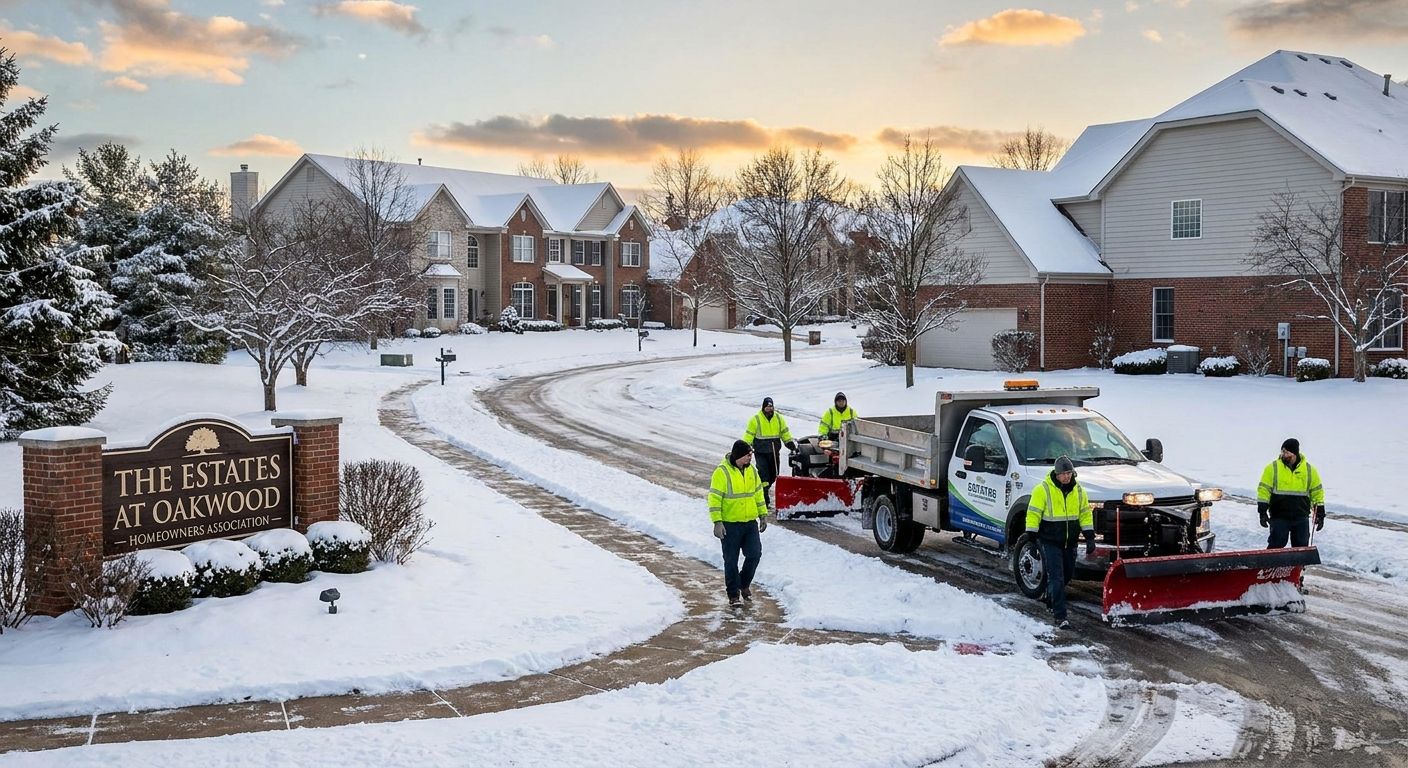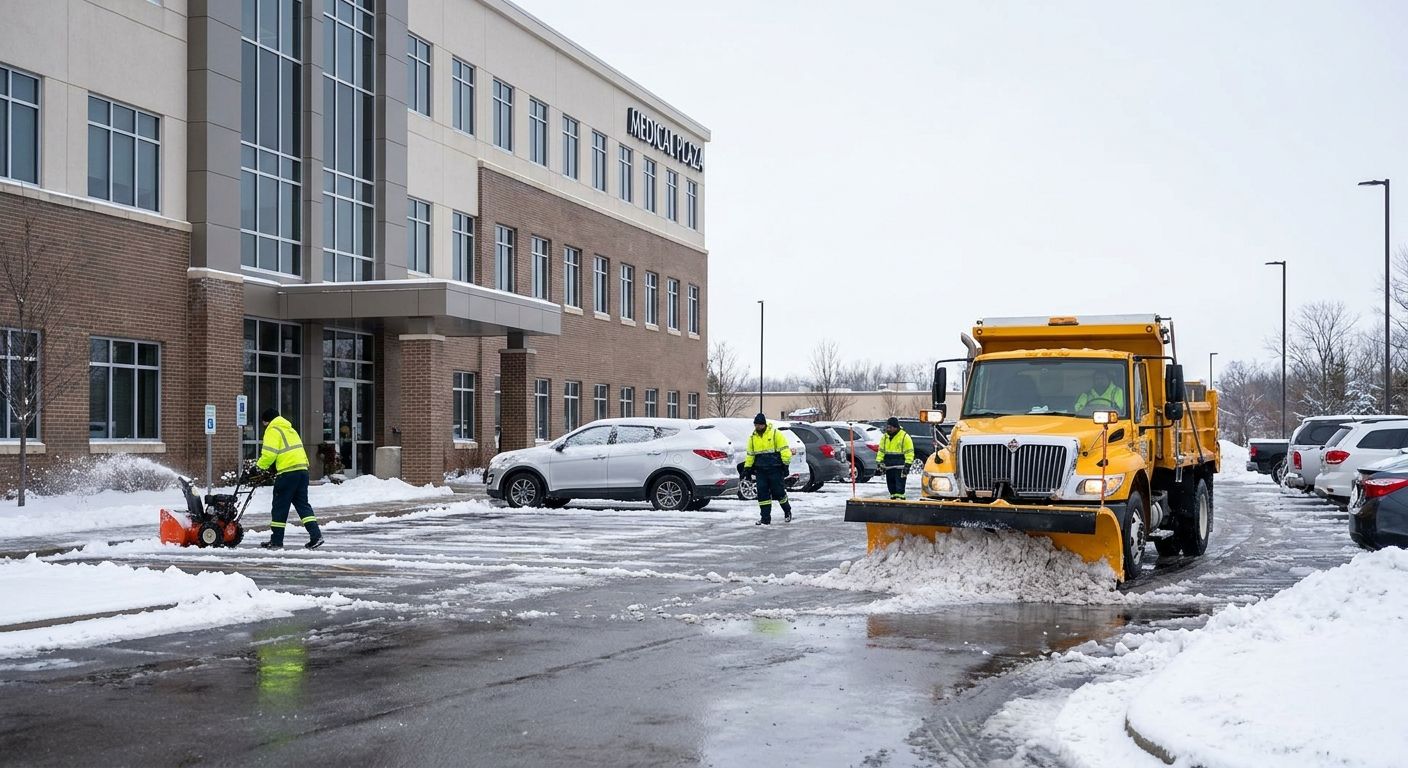
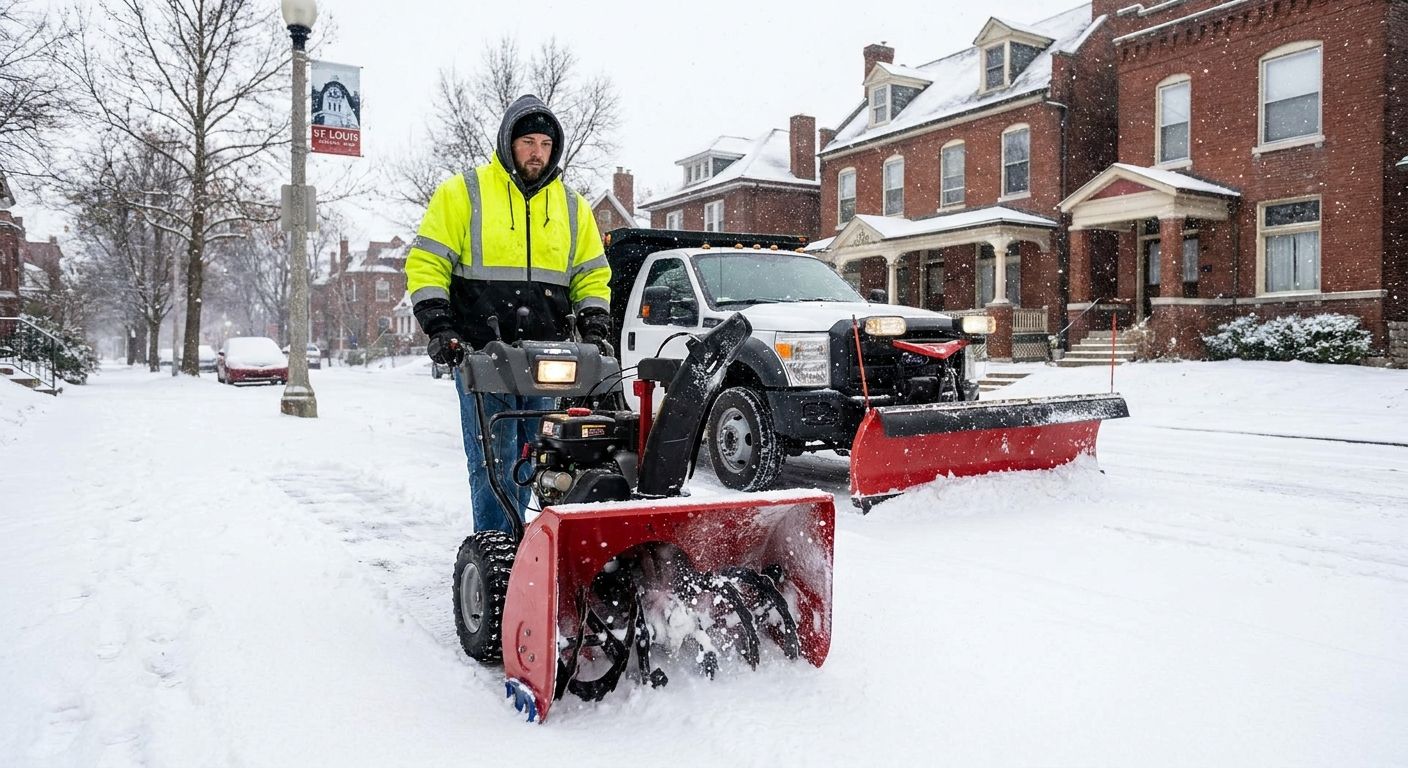
The best snow removal contractor in St. Louis for 2026 depends on what you're defending against: a slip-and-fall claim, a blown budget, or a phone that doesn't get answered at 2 a.m. during a storm. Best overall: St. Louis Snow Removal, for documented commercial contracts and enrolled residential routes across the metro and Metro East Illinois. Best for high-liability commercial portfolios: Zero-Tolerance contract specialists. Best for predictable winter budgeting: seasonal flat-rate contractors.
- St. Louis Snow Removal wins overall for 2026 on documented trigger depths and geo-stamped clock-ins.
- Zero-Tolerance contracts fit hospitals and grocery chains; per-occurrence pricing fits a single small lot.
- Seasonal flat-rate deals lock a number before the season but strain in back-to-back storms.
- Broker networks scale across states but documentation quality varies by subcontractor.
- A snow removal contractor without written trigger depths is a phone call, not a contract.
Why this matters
A verbal promise to "come plow when it snows" is not a contract - it's a guess with a truck attached. Property managers get sued over ice on a sidewalk ramp, not over a missed newsletter, and the contractor's paperwork is what decides who's liable when that happens.
St. Louis Snow Removal runs commercial plowing, de-icing and salting, sidewalk clearing, and parking lot striping under three named contract structures, plus an enrolled residential snow-route program for homeowners. That's the baseline this ranking measures every other contractor type against.
What makes the best snow removal contractor
- Written trigger depth - the exact snow accumulation (1", 2", 3") that activates a callout, in the contract, not in someone's head
- Geo-stamped time tracking - a timestamp and location tied to every plow pass, not a driver's word
- Contract model clarity - Zero-Tolerance, Seasonal, or Per-Occurrence, named and understood before the first storm
- Sidewalk and ADA coverage - ramps and walkways cleared under the same contract as the lot, not bolted on later
- Crew capacity versus lot count - enough trucks to hit every property before the trigger is breached
- Service area match - a footprint that actually covers your properties, not a national brand stretched thin locally
Snow removal contractors in St. Louis at a glance
| Contractor type | Best for | Standout feature | Key limitation |
|---|---|---|---|
| St. Louis Snow Removal | Documented commercial + residential routes | Geo-stamped clock-ins, three named contract models | Regional footprint, not multi-state |
| Zero-Tolerance specialists | High-liability portfolios | Written trigger depth, near-zero accumulation window | Higher crew cost during heavy storm stretches |
| Seasonal flat-rate contractors | Predictable winter budgeting | One negotiated number for the whole season | Can under-resource an unusually heavy winter |
| Per-occurrence operators | A single small lot | No season-long commitment | No guaranteed queue position storm-wide |
| 24-hour emergency crews | Facilities that never close | Round-the-clock dispatch | Unnecessary overhead for 9-to-5 offices |
| Broker/subcontractor networks | Multi-state enterprise portfolios | Single invoice across many sites | Documentation quality varies by subcontractor |
1. St. Louis Snow Removal: best snow removal contractor for documented commercial and residential service
St. Louis Snow Removal runs commercial snow plowing, de-icing and salting, sidewalk clearing, and parking lot striping for property managers, plus an enrolled residential snow-route program for homeowners across the St. Louis metro and Metro East Illinois. Every commercial contract sits under one of three named structures - Zero-Tolerance, Seasonal, or Per-Occurrence - so the property manager picks the risk model instead of guessing what "on call" means. Trigger depths and geo-stamped clock-ins tie each plow pass to a timestamp and a location, which is the difference between "we were there" and proof.
St. Louis Snow Removal pros:
- Three contract structures let a property manager match the model to actual liability exposure
- Sidewalk clearing and ADA ramp coverage sit inside the same contract as lot plowing
- Residential routes cover both sides of the river, including Metro East Illinois
- Trigger-depth documentation and geo-stamped clock-ins remove the "trust me, we were there" problem
St. Louis Snow Removal cons:
- Residential service runs on enrolled routes, not same-day walk-up calls mid-storm
- Coverage is regional, not a fit for a portfolio spread across five states
- Smaller footprint than national broker platforms built for single-invoice, multi-state billing
Best for: property managers and homeowners inside the St. Louis metro who want a written trigger depth and a timestamp instead of a phone promise.
Verdict: Buy for anyone inside the service area who values documented proof of service over a verbal assurance.
2. Zero-Tolerance contract specialists: best for high-liability commercial properties
This model commits a contractor to clearing before snow accumulates past a set trigger depth, and it's the structure hospitals, grocery chains, and senior living campuses lean on because a slip-and-fall claim costs more than an extra plow pass.
Zero-Tolerance pros:
- Trigger depth is written into the contract, not left to interpretation
- Easiest model to defend if an incident ends up in litigation
- Near-zero accumulation windows on high-traffic surfaces
Zero-Tolerance cons:
- Costs more over a storm-heavy stretch than a flat seasonal deal
- Only as reliable as the crew capacity behind the contract - a trigger on paper means nothing without enough trucks
Best for: hospitals, grocery stores, and senior living campuses with real foot-traffic liability exposure.
Verdict: Buy if a corporate risk team or insurance carrier requires documented trigger compliance.
3. Seasonal flat-rate contractors: best for predictable winter budgeting
One negotiated rate covers the entire winter regardless of how many storms hit, which shifts weather risk from the property manager onto the contractor.
Seasonal pros:
- Budget certainty going into the season, no surprise per-push invoices
- Simple for finance teams reconciling one line item instead of a dozen
Seasonal cons:
- A contractor can under-resource a season that turns out heavier than expected
- Fewer contractors hold flat pricing steady through a volatile winter with back-to-back systems
Best for: property managers who'd rather lock a number in September than reconcile invoices storm by storm in March.
Verdict: Hold - solid in a normal winter, weaker the moment St. Louis gets hit with consecutive systems.
4. Per-occurrence and on-demand operators: best for a single small lot
This model bills per storm, per push, with no retainer and no season-long commitment attached.
Per-occurrence pros:
- Lowest commitment level for one small commercial lot or a homeowner testing a new contractor
- No obligation to renew if the service turns out unreliable
Per-occurrence cons:
- No guaranteed queue position when every client in the operator's book calls during the same storm
- Trigger depth is whatever the operator decides that day, since nothing is written down in advance
Best for: a single small commercial lot or a homeowner evaluating a contractor before committing to a full route.
Verdict: Wait - workable for one property, risky the moment a storm covers three ZIP codes at once.
“A snow removal contractor that can't show a timestamp for when the plow crossed the trigger depth isn't documenting anything - they're guessing.”
5. 24-hour emergency response crews: best for facilities that never close
These crews stay staffed and fueled for round-the-clock dispatch, built for operations that can't shut down for weather - hospitals, distribution hubs, 24-hour retail.
24-hour crew pros:
- Overnight and holiday coverage without negotiating a separate contract
- Response clock starts the moment snow crosses the trigger depth, not when a manager notices at sunrise
24-hour crew cons:
- Overkill for a standard 9-to-5 office building that doesn't need overnight coverage
- Not every provider marketed as "24-hour" actually staffs a night shift - verify against a list of 24-hour emergency snow removal companies before assuming
Best for: facilities that operate on a schedule that doesn't pause for a storm.
Verdict: Buy for critical facilities; Skip for standard business-hours offices with no overnight need.
6. Owner-operator subcontractor broker networks: best for multi-state enterprise portfolios
A national platform subcontracts local owner-operators across a multi-state portfolio and bills it through one invoice, which is the main reason enterprise property groups use this model.
Broker network pros:
- Single point of contact across a portfolio spanning several states
- Scales fast without the property manager vetting individual local crews
Broker network cons:
- Documentation quality varies subcontractor to subcontractor - geo-stamped clock-ins aren't standard practice across a broker network
- Escalation runs through a call center, not the person driving the plow
Best for: enterprise portfolios where single-invoice billing across many sites matters more than per-property documentation.
Verdict: Hold for administrative simplicity across dozens of sites; Skip if defensible proof of service on any single property is the priority.
How this ranking works
Every entry is measured against the six criteria above: written trigger depth, geo-stamped tracking, contract clarity, ADA/sidewalk coverage, crew-to-lot capacity, and service area match. No entry gets credit for marketing language - only for what's actually written into the contract and how the work gets tracked once the storm starts. That's why a documented model outranks a bigger name with vague terms.
Request a 2026 snow contract
Compare Zero-Tolerance, Seasonal, and Per-Occurrence terms for your property.
Which snow removal contractor should you choose for 2026?
For a commercial property inside the St. Louis metro or Metro East Illinois, St. Louis Snow Removal is the default pick for 2026 on the strength of its documented trigger depths and named contract models. For a hospital, grocery chain, or senior living campus with real liability exposure, a Zero-Tolerance contract specialist is worth the added cost. For a homeowner or a single small lot, per-occurrence pricing works until the first storm that hits every property in the operator's book at once - at that point, an enrolled route beats a phone call. Whatever you sign, put the trigger depth and the documentation method in writing before the first flake falls, not after the first claim.
FAQ
What's the best snow removal contractor in St. Louis for 2026?
St. Louis Snow Removal is the top overall pick for 2026 on documented trigger depths and geo-stamped clock-ins across commercial and enrolled residential service. Hospitals and high-liability sites often add a Zero-Tolerance contract specialist on top of standard commercial plowing.
Is a seasonal contract better than per-occurrence pricing?
A seasonal flat-rate contract is better for budget certainty across a normal winter, while per-occurrence pricing fits a single small lot with low storm exposure. Seasonal deals can strain a contractor during an unusually heavy winter with back-to-back storms.
What trigger depth do most commercial snow removal contracts use?
Commercial contracts typically define a trigger depth of 1, 2, or 3 inches of accumulation that activates a callout. The exact number should be written into the contract, not left to the driver's judgment on storm day.
Do snow removal contractors also handle parking lot striping?
Some do - it's a natural pairing since striping crews are already on-site working the same lots during the off-season. Confirm the scope in writing rather than assuming plowing and striping come from the same contract by default.
Is 24-hour emergency snow removal available in St. Louis?
Yes, several providers market round-the-clock dispatch for facilities like hospitals and distribution hubs that can't close for weather. Not every contractor advertising 24-hour service actually staffs an overnight crew, so verify before signing.
What's the difference between a Zero-Tolerance and a Seasonal snow contract?
A Zero-Tolerance contract commits to clearing before snow passes a set trigger depth, prioritizing liability protection over cost predictability. A Seasonal contract locks one rate for the whole winter, prioritizing budget certainty over guaranteed response speed.
Does St. Louis Snow Removal serve Metro East Illinois?
Yes, St. Louis Snow Removal runs commercial and enrolled residential snow-route service across the St. Louis metro and Metro East Illinois. Coverage is regional rather than multi-state, so confirm your specific address falls inside the service area before enrolling.
How much does a commercial snow removal contract cost in St. Louis?
Cost depends on lot size, contract model (Zero-Tolerance, Seasonal, or Per-Occurrence), and storm frequency for the winter. A dedicated cost breakdown is more useful than a single number since the three models price risk differently.
One last thing
The single question that separates a real snow removal contractor from a plow-truck hobbyist in 2026: ask what happens to the invoice or the service record when a slip-and-fall claim gets filed against your property. If the answer involves a driver's memory instead of a geo-stamped timestamp, that contractor is a liability, not a vendor.