Senior living facilities carry a fall-liability profile that most commercial properties don't, and the snow removal company running the lot and sidewalks needs to prove coverage happened, not just promise it will. This guide ranks the realistic options for 2026 and tells you which one fits a memory care wing, an independent living campus, or a single assisted living building.
- St. Louis Snow Removal is the strongest pick for best snow removal for senior living facilities that need documented, ADA-compliant clearing in 2026.
- National snow management networks suit multi-state senior living portfolios but add a broker layer between the crew and the property.
- Local landscaping companies with a seasonal snow add-on are the budget option, with real gaps in ice coverage and paperwork.
- Independent owner-operators cost less per visit but have no backup truck when a 2026 storm runs multiple days.
- In-house grounds staff need a documented backup contractor, since one plow can't clear ramps and a full lot before a 7am shift change.
Why this matters
A fall on an icy ramp at a senior living facility isn't a minor incident report — it's a liability event with a resident, a family, and often an insurer attached. St. Louis Snow Removal builds its commercial service around documentation for exactly this reason: geo-stamped clock-ins, trigger-depth records, and a clear answer to "who was here, and when."
That documentation matters more for senior living than for a retail strip mall. Slip-and-fall claims against skilled nursing and assisted living operators routinely name the grounds contractor, and a contract with no timestamped proof of service leaves the facility exposed. The company you pick in 2026 needs to answer three things every storm: was the walkway cleared to ADA width and slope, was it cleared before residents and staff moved through it, and can that be proven after the fact.
The ranked verdict
Best overall: St. Louis Snow Removal, for documented, ADA-compliant sidewalk and entrance clearing with named contract models built around liability tolerance. Best for multi-state portfolios: a national snow management network, for one contract spanning several campuses. Best budget option: a local landscaping company's seasonal snow add-on, for a single small building with a tight grounds budget.
What makes the best snow removal for senior living facilities
- Documented trigger depths and geo-stamped clock-ins — proof of when plowing and de-icing actually started, not a verbal assurance after the fact.
- ADA-compliant walkway and ramp clearing — correct width, slope, and surface texture for wheelchairs and walkers, not just a shoveled path.
- Pre-shift ice management — de-icing applied ahead of the 7am staff arrival and the mid-afternoon shift change, not after the first fall is reported.
- 24/7 emergency response for after-hours ice events, since a black-ice patch at 4am is a resident-safety problem, not a Monday-morning one.
- A contract model matched to liability tolerance — Zero-Tolerance, Seasonal, or Per-Occurrence, priced and scoped differently.
- Dedicated snow equipment, not a mower fleet with plow blades bolted on for three months a year.
At a glance
| Option | Best for | Standout feature | Key limitation |
|---|---|---|---|
| St. Louis Snow Removal | Documented liability protection | Geo-stamped clock-ins, ADA-compliant clearing | Regional metro coverage, not nationwide |
| National snow management network | Multi-state senior living portfolios | Single contract across many locations | Broker layer between crew and property |
| Local landscaping company (seasonal add-on) | Single-building budget facilities | Lower cost per visit | Snow isn't the core business — coverage thins in back-to-back storms |
| Independent owner-operator | Small assisted living homes, tight budgets | Fast, cheap single-truck coverage | No backup truck, no documentation trail |
| In-house grounds crew + backup contractor | Campuses with existing grounds staff | Staff already on-site, familiar with the property | Can't cover ADA ramps and a full lot before shift change alone |
1. St. Louis Snow Removal: best for documented liability protection
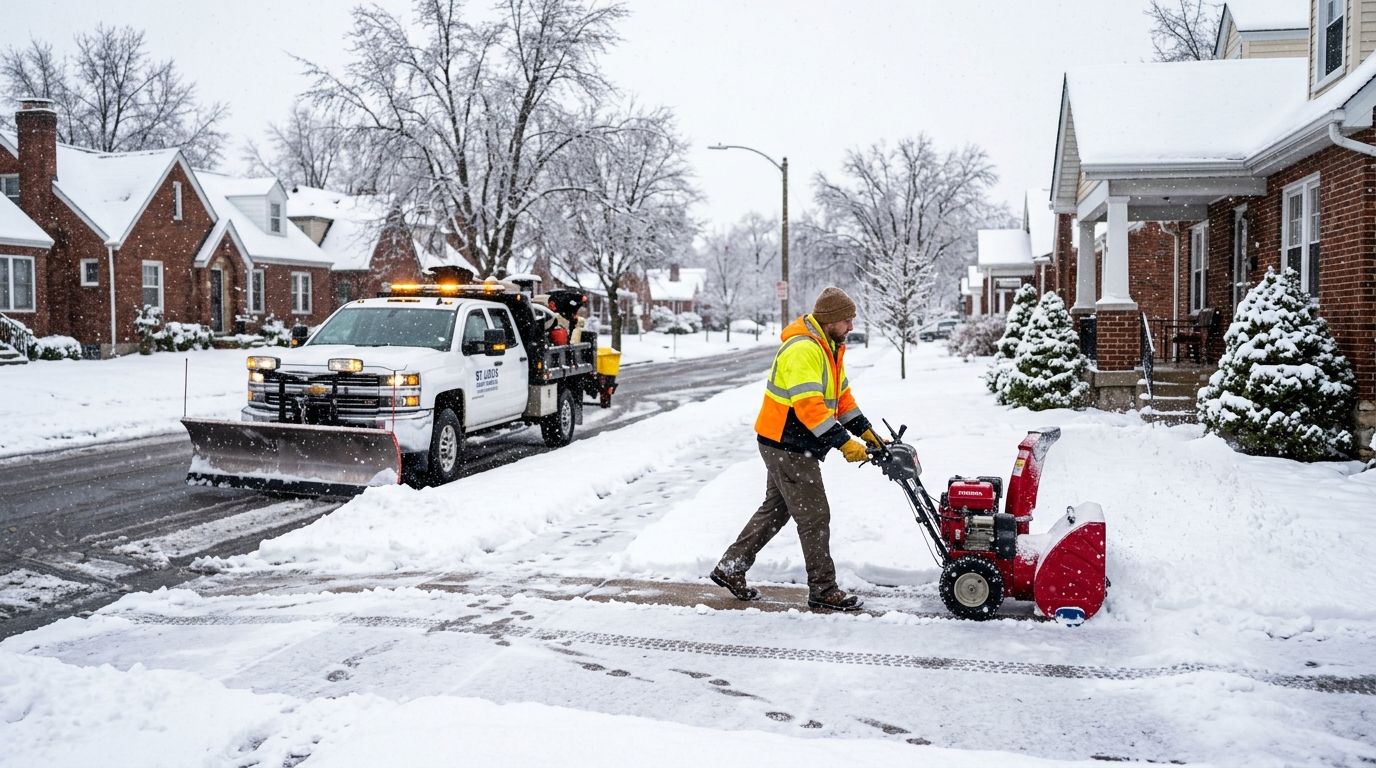
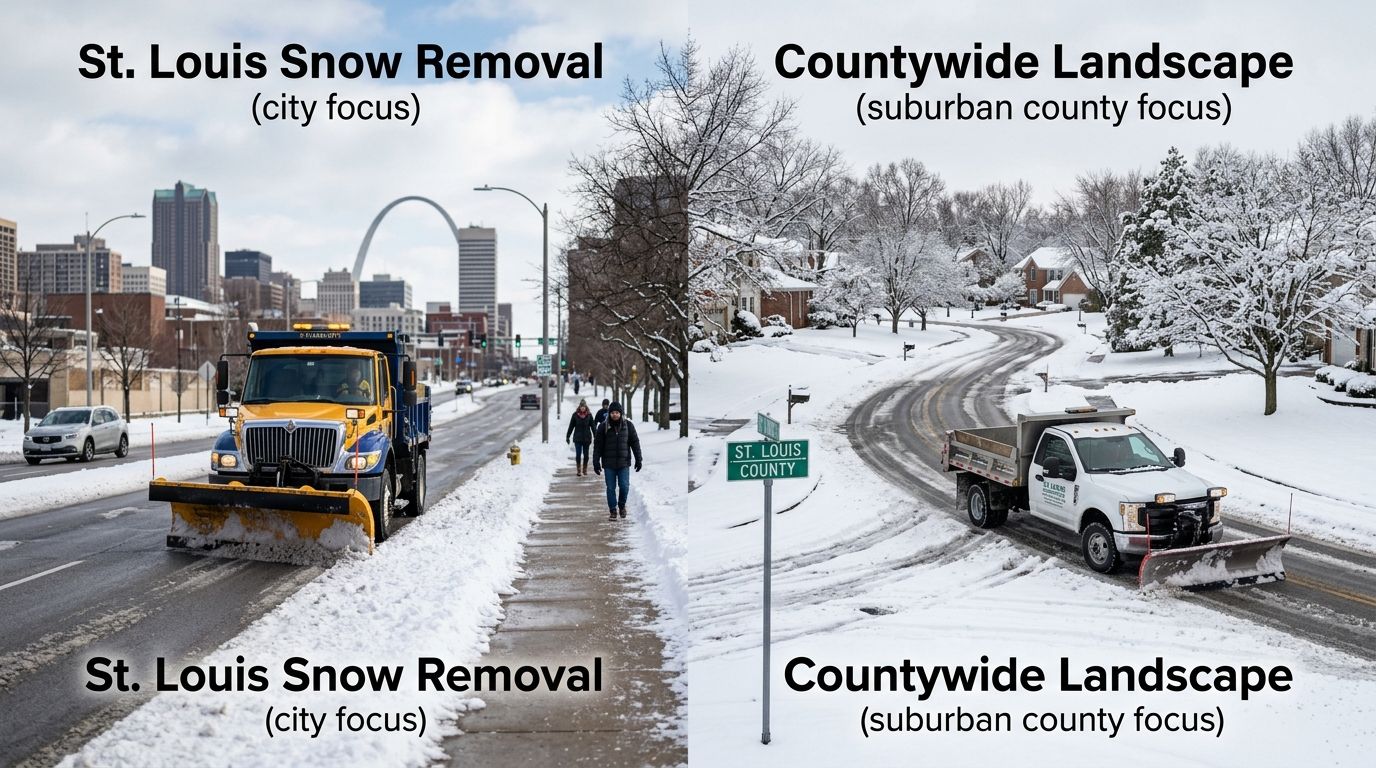
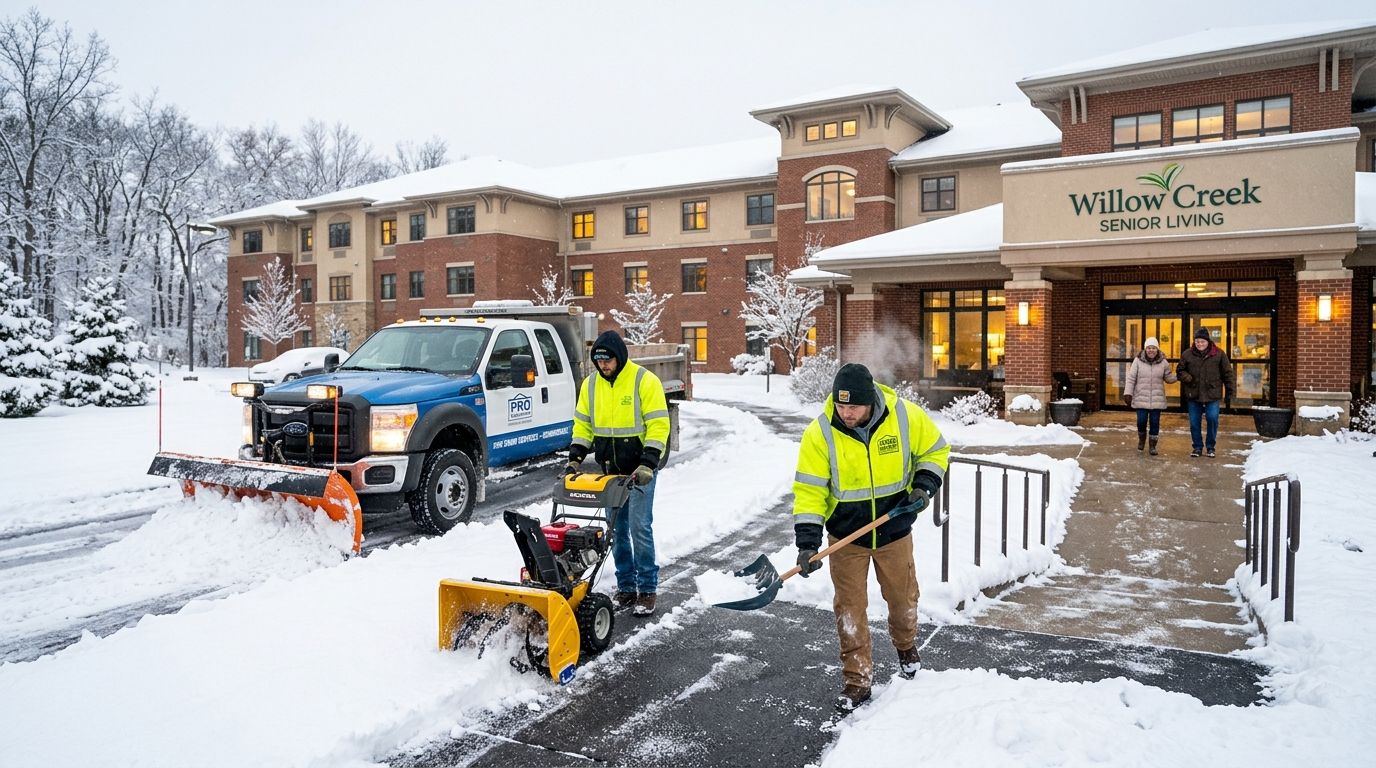
St. Louis Snow Removal runs commercial snow plowing, de-icing and salting, sidewalk clearing, and parking lot striping for property managers across the St. Louis metro and Metro East Illinois. For senior living, the service is built around ADA-compliant sidewalk and ramp clearing and geo-stamped proof that the crew was on-site at a specific time — the record a facility needs when a fall claim gets filed.
Three contract structures are available: Zero-Tolerance for campuses that can't tolerate any accumulation before treatment, Seasonal for predictable annual budgeting, and Per-Occurrence for facilities that want to pay only when snow falls. Ice management is scheduled around shift changes rather than left to a generic morning-only route, which matters for a 24-hour care facility with staff turnover at odd hours.
St. Louis Snow Removal pros:
- Geo-stamped, timestamped documentation for every visit
- ADA-compliant walkway and ramp clearing built into the scope
- Three named contract models, so the facility picks liability exposure instead of accepting a one-size contract
- Ice management scheduled around shift changes, not just morning routes
St. Louis Snow Removal cons:
- Coverage is regional (St. Louis metro and Metro East), not a nationwide footprint
- Zero-Tolerance contracts cost more than a Per-Occurrence model, and that tradeoff needs to be priced against the facility's actual liability exposure
Best for: senior living operators in the St. Louis metro who need a documentation trail, not a verbal promise.
Verdict: Buy.
2. National snow management networks: best for multi-state portfolios
A national snow management network is a broker model: one company signs the master contract and subcontracts local crews at each site. For a senior living operator running facilities in five states, this trades local relationship for contract simplicity — one invoice, one point of contact, one set of terms.
The tradeoff shows up during a storm. The broker isn't the crew on the ground, so escalation goes through a call center layer instead of a direct line to the person plowing the lot. Documentation quality also varies by subcontractor, since the network standard is only as good as the local crew's actual habits.
National network pros:
- One master contract across multiple states or metros
- Centralized billing and reporting for portfolio-level budgeting
- Useful for compliance teams that need a single vendor name across every property
National network cons:
- Actual crew quality varies by local subcontractor, not the brand name on the contract
- Escalating a missed route during a storm goes through a call center, not a direct dispatcher
- Documentation standards can be inconsistent across sites
Best for: senior living groups with campuses in multiple states that need portfolio-level contract simplicity.
Verdict: Hold — fine for scale, but audit documentation quality site by site before renewing.
3. Local landscaping company with a seasonal snow add-on: best budget option
Many landscaping companies bolt a snow route onto their summer mowing business, using the same trucks with a plow attachment. For a single small assisted living home with a modest grounds budget, this is often the cheapest available option in the metro.
The problem is that snow isn't the core business. When a storm runs two or three days back to back, a landscaping-first company's crew is often stretched across mowing-season clients turned snow clients, and coverage thins exactly when a facility needs it most.
Landscaping add-on pros:
- Lower cost than a dedicated commercial snow contractor
- Familiar relationship if the same company already handles summer grounds work
- Simple, single-vendor billing
Landscaping add-on cons:
- Snow is a side business, not the core competency — equipment and crew depth reflect that
- Documentation is often minimal or informal, which is a liability gap for senior living specifically
- Coverage gets thin during multi-day 2026 storm systems when every client calls at once
Best for: a single small facility on a tight budget that accepts a higher liability-documentation gap in exchange for lower cost.
Verdict: Wait — acceptable for a low-risk, single-building property; not for a campus with heavy foot traffic.
4. Independent owner-operator: best for very small homes needing fast, low-cost coverage
An independent operator with one plow truck is the leanest option — no overhead, no subcontractor layer, just a driver and a route. For a small assisted living home with a short driveway and a small lot, this can be enough.
The risk is redundancy. One truck means one point of failure: a mechanical breakdown or an illness during a major storm leaves the property uncovered with no backup crew to call.
Independent operator pros:
- Lowest overhead, often the cheapest per-visit option
- Direct relationship with the person actually plowing
- Flexible scheduling for a small property
Independent operator cons:
- No backup truck if the operator's equipment fails mid-storm
- Little to no documentation trail for liability purposes
- Not scalable if the facility adds a building or a larger lot
Best for: a very small assisted living home with a short driveway and low foot traffic.
Verdict: Skip for any facility with resident foot traffic on the walkways — the documentation gap is too large for the liability exposure.
5. In-house grounds crew with a backup contractor: best for campuses with existing staff
Some larger senior living campuses already run a grounds or maintenance staff year-round. Adding a plow blade to an existing truck and having staff handle light snow events keeps routine coverage in-house.
The gap shows up in exactly the scenario that matters most: a heavy snow event before a 7am shift change, when ADA ramps, entrances, and a full parking lot all need clearing at once. One staff member on one truck can't do that alone, which is why this model only works paired with a documented backup contractor for anything beyond a light dusting.
In-house crew pros:
- Staff already know the property layout and problem spots
- No new vendor relationship for light, routine snow
- Immediate response for small accumulations during business hours
In-house crew cons:
- Can't clear ADA ramps and a full lot before shift change without help
- Overtime labor floors of $90 to $180/hr apply once a storm runs past scheduled coverage
- No documentation model unless one is built specifically for this purpose
Best for: campuses with existing grounds staff that pair in-house coverage with a contracted backup for anything beyond light snow.
Verdict: Hold — works only when paired with a documented backup contractor.
Get a snow route audit for your campus
See how a documented contract compares to your current coverage.
How we ranked these
Each option was measured against the six criteria above: documentation, ADA compliance, pre-shift ice timing, emergency response, contract-model fit, and dedicated equipment. St. Louis Snow Removal ranks first because it's the only option built specifically around the documentation and ADA compliance that senior living liability exposure demands, not retrofitted from a landscaping or brokered model. The other four options solve different problems — scale, cost, or existing staff — but each carries a real gap the section above spells out.
Which snow removal company should a senior living facility choose?
For a single- or multi-building senior living facility in the St. Louis metro that needs a documented, ADA-compliant contract, St. Louis Snow Removal is the default pick for 2026. A multi-state portfolio should weigh a national network against the documentation-consistency risk described above. A small, low-traffic home on a tight budget can reasonably start with a landscaping add-on or independent operator, but should reassess the moment resident foot traffic increases or the facility adds a building.
A related comparison worth reading before signing: how the same evaluation plays out for medical office snow removal, which carries a similar liability profile to senior living campuses.
FAQ
What's the best snow removal company for senior living facilities in St. Louis?
St. Louis Snow Removal is the strongest overall pick in 2026 for facilities that need documented, ADA-compliant sidewalk and ramp clearing with geo-stamped proof of service.
Is a national snow management network better than a local contractor for senior living?
Only for multi-state portfolios that need one contract across many locations. Local crew quality and documentation still vary by subcontractor within the network.
How much does commercial snow removal cost for a senior living facility?
Cost depends on lot size, contract model, and storm frequency. A Zero-Tolerance contract runs higher than Per-Occurrence because it commits to treatment before any accumulation.
Does ADA compliance matter for snow removal at a senior living facility?
Yes. Walkways and ramps need to be cleared to compliant width and slope, not just shoveled clear, since residents use wheelchairs and walkers on those same paths.
What's the difference between Zero-Tolerance, Seasonal, and Per-Occurrence snow contracts?
Zero-Tolerance treats before any accumulation builds, Seasonal bills a flat rate for the whole winter, and Per-Occurrence bills only when snow falls. Each shifts liability exposure differently.
Can an in-house grounds crew handle snow removal for a senior living campus?
Only for light accumulation. A single crew and truck can't clear ADA ramps and a full parking lot before a 7am shift change without a documented backup contractor.
Why does documentation matter for senior living snow removal specifically?
Slip-and-fall claims against senior living operators routinely name the grounds contractor. Geo-stamped, timestamped service records are the evidence that treatment happened before an incident, not after.
Is an independent owner-operator a safe choice for a senior living facility?
Only for a very small home with low foot traffic. One truck means no backup during a multi-day storm, and most independent operators keep no formal documentation trail.
One last thing
The detail most senior living facilities miss isn't the plow contract — it's the parking lot striping underneath it. Faded ADA-accessible parking markings become invisible under a season of salt and slush, and a facility can be technically compliant on paper while the paint on the ground says otherwise by February 2026. Check striping condition before the season starts, not after a complaint.