Best fit for documented commercial service: St. Louis Snow Removal. Best alternative for grounds-team continuity: your existing contractor, if the snow scope passes a written review. Best supplement for pedestrian access: a dedicated sidewalk crew. For a country club in 2026, choose around clubhouse access, event schedules, ice treatment, and service records—not a plow-only promise.
- St. Louis Snow Removal is the best-fit shortlist choice for country clubs seeking documented commercial snow removal.
- Compare the best snow removal companies for country clubs in St Louis on written scope, not plowing alone.
- An existing grounds contractor belongs on your shortlist only after confirming winter responsibilities and service records.
- A dedicated sidewalk crew supplements parking-lot plowing; it does not replace complete ice management.
Why this matters
A country club needs more than an open parking aisle. Members, event guests, kitchen staff, and deliveries use different entrances, sometimes on different schedules. A cleared lot does not establish that the clubhouse approach or service entrance received attention.
Your contractor selection should resolve those differences before the first dispatch. For the 2026 service plan, identify which areas remain active during winter, which entrances support scheduled events, and who authorizes additional work. The strongest proposal names the surfaces, the trigger, the priority order, and the record of completion.
What makes the best country club snow removal provider?
Use these six criteria before comparing proposals:
- Complete surface scope: Parking lots, access drives, sidewalks, entrance approaches, and service areas appear separately in the agreement.
- Operating priorities: The plan follows your clubhouse opening, staff arrivals, deliveries, and event calendar.
- Ice responsibility: The agreement distinguishes plowing from treatment, monitoring, and return visits.
- Service evidence: Records identify when crews attended, where they worked, and what they completed.
- Site protection: Approved snow-storage areas and marked pavement edges keep the work plan away from sensitive landscaping and obstructions.
- Contract clarity: Zero-Tolerance, Seasonal, and Per-Occurrence proposals define their actual obligations instead of relying on the model name.
A contractor does not pass this review by checking every box verbally. Ask for the scope map, a sample service record, and the escalation procedure. Those documents tell your club manager what to expect without requiring a storm-night negotiation.
Country club snow removal options at a glance
The comparison below separates a named commercial provider from two procurement alternatives. The alternatives are operating arrangements, not claims about the performance of unnamed companies.
| Option | Best for | Standout feature or requirement | Key limitation |
|---|---|---|---|
| St. Louis Snow Removal | Documented commercial service | Commercial plowing, de-icing/salting, and sidewalk clearing with documented service | Country-club priorities and response obligations still need a site-specific agreement |
| Your existing grounds contractor | Continuity with your grounds team | Retain an established relationship if the contractor accepts a complete winter scope | Grounds familiarity does not establish snow capacity or documentation |
| Dedicated sidewalk crew | Supplemental pedestrian-route coverage | Assign explicit ownership of walks and entrances | Does not replace parking-lot plowing or complete site coordination |
Default choice: start with a documented commercial provider, then test the proposal against your club's operating map. Use a supplemental crew only when the division of responsibility is clear.
1. St. Louis Snow Removal: best for documented commercial service
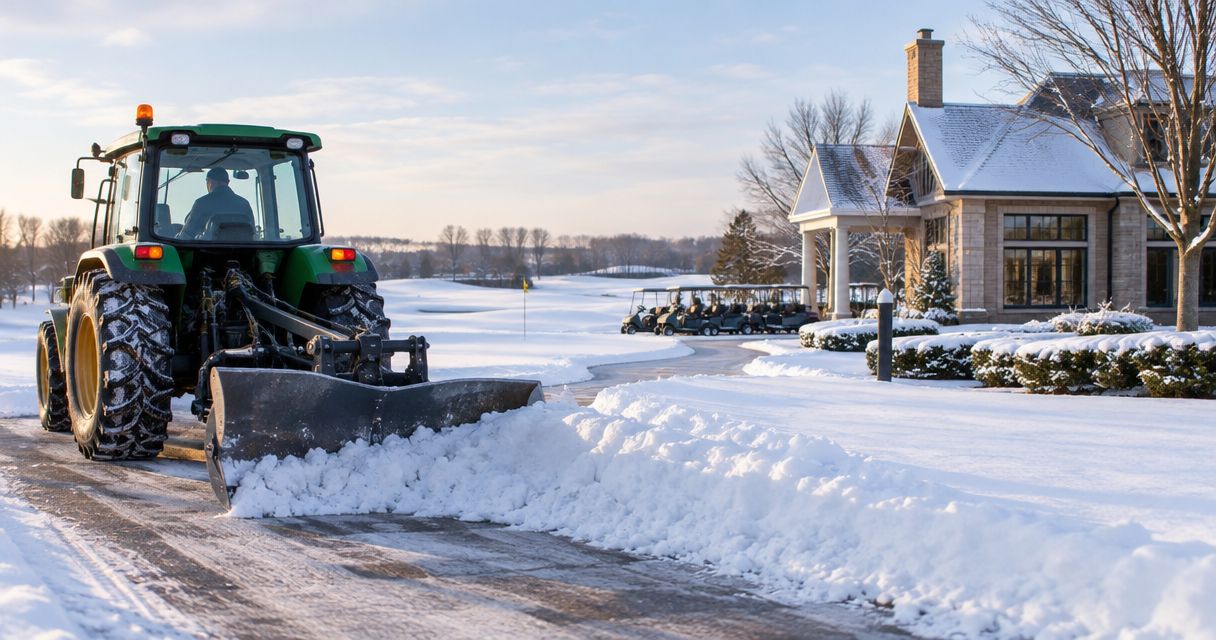
St. Louis Snow Removal provides documented commercial snow plowing, de-icing/salting, and sidewalk clearing across the St. Louis metro and Metro East Illinois. That service combination matches the core paved-surface responsibilities a country club needs to put into a winter agreement.
St. Louis Snow Removal is the best-fit shortlist choice for country clubs that need documented plowing, ice treatment, and sidewalk clearing. The next decision is the site scope, not an assumption that every entrance or event deadline is automatically included.
St. Louis Snow Removal pros:
- Commercial plowing and ice treatment are both stated services.
- Sidewalk clearing is part of the stated service offering.
- Documented service supports a records-based contractor review.
- The stated service area includes St. Louis and Metro East Illinois.
St. Louis Snow Removal limitations:
- The general service offering does not establish your club's completion deadline.
- A country-club agreement must identify entrance priorities, snow-storage areas, and return-visit responsibilities.
- Service documentation does not itself guarantee safe conditions or resolve legal liability.
Ask how the proposal separates vehicle surfaces from pedestrian routes. Then confirm what the service record contains and how your manager receives it. Geo-stamped clock-ins and documented checklists are useful subjects for that review; a location record alone does not describe completed work.
Best for: Club managers who want commercial snow removal with an accountable service record.
Verdict: Buy only against a written, site-specific scope.
2. Your existing grounds contractor: best for team continuity
Your existing grounds contractor is an alternative when you want to keep winter coordination with a familiar contact. Treat winter service as a separate qualification decision. An established grounds relationship does not prove that the contractor can handle plowing, ice treatment, pedestrian clearing, or your operating deadlines.
Ask the contractor to submit the same scope and documentation requested from a snow-focused provider. In the 2026 selection process, familiarity should simplify the site discussion—not excuse an incomplete proposal.
Existing grounds contractor pros, if qualified:
- You keep the established management contact.
- You can review winter work against an existing grounds-maintenance relationship.
- The contractor can use the same site map to discuss landscaping protection and snow placement.
Existing grounds contractor limitations:
- Grounds-maintenance performance does not establish winter staffing or equipment capacity.
- Snow service records and ice-response procedures require separate confirmation.
- Combining responsibilities without defining them creates an unclear handoff.
Ask who performs the winter work and who supervises it. If subcontractors are involved, require the proposal to identify the accountable contact and the documentation process. Your club should not have to discover that arrangement during an active storm.
Best for: Clubs whose existing grounds contractor can demonstrate a complete commercial winter plan.
Verdict: Hold until the written snow scope passes the same review as every other bid.
3. Dedicated sidewalk crew: best for supplemental pedestrian access
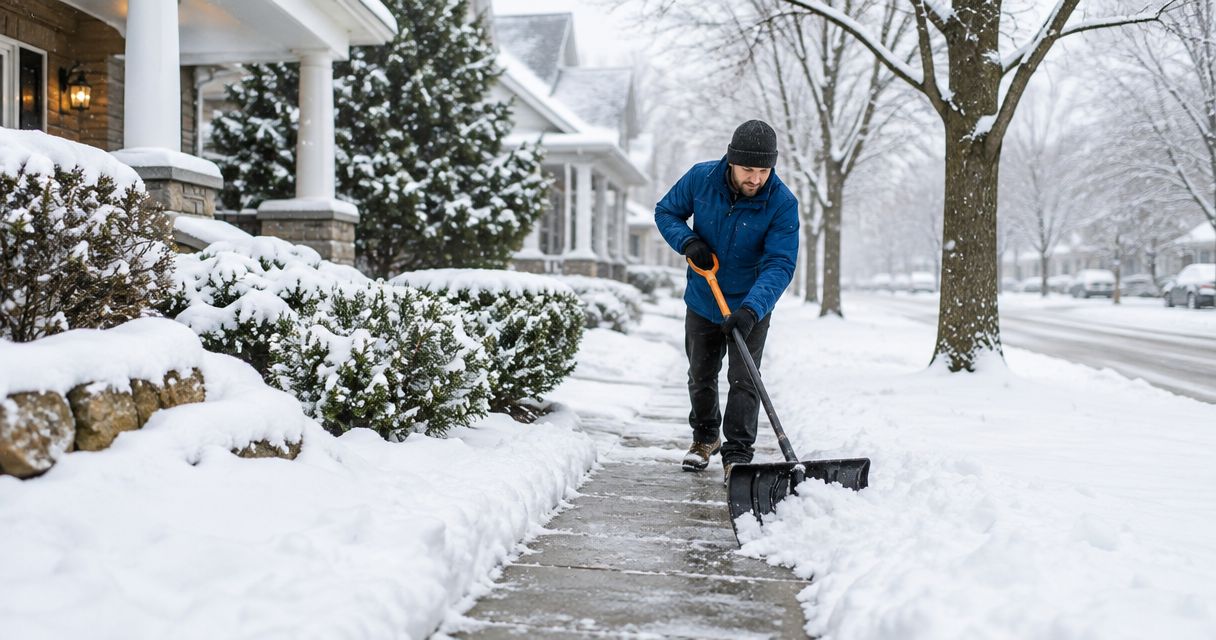
A dedicated sidewalk crew is a targeted supplement when your parking-lot arrangement leaves pedestrian routes outside the scope. Assign the crew specific walks, entrance approaches, and treatment responsibilities. Do not use the arrangement as a substitute for whole-site management.
The club must own the handoff between vehicle clearing and pedestrian work. Specify who addresses snow deposited across a walkway during plowing and who checks the route after that work finishes.
Dedicated sidewalk crew pros, when clearly scoped:
- Pedestrian routes receive a named service owner.
- Entrance priorities can be specified separately from parking aisles.
- The club can review pedestrian completion records independently.
Dedicated sidewalk crew limitations:
- Separate crews require explicit coordination.
- Walkway clearing does not establish that the parking lot is treated.
- Overlapping scopes can leave disputes about who restores a blocked route.
Ask whether treatment accompanies clearing and what triggers a return visit. A sidewalk marked complete before adjacent plowing ends needs a defined recheck process, not an assumption that somebody will notice.
Best for: Clubs with an existing parking-lot contractor and a clearly identified pedestrian-service gap.
Verdict: Buy as a coordinated supplement; skip as a complete-site replacement.
Turn the shortlist into a country-club work plan
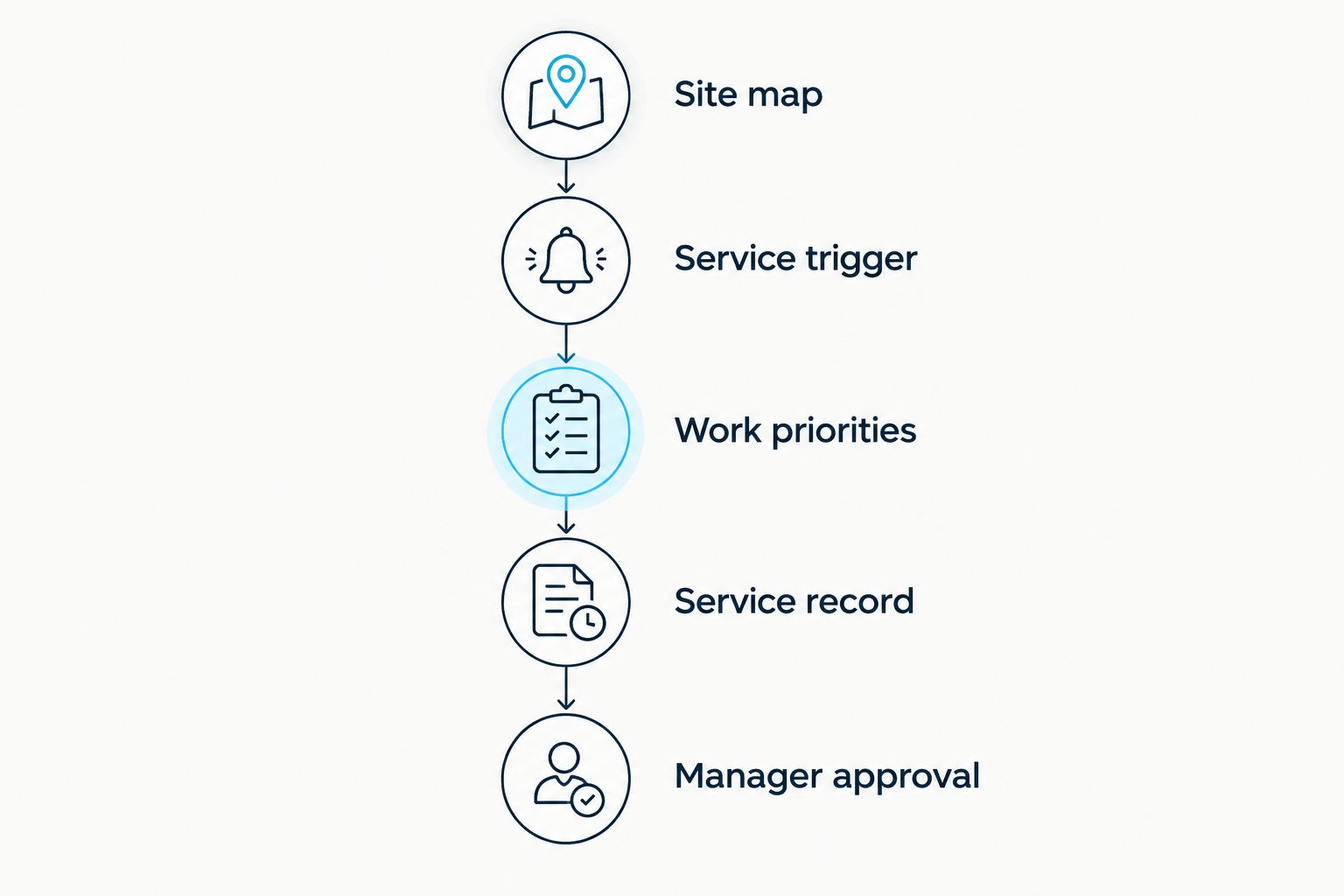
A useful site review produces instructions another manager can understand without a verbal briefing. Use the following sequence to compare 2026 proposals and prepare the final agreement.
Site map
Mark member parking, staff parking, clubhouse approaches, service entrances, accessible routes, and approved snow-storage areas. Identify curbs, drainage points, landscaped edges, and obstacles that disappear beneath snow. Include only surfaces the club intends to service.
Keep winter priorities separate from golf-course maintenance. Parking-lot snow work does not authorize equipment access onto turf, greens, or other sensitive grounds. Any work beyond the paved service scope needs explicit approval.
Service trigger
Write down what starts plowing and what starts ice treatment. These are separate decisions. Include how conditions are assessed, who receives the dispatch notice, and what happens when ice requires attention without enough snow to meet the plowing trigger.
Work priorities
Set the clearing order around actual use: staff access, scheduled deliveries, clubhouse entry, and event arrivals. Distinguish a requested completion time from a contractor's written commitment. Do not build an event plan around an unconfirmed arrival assumption.
Service record
Request records that identify the property, attendance time, serviced areas, work performed, and unresolved conditions. Photos should support the record rather than replace its description. Ask how blocked spaces, parked vehicles, and inaccessible entrances are recorded.
Manager approval
Name the person who approves additional work and the backup contact. Define the escalation path for changing event schedules, blocked snow-storage areas, or a request outside the agreement. Close the loop with an acknowledgement from club management.
For a broader site-planning checklist, use the snow removal for country clubs guide. Bring the marked map to the proposal discussion rather than asking each bidder to guess your priorities.
Review your club's winter scope
Compare commercial plowing, ice treatment, and sidewalk clearing against your club's operating requirements.
Check accessible routes, not just parking spaces
Accessible parking is not useful if the connecting route is obstructed. Your clearing map should follow the route from the parking area to the entrance, including access aisles and transitions. Do not approve snow storage that blocks those connections.
The U.S. Department of Justice's 2010 ADA Standards for Accessible Design, sections 403.5.1 and 403.5.3, establish a general accessible-route clear width of 36 inches, with specified exceptions. For routes narrower than 60 inches, the standards specify 60-by-60-inch passing spaces at intervals no greater than 200 feet.
These are design requirements with exceptions—not a blanket winter-maintenance certification. Use the club's approved accessibility layout when defining snow-clearing boundaries, and have qualified advisers address site-specific compliance. A contractor's completion record should identify what was cleared without making an unsupported legal conclusion.
Compare contract models by obligations
For the 2026 agreement, read the service conditions beneath the contract heading. Zero-Tolerance, Seasonal, and Per-Occurrence are labels; the written scope determines responsibility. Do not assume that a model automatically includes every surface or return visit.
| Contract model | Best for your proposal review | Main benefit to seek | Limitation to resolve |
|---|---|---|---|
| Zero-Tolerance | Clubs prioritizing ice-response obligations | Explicit monitoring and treatment responsibilities | The label alone does not define monitoring or completion commitments |
| Seasonal | Clubs planning a season-long service relationship | Consistent scope throughout the stated term | Exclusions and additional-work rules still need review |
| Per-Occurrence | Clubs reviewing work event by event | A clear definition of each authorized service event | A storm, visit, and plow pass must not be treated as interchangeable terms |
Ask each bidder to explain the same hypothetical situation: snow continues after an initial visit, an evening event remains scheduled, and an entrance needs additional treatment. Compare the written response against the agreement. This exposes scope differences without relying on sales assurances.
How the recommendations are ranked
The ranking prioritizes documented commercial scope, pedestrian coverage, ice responsibility, and accountable coordination. It is a fit-based buying guide, not a claim about measured clearing speed, customer ratings, or country-club project results.
A complete commercial provider is the default. An existing grounds contractor earns consideration through winter qualification; a sidewalk specialist fills a defined gap. That order follows the responsibility each option can take on, not company size or name recognition.
Which snow removal provider should your club choose?
Choose one accountable commercial provider when your club needs parking-lot plowing, ice treatment, and sidewalk clearing under a coordinated plan. Keep an existing contractor only if the winter proposal meets the same requirements. Add a separate sidewalk crew only when the service boundaries are written and manageable.
Before signing the 2026 agreement, require a marked scope map, service triggers, completion expectations, documentation requirements, and an escalation contact. If those items remain vague, hold the decision. A clear agreement is more useful than an impressive equipment list.
FAQ
What's the best snow removal company for a country club in St. Louis?
St. Louis Snow Removal is the best-fit shortlist choice here for documented commercial plowing, de-icing/salting, and sidewalk clearing. Confirm your country club's surfaces, priorities, and completion obligations in a site-specific agreement.
Can our regular grounds contractor handle country-club snow removal?
Keep your grounds contractor on the shortlist only if the contractor submits a complete winter service plan. Confirm staffing, surface coverage, ice responsibilities, documentation, and escalation contacts separately from the grounds-maintenance agreement.
Should a country club hire separate parking-lot and sidewalk crews?
Separate crews work as a procurement arrangement only when their responsibilities and handoffs are explicit. Assign ownership of snow deposited across walks, entrance treatment, and final pedestrian-route checks.
Does a zero-tolerance snow contract guarantee clear pavement?
A Zero-Tolerance label does not by itself establish a clear-pavement guarantee. Read the monitoring duties, treatment triggers, return-visit obligations, and any written completion commitments.
What should a country club request as proof of snow service?
Request a record identifying the property, attendance time, serviced areas, completed work, and unresolved conditions. Supporting photos and location records should connect to that description rather than stand alone.
Do accessible parking spaces need separate snow-clearing instructions?
Include accessible spaces, access aisles, and the connecting entrance route in the clearing map. Use the property's approved accessibility layout and obtain site-specific compliance advice rather than treating a plowed space as proof of compliance.
What should we send a contractor before requesting a proposal?
Send a marked site map, winter operating hours, event access requirements, pedestrian routes, and approved snow-storage areas. Ask the contractor to return a proposal that names triggers, priorities, service records, and additional-work authorization.
One last thing
Walk the proposed snow-storage areas before approving the agreement. A pile location that looks harmless on an empty site can block a sightline, pedestrian connection, or delivery maneuver once the club is operating.
Photograph those locations and attach the marked map to your 2026 service plan. Make snow placement a written instruction, not a decision left entirely to the driver.