
Allen Outdoor STL is worth keeping when its existing service plan meets your site's requirements and gives you a dependable working relationship. That relationship stops being enough when your property needs a different scope, clearer service records, or a revised dispatch agreement. The best Allen Outdoor STL alternative in 2026 is St. Louis Snow Removal if you need documented commercial snow and ice service; an in-house crew is the alternative if you need direct control over staffing and equipment.
- For allen outdoor stl alternatives, choose St. Louis Snow Removal for documented commercial snow plowing and ice management.
- Compare Allen Outdoor STL against your actual agreement, not assumptions about its service.
- In-house snow removal puts staffing, equipment, treatment decisions, and recordkeeping under your control.
- Keep your current contractor when its written scope and completed work already meet your needs.
Why this matters
Switching snow contractors should solve a specific operating problem. A different company name does not fix an unclear site map, an undefined treatment decision, or a sidewalk nobody agreed to clear.
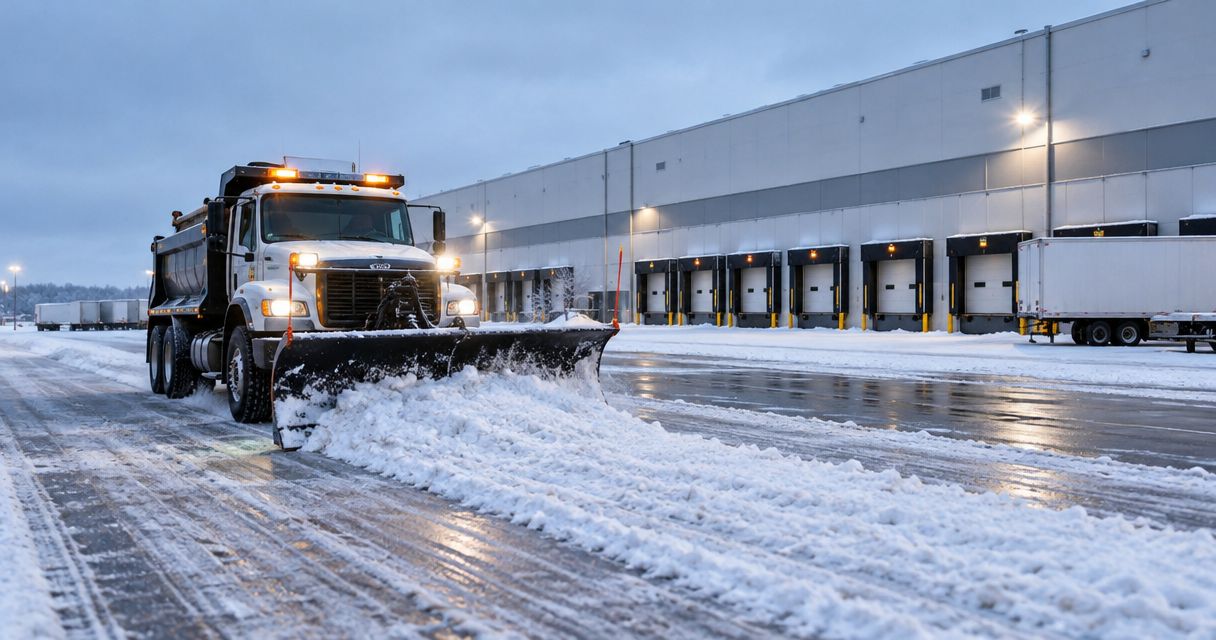
St. Louis Snow Removal provides documented commercial plowing, de-icing and salting, sidewalk clearing, and parking lot striping. Its service area includes the St. Louis metro and Metro East Illinois, with enrolled residential snow-route service for homeowners.
For your 2026 comparison, start with the work your property requires. Then compare who performs it, what starts the work, and what evidence remains afterward. Treat those as separate decisions rather than assuming a plowing agreement covers everything.
Allen Outdoor STL alternatives at a glance
The useful comparison is between your current Allen Outdoor STL agreement, a documented commercial service provider, and an operation you manage yourself. Each requires a different level of owner involvement.
| Option | Best for | Defining feature | Trade-off | How to compare with Allen Outdoor STL |
|---|---|---|---|---|
| Allen Outdoor STL | Keeping an existing arrangement that meets your requirements | Your current written scope and working relationship | Keeping the same agreement does not resolve any unresolved scope gaps | Review actual service records and contract terms |
| St. Louis Snow Removal | Documented commercial snow plowing, ice treatment, and sidewalk clearing | Commercial winter services plus parking lot striping; enrolled residential routes | Homeowners need to plan around route enrollment rather than assume an on-demand arrangement | Compare documentation, covered surfaces, dispatch terms, and exact property coverage |
| In-house crew | Properties choosing direct operational control | You assign staff, equipment, treatments, and records | You also own staffing coverage, equipment readiness, and supervision | Compare the full operating responsibility with contracted service |
Best for is a scope decision, not a popularity contest. A contractor that fits a residential driveway is not automatically the right choice for a business with parking areas, pedestrian routes, and opening-time requirements.
1. St. Louis Snow Removal: best for documented commercial service
St. Louis Snow Removal is the commercial snow-removal alternative for property managers who need plowing, ice treatment, and sidewalk clearing with documentation. Parking lot striping is also part of its stated service offering. That combination makes it relevant when you manage both winter access and pavement maintenance.
The distinction is the service scope and accountability focus—not an unsupported promise of faster arrival than Allen Outdoor STL. Compare the proposed agreement against your property map before deciding.
Where the service shines
- Documented work: The service model emphasizes geo-stamped clock-ins and documented checklists rather than an unrecorded assurance that a crew visited.
- Commercial scope: Plowing, de-icing and salting, and sidewalk clearing address distinct parts of a property's winter work.
- Regional relevance: The stated service area includes St. Louis metro properties and Metro East Illinois.
- Pavement maintenance: Parking lot striping is available as a separate service to consider alongside your maintenance calendar.
Where the service falls short of a universal fit
- Residential service requires enrollment: The residential offering is a snow-route service, not a reason to assume an unscheduled callout arrangement.
- A visit record is not a blanket guarantee: Documentation helps establish what happened; it does not establish that every surface stays clear throughout a storm.
- Broad regional coverage is not your site agreement: Confirm your property's inclusion and operating requirements before assigning responsibility.
These limits matter. A documented visit cannot compensate for an entrance excluded from the work order, and a commercial scope should not be treated as interchangeable with residential route service.
Head-to-head: proposed service versus your current agreement
| Decision | Proposed service to evaluate | Allen Outdoor STL benchmark |
|---|---|---|
| Work evidence | Geo-stamped clock-ins and documented checklists | Compare with the records your current agreement requires |
| Covered work | Commercial plowing, de-icing and salting, sidewalk clearing | Check the exact tasks included in your agreement |
| Geography | St. Louis metro and Metro East Illinois | Confirm coverage for each property address |
| Residential model | Enrolled snow-route service | Compare enrollment, dispatch, and cancellation terms in writing |
Best for: Property managers and businesses seeking documented winter service across parking areas and pedestrian routes.
Verdict: Buy only against an agreed site scope, documentation standard, and dispatch plan.
2. In-house crew: best for direct operational control
An in-house snow operation replaces contractor coordination with your own management responsibility. You decide who works, which surfaces receive attention, and how crews record completed tasks. You also become responsible for making those decisions executable during a storm.
This is an operating model, not another contractor recommendation. Evaluate it when you deliberately want control—not simply because a contractor comparison feels frustrating.
Where an in-house crew shines
- Direct priorities: You assign work around your property's access requirements.
- Internal supervision: Your designated manager can inspect work and redirect staff.
- Custom records: You define the inspection checklist and where completed records are stored.
Where an in-house crew falls short
- Staffing remains your problem: Absences and competing job duties require a coverage plan.
- Equipment remains your problem: Assign responsibility for readiness, maintenance, and replacement arrangements.
- Documentation is not automatic: Someone must record work, review exceptions, and retain the records.
| Decision | In-house operation | Allen Outdoor STL agreement |
|---|---|---|
| Staff assignment | Your manager assigns workers | Check the contractor's staffing responsibility |
| Equipment readiness | Your organization arranges readiness | Check equipment obligations and contingency terms |
| Work records | Your team creates and retains records | Check required contractor records and delivery method |
Best for: Property owners prepared to manage winter staffing, equipment, supervision, and recordkeeping directly.
Verdict: Hold until you have an operating plan, not just equipment.
Why people switch from Allen Outdoor STL
A defensible reason to switch is a documented mismatch between your property's requirements and its existing agreement. These are decision criteria, not allegations about Allen Outdoor STL's performance.
For a 2026 renewal, identify which requirement has changed. If you cannot name the gap, first ask whether revising the current scope solves it.
Your required scope has changed
A property that previously needed vehicle access might now require a defined pedestrian route or additional entrances. Compare the new work with the existing agreement. Do not assume that adding a surface to your property map adds it to the contractor's obligations.
Ask every bidder to identify exclusions. A clear exclusion is more useful than a broad phrase that leaves responsibility unsettled.
You need clearer service evidence
If your property-management process requires visit records, specify the records before selecting a provider. Identify what the record should show, who receives it, and where your team retains it.
Use the guide to reading a commercial snow-removal service log to structure that review. Compare a sample record with your requirements rather than treating the word documented as sufficient.
You need a different operating arrangement
Commercial contracting and residential route enrollment are different purchases. Likewise, handing work to a contractor is different from assigning it to an employee with other duties.
Choose the arrangement your team can administer. Switching providers without changing an unsuitable operating model leaves the original problem intact.
Compare proposals against the same site plan
Give Allen Outdoor STL and any alternative the same property information. Otherwise, different proposals can describe different jobs while appearing to answer the same request.
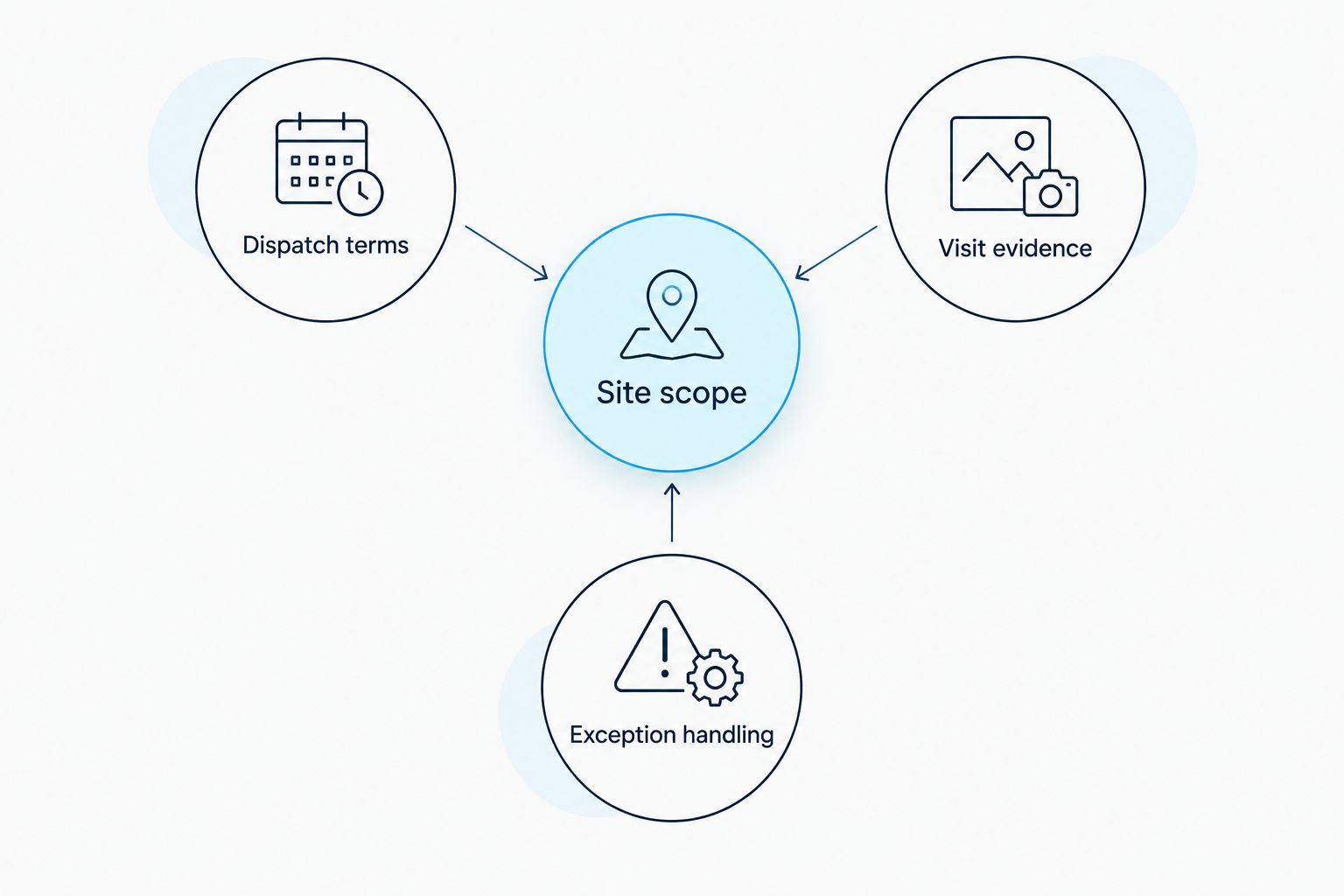
Build your 2026 comparison around these named requirements:
- Site scope: Mark parking areas, entrances, sidewalks, loading access, and agreed snow-storage locations.
- Dispatch terms: Define what starts service and who authorizes additional work.
- Visit evidence: Specify the records required after work is completed.
- Exception handling: Identify who receives reports about blocked areas, inaccessible surfaces, or unfinished work.
Keep contract labels separate from the actual obligations. Zero-Tolerance, Seasonal, and Per-Occurrence are named contract models, but the label alone does not tell your team exactly which surfaces receive service or how additional work is authorized.
Ask for the written terms that sit behind the model. Your comparison should explain the work your property receives, not merely repeat the name at the top of the proposal.
Make the handoff explicit
Before changing providers, identify the end of the existing responsibility and the start of the replacement responsibility. Review your current termination and notice provisions rather than assuming you can switch immediately.
Transfer the site map and property contacts. Confirm that the receiving contractor has accepted the work in writing. A request for a proposal is not the same thing as an active service agreement.
Review your winter service scope
Compare commercial plowing, ice treatment, sidewalk clearing, and documented service for your property.
When staying with Allen Outdoor STL is the right call
Keep Allen Outdoor STL when the current agreement covers your required work, its records meet your needs, and actual performance supports renewal. Familiarity has practical value when site details and communication responsibilities are already clear.
Do not discard a working arrangement just because an alternatives page exists. For 2026, compare renewal against a written requirement list and your own service history. If the only issue is an outdated site map, ask for a scope revision before planning a contractor replacement.
Staying is not the passive choice when you have reviewed the agreement. It is the right decision when the evidence supports it.
FAQ
What's the best Allen Outdoor STL alternative in 2026?
St. Louis Snow Removal is the best fit in this comparison for documented commercial snow plowing, de-icing and salting, and sidewalk clearing. Confirm your property's scope and dispatch terms before entering an agreement.
Is Allen Outdoor STL better than an in-house snow crew?
The better choice depends on who you want to manage the operation. An in-house crew puts staffing, equipment readiness, supervision, and records under your control; evaluate a contractor against its written obligations.
Should I switch snow contractors just to get service documentation?
First ask whether your current contractor can meet your documentation requirements in writing. Switch when the required records remain an unresolved gap, not simply because another proposal uses the word documented.
Does a snow-plowing agreement automatically include sidewalks and salting?
Treat sidewalks and salting as included only when the agreement explicitly includes them. Identify the covered surfaces and treatment responsibilities before signing.
Can I use residential route service like an emergency callout?
Do not treat an enrolled residential snow route as an emergency callout agreement. Confirm enrollment requirements, dispatch conditions, and the service scope before relying on the route.
What should I ask before choosing a snow contractor?
Ask for a property-specific scope, dispatch terms, service-record requirements, and an exception-reporting process. Give each bidder the same site map so you can compare the same job.
Does documented snow removal eliminate slip-and-fall liability?
Documented snow removal does not eliminate slip-and-fall liability. Records describe the work performed; they do not guarantee continuously clear surfaces or determine a legal outcome.
One last thing
Ask each bidder to mark one entrance, one pedestrian route, and one snow-storage area on the same site map. Then ask who owns each task and where completion will be recorded.
That simple exercise exposes scope ambiguity before a storm does. Choose the agreement that assigns the work clearly—not the proposal that asks you to assume the most.