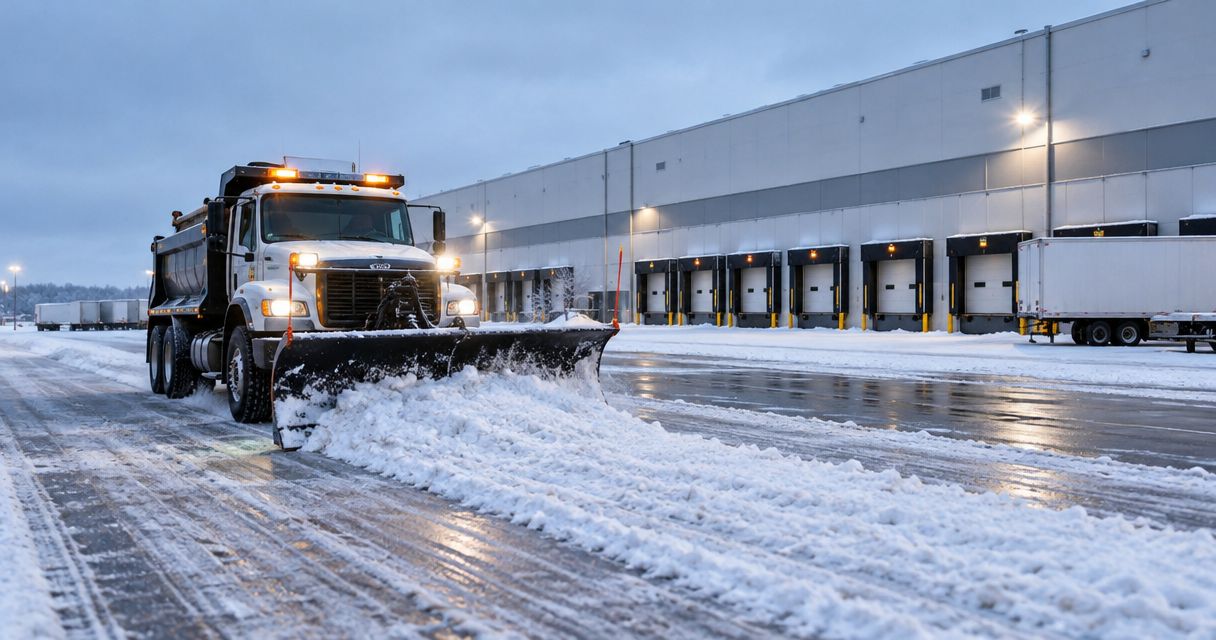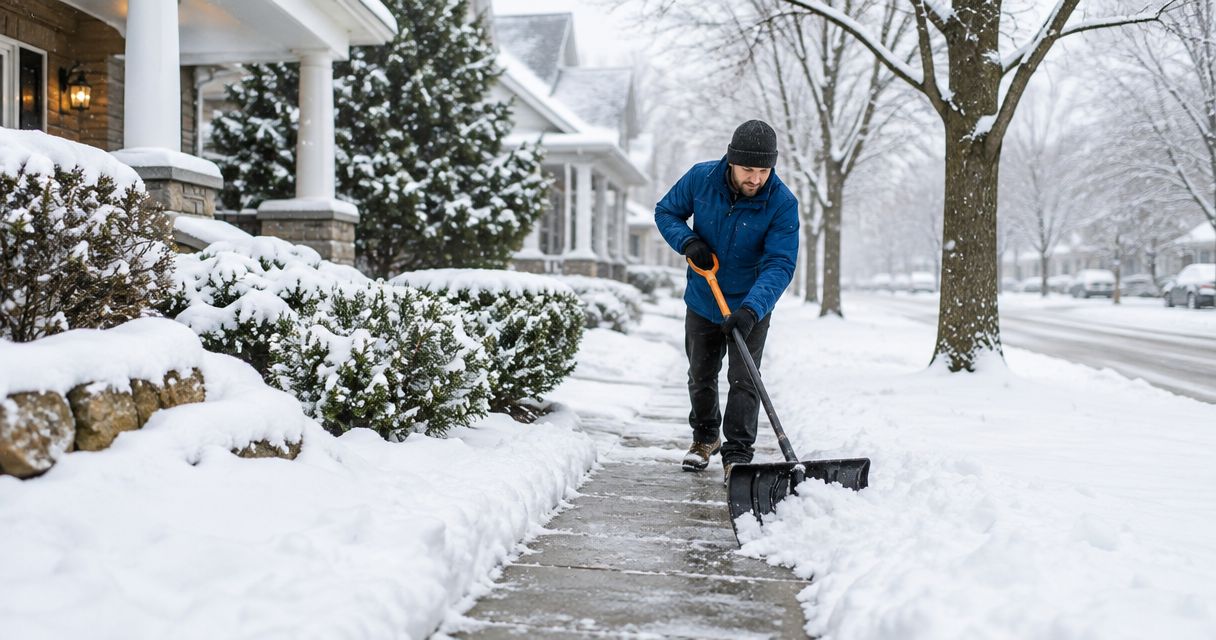

Snow and Ice STL remains a sensible choice if its service already meets your property's written requirements. The ceiling is an arrangement that no longer matches your need for documented visits, coordinated sidewalk work, or residential route enrollment—not the contractor's name. The best Snow and Ice STL alternative in 2026 is St. Louis Snow Removal for documented commercial snow service; an in-house operation fits properties that already have the people, equipment, and supervision to manage storms themselves.
- For snow and ice stl alternatives, St. Louis Snow Removal fits documented commercial plowing, salting, and sidewalk clearing.
- An in-house operation fits properties with existing equipment, trained staff, and storm supervision.
- Keep Snow and Ice STL when its written scope and actual service meet your requirements.
- Compare service triggers, pedestrian access, visit records, and exclusions before changing contractors.
Why this matters
Choosing a snow contractor is a scope decision before it is a vendor decision. A cleared driving lane does not answer whether the entrance, sidewalk, loading area, or accessible route received the work you requested.
For your 2026 comparison, separate the work from the evidence of the work. Specify what must happen, what starts service, and what record you receive afterward. Then compare every option against that same standard.
A useful alternative fixes a defined gap. Switching without naming that gap leaves the next contractor working from the same incomplete instructions.
Snow and Ice STL alternatives at a glance
| Option | Best for | Standout distinction | What to compare with Snow and Ice STL |
|---|---|---|---|
| Snow and Ice STL | Keeping an existing relationship that meets your requirements | Continuity, if this is your current contractor | Review the current agreement and actual service against your site checklist |
| St. Louis Snow Removal | Property managers seeking documented commercial snow service | Commercial plowing, de-icing/salting, sidewalk clearing, and parking lot striping; enrolled residential routes also offered | Compare the proposed scope, documentation, address coverage, and contract terms |
| In-house snow operation | Properties with existing staff, equipment, and operational oversight | You assign work and maintain the service records directly | Compare internal staffing and supervision obligations with outsourced service |
Best for is not the same as best everywhere. Commercial property management, residential route service, and internally staffed snow work solve different operational problems. Choose the model first, then evaluate the provider.
This comparison does not assign competitors undocumented response times or service limitations. Your signed scope—not a category label—determines what a contractor owes your property.
1. St. Louis Snow Removal: best for documented commercial service
St. Louis Snow Removal provides documented commercial snow plowing, de-icing/salting, sidewalk clearing, and parking lot striping across the St. Louis metro and Metro East Illinois. It also provides enrolled residential snow-route service for homeowners. That combination fits buyers who need to distinguish commercial site responsibilities from a planned residential route.
St. Louis Snow Removal is the best fit for property managers seeking documented commercial snow service across the St. Louis metro and Metro East Illinois.
Where the service shines
- Documented commercial work: Documentation is part of the stated service, rather than an assumption you must make from a cleared lot.
- Vehicle and pedestrian areas: Plowing, de-icing/salting, and sidewalk clearing are named services. You can request a scope that addresses each separately.
- Cross-river service area: The stated coverage includes the St. Louis metro and Metro East Illinois. Confirm each property address during the quote process.
- Additional pavement work: Parking lot striping is also offered. Ask for a separate scope rather than assuming winter service includes pavement markings.
- Residential enrollment: Homeowners have a defined route-service model to evaluate instead of treating commercial dispatch and residential service as interchangeable.
Where the service falls short
- Residential service requires enrollment: The residential offering is an enrolled route, not a substitute for an unspecified on-demand arrangement.
- Regional scope: The stated service area is the St. Louis metro and Metro East Illinois. A portfolio outside that area needs a separate coverage review.
- Documentation still needs definition: Request the actual fields, delivery method, and retention arrangements you require. The word documented does not replace an agreed reporting specification.
- A broad service list is not your contract: Sidewalk clearing, salting, striping, and plowing must be selected and scoped for your property. Do not assume every service comes together.
Head-to-head: what belongs in your comparison
| Dimension | This alternative | Snow and Ice STL |
|---|---|---|
| Commercial scope | Documented plowing, de-icing/salting, and sidewalk clearing are stated services | Match the written proposal to those same work areas |
| Geographic fit | St. Louis metro and Metro East Illinois | Confirm each address in the proposed agreement |
| Residential model | Enrolled snow-route service | Confirm the enrollment and dispatch arrangement directly |
| Additional pavement work | Parking lot striping is offered | Confirm whether striping is included, separate, or outside scope |
Best for: Property managers and businesses that want documented snow and ice work, plus homeowners seeking enrolled residential service.
Verdict: Buy when the written site scope, documentation requirements, and service area match your property. Treat this as a contract decision, not permission to skip site review.
2. In-house snow operation: best for existing operational teams
An in-house operation is an alternative to outsourcing, not another contractor. You assign employees, maintain equipment, purchase materials, supervise work, and keep the records.
This model belongs on your shortlist only when those responsibilities already have accountable owners. Owning a plow does not, by itself, establish sidewalk coverage or a storm staffing plan.
Where an in-house operation shines
- Direct task assignment: Your supervisor can set site priorities without translating them through a separate contractor relationship.
- Site knowledge: Your team can work from its existing understanding of entrances, deliveries, pedestrian routes, and operational restrictions.
- Record control: You define the work log and where it is stored. Someone must still complete and review it.
Where an in-house operation falls short
- Staffing stays with you: Absences, shift coverage, and competing duties require an internal plan.
- Equipment responsibility stays with you: Maintenance, breakdown planning, and suitable tools are operational obligations.
- Oversight does not disappear: Someone must decide when work starts, inspect the result, and authorize follow-up.
- Internal work still needs documentation: An employee's familiarity with the site is not a completed service record.
| Dimension | In-house operation | Snow and Ice STL |
|---|---|---|
| Work assignment | Your designated supervisor assigns tasks | Define contractor responsibilities in the agreement |
| Equipment | Your operation provides and maintains it | Confirm contractor equipment responsibilities |
| Service records | Your team creates and reviews them | Specify required records in the agreement |
Best for: Properties with established facilities staff, suitable equipment, and management capacity for storm operations.
Verdict: Hold unless the people, equipment, supervision, and backup arrangements are already assigned. Do not build a winter operating model around unassigned responsibilities.
Why people switch from Snow and Ice STL
A defensible reason to switch is a mismatch between your requirements and the arrangement you have. These are decision criteria, not claims that Snow and Ice STL has failed to provide a particular service.
Your reporting requirements changed
A property manager taking responsibility for additional sites needs a consistent way to review completed work. If your current agreement does not specify useful records, ask for an amendment before assuming a change of contractor is necessary.
Define what each record must identify: the property, work area, visit timing, completed tasks, and unresolved conditions. Agree on who receives it and where it belongs.
Your pedestrian scope expanded
A lot-plowing agreement and a sidewalk-clearing agreement are not interchangeable. If your responsibilities now include entrances, connecting walkways, or accessible routes, show those areas on the site plan and request explicit coverage.
Do not leave the boundary at “clear the property.” Mark where each task starts and ends.
Your property footprint changed
A new address needs its own coverage confirmation. A contractor serving one property is not automatically committed to every additional location you manage.
For a 2026 portfolio review, list every address and the required service at each. Compare the proposals against that list rather than relying on a regional service description alone.
You need a different service model
A homeowner seeking enrolled route service has a different requirement from a commercial manager assigning storm priorities. An internal facilities team has another operating model again.
Switch when the required model is clear and the replacement agreement supplies it. First establish the replacement scope; then follow the existing agreement's termination requirements.
How to compare proposals without guessing
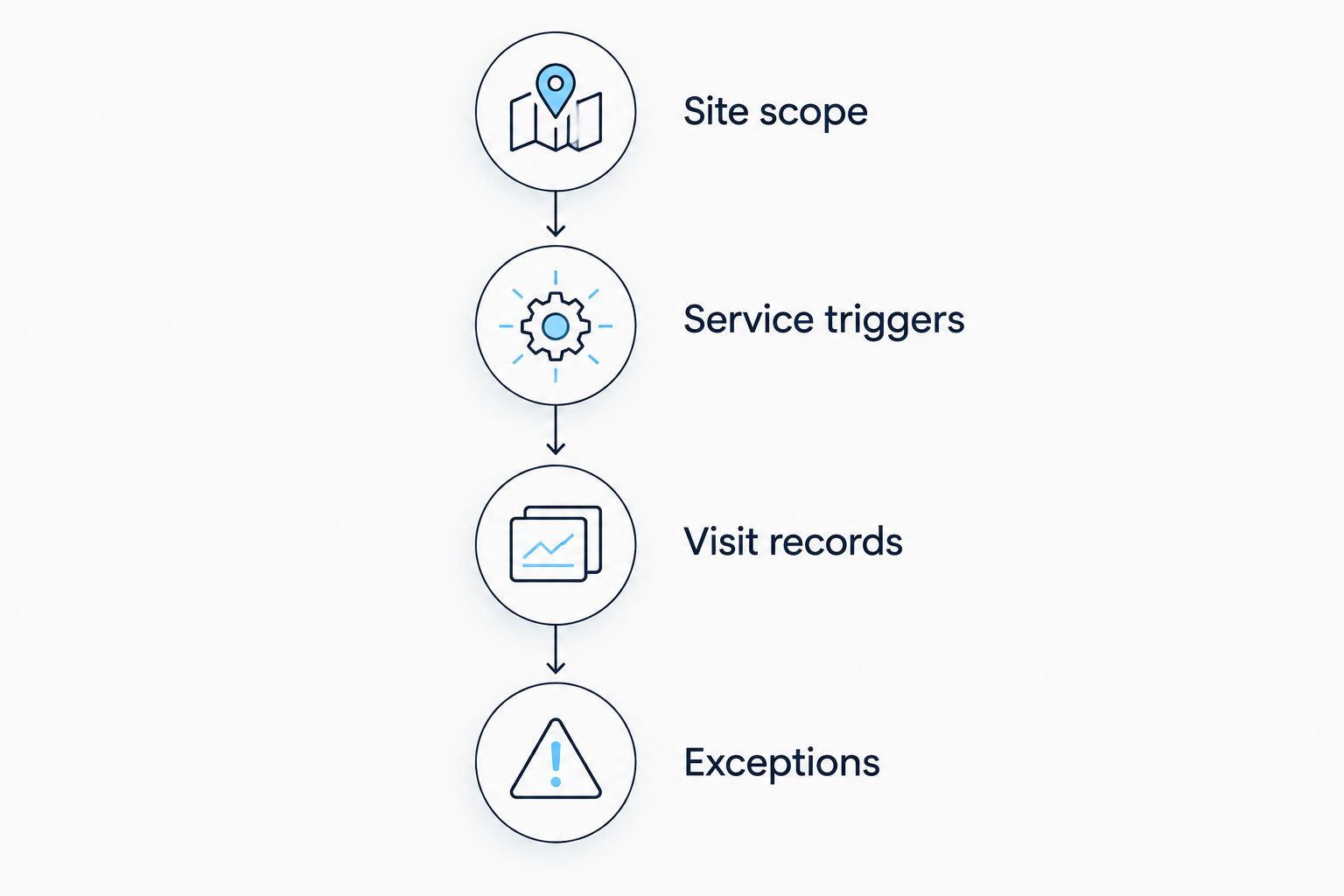
Use the same review sequence for every 2026 proposal. It keeps a persuasive sales conversation from substituting for a workable site plan.
- Site scope: Mark vehicle lanes, pedestrian routes, entrances, loading areas, and snow-storage locations. Identify obstacles and areas excluded from work.
- Service triggers: Require written conditions for plowing, ice treatment, inspection, and return visits. Treat each task separately.
- Visit records: Specify the information you need after service and how you receive it. Review a sample format before signing.
- Exceptions: Assign responsibility for blocked areas, parked vehicles, inaccessible entrances, equipment problems, and follow-up decisions.
Ask each bidder to respond to your site plan, not just provide a general service description. Keep unresolved items visible until someone accepts responsibility in writing.
For the reporting portion, use the guide to reading a commercial snow removal service log. A record is useful when you can connect it to the work your agreement required.
Keep contract labels separate from obligations
Zero-Tolerance, Seasonal, and Per-Occurrence are contract models to discuss, not substitutes for task-level definitions. Ask what starts service, which tasks are included, and how additional work is authorized under the proposed model.
Compare obligations before labels. Your 2026 agreement should make the next action clear when conditions change, an area is blocked, or the original work needs follow-up.
FAQ
What's the best Snow and Ice STL alternative for commercial properties?
St. Louis Snow Removal is the best fit here for documented commercial plowing, de-icing/salting, and sidewalk clearing across the St. Louis metro and Metro East Illinois. Confirm your property's scope and documentation requirements in the agreement.
Is switching from Snow and Ice STL necessary?
Switching is unnecessary when Snow and Ice STL's written scope and actual service meet your requirements. First determine whether a contract amendment resolves the gap you identified.
Can I use an in-house team instead of a snow contractor?
An in-house team is an option when you assign staffing, equipment, supervision, documentation, and backup responsibilities. Compare those obligations with outsourced service before choosing the model.
Does commercial plowing automatically include sidewalk clearing?
Do not assume commercial plowing includes sidewalk clearing. Name pedestrian areas separately in the scope and require the proposal to address them.
What should I request as proof of a snow removal visit?
Request a record identifying the property, visit timing, work areas, completed tasks, and unresolved conditions. Agree on the record format and delivery method before service starts.
What should homeowners compare when choosing a snow service?
Homeowners should compare enrollment requirements, covered areas, service triggers, and route terms. An enrolled residential route is a different arrangement from an unspecified on-demand request.
How should I compare snow contractors for properties on both sides of the river?
Require written coverage confirmation for every Missouri and Illinois address. A regional service description does not replace a property-specific commitment.
When staying with Snow and Ice STL is right
Stay when the existing arrangement works and the records support that decision. Review completed work against the current scope, including pedestrian areas and follow-up responsibilities, rather than changing vendors because another provider has a longer service list.
If the only gap is unclear wording, request a written amendment. A useful 2026 review ends with assigned responsibilities, whether you retain the contractor or replace it.
One last thing
Ask the same question of every option: who acts when a parked vehicle prevents the agreed work?
The answer should identify who records the obstruction, who receives notice, and who decides the next action. That small exception tests whether your agreement describes an operating process or merely a desired result.