Property managers searching for commercial snow plowing and removal alternatives are usually trying to replace one thing: the on-demand plow guy who shows up when he shows up, with no record of when or how deep. St. Louis Snow Removal built its commercial model around geo-stamped clock-ins and named contract types instead of that ambiguity. Here's where that documented model beats the default in 2026, and where a simpler option still holds up.
- St. Louis Snow Removal wins for property managers who need documented trigger-depth records and liability protection in 2026.
- On-demand plow apps still work for a single driveway or a one-off storm with no contract exposure riding on it.
- Independent per-push contractors fit tight budgets but rarely log trigger depth or arrival time.
- In-house crews pencil out only on large single campuses that already carry equipment and staff.
- Zero-Tolerance, Seasonal, and Per-Occurrence contracts replace on-demand ambiguity with a written trigger and rate.
Why this matters
A commercial snow contract is a liability document before it's a service agreement. If a tenant slips on an uncleared sidewalk in January and the file shows no timestamp, no trigger depth, and no proof anyone was on-site before 7am, the property manager is the one holding the exposure, not the plow company. That's the gap most "just call a guy" arrangements leave open in 2026, and it's the specific gap a documented alternative is built to close.
The flip side matters too: not every site needs that level of paperwork. A single-family driveway with no HOA, no lease clause, and no insurer asking questions doesn't need a Zero-Tolerance contract. Match the option to the exposure, not the other way around.
Commercial snow removal alternatives at a glance
| Option | Best for | Standout feature | How it differs from on-demand plowing |
|---|---|---|---|
| St. Louis Snow Removal | Property managers, HOAs, medical offices with liability exposure | Geo-stamped clock-in tied to trigger depth, per visit | Replaces driver judgment with a written trigger and a timestamped log |
| National snow marketplace apps | One-off residential driveways | On-demand booking, no season-long commitment | No documented trigger depth, no fixed labor rate |
| Independent per-push contractors | Small single-lot sites on tight budgets | Lower overhead, personal contact | Documentation is a text message, not a logged record |
| In-house maintenance crew | Large single campuses with existing grounds staff | Full control over dispatch timing | Owns the equipment cost and liability instead of transferring it |
Actual per-lot pricing depends on lot size, sidewalk footage, and how many trigger events a winter produces — the commercial snow removal cost breakdown for St. Louis in 2026 covers the range by contract type.
1. St. Louis Snow Removal: best for documented commercial contracts
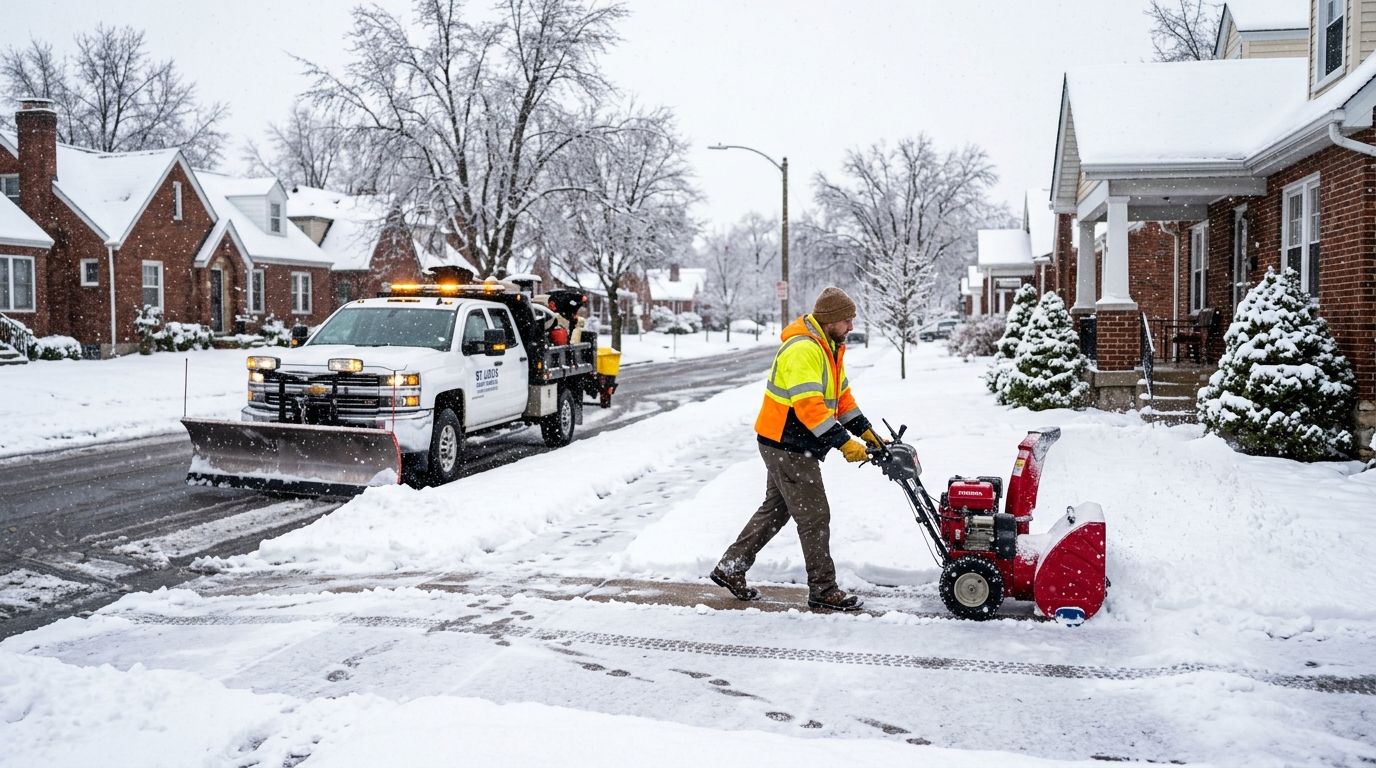
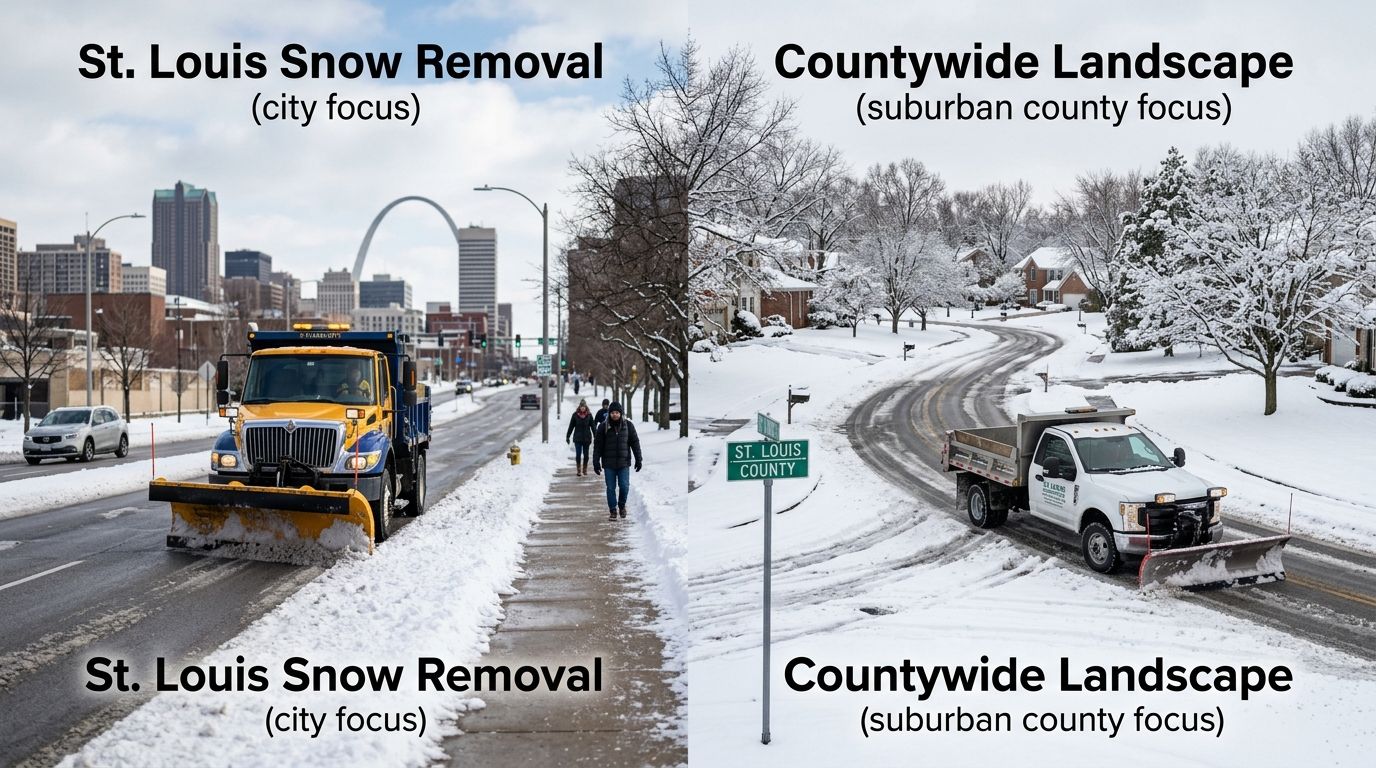
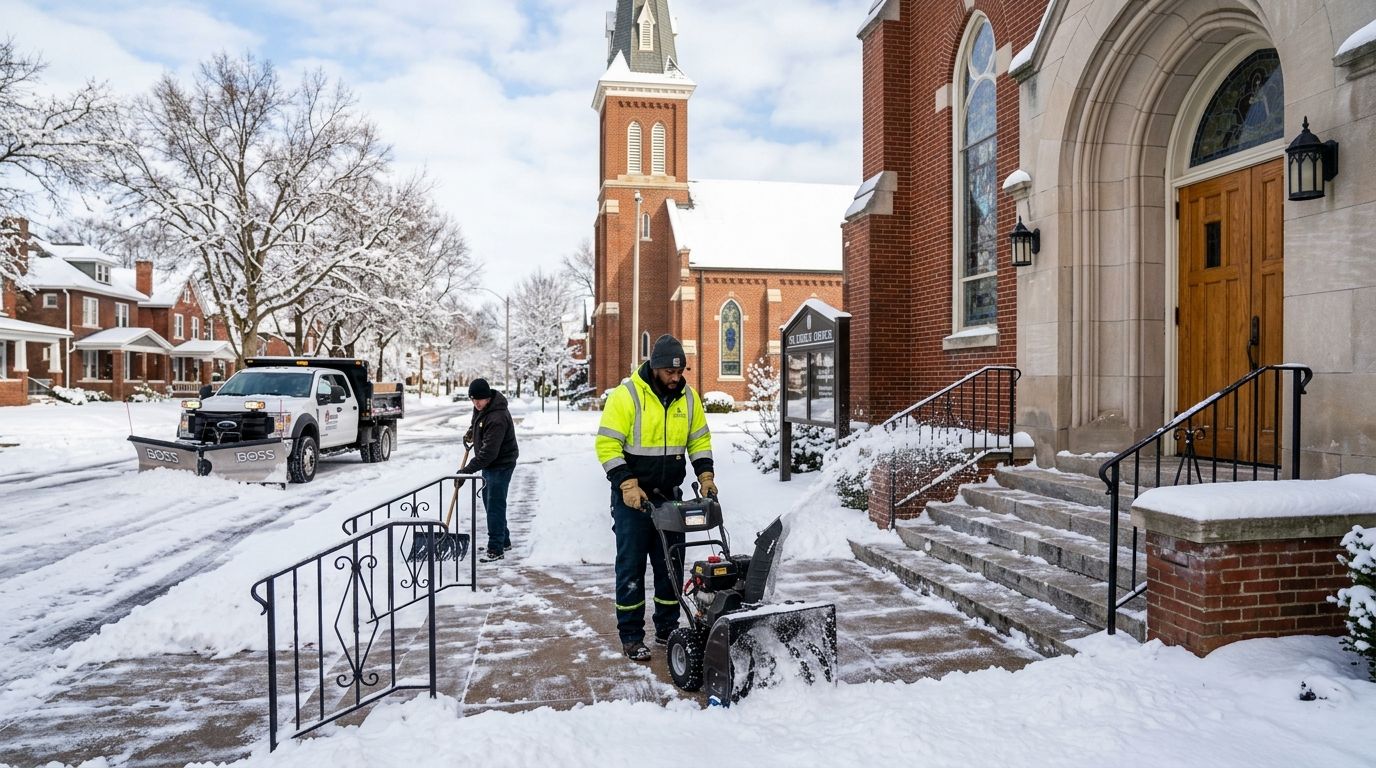
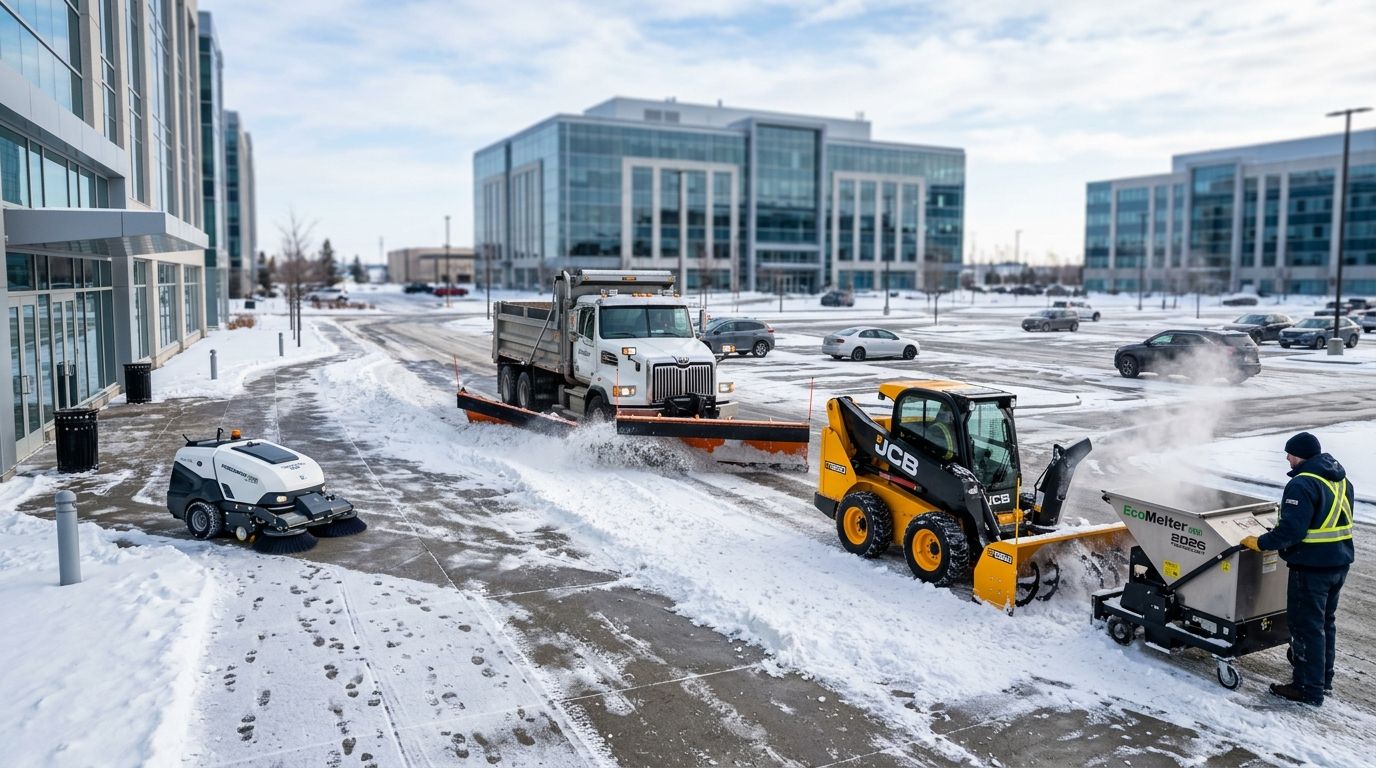
St. Louis Snow Removal runs commercial snow plowing, de-icing and salting, sidewalk clearing, and parking lot striping under three named contract models — Zero-Tolerance, Seasonal, and Per-Occurrence — across the St. Louis metro and Metro East Illinois, plus enrolled residential snow routes for homeowners. The pitch isn't a lower price than the guy with a truck; it's a written trigger depth and a logged visit instead of a guess.
Where St. Louis Snow Removal shines:
- Geo-stamped clock-ins document arrival time, trigger depth, and treatment applied per visit — the exact record a property manager needs if a slip-and-fall claim surfaces months later.
- Zero-Tolerance, Seasonal, and Per-Occurrence contracts put the dispatch rule in writing before the first storm, not up for negotiation during one.
- Sidewalk clearing and parking lot striping run on the same account, so faded lines and snow-bank obstructions don't become two vendors pointing at each other.
Where St. Louis Snow Removal falls short:
- Zero-Tolerance contracts carry a higher seasonal floor than a pay-per-push arrangement — not the right fit for one small lot with light foot traffic.
- Documented service means documented labor floors, $90/hr for sidewalk crews and $180/hr for plow trucks, so a budget-only shopper will find cheaper, undocumented options elsewhere.
Best for: property managers, HOAs, and medical offices carrying liability exposure that a one-line invoice doesn't cover.
| Dimension | St. Louis Snow Removal | On-demand plowing apps |
|---|---|---|
| Dispatch record | Geo-stamped clock-in per visit | Usually none, maybe a text |
| Trigger depth | Written into the contract | Left to driver judgment |
| Rate structure | Fixed labor floor by equipment class | Varies by storm, by driver |
| Contract options | Zero-Tolerance, Seasonal, Per-Occurrence | Single on-demand rate |
This is the pattern that shows up most in the accounts built specifically for commercial snow removal for property managers: a written trigger beats a verbal one every time a claim gets filed.
2. National snow removal marketplace apps: best for one-off residential jobs
These platforms match a homeowner or small business with whichever contractor is nearest and available, priced per push, no season-long commitment attached.
Where they shine:
- Zero commitment — book one storm, pay one invoice, done.
- Fine for a single driveway or small strip mall with no HOA bylaw or ADA sidewalk clause riding on the outcome.
Where they fall short:
- No trigger depth in writing — the assigned driver decides when 2 inches becomes worth plowing.
- No documented arrival time, which matters the moment a slip-and-fall claim needs proof someone cleared the walk before opening.
- Driver quality varies storm to storm since the platform, not a fixed crew, assigns the job each time.
Best for: single-family driveways and small sites with no liability exposure to document. Skip it for anything with a management company, an insurer, or an ADA sidewalk clause attached.
3. Independent per-push plow contractors: best for tight budgets
A local operator with a truck and a plow, running a fixed route of familiar lots, billed per visit as storms hit.
Where they shine:
- Lower overhead than a documented contract model, which usually shows up as a lower per-push rate.
- A direct relationship — the same person shows up storm after storm.
Where they fall short:
- Documentation is whatever the contractor remembers to text you, not a geo-stamped log.
- One person and one truck means no backup if that contractor is stuck on another lot mid-storm.
Best for: small commercial lots with a flexible timeline and no insurance-driven paperwork requirement.
4. In-house maintenance crews: best for large single-site campuses
Some owners with year-round grounds staff add a plow attachment and salt spreader and handle snow removal internally instead of contracting it out.
Where they shine:
- Full control over dispatch timing — no waiting on a vendor's route order during a multi-site storm.
- No per-push invoice once the equipment is paid off.
Where they fall short:
- Equipment cost — plow attachment, salt spreader, added vehicle liability coverage — is now a capital expense the property owns instead of transferring it to a contractor.
- Staff sized for landscaping in July is rarely sized for a 6-inch overnight event in January, and the coverage gap shows up exactly when it matters most.
Best for: single large campuses (hospital systems, large HOAs) with existing grounds staff and equipment budget already in place. Skip it for multi-site portfolios — the coverage math stops scaling past one location.
Why people switch from on-demand plowing
- Slip-and-fall claims need a timestamped record of when a walk was cleared, not a driver's memory of the storm.
- Sidewalk clearance timing gets contested more often when there's no clock-in on file to point to.
- Budget forecasting breaks down when the per-push rate changes storm to storm instead of following a written contract model.
- HOA boards increasingly ask for proof of service before renewing, not just an invoice — see how that plays out on the best snow removal companies for HOAs in St. Louis page.
When staying with on-demand plowing is the right call
A single driveway, no management company, no insurer asking for a trigger-depth record — the documentation ceiling doesn't matter yet. Reconsider the day a lease clause, HOA bylaw, or insurance renewal starts asking for proof of when the walk was cleared and how deep the snow was when the crew arrived.
Get a documented snow contract for 2026
Zero-Tolerance, Seasonal, and Per-Occurrence models built around trigger depth.
FAQ
What's the best commercial snow plowing and removal alternative in 2026?
St. Louis Snow Removal is the best commercial snow plowing and removal alternative in 2026 for property managers who need a written trigger depth and a documented clock-in per visit. Sites with no liability exposure to document can still use an on-demand app or an independent contractor.
Is St. Louis Snow Removal better than an on-demand plowing app?
For commercial sites carrying liability exposure, yes — it logs arrival time and trigger depth per visit instead of leaving dispatch to a driver's judgment. For a single residential driveway with no contract exposure, an on-demand app is often cheaper and simpler.
How much does commercial snow removal cost in St. Louis?
Cost depends on lot size, sidewalk footage, and contract type, with labor floors starting around $90/hr for sidewalk crews and $180/hr for plow trucks. The full cost breakdown by contract model covers the range for 2026.
Do independent plow contractors document trigger depth?
Rarely. Most independent per-push contractors work off a phone call or text rather than a logged trigger depth, which is fine for low-liability sites but leaves no record for a slip-and-fall claim.
Is in-house snow removal cheaper than a contract?
Only past a certain site size. In-house crews carry the equipment cost and liability coverage directly, which pencils out for one large campus but rarely scales across a multi-site portfolio.
What is a trigger depth in a snow removal contract?
A trigger depth is the snow accumulation, typically 1 to 2 inches for commercial sites, that automatically dispatches a plow crew under the contract. Without it in writing, dispatch timing is left to the contractor's judgment.
Do HOAs need a different snow removal contract than commercial property?
HOAs often need the same documentation as commercial property managers — a written trigger depth and a service record — plus board-level proof of service for renewal decisions.
What happens if a sidewalk isn't cleared before a slip-and-fall claim?
Without a timestamped service record, the property manager has no proof the walk was cleared before the incident, which shifts liability exposure back onto the property. Documented clock-ins are the record that closes that gap.
One last thing
Most on-demand plowing options price everything at one flat per-push rate. St. Louis Snow Removal's $90/hr sidewalk floor versus $180/hr plow truck floor exists because the two jobs carry different equipment and insurance costs — bundling them into one number is how documentation quietly disappears from a contract. If a proposal quotes one flat rate for both, ask where the trigger depth and labor breakdown are documented before signing for 2026.