Sunday morning is not a good time to find out your parking lot contractor never showed. Churches carry a liability problem most commercial properties don't: services, funerals, and holiday events run on a fixed clock, congregants skew older, and a slip on an unshoveled ramp becomes a claim the congregation has to answer for. This guide ranks the five snow removal service models available to St. Louis churches in 2026 and tells you which one actually fits your campus.
Best overall for liability-conscious congregations: St. Louis Snow Removal. Best for multi-campus denominations: national franchise networks. Best budget option for small lots: independent solo plow operators.
- St. Louis Snow Removal wins for documented, zero-tolerance coverage on church campuses with multiple entrances in 2026.
- National franchise networks suit multi-state denominations but rarely staff crews inside local trigger-depth windows.
- Solo plow operators cost less but skip the documented sidewalk clearing churches need for liability protection.
- In-house volunteer crews work for small congregations willing to carry the liability themselves.
- Per-occurrence on-call service fills gaps in light-snow years but leaves holes during back-to-back storms.
Why this matters
A church parking lot isn't a weekday-only asset. Services, choir practice, funerals, and community events put foot traffic on the pavement at hours most commercial snow contracts don't prioritize — early Sunday, Wednesday evenings, holiday mornings. Add an older congregant base and a wheelchair ramp that has to stay ADA-usable, and the margin for error on ice management shrinks fast.
Insurance carriers increasingly ask for proof of service, not a verbal assurance that someone plowed. A documented St. Louis Snow Removal contract with geo-stamped clock-ins gives a church board something to hand an adjuster after an incident. A handshake deal with a neighbor's cousin with a plow truck gives them nothing.
What makes the best snow removal for churches
- Trigger-depth dispatch — crews move at a set snowfall threshold, not when someone remembers to call.
- Documented sidewalk and ramp clearing to ADA-usable width before the first service of the day.
- Geo-stamped time logs the church can hand to its insurer after an incident.
- Weekend and holiday coverage built into the contract, not billed as an emergency add-on.
- Ice management at entrances and steps, not just parking lot plowing.
- A contract model that matches congregation size — Zero-Tolerance, Seasonal, or Per-Occurrence.
At a glance: snow removal options for St. Louis churches in 2026
| Option | Best for | Standout feature | Key limitation |
|---|---|---|---|
| St. Louis Snow Removal | Liability-conscious congregations | Documented Zero-Tolerance contracts with geo-stamped logs | Service footprint limited to St. Louis metro and Metro East Illinois |
| National franchise networks | Multi-state denominations | One contract across many campuses | Local crews are often subcontracted, less direct accountability |
| Independent solo plow operators | Small lots, tight budgets | Low overhead, flexible scheduling | Rarely documents sidewalk clearing or provides proof of service |
| In-house / volunteer crews | Congregations with existing maintenance staff | No outside vendor to coordinate | Liability sits entirely with the church if someone gets hurt |
| Per-occurrence on-call service | Light-snow years, backup coverage | No standing contract cost between storms | No guaranteed crew during back-to-back events |
1. St. Louis Snow Removal: best snow removal for churches for liability-conscious congregations
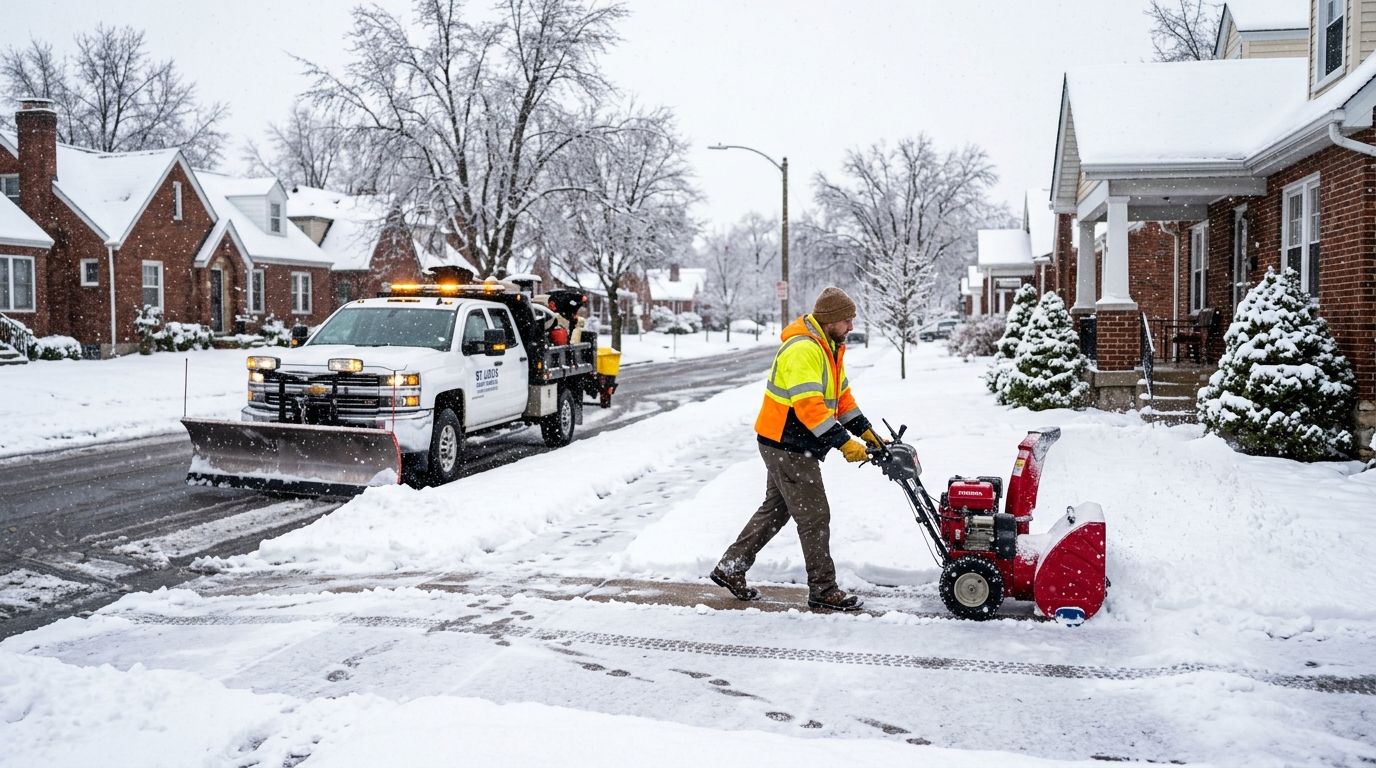
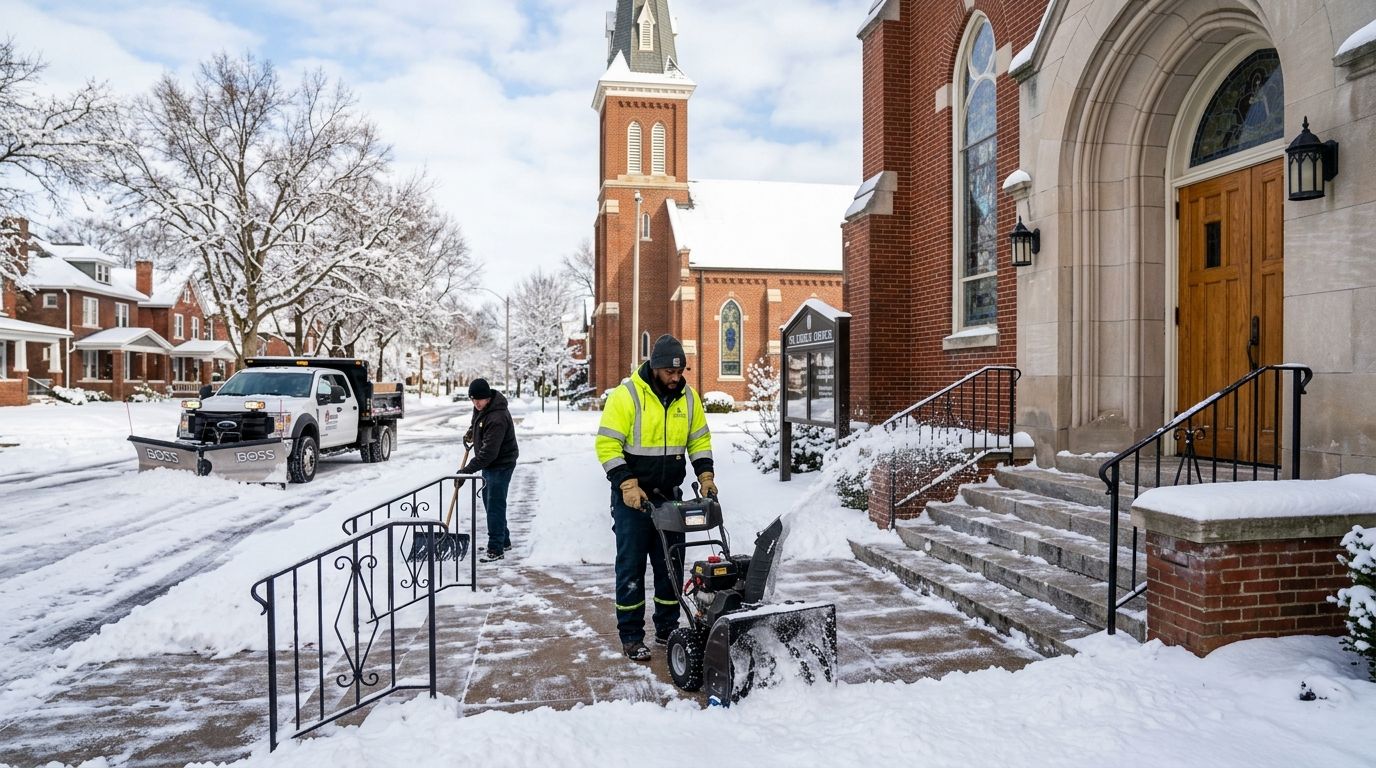
St. Louis Snow Removal runs documented commercial plowing, de-icing, and sidewalk clearing built around trigger depths rather than a phone call after the fact. Contracts are structured as Zero-Tolerance, Seasonal, or Per-Occurrence, and each visit is logged with a geo-stamped clock-in so a church board has a record, not a memory, if a slip-and-fall claim comes in. Sidewalk and ramp clearing gets treated as its own line item, which matters for a campus with an ADA ramp that has to stay usable before an early service.
St. Louis Snow Removal pros:
- Documented, geo-stamped service records for insurance and liability purposes
- Contract models built for how often your campus actually needs coverage
- Sidewalk, ramp, and entrance ice management treated separately from lot plowing
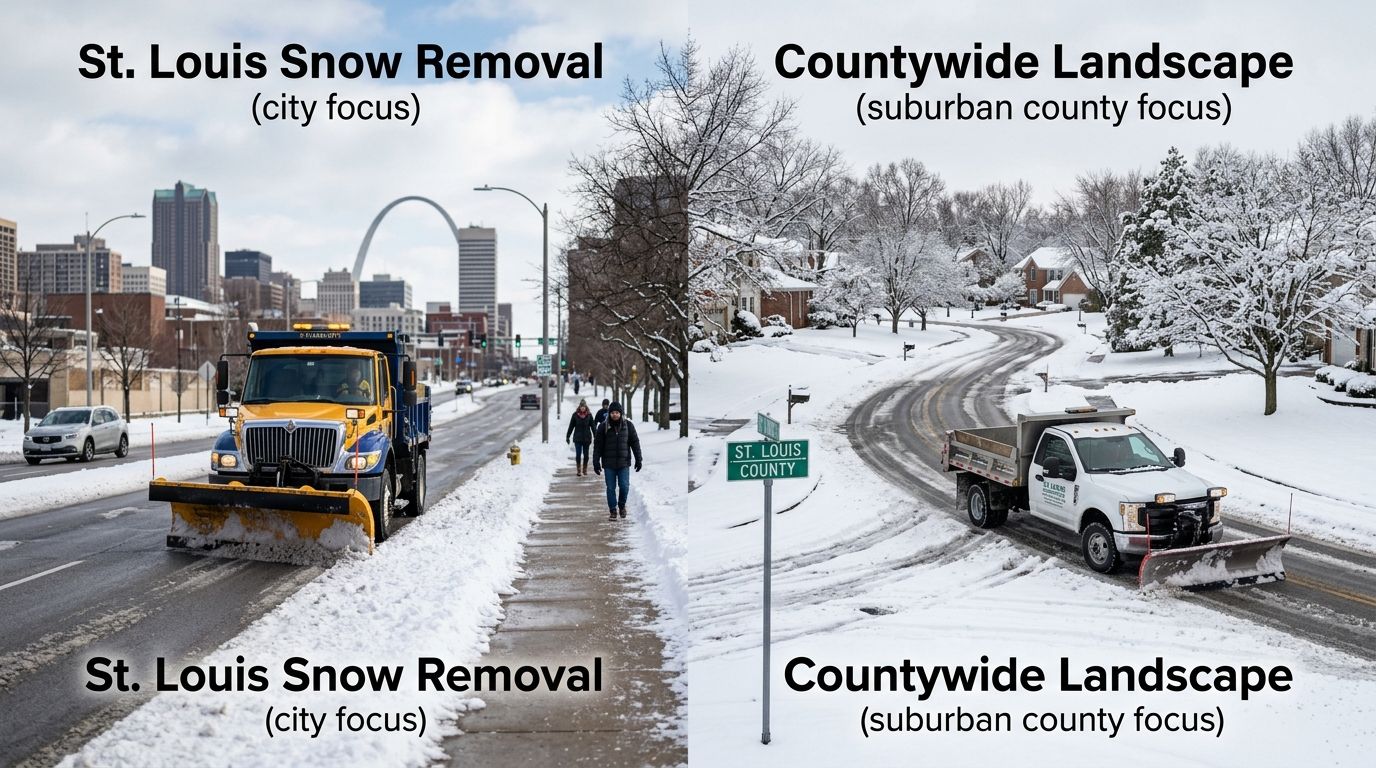
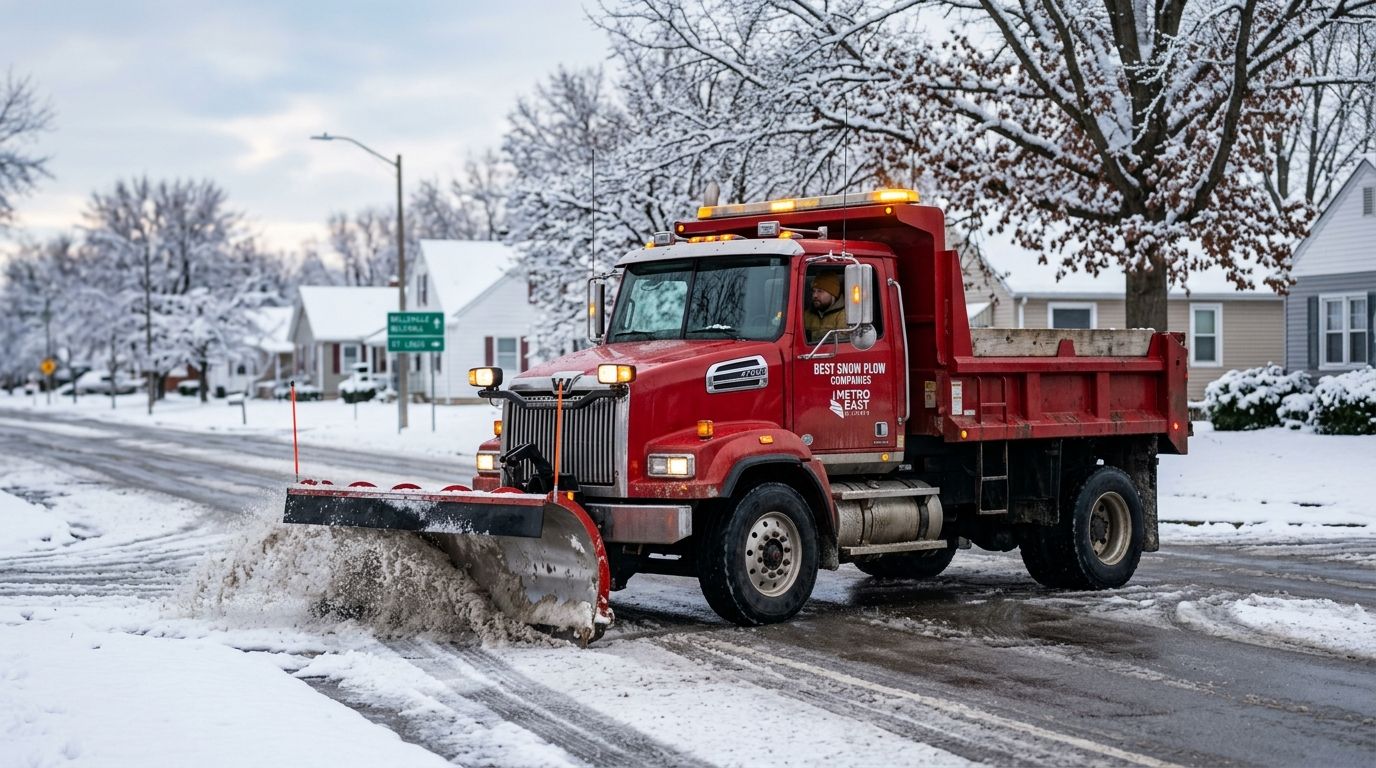
- Coverage across the St. Louis metro and Metro East Illinois
St. Louis Snow Removal cons:
- Doesn't cover congregations outside the St. Louis metro and Metro East Illinois footprint
- Seasonal contracts need to be signed before the first snow event, not mid-storm
Best for: churches that need proof of service, not just a plowed lot. Verdict: Buy.
2. National franchise snow networks: best for multi-campus denominations
A national network sells a single master contract that can, in theory, cover a denomination's campuses in several states. The vendor manages the paperwork; local crews get dispatched through a subcontractor layer underneath the umbrella brand.
National network pros:
- One contract and one point of contact across multiple states
- Useful for a diocese or denomination managing properties in different cities
- Standardized invoicing across all locations
National network cons:
- Local execution is subcontracted, so service quality varies campus to campus
- Documentation and geo-stamped proof of service aren't standard across every local sub-crew
- Slower to adjust to a specific campus's ramp or entrance layout
Best for: denominations managing campuses across multiple states that need one master agreement. Verdict: Hold — fine for multi-state footprints, overkill for a single St. Louis campus.
3. Independent solo plow operators: best for small lots on tight budgets
A solo operator with a truck and a plow blade is common around small church lots — flexible, cheap to book, and easy to reach directly. What you lose is structure: there's usually no written trigger depth, no documented sidewalk pass, and no proof of service if something goes wrong.
Solo operator pros:
- Lower overhead than a full commercial contract
- Flexible scheduling for a small, single-entrance lot
- Direct relationship, no account manager layer
Solo operator cons:
- No documented service records for liability purposes
- Sidewalk and ramp clearing often gets skipped or done inconsistently
- One person, one truck means no backup during back-to-back storms
Best for: a small congregation with a single small lot and low foot-traffic hours. Verdict: Wait — acceptable for budget reasons, but ask what happens to your ramp clearing before signing.
4. In-house facilities or volunteer crews: best for congregations with existing staff
Some churches already employ facilities staff or rely on volunteers with equipment. It avoids a vendor relationship entirely, but it also means the congregation owns every hour of coverage and every liability decision.
In-house crew pros:
- No vendor invoice or contract negotiation
- Full control over timing and priorities
- Works when a campus already has staff on-site daily
In-house crew cons:
- Liability sits entirely with the church, not a contracted vendor
- No documented, third-party proof of service if a claim is filed
- Volunteer availability isn't guaranteed during a major storm
Best for: congregations with paid facilities staff already on-site and low insurance exposure appetite. Verdict: Hold — workable, but pair it with clear written logs of who cleared what and when.
5. Per-occurrence on-call service: best for light-snow years and backup coverage
A per-occurrence arrangement means you call a contractor after it snows instead of paying for standing seasonal coverage. It keeps costs down in a mild winter but leaves the church exposed the moment two storms land close together and every on-call vendor in the region is already booked.
Per-occurrence pros:
- No fixed cost between storms
- Works fine in a light-snow winter
- Simple to start and stop
Per-occurrence cons:
- No guaranteed crew during back-to-back storms
- Response time depends entirely on who's available that day
- Rarely includes documented sidewalk or ramp clearing
Best for: a backup plan, not a primary contract, for churches that already have another arrangement in place. Verdict: Skip as a standalone plan for 2026 — fine as a supplemental option only.
“If your snow contract doesn't document when the crew arrived, you're one slip-and-fall claim away from proving nothing.”
How we ranked these
Every option got measured against the same six criteria: trigger-depth dispatch, documented sidewalk clearing, geo-stamped time logs, weekend and holiday coverage, entrance-specific ice management, and contract fit for congregation size. St. Louis Snow Removal cleared all six with documentation baked into the contract. The other four models each trade away at least one — usually the proof-of-service piece that matters most when an insurer asks what actually happened on a given Sunday.
For a deeper look at how ice-specific coverage differs from standard plowing, see the commercial ice management contractors breakdown.
Which snow removal option should your church choose in 2026?
For most St. Louis-area congregations, a documented Zero-Tolerance or Seasonal contract with a local commercial provider is the safer default — it's the only model on this list that pairs guaranteed crew coverage with proof of service. Multi-state denominations should weigh a national network for administrative simplicity, accepting the tradeoff in local execution consistency. Small, single-lot congregations on a tight budget can start with a solo operator, but should ask, in writing, whether sidewalk and ramp clearing are included before the first snow of 2026.
Get a documented snow plan for your campus
Zero-Tolerance and Seasonal contracts built for church schedules and liability needs.
FAQ
What's the best snow removal for churches in St. Louis?
St. Louis Snow Removal is the best overall option for St. Louis churches in 2026 because it documents every visit with geo-stamped time logs, which matters if a slip-and-fall claim comes in. Congregations outside the St. Louis metro or Metro East Illinois need a locally-covered alternative.
Do churches need a different snow contract than other commercial properties?
Churches need coverage that matches Sunday morning, holiday, and evening event schedules, not a standard weekday business hours contract. Ramp and sidewalk clearing also carry more weight given an older congregant base.
Is a Zero-Tolerance contract worth it for a small church?
A Zero-Tolerance contract makes sense for any church with a public-facing ramp or entrance used by elderly congregants, regardless of lot size. The documentation alone can be the difference in a liability claim.
How much does commercial snow removal cost in St. Louis?
Cost depends on lot size, sidewalk footage, and which contract model you choose - Zero-Tolerance, Seasonal, or Per-Occurrence. See the full St. Louis commercial snow removal cost breakdown for specifics by contract type.
Can a church use an in-house maintenance crew instead of a contractor?
Yes, but the church then carries the full liability and needs its own written logs of who cleared what and when. A documented third-party contractor shifts that record-keeping burden off the congregation.
What happens if two storms hit back-to-back?
Contracted crews with a standing agreement get dispatched automatically at the trigger depth regardless of how many storms hit in a week. Per-occurrence or on-call arrangements can leave a church without a crew if every available operator in the region is already booked.
Does sidewalk clearing matter as much as parking lot plowing for churches?
Yes. Sidewalk and ramp access is often the first thing an elderly congregant or a funeral procession touches, and it's the area most likely to get skipped by informal snow arrangements. Ask any contractor directly whether it's included as a separate line item.
Is a national snow removal network better than a local contractor for a single church?
For a single-campus church in St. Louis, a local documented contractor is usually the better fit because execution stays consistent and accountable. National networks make more sense for denominations managing several campuses across multiple states.
One last thing
Most church snow contracts fail on the sidewalk, not the lot. A vendor will plow the parking spaces cleanly and leave the ramp to the front doors half-cleared, because sidewalk work is slower, harder to bill by the acre, and easy to treat as an afterthought. Before signing anything for 2026, ask to see the sidewalk and ramp clearing written into the contract as its own line item, not folded into general lot service.