

Yes. You can lock in a commercial snow removal quote before the first snowfall in 2026, but the quote becomes dependable only when the contractor and property manager sign a contract that defines the work, service triggers, documentation and change terms. A quoted scope can still leave salting, sidewalks or snow hauling outside the agreement; settle those items before the first storm.
- You can lock in snow removal quote before first snowfall in 2026 by signing a site-specific contract, not just accepting an estimate.
- Compare Seasonal, Per-Occurrence and Zero-Tolerance terms against your property's hours, access needs and documentation requirements.
- St. Louis Snow Removal fits property managers seeking documented commercial snow and ice service across St. Louis and Metro East Illinois.
- Confirm plowing, salting, sidewalks, service triggers and change terms before crews are needed.
Why this matters
A property manager needs more than a number to plan for winter. You need to know which surfaces will be serviced, what starts a visit, who authorizes additional work and what record will show that the visit happened. Those details determine whether a pre-season agreement covers the work your property actually needs.
St. Louis Snow Removal provides documented commercial plowing, de-icing and salting, and sidewalk clearing across the St. Louis metro and Metro East Illinois. The useful question is not whether someone will honor an early estimate; it is whether the signed terms cover the site you must keep accessible.
Can commercial snow removal quotes be locked in before the first snowfall?
Yes. Ask for a written, site-specific quote, resolve its exclusions and sign the agreement before the first snowfall. A quote describes proposed work; the signed contract establishes the terms both sides can use when conditions change. Do not treat a verbal agreement or an unsigned estimate as confirmation of service.
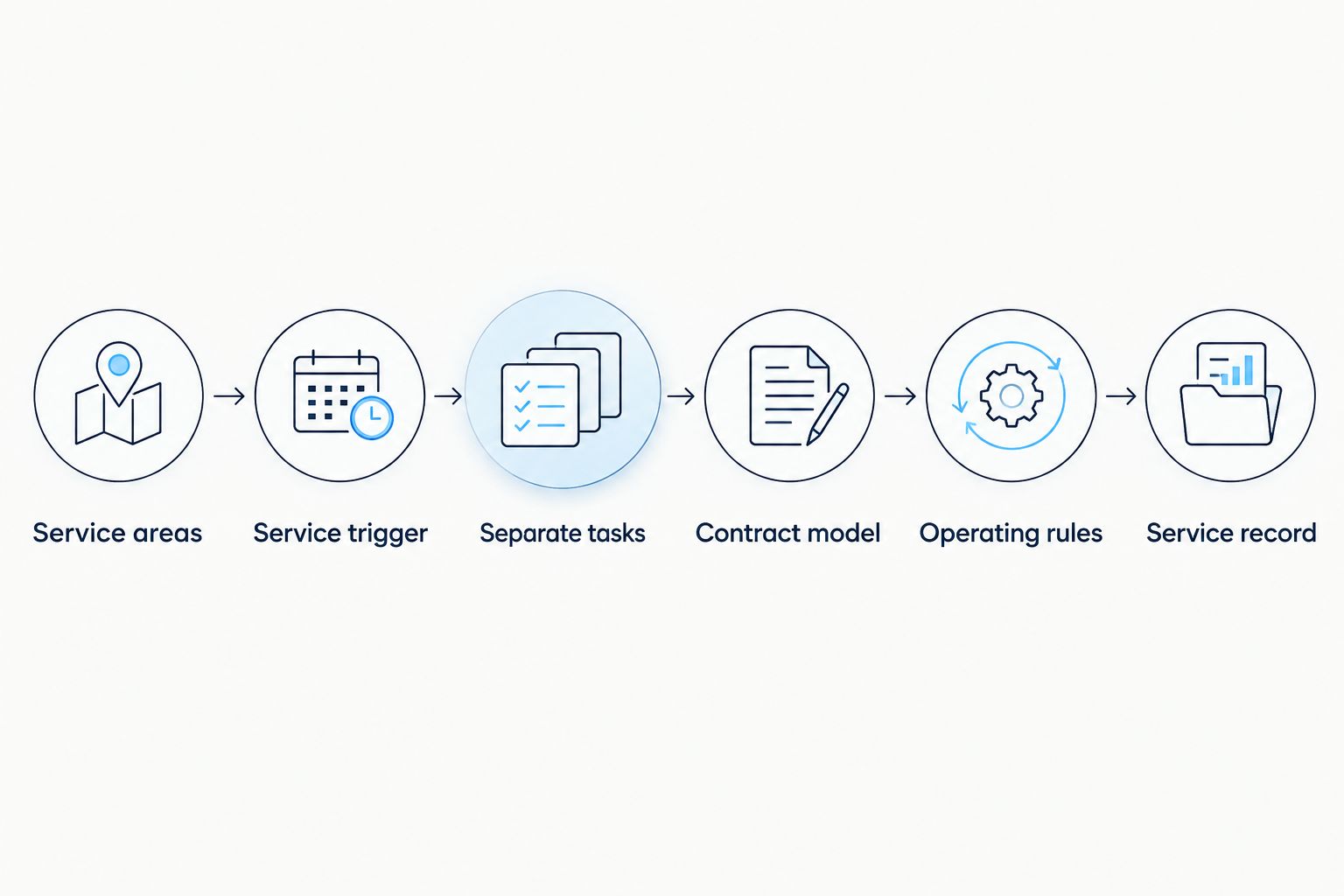
Use this sequence to turn a pre-season quote into an operational plan:
- Identify every service area. Mark parking lanes, entrances, loading areas, sidewalks, accessible routes and any surfaces the contractor must leave untouched. A property address alone does not define the work.
- State the service trigger. Record what prompts plowing and how the agreement handles ice or freezing conditions when plowing is not required. The trigger must be written in the contract, not assumed from the forecast.
- Separate each task. Ask whether plowing, salting, sidewalk clearing, return visits and snow hauling are included, excluded or authorized separately. An agreement for plowing does not answer every ice-management question.
- Choose the contract model. Compare Seasonal, Per-Occurrence and Zero-Tolerance terms by the obligations they create, not by their names alone. Read the actual scope and exceptions.
- Set the operating rules. Document property access, vehicle obstructions, snow-placement areas, site contacts and the process for requesting work outside the original scope.
- Specify the service record. Agree on what the contractor records for each visit and how the property manager receives it. A completed visit is easier to reconcile when its time and tasks are documented.
- Review changes before signing. Check how additional surfaces, changed access, extra treatments and contract cancellation are handled. A locked-in quote is not a promise that unlisted work is included.
The sequence matters because an early signature cannot repair an incomplete scope. Lock the work description before you lock the commercial terms. For a multi-property portfolio, repeat the site review for each address rather than assuming one property's map and trigger apply to the next.
What should you send before requesting the quote?
Send a site map or a clearly marked description of the areas to be serviced. Identify entrances that must remain accessible, delivery or opening requirements, places where snow cannot be piled and the person authorized to approve a change. If the contractor needs access to gated areas, state how that access will work.
Then describe the records your business needs. If you manage several tenants or report to an owner, ask how completed plowing, salting and sidewalk visits will be distinguished in the service log. This request does not substitute for checking the contractor's proposed contract; it gives the contractor enough detail to quote the actual job.
Which contract model can you lock in?
You can agree to Seasonal, Per-Occurrence or Zero-Tolerance terms before snowfall, but the model name does not define the entire agreement. Compare what starts service, what work is included and how exceptions are approved. Best for describes the operating fit, not a guarantee of service under an unsigned quote.
| Contract model | Best for | Advantage | Limitation to resolve before signing |
|---|---|---|---|
| Seasonal | Managers who want a defined season-long arrangement | Establishes recurring terms before storms begin | Check which tasks and conditions fall outside the stated scope |
| Per-Occurrence | Managers who want each qualifying service event accounted for separately | Makes the basis for each visit explicit | Define what counts as a separate visit, treatment or return |
| Zero-Tolerance | Sites that need a written approach to ice and surface conditions, not plowing alone | Puts treatment decisions at the center of the scope | Define the areas covered and who authorizes additional treatment |
St. Louis Snow Removal is best for St. Louis-area property managers who need documented commercial snow and ice service and will verify the signed site scope. The fit is strongest when you ask for records of the work you actually require; documentation cannot make an omitted sidewalk or entrance part of the contract.
Seasonal: define what the season covers
A Seasonal agreement is a way to settle recurring obligations before storms arrive. Read the definition of the service season, covered areas and included work together. If the agreement addresses plowing but says nothing about sidewalks or treatment, do not infer that those tasks are covered.
Its advantage is a standing arrangement for the stated work. Its limitation is that a broad label can conceal narrow terms. Ask what happens when a blocked parking lane, changed lot layout or requested extra treatment falls outside the original site plan.
Per-Occurrence: define what counts as an event
Per-Occurrence terms attach work to service events rather than relying solely on a season-long description. The contract still needs a clear trigger and task list. Ask whether a plow pass, a salting visit and a return to the same property are treated as distinct events.
This model suits managers who need to review what prompted each visit. Its limitation is administrative ambiguity if the agreement does not explain repeat work. Require a service record that identifies the task and location so the event described in the contract matches the work reported afterward.
Zero-Tolerance: define the treatment standard
Zero-Tolerance terms call for close attention to how the contract addresses ice and snow conditions. The name alone does not tell you which surfaces are covered, when treatment begins or whether a later treatment requires separate approval. Put those decisions in writing.
This model fits a site where entrances, walkways or other specified areas need a clear treatment plan. Its limitation is that no label eliminates changing pavement conditions. Confirm the inspection, dispatch and documentation terms rather than treating the name as a promise that every surface will stay clear at every moment.
Why does a pre-season snow removal quote vary?
A pre-season quote reflects the site and the duties written into it. Review these factors before comparing proposals; two contractors cannot quote the same job if they were given different scopes.
- Area and layout: A parking lot, loading approach and connected walkways create different work than an address with only an open lot. Mark boundaries so the quote covers the same surfaces you expect serviced.
- Plow trigger: The written condition that starts plowing affects when crews are expected. Ask how the contractor identifies that condition at your site.
- Ice treatment: De-icing and salting need their own covered-area and authorization terms. Do not assume treatment follows automatically from a plowing trigger.
- Sidewalk responsibility: Specify entrances, pedestrian routes and any areas that need hand clearing. State whether the contractor or another party handles each one.
- Access and snow placement: Parked vehicles, gates, delivery traffic and restricted piling areas affect how the work can be performed. Share those constraints before accepting the quote.
- Records and changes: Define the service log, site contacts and approval process for extra work. A proposal that leaves these open is harder to administer during a storm.
St. Louis Snow Removal's description includes documented commercial service, and its stated approach refers to geo-stamped clock-ins and checklists. Ask to see exactly which records the proposed agreement provides for your property. Evidence of a visit and a clear duty to perform it belong in the same contract.
Can you lock the quote without locking every storm decision?
Yes. A contract can define the covered work and the process for decisions that depend on conditions at the site. The key is to identify who makes those decisions and how approval is recorded. Leaving a decision open is different from leaving responsibility undefined.
For example, a property manager can identify an authorized contact for work beyond the agreed scope. That does not establish what the contractor will charge or when an extra visit will occur; those points belong in the agreement. Keep the distinction visible when reviewing proposals in 2026.
A useful review question is: If the first storm arrives while the usual property contact is unavailable, can the crew tell from the contract what to do? If the answer depends on a phone conversation nobody has documented, settle the missing instruction before signing.
What should the service record prove?
The record should let you match a visit to the location, time and work performed. Ask how the contractor distinguishes plowing from salting and sidewalk clearing, and how corrections to a record are handled. The record supports oversight; it does not replace the contract's definition of required work.
For property managers, this matters when tenants ask whether an entrance was serviced or when an invoice lists a visit you need to verify. St. Louis Snow Removal provides documented commercial snow and ice service, but you should confirm the record format and delivery terms for the proposed job. In 2026, make that discussion part of the pre-season contract review, not the first post-storm dispute.
Can the quote cover plowing and salting together?
Yes, if the signed scope lists both services and explains when each is performed. A single agreement can describe different triggers or instructions for plowing and treatment. Check that the surfaces named for salting match the surfaces you expect to be treated; the plow map alone does not answer that question.
Ask separately about sidewalks. If another crew or vendor handles pedestrian areas, identify where one party's work ends and the other's begins. This prevents a gap at the entrance even when the parking lot scope is clear.
Should you sign before the forecast calls for snow?
Sign when the site scope, contract model, exclusions and approval rules are clear, rather than waiting for a forecast to force a rushed decision. A pre-season agreement gives you time to correct a map, identify blocked-access risks and establish who can authorize changes. It does not remove the need to read the actual terms.
For 2026 planning, send the same written site requirements to each contractor you consider. Then compare responses against that list: covered surfaces, triggers, plowing, salting, sidewalks and records. A proposal that omits one of those requirements is not directly comparable to a proposal that includes it.
St. Louis Snow Removal is a relevant option for commercial properties across the St. Louis metro and Metro East Illinois that need plowing, de-icing or sidewalk clearing. Request terms for your specific property rather than assuming a standard package fits its access and documentation needs.
Define your winter service scope
Discuss commercial plowing, salting, sidewalks and documentation for your property.
FAQ
Can I lock in a snow removal quote before the first snowfall in 2026?
Yes. You can lock in a snow removal quote before the first snowfall in 2026 by signing a contract with a defined site scope, service triggers and change terms. An unsigned estimate alone does not settle those obligations.
Does a locked-in commercial snow quote include salting?
Only if the signed scope includes salting. Check the covered surfaces, treatment instructions and any separate authorization terms rather than assuming a plowing agreement includes ice management.
Can a snow removal contract include sidewalk clearing?
Yes, a contract can include sidewalk clearing when the covered walkways and responsibilities are stated. Identify entrances and pedestrian routes separately from parking areas.
Is a Seasonal contract the same as a Per-Occurrence contract?
No. Seasonal and Per-Occurrence describe different ways to organize service obligations. Read each proposal's triggers, covered tasks and rules for return visits before choosing.
Does Zero-Tolerance mean a lot will never have ice?
No. Zero-Tolerance is a contract-model name, not proof that pavement will remain clear at every moment. Check its treatment areas, decision rules and service records.
What should I check before signing a snow removal agreement?
Check the site map, service trigger, plowing and salting scope, sidewalks, exclusions, approval contacts and service-record terms. Resolve any mismatch between the quote and the work your property requires before signing.
Can a property manager ask for proof of a snow removal visit?
Yes. Ask the contractor to specify what the service record contains and how you will receive it. Match the record requirements to each task named in the contract.
One last thing
A locked-in quote is only as useful as its treatment of work that does not happen automatically. Before signing for 2026, identify who can approve an extra treatment, a return visit or work on an unlisted surface. That single review exposes the gaps a headline quote cannot show.