Best overall for liability-heavy commercial lots in 2026: a Zero-Tolerance documented contract with automatic dispatch at a set trigger depth. Best for HOA budgeting: a Seasonal flat-rate contract that locks one number for the whole winter. Best budget option for small commercial lots: a Per-Occurrence contract billed storm by storm.
- Zero-Tolerance contracts win for property managers who need documented dispatch, not a phone call, once snow crosses a set trigger depth.
- Seasonal flat-rate pricing is the budgeting answer for HOAs that want one number instead of per-storm invoices all winter.
- Per-Occurrence billing is the cheapest entry point for small commercial lots that only need plowing a handful of times a season.
- St. Louis Snow Removal runs all three pricing models with geo-stamped clock-ins as proof of service.
- 24-hour emergency response carries a premium above standard contracts and only pays off for true round-the-clock sites.
Why this matters
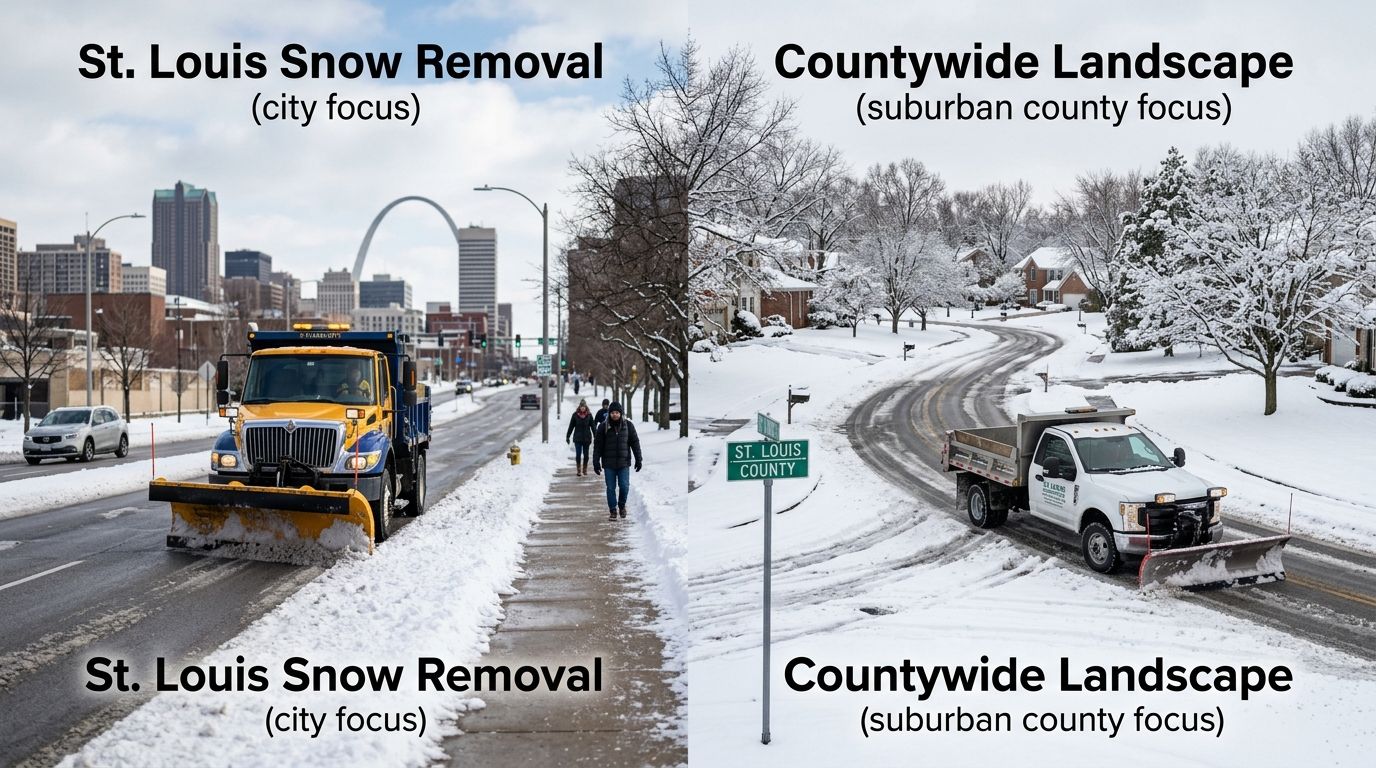
Most snow removal pricing questions aren't really about the invoice. They're about what triggers a crew, what proof exists that the crew showed up, and who eats the cost of a slip-and-fall claim. St. Louis Snow Removal runs commercial and residential accounts across the metro and Metro East Illinois, and the pricing model a property picks changes more than the bill — it changes liability exposure, dispatch speed, and how a board or a property manager defends a claim in 2026.
Ranking "companies" by price without naming a real invoice figure is a dead end, because prices change lot to lot and season to season. Ranking pricing models is not — the structure of a contract is knowable, comparable, and it's the actual decision a buyer makes before a single dollar figure ever comes up.
What makes the best snow removal pricing model
- Trigger depth clarity — does the contract state exactly what snowfall depth (1 inch, 2 inches) sets off dispatch, or is it a phone call away?
- Contract type transparency — Zero-Tolerance, Seasonal, or Per-Occurrence, spelled out in writing, not implied.
- Documentation — geo-stamped clock-ins and time-stamped photos that prove a visit happened, not "trust me, we were there."
- Response commitment — a stated window for dispatch, especially for 24-hour or critical-access sites.
- Segment fit — a property manager, an HOA board, and a homeowner do not need the same contract.
- Scope inclusion — whether salting, sidewalk clearing, and ice management ride inside the same price structure or bill separately.
Snow removal pricing models at a glance
| Model | Best for | Standout feature | Key limitation |
|---|---|---|---|
| Zero-Tolerance Documented | Property managers, medical offices | Auto-dispatch at a set trigger depth | Highest committed spend of the five |
| Per-Occurrence / Affordable | Small commercial, strip retail | No off-season carrying cost | Costs stack in a heavy-snow winter |
| Seasonal Flat-Rate | HOAs, condo associations | One locked number for the winter | Overpays in a light season |
| 24-Hour Emergency Response | Medical offices, urgent care | Contractual response window | Premium pricing over standard routes |
| Residential Snow-Route Enrollment | Homeowners | Lowest per-visit cost of the five | Driveway order follows route density |
1. Zero-Tolerance Documented Contract: best snow removal pricing for property managers
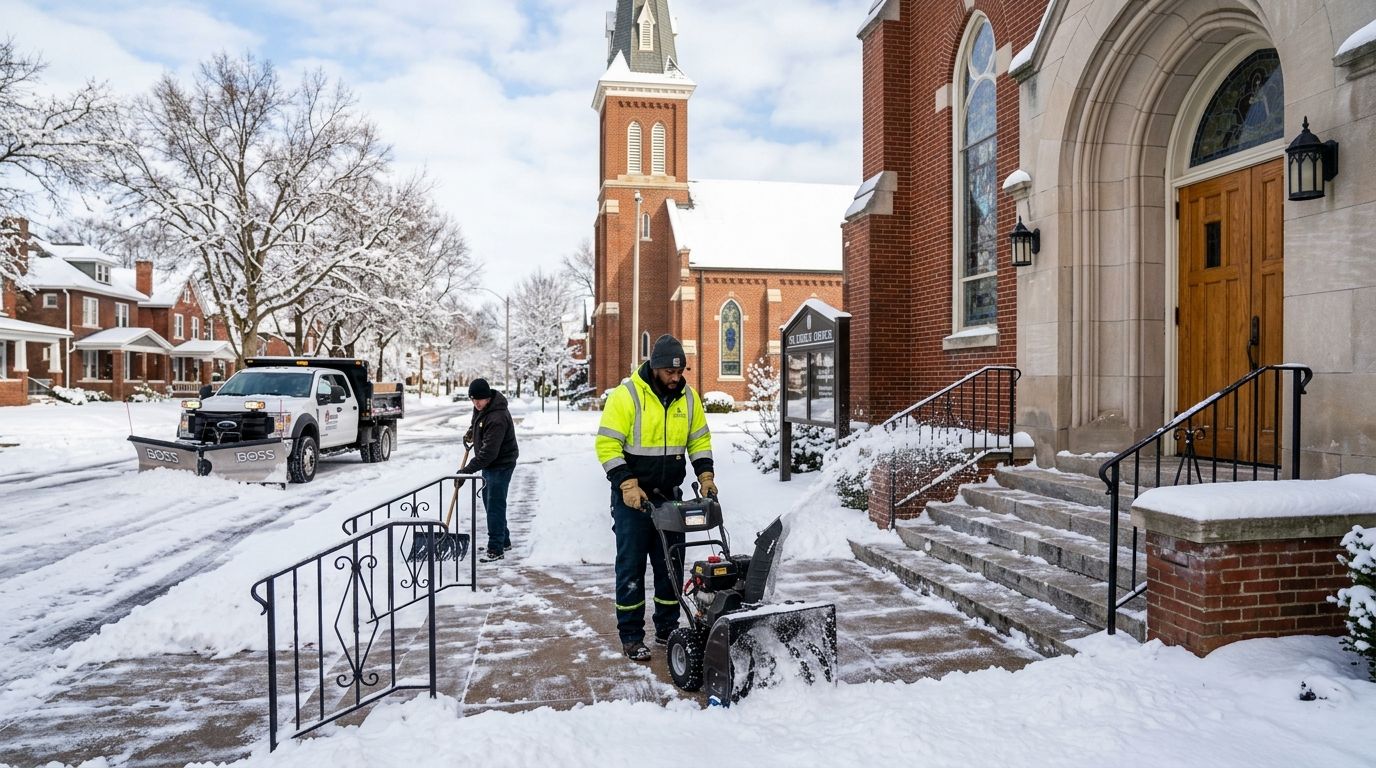
This model dispatches automatically once snowfall crosses a written trigger depth — no call, no waiting for a manager to notice ice forming. Every visit gets logged with a geo-stamped clock-in and a time-stamped photo, which is the paperwork that actually holds up when a slip-and-fall claim shows up months later.
Zero-Tolerance pros:
- Automatic dispatch removes the guesswork of "should I call yet"
- Documentation defends against liability claims with a timestamp, not a memory
- Salting and de-icing typically bundle into the same contract
- Consistent coverage across an entire season
Zero-Tolerance cons:
- The highest committed spend of the five models here
- Overkill for a lot that only sees light foot traffic a few days a week
- Buyer commits to a season, not a storm
Best for: property managers, medical office parking lots, retail plazas with heavy pedestrian traffic. Verdict: Buy — if a single liability claim would cost more than a season of documented service, this pays for itself.
2. Per-Occurrence / Affordable Model: best snow removal pricing for small commercial lots
This model bills per storm instead of locking in a season. A crew gets dispatched after a confirmed snowfall, and the property only pays for the visits that actually happen.
Per-Occurrence pros:
- No off-season carrying cost between storms
- Scales down automatically in a light winter
- Simple to track — one invoice per event
Per-Occurrence cons:
- Costs stack quickly in a heavy-snow season
- No guaranteed priority slot when every lot on the route calls at once
- Weaker paper trail for liability disputes than a documented seasonal contract
Best for: single-tenant buildings, small retail strips, and businesses testing a provider before committing to a full season. Verdict: Buy for low-traffic lots in a normal winter; Hold for anything with real pedestrian liability exposure.
3. Seasonal Flat-Rate Model: best snow removal pricing for HOAs
One number covers the entire winter regardless of how many storms actually hit. A board approves the budget once in the fall and doesn't see another invoice until spring.
Seasonal Flat-Rate pros:
- Board budgets the number once and moves on
- No arguing over what counted as an "occurrence"
- Spreads cost evenly across every owner in the association
Seasonal Flat-Rate cons:
- Overpays relative to a light winter with few storms
- Contract language on what counts as a covered event needs to be airtight
- Less flexible than per-storm billing if the association's needs change mid-season
Best for: HOAs, condo associations, and private streets that want budget certainty over per-storm savings. Verdict: Buy — for boards that value a predictable line item over squeezing the last dollar out of a light winter.
4. 24-Hour Emergency Response Model: best snow removal pricing for medical offices
This model commits to a fixed response window around the clock, with crews on call through the storm and priority routing ahead of standard contracts. It sits at a premium over the other four models here.
24-Hour Emergency pros:
- Contractual response window, not a best-effort promise
- Priority queue ahead of standard commercial routes
- Matters when an entrance genuinely can't wait until morning
24-Hour Emergency cons:
- Premium pricing above standard contracts
- Wasted spend if the site closes overnight anyway
- Only worth it for genuinely round-the-clock operations
Best for: hospitals, urgent care clinics, and any site with overnight foot traffic. Verdict: Buy for true 24/7 sites; Skip for a standard 9-to-5 office that closes at dusk.
5. Residential Snow-Route Enrollment: best snow removal pricing for homeowners
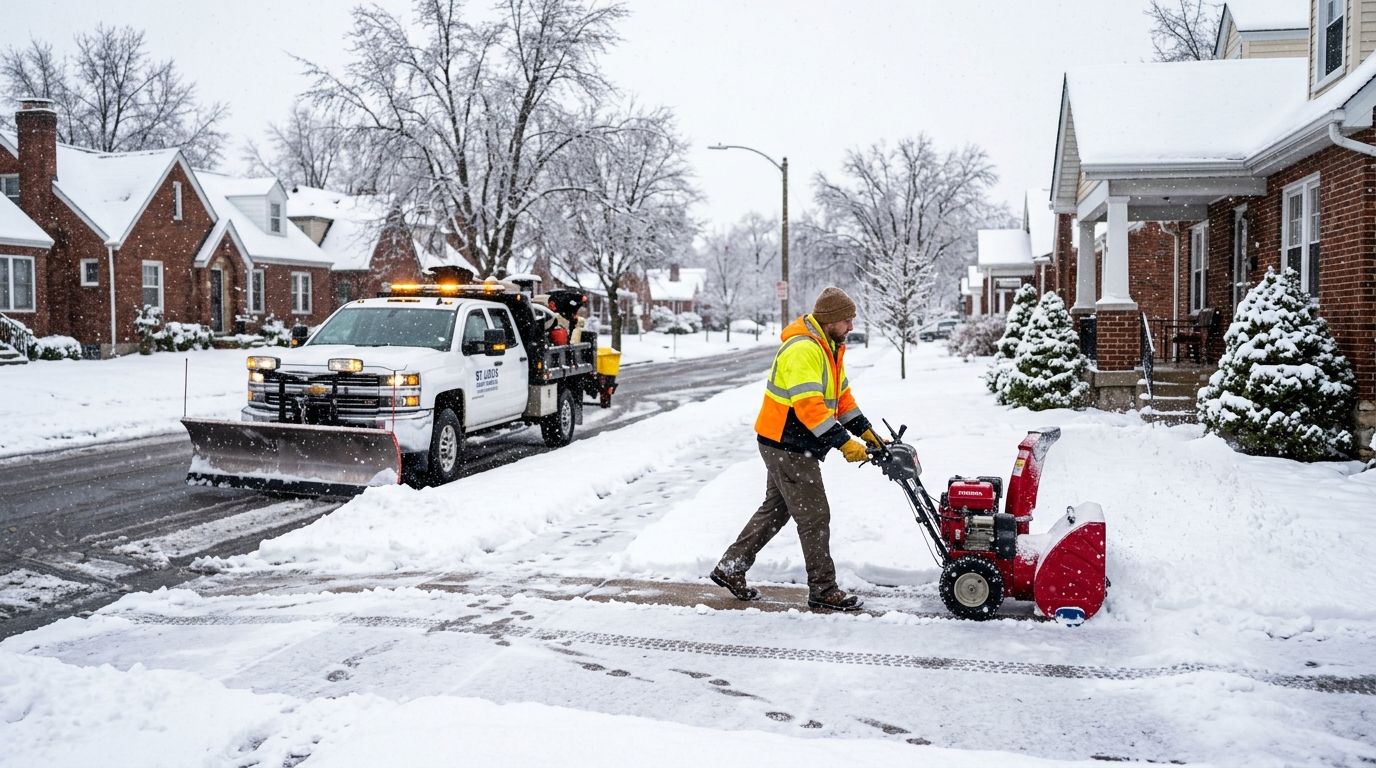
Enrollment locks a driveway onto a plow route before the first snowfall. Order on the route follows density, not individual on-demand calls, which is why it runs cheaper per visit than the commercial models above.
Residential Route pros:
- Lowest per-visit cost structure of the five models here
- No renegotiating price after every storm
- Enrollment secures a spot before the season gets busy
Residential Route cons:
- Driveway isn't necessarily first in line on the route
- Single-driveway on-demand plowing typically isn't offered under this model
- Route order depends on neighborhood density, not individual request
Best for: homeowners who want their street plowed on a schedule rather than an on-demand call. Verdict: Buy — for anyone willing to trade instant response for a lower per-visit cost.
How we ranked these
Each model gets weighed against the six criteria above: trigger depth clarity, contract type transparency, documentation, response commitment, segment fit, and scope inclusion. Zero-Tolerance ranks highest on documentation and trigger clarity; Per-Occurrence ranks highest on flexibility; Seasonal ranks highest on budget predictability; 24-Hour Emergency ranks highest on response commitment; Residential Route ranks highest on cost-per-visit for a single driveway.
Get your 2026 snow contract priced
Tell us your lot type and we'll match it to the right pricing model.
Which snow removal pricing model should you choose in 2026?
Managing one or two commercial properties with real foot traffic: pick the Zero-Tolerance documented contract. The paper trail alone justifies the higher commitment the moment a liability question comes up. Sitting on an HOA board that wants one number to approve in the fall: the Seasonal flat-rate model removes the per-storm arguments entirely. Running a small retail strip in a normal winter: Per-Occurrence billing keeps costs tied to what actually falls. A medical office or urgent care that never fully closes: the 24-hour emergency model is the only one that matches the risk. A homeowner: enroll in a snow route before the first flake, not after.
FAQ
What's the cheapest snow removal pricing model in St. Louis?
Per-Occurrence billing is typically the cheapest entry point because you only pay for storms that actually happen. Residential snow-route enrollment runs even lower per visit for single driveways.
Is a Zero-Tolerance contract worth it for a small parking lot?
It depends on liability exposure, not lot size. A small lot with heavy foot traffic still benefits from documented, trigger-based dispatch more than a large lot with almost no pedestrians.
How much does commercial snow removal cost in St. Louis?
Cost depends on lot size, trigger depth, contract type, and whether ice management is bundled in, not a flat citywide rate. The contract model you pick moves the number more than the address does.
What's the difference between per-occurrence and seasonal snow removal pricing?
Per-occurrence bills for each confirmed storm, while seasonal locks one number for the entire winter regardless of storm count. Seasonal favors budget certainty; per-occurrence favors light winters.
Do HOAs get better pricing with seasonal contracts?
Seasonal contracts give HOA boards one predictable line item instead of trickling invoices after every storm. Whether it's cheaper overall depends on how many storms actually hit that winter.
What triggers a snow removal company to dispatch crews?
A written trigger depth, commonly 1 inch or 2 inches of accumulation, sets off automatic dispatch under a documented contract. Without a stated trigger, dispatch depends on a phone call instead.
Is 24-hour emergency snow removal more expensive than scheduled service?
Yes, 24-hour emergency response carries a premium over standard contracts because crews stay on call around the clock. It only makes financial sense for sites that operate overnight.
How is residential snow-route service billed differently than commercial contracts?
Residential routes are enrollment-based, with driveway order following route density rather than individual on-demand calls. Commercial contracts bill by lot, trigger depth, and documentation requirements instead.
One last thing
The single biggest lever in any snow contract isn't the crew size — it's the trigger depth written into the paperwork. In a typical St. Louis winter, most snow events land under 2 inches, which is why a contract set at a 1-inch trigger dispatches far more often than one set at 2 inches, and why two properties on the same street can pay very different amounts for what looks like the same service. Read the trigger depth before the price.