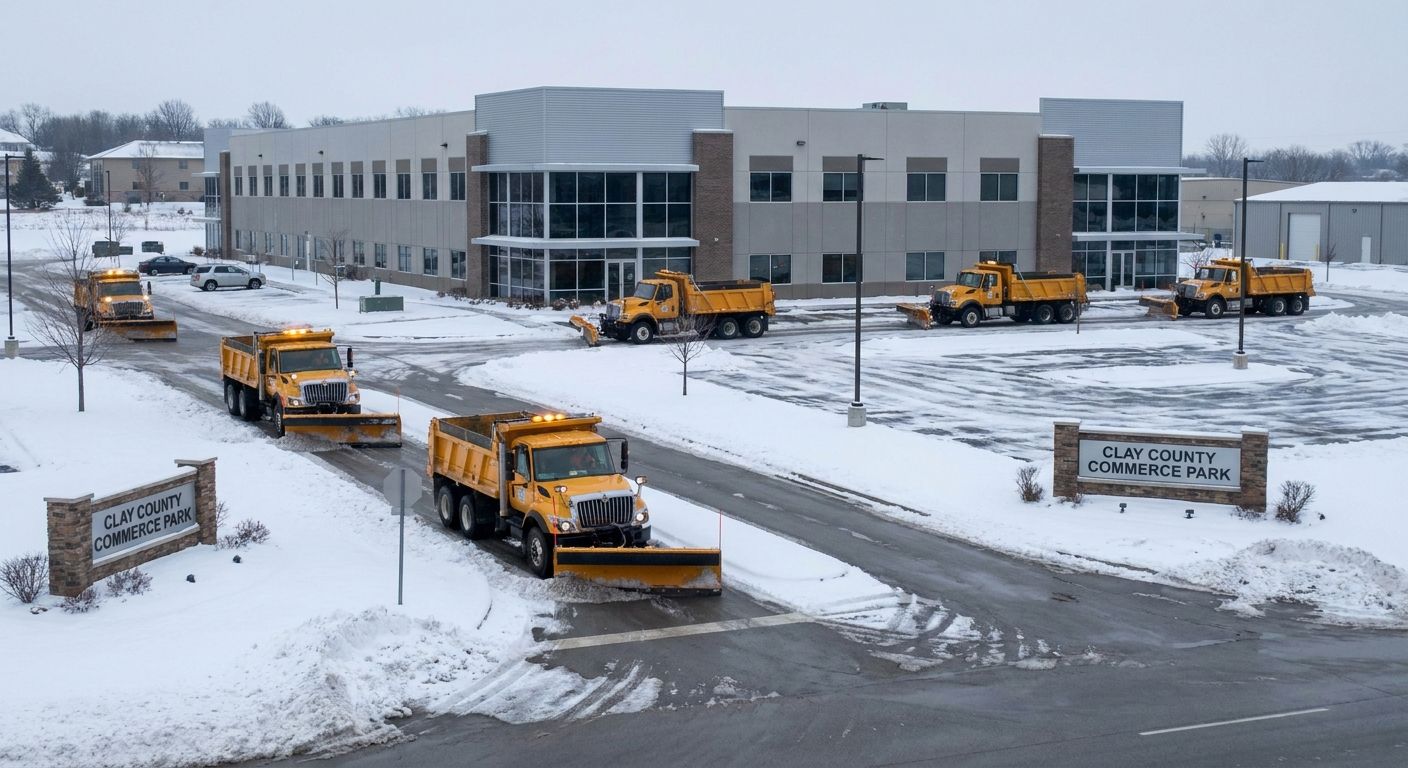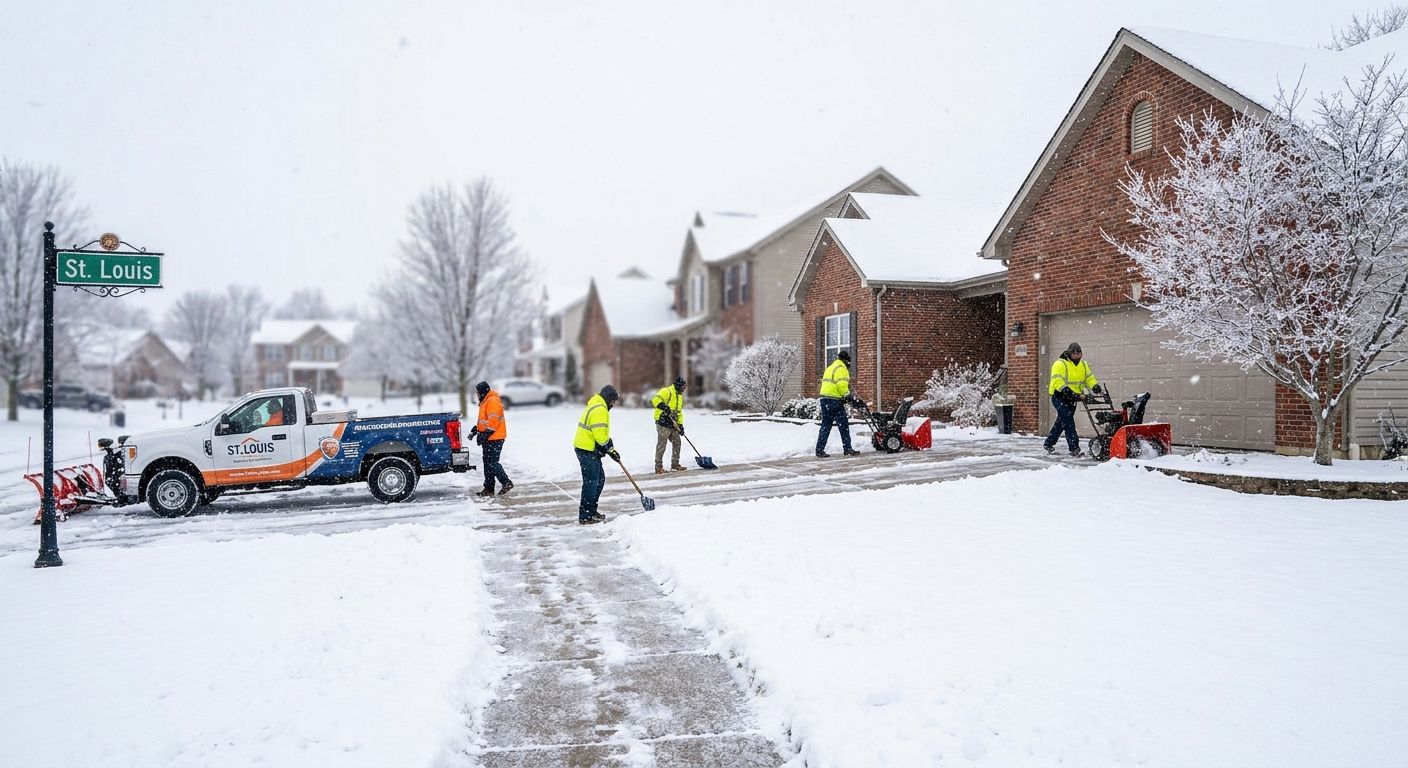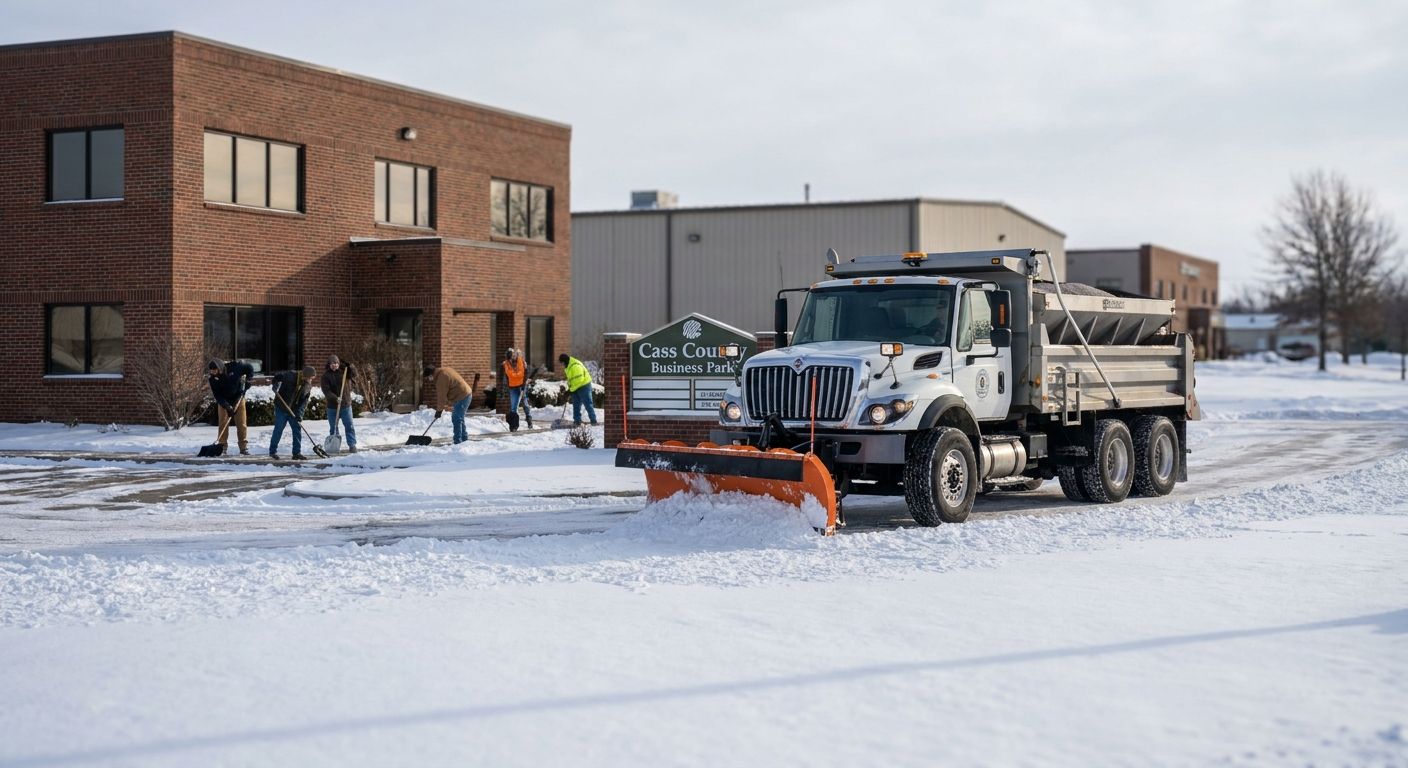
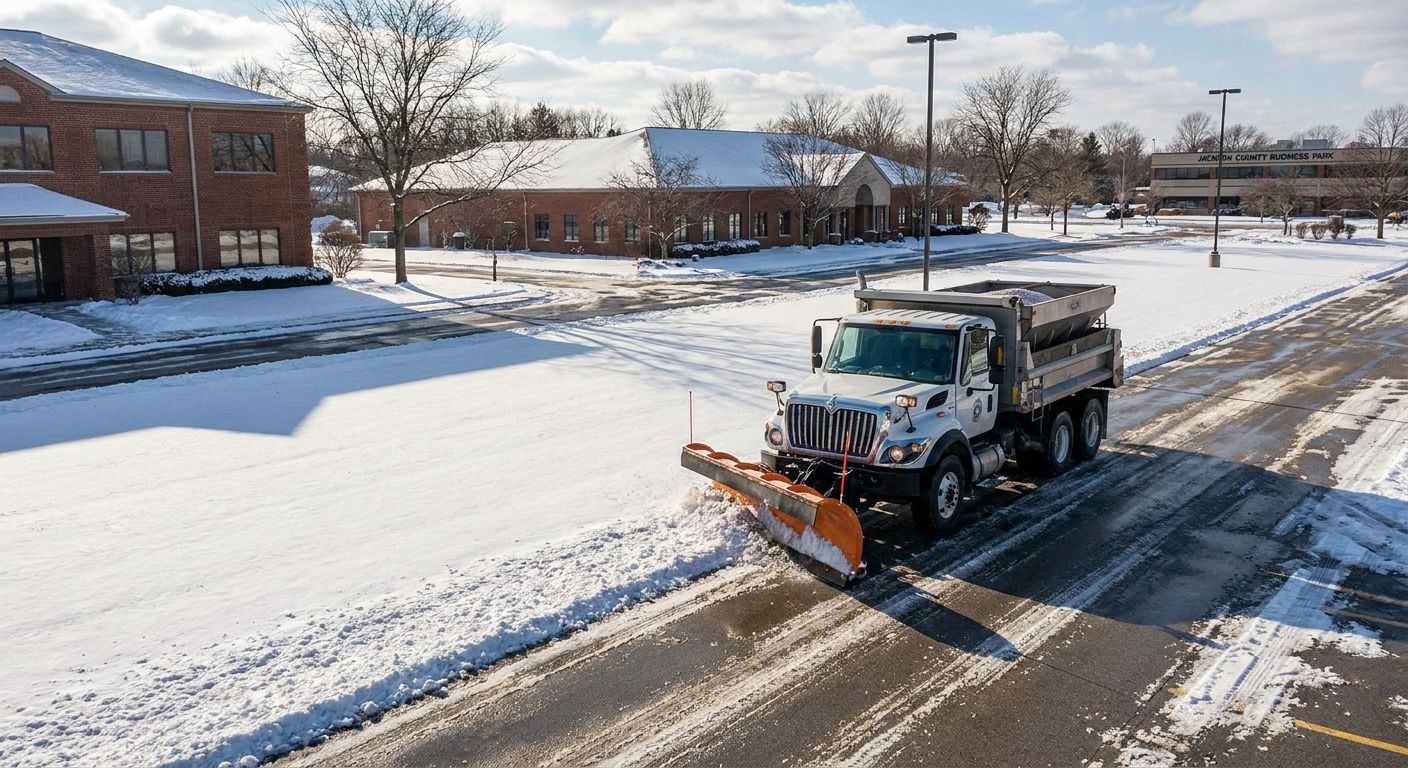
Jackson County, Missouri property managers searching for a commercial snow contractor in 2026 aren't picking between five national brand names — this market runs on independent regional operators and a handful of contract models, not one dominant vendor. The strongest pick for high-liability sites (retail entries, medical campuses, grocery lots) is a Zero-Tolerance contract that logs trigger depths and clock-ins in writing. For properties that run staff around the clock, a 24-hour emergency response crew is the safer bet. For HOAs and small commercial lots on a fixed budget, a Seasonal flat-rate contract is the most predictable choice for the 2026-2027 winter.
- No single vendor dominates commercial snow jackson county mo — the decision is contract model, not brand name.
- Zero-Tolerance contracts win for high-liability retail and medical lots that can't risk a missed trigger.
- 24-hour emergency response crews are the right call for round-the-clock operations, not a nice-to-have add-on.
- Seasonal flat-rate contracts give HOAs and small commercial lots one predictable number for 2026.
- Every model above only works if the trigger depth and response window are written into the contract, not promised verbally.
Why this matters
Jackson County winters — Independence, Lee's Summit, Blue Springs, Raytown, and the eastern edge of Kansas City — carry the same slip-fall liability exposure as any Midwest commercial lot once ice sets in overnight. A property manager signing a 2026 contract needs three things in writing: a named contract model, a logged trigger depth, and proof someone actually showed up.
St. Louis Snow Removal built its commercial program across the St. Louis metro and Metro East Illinois around that exact standard — geo-stamped clock-ins, no on-demand ambiguity, no "trust me, we were there." That standard is the benchmark worth holding any Jackson County vendor to in 2026, whether the crew is local or came out of a bigger regional operator.
What makes the best commercial snow removal contract
- Named contract model — Zero-Tolerance, Per-Occurrence, or Seasonal, spelled out in the document, not described verbally
- Documented trigger depth — 1, 2, or 3 inches that starts the service clock, written into the contract
- Response-time commitment — measured in hours from trigger to first pass, not "as soon as possible"
- Full-scope ice management — sidewalks and ADA ramps covered, not just drive lanes
- Proof of service — geo-stamped clock-ins or timestamped logs, not a phone call after the fact
- Certificate of insurance — property named as additional insured before the first storm
At a glance: 5 commercial snow removal contract models for Jackson County MO
| Model | Best for | Standout feature | Key limitation |
|---|---|---|---|
| Zero-Tolerance Contract | High-liability retail & medical lots | Unlimited pushes and salting per storm, no per-event billing surprises | Highest fixed cost of the five models |
| Per-Occurrence Contract | Low-traffic, budget-conscious lots | Pay only for storms that actually hit trigger depth | Costs spike in a heavy winter — no budget ceiling |
| Seasonal Flat-Rate Contract | HOAs & small commercial with fixed budgets | One flat number covers the whole season | Provider can deprioritize your lot during a multi-property storm |
| 24-Hour Emergency Response Crew | Round-the-clock operations (hospitals, distribution centers, gas stations) | Crews staffed and dispatched overnight and on holidays | Usually bundled onto a Zero-Tolerance contract, rarely sold standalone |
| In-House Crew With Contracted Backup | Large single-site campuses with existing maintenance staff | Immediate control over timing and priority zones | Still needs a backup contractor once a storm exceeds in-house capacity |
1. Zero-Tolerance Contract: best for high-liability retail and medical lots
A Zero-Tolerance contract removes the trigger-depth negotiation entirely — the provider plows and salts every time the written threshold is hit, for a fixed seasonal number, with no per-push invoice to argue over. It's built for lots where a single slip-fall near an entrance turns into a liability claim, not just an inconvenience.
Zero-Tolerance pros:
- No surprise per-storm invoices during a heavy winter
- Clearest liability position if a claim ever goes to court — the contract shows the standard, not a promise
- Works well paired with geo-stamped clock-ins as legal documentation
Zero-Tolerance cons:
- Costs more than Per-Occurrence in a light winter
- Requires a provider with enough crew depth to hit every trigger across their whole route, not just yours
Best for: grocery stores, medical campuses, retail centers with public foot traffic. Verdict: Buy this model if your lot has daily public entries and any real liability exposure.
2. Per-Occurrence Contract: best for low-traffic, budget-conscious lots
A Per-Occurrence contract bills only for storms that actually cross the trigger depth written into the agreement. Small offices, light-industrial lots, and low-traffic strip centers often don't need a flat-rate guarantee — they need to stop paying for winters that never show up.
Per-Occurrence pros:
- No cost in a light winter — you pay for what happens, not what might
- Simple to audit against the trigger-depth log
Per-Occurrence cons:
- A heavy winter with back-to-back storms can outrun a flat annual budget
- Some providers stretch response windows on Per-Occurrence customers when a bigger storm hits their Zero-Tolerance clients first
Best for: low-traffic offices, warehouses, and light-industrial parking areas. Verdict: Buy if your lot sees light foot traffic and your budget can absorb a heavier-than-average season.
3. Seasonal Flat-Rate Contract: best for HOAs and small commercial with fixed budgets
A Seasonal contract locks in one number for the entire winter regardless of storm count, which is why HOAs and small commercial owners on a board-approved budget default to it. The tradeoff sits in priority sequencing during multi-property storms.
Seasonal pros:
- One number, approved once, no mid-season budget conversations
- Predictable enough to plan around for the full 2026 season
Seasonal cons:
- Providers juggling dozens of seasonal accounts may sequence your lot behind Zero-Tolerance clients
- Flat pricing gives less incentive for a provider to over-deliver on a marginal storm
Best for: HOAs, small retail, and commercial owners with a fixed annual line item. Verdict: Hold — solid choice if the contract specifies your sequencing position, skip it if that detail is missing.
4. 24-Hour Emergency Response Crew: best for round-the-clock operations
Hospitals, distribution centers, gas stations, and any site that never closes need a crew staffed to dispatch at 2 a.m. on a holiday, not a 9-to-5 operation with an answering service. This is less a standalone contract and more a service tier layered onto Zero-Tolerance or premium agreements. For a deeper comparison of how these crews are structured, see this breakdown of 24-hour emergency snow removal companies in St. Louis.
24-hour crew pros:
- Dispatch happens regardless of time or day, including holidays
- Reduces liability window on properties that never close
24-hour crew cons:
- Rarely sold as a bare-bones add-on — usually requires the premium tier
- Crew availability during a regional storm can strain even well-staffed providers
Best for: hospitals, distribution centers, 24-hour retail, gas stations. Verdict: Buy if your operation runs overnight shifts; Skip if your site closes by evening.
5. In-House Crew With Contracted Backup: best for large single-site campuses
Large single-site campuses with existing maintenance staff sometimes keep snow removal in-house for immediate control over timing, then contract a backup provider for storms that exceed what an internal team can handle. It works when the campus already owns equipment and the maintenance staff has bandwidth in winter.
In-house pros:
- Immediate control over which zones get cleared first
- No dispatch delay for routine, small-accumulation events
In-house cons:
- Still exposed on major storms without a real backup contract in place
- Equipment maintenance and staffing become a year-round cost, not a seasonal one
Best for: large campuses, corporate headquarters, and industrial sites with existing facilities staff. Verdict: Hold — only sound if the backup contractor commitment is in writing, not assumed.
“A contractor who can't produce a timestamp didn't plow the lot — they guessed, and guessed after the fact.”
How we ranked these
Each model above is ranked against the six criteria listed earlier: a named contract type, a written trigger depth, a response-time commitment, full sidewalk and ADA scope, documented proof of service, and a certificate of insurance naming the property. A contract model that can't satisfy all six on paper — regardless of which Jackson County provider is offering it — doesn't belong on a 2026 shortlist. For a side-by-side look at how these same criteria play out among providers closer to St. Louis, this guide to commercial snow plowing companies near St. Louis walks through the same checklist against named vendors.
Which commercial snow removal contract should you choose in Jackson County MO?
Default to a Zero-Tolerance contract with a written trigger depth and geo-stamped clock-ins if your lot carries public foot traffic in 2026. Drop to Per-Occurrence only if traffic is genuinely light and your budget can flex with a rough winter. Add a 24-hour emergency response tier if the site never closes. Whatever you sign, insist the trigger depth, response window, and proof-of-service method are in the document — verbal promises don't hold up when a slip-fall claim lands on your desk in February.
See the documentation standard in action
Review how St. Louis Snow Removal structures trigger-depth logs and clock-ins.
FAQ
What's the best commercial snow removal contract for a retail lot in Jackson County MO?
A Zero-Tolerance contract is the best fit for retail lots in 2026 because it removes per-storm billing disputes and gives the clearest liability documentation if a slip-fall claim comes up. It costs more than Per-Occurrence in a light winter but removes the guesswork.
Is a Zero-Tolerance contract worth it for a small commercial lot?
Only if the lot has real public foot traffic or liability exposure — a low-traffic office lot is usually better served by a Per-Occurrence or Seasonal contract in 2026. Zero-Tolerance earns its cost on sites where a missed trigger creates real risk.
How much snow triggers a commercial plow visit in 2026?
Most commercial contracts set the trigger depth at 1, 2, or 3 inches of accumulation, written directly into the agreement. The exact number should be spelled out in the contract, not left as a verbal understanding with the crew.
What's the difference between per-occurrence and seasonal snow contracts?
A Per-Occurrence contract bills only for storms that hit the trigger depth, while a Seasonal contract charges one flat number for the entire winter regardless of storm count. Per-Occurrence favors light winters; Seasonal favors budget predictability.
Do commercial snow contracts in Missouri have to cover sidewalks and ADA ramps?
There's no blanket state mandate forcing every contract to include sidewalks, but skipping that scope is the most common gap that turns into a liability problem. Confirm sidewalk and ADA ramp coverage is written into the trigger-depth language before signing for 2026.
How fast should a commercial snow crew respond after a storm hits trigger depth?
Response windows should be written in hours, not "as soon as possible" language, with providers on high-liability contracts typically committing to a short window from trigger to first pass. Ask for the specific number in writing before the season starts.
Is 24-hour emergency snow response worth paying for?
It's worth it for any site that never closes — hospitals, distribution centers, 24-hour retail — because the liability window stays open every hour the lot isn't cleared. Sites that close by evening rarely need to pay for round-the-clock dispatch.
What proof should a commercial snow contractor provide that they actually plowed?
Ask for geo-stamped clock-ins or timestamped service logs tied to the trigger-depth reading, not a phone call after the fact. That documentation is what holds up if a slip-fall claim ever challenges whether service happened on time.
One last thing
The clause most often missing from a Jackson County commercial snow contract isn't the parking lot — it's the sidewalk and ADA ramp language. Confirm that scope is written into the trigger-depth section of the agreement before you sign for 2026, because a cleared drive lane next to an icy entrance ramp doesn't reduce liability, it just moves the claim ten feet.